

Baby Toddler cereal, barley, dry
Common food

Photo: Wikipedia
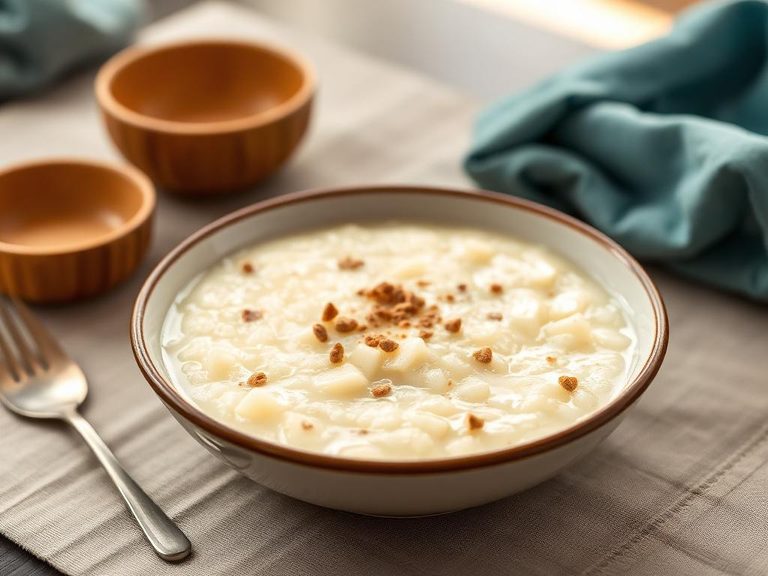
This is a finely milled, dry cereal made from hulled barley, designed as a first solid food for infants and toddlers. It has a mild, slightly nutty flavor and a smooth, porridge-like texture when mixed with milk or water. Nutritionally, it's a powerhouse of complex carbohydrates and fiber, providing sustained energy for growing bodies.
Calorie split: 14% protein · 71% carbs · 15% fat
↓ Full nutrition💚 Why it's loved
Parents appreciate its gentle, hypoallergenic nature and mild taste that's easy for babies to accept. Its versatility allows it to be mixed with breast milk, formula, or purees, making it a blank canvas for introducing flavors.
⚠️ Watch-outs & how to enjoy it better
The high carbohydrate content can cause blood sugar spikes if not paired with protein or fat. Barley contains gluten, making it unsuitable for those with celiac disease or gluten sensitivity. To mitigate, always mix it with a protein source like pureed meat, legumes, or full-fat yogurt.
Key benefits
- Excellent source of dietary fiber for digestive health
- Provides complex carbohydrates for steady energy release
- Contains plant-based protein essential for growth
- Naturally low in fat and sodium
- Iron-fortified in many commercial versions
🍽️ Popular dishes
🌍 Where it's eaten
💡 Did you know?
Barley is one of the oldest cultivated grains, with evidence of its use as baby food dating back over 10,000 years in the Fertile Crescent.
Full nutrition (USDA data · scales with serving)
| Water | 6.8 g |
| Energy | 376 kcal |
| Protein | 13.2 g |
| Total lipid (fat) | 6.6 g |
| Carbohydrate, by difference | 69.4 g |
| Fiber, total dietary | 6.6 g |
| Total Sugars | 13.2 g |
| Calcium, Ca | 643 mg |
| Iron, Fe | 48.2 mg |
| Magnesium, Mg | 115 mg |
| Phosphorus, P | 333 mg |
| Potassium, K | 467 mg |
| Sodium, Na | 33.0 mg |
| Zinc, Zn | 3.1 mg |
| Copper, Cu | 0.47 mg |
| Selenium, Se | 30.2 ug |
| Vitamin C, total ascorbic acid | 58.3 mg |
| Thiamin | 0.89 mg |
| Riboflavin | 1.1 mg |
| Niacin | 14.3 mg |
| Vitamin B-6 | 0.71 mg |
| Folate, total | 179 ug |
| Folic acid | 156 ug |
| Folate, food | 23.0 ug |
| Folate, DFE | 287 ug |
| Choline, total | 45.4 mg |
| Vitamin B-12 | 0.80 ug |
| Vitamin B-12, added | 0.80 ug |
| Vitamin A, RAE | 0.00 ug |
| Retinol | 0.00 ug |
| Carotene, beta | 0.00 ug |
| Carotene, alpha | 0.00 ug |
| Cryptoxanthin, beta | 0.00 ug |
| Lycopene | 0.00 ug |
| Lutein + zeaxanthin | 170 ug |
| Vitamin E (alpha-tocopherol) | 5.0 mg |
| Vitamin E, added | 4.9 mg |
| Vitamin D (D2 + D3) | 7.1 ug |
| Vitamin K (phylloquinone) | 2.3 ug |
| Alcohol, ethyl | 0.00 g |
| Caffeine | 0.00 mg |
| Theobromine | 0.00 mg |
Fat & fatty acid profile (per 100g)
| Fatty acids, total saturated | 0.89 g |
| SFA 4:0 | 0.00 g |
| SFA 6:0 | 0.00 g |
| SFA 8:0 | 0.00 g |
| SFA 10:0 | 0.00 g |
| SFA 12:0 | 0.00 g |
| SFA 14:0 | 0.01 g |
| SFA 16:0 | 0.60 g |
| SFA 18:0 | 0.28 g |
| Fatty acids, total monounsaturated | 1.4 g |
| MUFA 16:1 | 0.22 g |
| MUFA 18:1 | 1.2 g |
| MUFA 20:1 | 0.00 g |
| MUFA 22:1 | 0.00 g |
| Fatty acids, total polyunsaturated | 3.9 g |
| PUFA 18:2 | 3.5 g |
| PUFA 18:3 | 0.32 g |
| PUFA 18:4 | 0.00 g |
| PUFA 20:4 | 0.00 g |
| PUFA 20:5 n-3 (EPA) | 0.00 g |
| PUFA 22:5 n-3 (DPA) | 0.00 g |
| PUFA 22:6 n-3 (DHA) | 0.00 g |
| Cholesterol | 0.00 mg |
Amino acid profile (per 100g)
Estimated from Babyfood, dinner, chicken stew, toddler — USDA does not publish this profile for Baby Toddler cereal.
| Tryptophan | 0.06 g |
| Threonine | 0.22 g |
| Isoleucine | 0.26 g |
| Leucine | 0.41 g |
| Lysine | 0.41 g |
| Methionine | 0.11 g |
| Cystine | 0.05 g |
| Phenylalanine | 0.21 g |
| Tyrosine | 0.17 g |
| Valine | 0.29 g |
| Arginine | 0.33 g |
| Histidine | 0.13 g |
| Alanine | 0.30 g |
| Aspartic acid | 0.47 g |
| Glutamic acid | 0.90 g |
| Glycine | 0.29 g |
| Proline | 0.35 g |
| Serine | 0.21 g |
FAQ
At what age can I introduce barley cereal?
Most pediatricians recommend introducing single-grain cereals like barley around 4-6 months, once the baby shows signs of readiness for solids.
How do I prepare it?
Mix the dry cereal with warm breast milk, formula, or water to achieve a smooth, runny consistency. Gradually thicken as the baby gets older.
Is it a common allergen?
Yes, barley contains gluten. It should be introduced separately from other new foods to monitor for any allergic reaction.
Nutrient density (calculated · NRF9.3)
Nutrient Rich Foods index: beneficial nutrients (protein, fiber, vitamins, minerals) minus saturated fat, added sugar & sodium, per 100 kcal.
NRF9.3 index — Fulgoni, Keast & Drewnowski, 2009. Computed from USDA nutrients.
Weight-loss friendliness (composite index)
Energy density 3.76 kcal/g · 14% calories from protein · 6.6 g fiber · 13.2 g sugar per 100 g.
Composite of energy density (Rolls et al., 1999), protein & fiber satiety, minus sugar. A calculated heuristic — ranks satiety-per-calorie, not a clinical measure.
Dietary load (calculated from USDA values)
Potential renal acid load. Positive = acid-forming, negative = alkaline-forming.
Sodium-to-potassium ratio: 0.07 (lower is better — aim for ≤ 1)
Sodium:potassium per WHO potassium guidance. Computed from USDA nutrients.