

Baby Toddler bananas, Stage 1
Common food

Photo: Wikipedia
These are smooth, creamy purees of fully ripe bananas, specifically designed for a baby's first solid foods. Their texture is silky and uniform, with a naturally sweet, mild flavor that's gentle on new palates. Nutritionally, they are a concentrated source of quick energy from carbohydrates, offering a simple way to introduce fruit.
Calorie split: 4% protein · 94% carbs · 2% fat
↓ Full nutrition💚 Why it's loved
Parents love it for its reliable sweetness and smooth texture, which most babies accept readily. It's a versatile staple that can be easily mixed with other purees or used as a natural sweetener in homemade baby foods.
⚠️ Watch-outs & how to enjoy it better
The high natural sugar content (over 11g per 100g) can contribute to rapid blood-sugar spikes if served alone. To counteract this, always pair it with a source of protein or fat, like stirring it into full-fat yogurt or serving it alongside mashed avocado. Due to its soft, sticky texture, it should be offered in a controlled portion to avoid being a choking hazard for older babies who are learning to chew.
Key benefits
- Excellent source of natural, easily digestible energy
- Provides dietary fiber for healthy digestion
- Contains potassium, an essential mineral for muscle and nerve function
- Naturally free from common allergens, salt, and fat
- Convenient, portable first food with no preparation needed
🍽️ Popular dishes
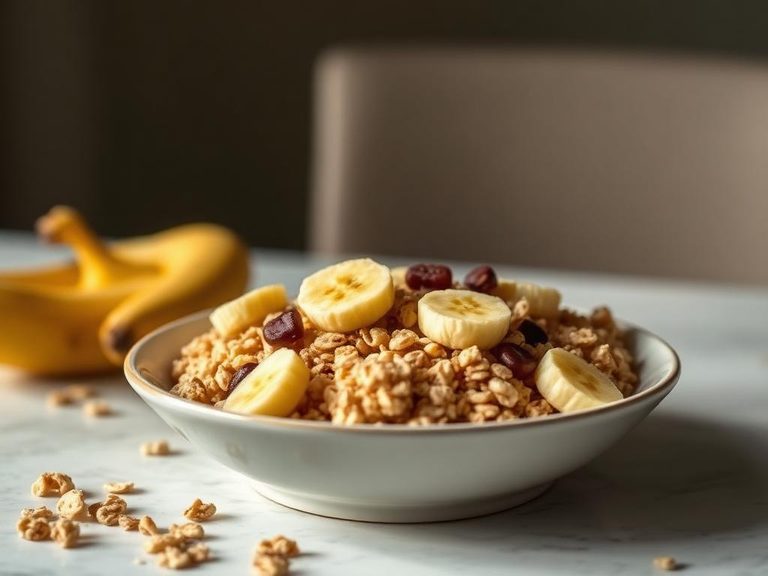
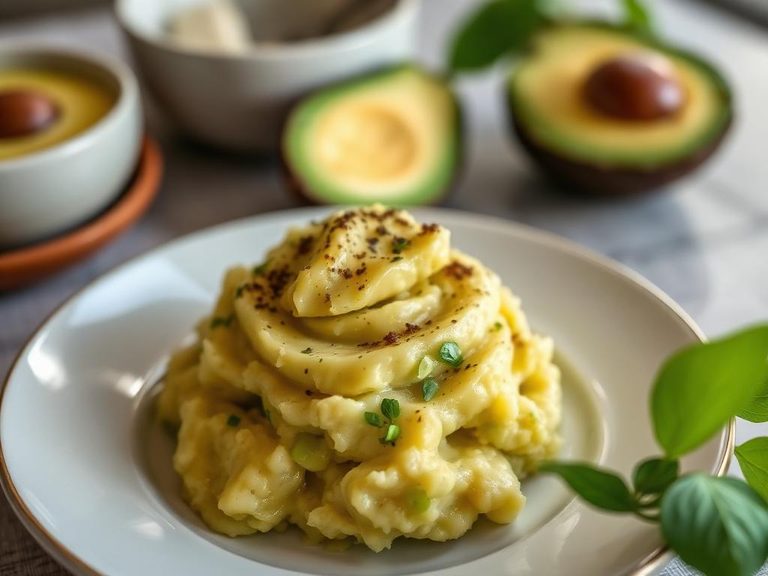
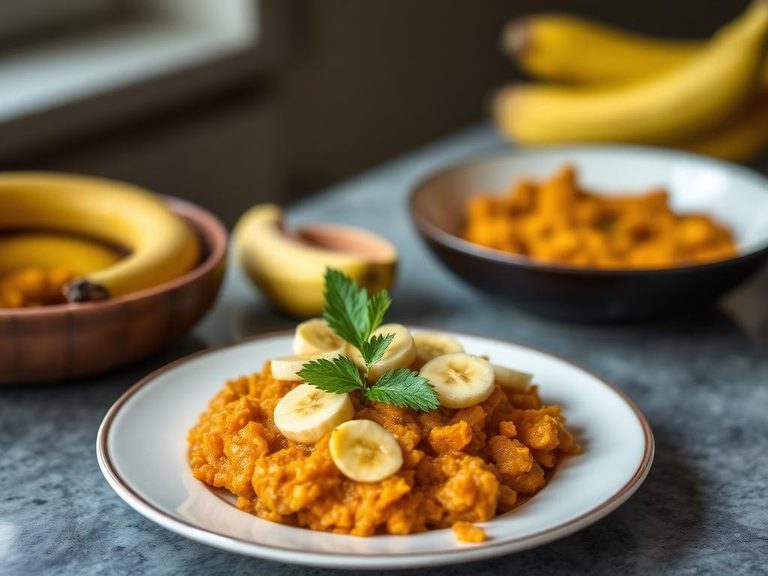
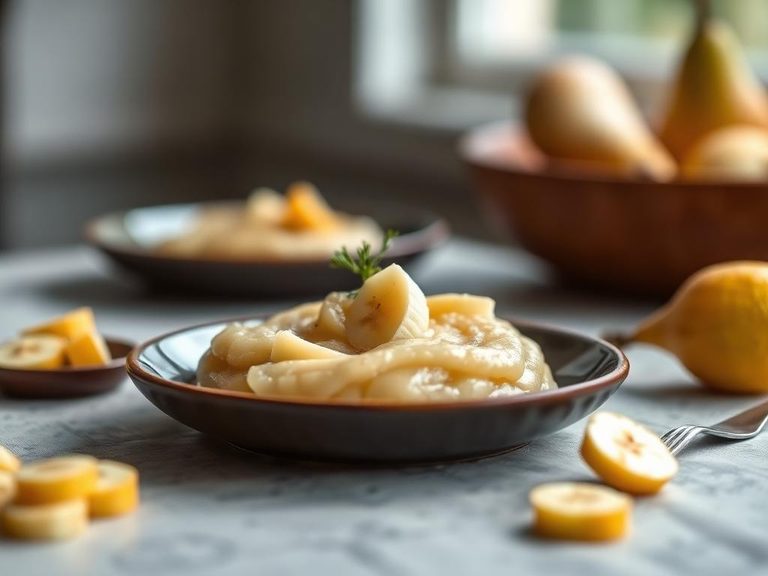
🌍 Where it's eaten
💡 Did you know?
The Cavendish banana, which is likely the variety used in most commercial baby foods, was originally cultivated in the UK in the 1830s as a greenhouse curiosity before becoming the world's dominant banana variety.
Full nutrition (USDA data · scales with serving)
| Water | 76.7 g |
| Energy | 91.0 kcal |
| Protein | 1.0 g |
| Total lipid (fat) | 0.20 g |
| Carbohydrate, by difference | 21.3 g |
| Fiber, total dietary | 1.6 g |
| Total Sugars | 11.4 g |
| Calcium, Ca | 4.0 mg |
| Iron, Fe | 0.30 mg |
| Magnesium, Mg | 26.0 mg |
| Phosphorus, P | 20.0 mg |
| Potassium, K | 290 mg |
| Sodium, Na | 2.0 mg |
| Zinc, Zn | 0.05 mg |
| Copper, Cu | 0.04 mg |
| Selenium, Se | 1.1 ug |
| Vitamin C, total ascorbic acid | 21.9 mg |
| Thiamin | 0.02 mg |
| Riboflavin | 0.06 mg |
| Niacin | 0.54 mg |
| Vitamin B-6 | 0.26 mg |
| Folate, total | 17.0 ug |
| Folic acid | 0.00 ug |
| Folate, food | 17.0 ug |
| Folate, DFE | 17.0 ug |
| Choline, total | 4.1 mg |
| Vitamin B-12 | 0.00 ug |
| Vitamin B-12, added | 0.00 ug |
| Vitamin A, RAE | 0.00 ug |
| Retinol | 0.00 ug |
| Carotene, beta | 2.0 ug |
| Carotene, alpha | 2.0 ug |
| Cryptoxanthin, beta | 0.00 ug |
| Lycopene | 0.00 ug |
| Lutein + zeaxanthin | 20.0 ug |
| Vitamin E (alpha-tocopherol) | 0.25 mg |
| Vitamin E, added | 0.00 mg |
| Vitamin D (D2 + D3) | 0.00 ug |
| Vitamin K (phylloquinone) | 0.50 ug |
| Alcohol, ethyl | 0.00 g |
| Caffeine | 0.00 mg |
| Theobromine | 0.00 mg |
Fat & fatty acid profile (per 100g)
| Fatty acids, total saturated | 0.07 g |
| SFA 4:0 | 0.00 g |
| SFA 6:0 | 0.00 g |
| SFA 8:0 | 0.00 g |
| SFA 10:0 | 0.00 g |
| SFA 12:0 | 0.00 g |
| SFA 14:0 | 0.00 g |
| SFA 16:0 | 0.05 g |
| SFA 18:0 | 0.00 g |
| Fatty acids, total monounsaturated | 0.03 g |
| MUFA 16:1 | 0.00 g |
| MUFA 18:1 | 0.02 g |
| MUFA 20:1 | 0.00 g |
| MUFA 22:1 | 0.00 g |
| Fatty acids, total polyunsaturated | 0.04 g |
| PUFA 18:2 | 0.03 g |
| PUFA 18:3 | 0.01 g |
| PUFA 18:4 | 0.00 g |
| PUFA 20:4 | 0.00 g |
| PUFA 20:5 n-3 (EPA) | 0.00 g |
| PUFA 22:5 n-3 (DPA) | 0.00 g |
| PUFA 22:6 n-3 (DHA) | 0.00 g |
| Cholesterol | 0.00 mg |
Amino acid profile (per 100g)
Estimated from Babyfood, dinner, chicken stew, toddler — USDA does not publish this profile for Baby Toddler bananas.
| Tryptophan | 0.06 g |
| Threonine | 0.22 g |
| Isoleucine | 0.26 g |
| Leucine | 0.41 g |
| Lysine | 0.41 g |
| Methionine | 0.11 g |
| Cystine | 0.05 g |
| Phenylalanine | 0.21 g |
| Tyrosine | 0.17 g |
| Valine | 0.29 g |
| Arginine | 0.33 g |
| Histidine | 0.13 g |
| Alanine | 0.30 g |
| Aspartic acid | 0.47 g |
| Glutamic acid | 0.90 g |
| Glycine | 0.29 g |
| Proline | 0.35 g |
| Serine | 0.21 g |
FAQ
When can I start giving my baby banana puree?
Stage 1 banana puree is typically introduced when a baby starts solids, around 4-6 months of age, as advised by your pediatrician.
Is the sugar in banana puree bad for my baby?
The sugar is naturally occurring fructose from the fruit itself. The key is portion control and pairing it with protein or fat (like yogurt) to create a more balanced snack and avoid energy spikes.
Can I freeze homemade banana puree?
Yes, mashed ripe banana freezes well. Portion it into ice cube trays, freeze until solid, then transfer to a bag. It may darken slightly but is still safe to eat.
Nutrient density (calculated · NRF9.3)
Nutrient Rich Foods index: beneficial nutrients (protein, fiber, vitamins, minerals) minus saturated fat, added sugar & sodium, per 100 kcal.
NRF9.3 index — Fulgoni, Keast & Drewnowski, 2009. Computed from USDA nutrients.
Weight-loss friendliness (composite index)
Energy density 0.91 kcal/g · 4% calories from protein · 1.6 g fiber · 11.4 g sugar per 100 g.
Composite of energy density (Rolls et al., 1999), protein & fiber satiety, minus sugar. A calculated heuristic — ranks satiety-per-calorie, not a clinical measure.
Dietary load (calculated from USDA values)
Potential renal acid load. Positive = acid-forming, negative = alkaline-forming.
Sodium-to-potassium ratio: 0.01 (lower is better — aim for ≤ 1)
Sodium:potassium per WHO potassium guidance. Computed from USDA nutrients.