

Apricot, dried
Common food

Photo: Wikipedia
Dried apricots are the sun-kissed, chewy jewels of the stone fruit world, with a concentrated, honey-like sweetness and a tender, slightly sticky texture. They are a powerhouse of natural energy, offering a potent hit of carbohydrates and a notable amount of dietary fiber in every bite.
Calorie split: 5% protein · 93% carbs · 2% fat
↓ Full nutrition💚 Why it's loved
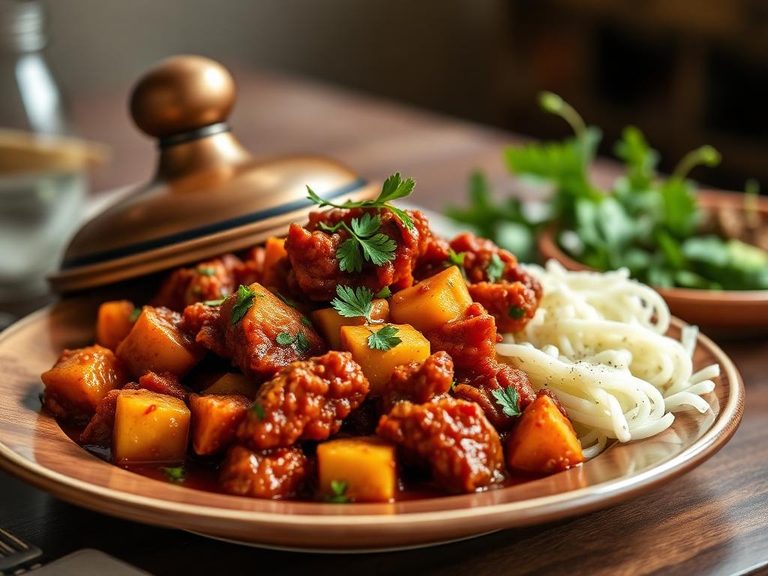
People adore them for their intense, caramelized sweetness and satisfying chew, making them a perfect natural candy. Their versatility shines in both sweet and savory dishes, from trail mixes to tagines.
⚠️ Watch-outs & how to enjoy it better
Their high natural sugar content (over 50g per 100g) can cause blood sugar spikes if eaten in large quantities. To counteract this, pair them with a source of protein or fat (like nuts or yogurt) and practice portion control. Some commercially dried apricots contain added sulfites, which can trigger reactions in sensitive individuals; look for unsulfured varieties if concerned.
Key benefits
- Excellent source of dietary fiber for digestive health.
- Rich in potassium, supporting normal blood pressure and muscle function.
- Provides a quick, natural energy boost from complex carbs and sugars.
- Contains beta-carotene, an antioxidant that gives them their orange hue.
- A convenient, shelf-stable fruit for snacking and cooking.
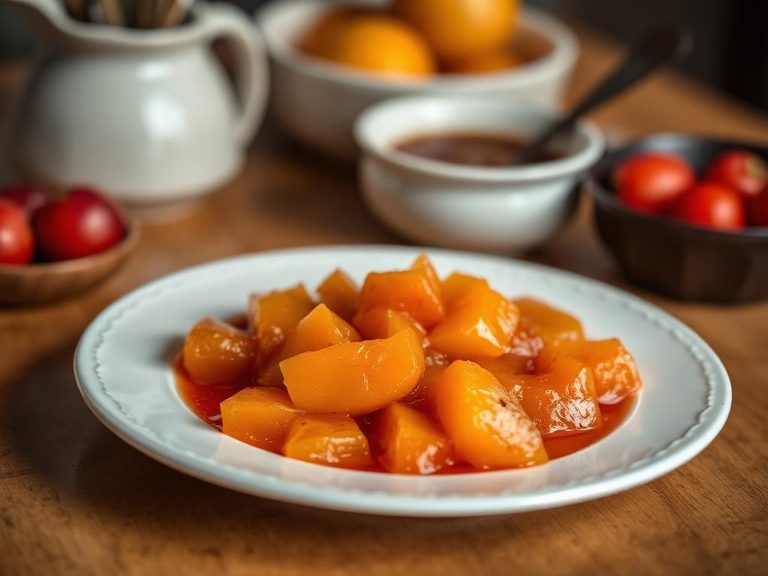
🍽️ Popular dishes


🌍 Where it's eaten
💡 Did you know?
The vibrant orange color of most commercially sold dried apricots is preserved by a treatment with sulfur dioxide; unsulfured apricots dry to a dark brown or black color but are just as nutritious.
Full nutrition (USDA data · scales with serving)
| Water | 30.9 g |
| Energy | 241 kcal |
| Protein | 3.4 g |
| Total lipid (fat) | 0.51 g |
| Carbohydrate, by difference | 62.6 g |
| Fiber, total dietary | 7.3 g |
| Total Sugars | 53.4 g |
| Calcium, Ca | 55.0 mg |
| Iron, Fe | 2.7 mg |
| Magnesium, Mg | 32.0 mg |
| Phosphorus, P | 71.0 mg |
| Potassium, K | 1162 mg |
| Sodium, Na | 10.0 mg |
| Zinc, Zn | 0.39 mg |
| Copper, Cu | 0.34 mg |
| Selenium, Se | 2.2 ug |
| Vitamin C, total ascorbic acid | 1.0 mg |
| Thiamin | 0.01 mg |
| Riboflavin | 0.07 mg |
| Niacin | 2.6 mg |
| Vitamin B-6 | 0.14 mg |
| Folate, total | 10.0 ug |
| Folic acid | 0.00 ug |
| Folate, food | 10.0 ug |
| Folate, DFE | 10.0 ug |
| Choline, total | 13.9 mg |
| Vitamin B-12 | 0.00 ug |
| Vitamin B-12, added | 0.00 ug |
| Vitamin A, RAE | 180 ug |
| Retinol | 0.00 ug |
| Carotene, beta | 2163 ug |
| Carotene, alpha | 0.00 ug |
| Cryptoxanthin, beta | 0.00 ug |
| Lycopene | 0.00 ug |
| Lutein + zeaxanthin | 0.00 ug |
| Vitamin E (alpha-tocopherol) | 4.3 mg |
| Vitamin E, added | 0.00 mg |
| Vitamin D (D2 + D3) | 0.00 ug |
| Vitamin K (phylloquinone) | 3.1 ug |
| Alcohol, ethyl | 0.00 g |
| Caffeine | 0.00 mg |
| Theobromine | 0.00 mg |
Fat & fatty acid profile (per 100g)
| Fatty acids, total saturated | 0.02 g |
| SFA 4:0 | 0.00 g |
| SFA 6:0 | 0.00 g |
| SFA 8:0 | 0.00 g |
| SFA 10:0 | 0.00 g |
| SFA 12:0 | 0.00 g |
| SFA 14:0 | 0.00 g |
| SFA 16:0 | 0.02 g |
| SFA 18:0 | 0.00 g |
| Fatty acids, total monounsaturated | 0.07 g |
| MUFA 16:1 | 0.00 g |
| MUFA 18:1 | 0.07 g |
| MUFA 20:1 | 0.00 g |
| MUFA 22:1 | 0.00 g |
| Fatty acids, total polyunsaturated | 0.07 g |
| PUFA 18:2 | 0.07 g |
| PUFA 18:3 | 0.00 g |
| PUFA 18:4 | 0.00 g |
| PUFA 20:4 | 0.00 g |
| PUFA 20:5 n-3 (EPA) | 0.00 g |
| PUFA 22:5 n-3 (DPA) | 0.00 g |
| PUFA 22:6 n-3 (DHA) | 0.00 g |
| Cholesterol | 0.00 mg |
Amino acid profile (per 100g)
Estimated from Apricots, dried, sulfured, stewed, with added sugar — USDA does not publish this profile for Apricot.
| Tryptophan | 0.02 g |
| Threonine | 0.04 g |
| Isoleucine | 0.04 g |
| Leucine | 0.07 g |
| Lysine | 0.08 g |
| Methionine | 0.01 g |
| Cystine | 0.00 g |
| Phenylalanine | 0.05 g |
| Tyrosine | 0.03 g |
| Valine | 0.04 g |
| Arginine | 0.04 g |
| Histidine | 0.02 g |
| Alanine | 0.06 g |
| Aspartic acid | 0.27 g |
| Glutamic acid | 0.12 g |
| Glycine | 0.04 g |
| Proline | 0.07 g |
| Serine | 0.07 g |
FAQ
Are dried apricots as healthy as fresh ones?
Dried apricots are a concentrated source of nutrients like fiber, potassium, and iron, but also of calories and sugar. They are a healthy part of a diet when eaten in moderation, unlike fresh fruit, which is more voluminous and hydrating.
Why are some dried apricots orange and some brown?
The bright orange ones are typically treated with sulfur dioxide to preserve color and extend shelf life. The dark brown or black ones are unsulfured and have undergone natural oxidation during drying.
How should I store dried apricots?
For short-term use, keep them in an airtight container in a cool, dark pantry. For longer storage (up to a year), refrigerate or freeze them to maintain freshness and prevent them from becoming too hard.
Nutrient density (calculated · NRF9.3)
Nutrient Rich Foods index: beneficial nutrients (protein, fiber, vitamins, minerals) minus saturated fat, added sugar & sodium, per 100 kcal.
NRF9.3 index — Fulgoni, Keast & Drewnowski, 2009. Computed from USDA nutrients.
Weight-loss friendliness (composite index)
Energy density 2.41 kcal/g · 6% calories from protein · 7.3 g fiber · 53.4 g sugar per 100 g.
Composite of energy density (Rolls et al., 1999), protein & fiber satiety, minus sugar. A calculated heuristic — ranks satiety-per-calorie, not a clinical measure.
Dietary load (calculated from USDA values)
Potential renal acid load. Positive = acid-forming, negative = alkaline-forming.
Sodium-to-potassium ratio: 0.01 (lower is better — aim for ≤ 1)
Sodium:potassium per WHO potassium guidance. Computed from USDA nutrients.