

Apple, baked
Common food

Photo: Wikipedia
A baked apple transforms into a tender, caramelized jewel, its flesh softening to a custard-like consistency while its natural sugars concentrate into a deep, honeyed sweetness. This simple preparation highlights the fruit's warm, spiced notes, often enhanced with cinnamon or nutmeg, creating a comforting dessert with a satisfying, jammy texture. Nutritionally, it's a low-calorie, high-fiber treat that delivers a significant portion of your daily sugar intake from natural sources.
Calorie split: 1% protein · 76% carbs · 23% fat
↓ Full nutrition💚 Why it's loved
People adore baked apples for their profound comfort-food appeal and the way they fill a kitchen with a nostalgic, autumnal aroma. Their versatility is key—they can be a simple, healthy snack or a decadent dessert with toppings like ice cream or caramel.
⚠️ Watch-outs & how to enjoy it better
The high natural sugar content can cause rapid blood-sugar spikes, which is a consideration for diabetics or those monitoring glycemic response. To counteract this, pair the baked apple with a source of protein or healthy fat, like a dollop of Greek yogurt or a handful of nuts, to slow sugar absorption.
Key benefits
- Excellent source of dietary fiber, aiding digestion.
- Rich in antioxidants, particularly quercetin, from the skin.
- Provides a quick, natural energy boost from carbohydrates.
- Low in protein and fat, making it a light dessert option.
🍽️ Popular dishes
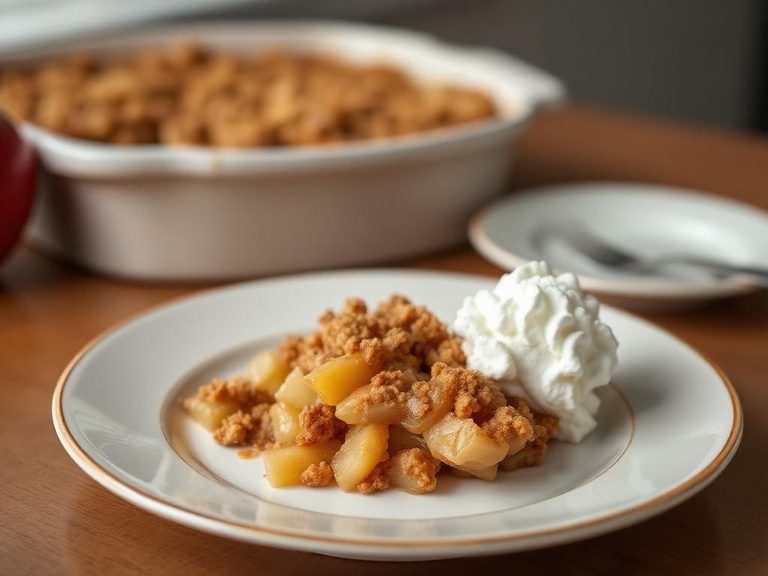
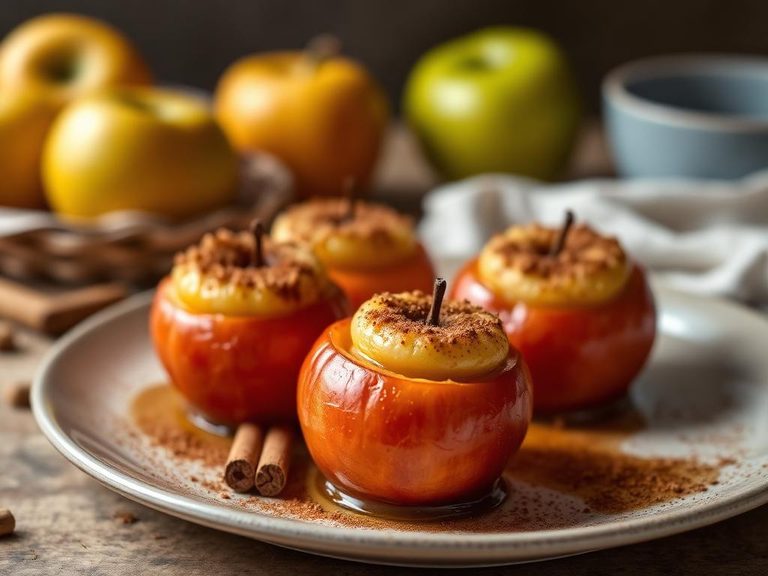
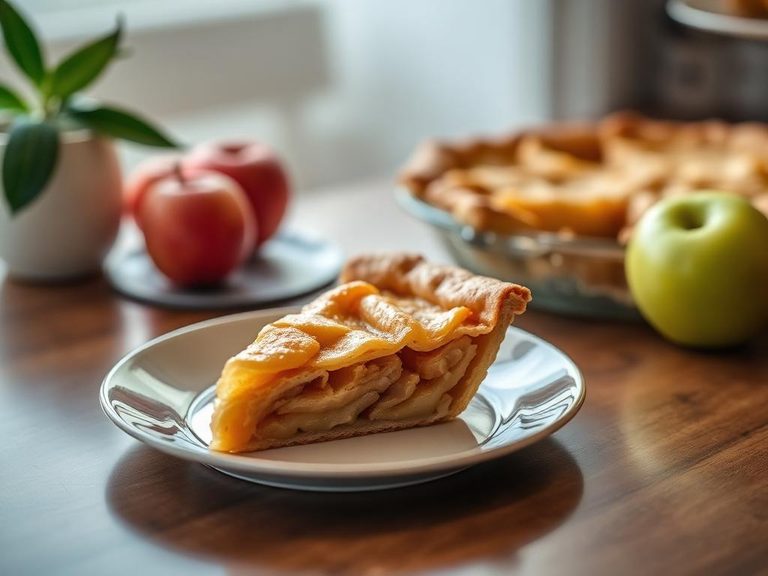
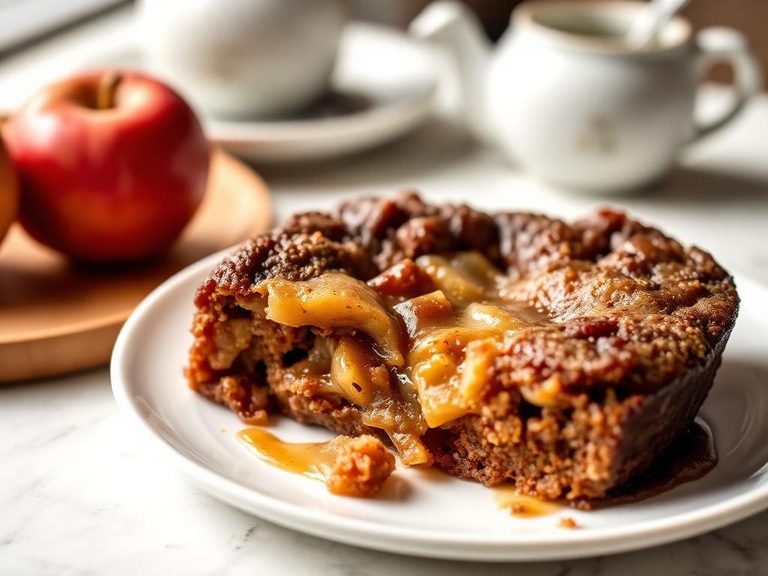
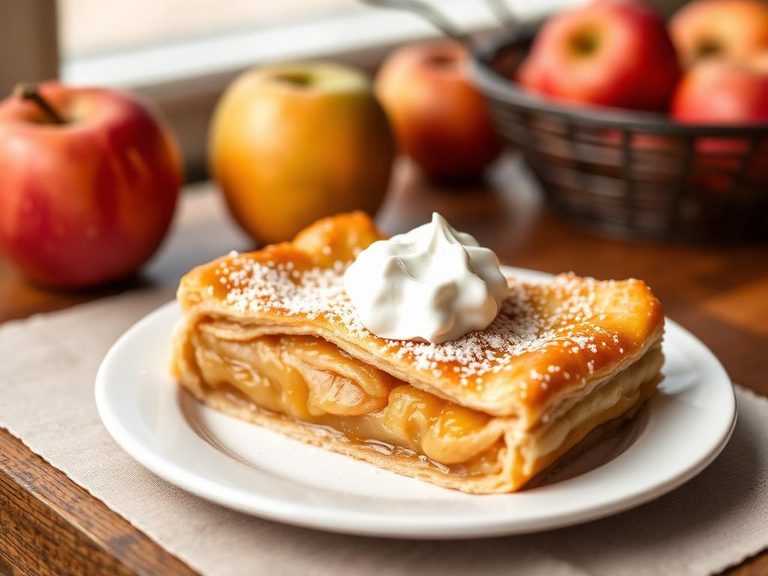
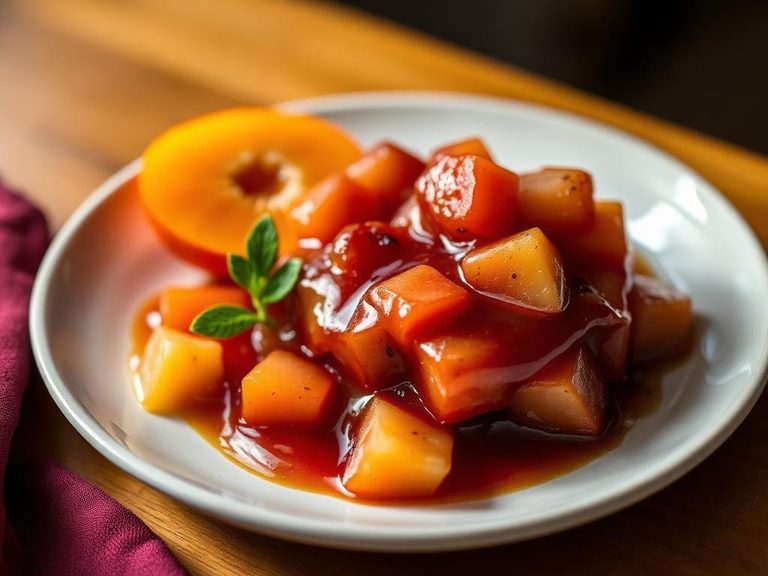
🌍 Where it's eaten
💡 Did you know?
The practice of baking apples whole in their skins is a centuries-old technique originally used as a method of preservation and to make tough, late-season apples more palatable.
Full nutrition (USDA data · scales with serving)
| Water | 73.6 g |
| Energy | 113 kcal |
| Protein | 0.32 g |
| Total lipid (fat) | 3.1 g |
| Carbohydrate, by difference | 22.7 g |
| Fiber, total dietary | 2.5 g |
| Total Sugars | 19.0 g |
| Calcium, Ca | 14.0 mg |
| Iron, Fe | 0.19 mg |
| Magnesium, Mg | 6.0 mg |
| Phosphorus, P | 13.0 mg |
| Potassium, K | 114 mg |
| Sodium, Na | 4.0 mg |
| Zinc, Zn | 0.05 mg |
| Copper, Cu | 0.03 mg |
| Selenium, Se | 0.10 ug |
| Vitamin C, total ascorbic acid | 3.9 mg |
| Thiamin | 0.01 mg |
| Riboflavin | 0.03 mg |
| Niacin | 0.10 mg |
| Vitamin B-6 | 0.04 mg |
| Folate, total | 2.0 ug |
| Folic acid | 0.00 ug |
| Folate, food | 2.0 ug |
| Folate, DFE | 2.0 ug |
| Choline, total | 4.5 mg |
| Vitamin B-12 | 0.00 ug |
| Vitamin B-12, added | 0.00 ug |
| Vitamin A, RAE | 29.0 ug |
| Retinol | 26.0 ug |
| Carotene, beta | 30.0 ug |
| Carotene, alpha | 0.00 ug |
| Cryptoxanthin, beta | 10.0 ug |
| Lycopene | 0.00 ug |
| Lutein + zeaxanthin | 26.0 ug |
| Vitamin E (alpha-tocopherol) | 0.19 mg |
| Vitamin E, added | 0.00 mg |
| Vitamin D (D2 + D3) | 0.00 ug |
| Vitamin K (phylloquinone) | 2.6 ug |
| Alcohol, ethyl | 0.00 g |
| Caffeine | 0.00 mg |
| Theobromine | 0.00 mg |
Fat & fatty acid profile (per 100g)
| Fatty acids, total saturated | 1.6 g |
| SFA 4:0 | 0.07 g |
| SFA 6:0 | 0.05 g |
| SFA 8:0 | 0.03 g |
| SFA 10:0 | 0.07 g |
| SFA 12:0 | 0.08 g |
| SFA 14:0 | 0.25 g |
| SFA 16:0 | 0.77 g |
| SFA 18:0 | 0.27 g |
| Fatty acids, total monounsaturated | 0.60 g |
| MUFA 16:1 | 0.04 g |
| MUFA 18:1 | 0.54 g |
| MUFA 20:1 | 0.00 g |
| MUFA 22:1 | 0.00 g |
| Fatty acids, total polyunsaturated | 0.14 g |
| PUFA 18:2 | 0.13 g |
| PUFA 18:3 | 0.02 g |
| PUFA 18:4 | 0.00 g |
| PUFA 20:4 | 0.00 g |
| PUFA 20:5 n-3 (EPA) | 0.00 g |
| PUFA 22:5 n-3 (DPA) | 0.00 g |
| PUFA 22:6 n-3 (DHA) | 0.00 g |
| Cholesterol | 8.0 mg |
Amino acid profile (per 100g)
Estimated from Pie, Dutch Apple, Commercially Prepared — USDA does not publish this profile for Apple.
| Tryptophan | 0.03 g |
| Threonine | 0.06 g |
| Isoleucine | 0.08 g |
| Leucine | 0.16 g |
| Lysine | 0.04 g |
| Methionine | 0.05 g |
| Cystine | 0.06 g |
| Phenylalanine | 0.10 g |
| Tyrosine | 0.05 g |
| Valine | 0.10 g |
| Arginine | 0.08 g |
| Histidine | 0.05 g |
| Alanine | 0.07 g |
| Aspartic acid | 0.12 g |
| Glutamic acid | 0.74 g |
| Glycine | 0.08 g |
| Proline | 0.25 g |
| Serine | 0.10 g |
FAQ
Do I need to peel the apple before baking?
No, the skin is edible and contains a large portion of the fiber and antioxidants. It also helps the apple hold its shape during baking.
What's the best apple variety for baking?
Firm, tart varieties like Granny Smith, Honeycrisp, or Braeburn hold their shape well and provide a nice flavor contrast to added sweeteners.
How can I prevent the baked apple from becoming mushy?
Choose a firm apple, avoid over-baking, and consider adding a small amount of acid like lemon juice to the baking liquid to help the pectin set.
Nutrient density (calculated · NRF9.3)
Nutrient Rich Foods index: beneficial nutrients (protein, fiber, vitamins, minerals) minus saturated fat, added sugar & sodium, per 100 kcal.
NRF9.3 index — Fulgoni, Keast & Drewnowski, 2009. Computed from USDA nutrients.
Weight-loss friendliness (composite index)
Energy density 1.13 kcal/g · 1% calories from protein · 2.5 g fiber · 19.0 g sugar per 100 g.
Composite of energy density (Rolls et al., 1999), protein & fiber satiety, minus sugar. A calculated heuristic — ranks satiety-per-calorie, not a clinical measure.
Dietary load (calculated from USDA values)
Potential renal acid load. Positive = acid-forming, negative = alkaline-forming.
Sodium-to-potassium ratio: 0.04 (lower is better — aim for ≤ 1)
Sodium:potassium per WHO potassium guidance. Computed from USDA nutrients.