Crackers, matzo, plain
Whole food · Baked Products
Matzo is a thin, crisp, unleavened flatbread with a dry, cracker-like texture and a subtly toasty, wheaty flavor. Its extreme simplicity—just flour and water—belies its dense nutritional profile, packing a remarkable 10 grams of protein and nearly 84 grams of carbohydrates per 100 grams. It serves as a foundational staple, particularly during the Jewish holiday of Passover, where its stark, unadorned character is both a ritual requirement and a culinary canvas.
💚 Why it's loved
People love matzo for its satisfying crunch and its role as a versatile base for both sweet and savory toppings, from cream cheese and jam to charoset. It holds deep cultural significance, connecting generations through the traditions of Passover and the shared experience of its distinct, humble flavor.
⚠️ Watch-outs & how to enjoy it better
Its high carbohydrate content and lack of fat can lead to rapid blood-sugar spikes, especially when eaten plain. To counteract this, pair it with protein or healthy fats like hummus, avocado, or hard-boiled eggs to slow digestion and promote satiety. Those with gluten sensitivity or celiac disease must avoid it entirely.
Key benefits
- High in carbohydrates for quick energy
- Good source of plant-based protein
- Very low in fat
- Provides dietary fiber
- Simple, minimal ingredients
🍽️ Popular dishes
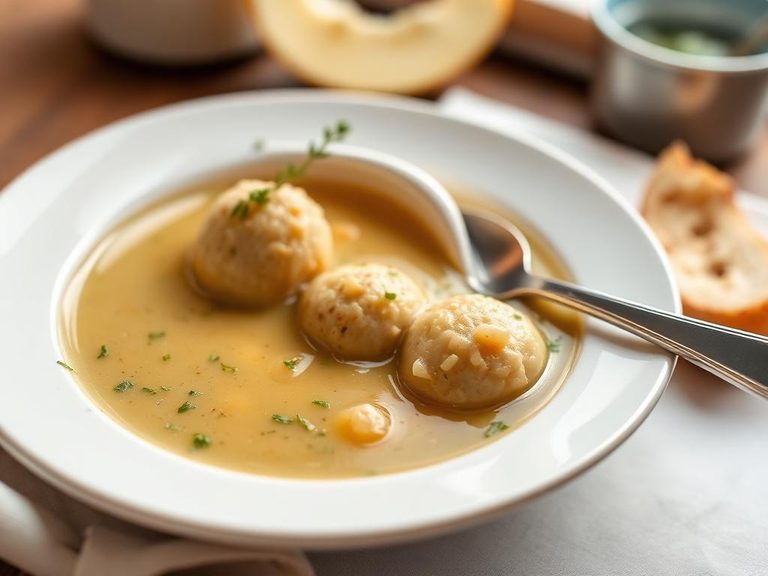
🌍 Where it's eaten
💡 Did you know?
During Passover, the dough for matzo must be baked within 18 minutes of mixing to prevent any leavening, a rule that gives the bread its characteristically flat, dense texture.
Full nutrition (scales with serving)
| Water | 4.3 g |
| Energy | 395 kcal |
| Energy | 1653 kj |
| Protein | 10.0 g |
| Total lipid (fat) | 1.4 g |
| Ash | 0.60 g |
| Carbohydrate, by difference | 83.7 g |
| Fiber, total dietary | 3.0 g |
| Total Sugars | 0.29 g |
| Calcium, Ca | 13.0 mg |
| Iron, Fe | 3.2 mg |
| Magnesium, Mg | 25.0 mg |
| Phosphorus, P | 89.0 mg |
| Potassium, K | 112 mg |
| Sodium, Na | 0.00 mg |
| Zinc, Zn | 0.68 mg |
| Copper, Cu | 0.06 mg |
| Manganese, Mn | 0.65 mg |
| Selenium, Se | 36.9 ug |
| Vitamin C, total ascorbic acid | 0.00 mg |
| Thiamin | 0.39 mg |
| Riboflavin | 0.29 mg |
| Niacin | 3.9 mg |
| Pantothenic acid | 0.44 mg |
| Vitamin B-6 | 0.12 mg |
| Folate, total | 17.0 ug |
| Folic acid | 0.00 ug |
| Folate, food | 17.0 ug |
| Folate, DFE | 17.0 ug |
| Choline, total | 10.8 mg |
| Vitamin B-12 | 0.00 ug |
| Vitamin B-12, added | 0.00 ug |
| Vitamin A, RAE | 0.00 ug |
| Retinol | 0.00 ug |
| Carotene, beta | 0.00 ug |
| Carotene, alpha | 0.00 ug |
| Cryptoxanthin, beta | 0.00 ug |
| Vitamin A, IU | 0.00 iu |
| Lycopene | 0.00 ug |
| Lutein + zeaxanthin | 18.0 ug |
| Vitamin E (alpha-tocopherol) | 0.06 mg |
| Vitamin E, added | 0.00 mg |
| Vitamin D (D2 + D3), International Units | 0.00 iu |
| Vitamin D (D2 + D3) | 0.00 ug |
| Vitamin K (phylloquinone) | 0.30 ug |
| Alcohol, ethyl | 0.00 g |
| Caffeine | 0.00 mg |
| Theobromine | 0.00 mg |
Fat & fatty acid profile (per 100g)
| Fatty acids, total saturated | 0.23 g |
| SFA 4:0 | 0.00 g |
| SFA 6:0 | 0.00 g |
| SFA 8:0 | 0.00 g |
| SFA 10:0 | 0.00 g |
| SFA 12:0 | 0.00 g |
| SFA 14:0 | 0.00 g |
| SFA 16:0 | 0.22 g |
| SFA 18:0 | 0.01 g |
| Fatty acids, total monounsaturated | 0.13 g |
| MUFA 16:1 | 0.00 g |
| MUFA 18:1 | 0.13 g |
| MUFA 20:1 | 0.00 g |
| MUFA 22:1 | 0.00 g |
| Fatty acids, total polyunsaturated | 0.60 g |
| PUFA 18:2 | 0.57 g |
| PUFA 18:3 | 0.03 g |
| PUFA 18:4 | 0.00 g |
| PUFA 20:4 | 0.00 g |
| PUFA 20:5 n-3 (EPA) | 0.00 g |
| PUFA 22:5 n-3 (DPA) | 0.00 g |
| PUFA 22:6 n-3 (DHA) | 0.00 g |
| Cholesterol | 0.00 mg |
Amino acid profile (per 100g)
| Tryptophan | 0.12 g |
| Threonine | 0.27 g |
| Isoleucine | 0.37 g |
| Leucine | 0.69 g |
| Lysine | 0.19 g |
| Methionine | 0.18 g |
| Cystine | 0.23 g |
| Phenylalanine | 0.49 g |
| Tyrosine | 0.27 g |
| Valine | 0.42 g |
| Arginine | 0.35 g |
| Histidine | 0.21 g |
| Alanine | 0.31 g |
| Aspartic acid | 0.40 g |
| Glutamic acid | 3.5 g |
| Glycine | 0.34 g |
| Proline | 1.2 g |
| Serine | 0.48 g |
FAQ
Is matzo the same as a cracker?
While it shares a similar crisp texture, matzo is a specific type of unleavened flatbread with religious and cultural significance, made from a simple dough of flour and water without any leavening agents.
Can I eat matzo if I'm gluten intolerant?
No, traditional matzo is made from wheat flour and contains gluten. However, there are gluten-free versions available made from alternative flours like potato or almond.
Why is matzo eaten during Passover?
Matzo is eaten during Passover to commemorate the Israelites' hasty departure from Egypt, where they did not have time to let their bread rise, leaving only unleavened dough.