Salad dressing, russian dressing, low calorie
Whole food · Fats and Oils

Photo: Wikipedia
A tangy, slightly sweet, and creamy tomato-based dressing with a vibrant orange-red hue. It offers a smooth, pourable texture that clings lightly to greens, delivering a punch of flavor with a notable 21.87g of sugar per 100g.
💚 Why it's loved
People love it for its unique sweet-and-savory profile that instantly elevates a simple salad or coleslaw. It's a nostalgic staple in American delis and diners, offering a familiar, comforting taste.
⚠️ Watch-outs & how to enjoy it better
The high sugar content (21.87g per 100g) can cause rapid blood-sugar spikes, making it less ideal for those managing diabetes or on low-sugar diets. To counteract this, use it sparingly as a flavor accent, and pair your salad with a source of protein (like grilled chicken or chickpeas) and healthy fat (like avocado or nuts) to slow sugar absorption.
Key benefits
- Low in fat (4g per 100g)
- Very low in protein and fiber
- Provides quick energy from carbohydrates
- Convenient, ready-to-use flavor boost
🍽️ Popular dishes
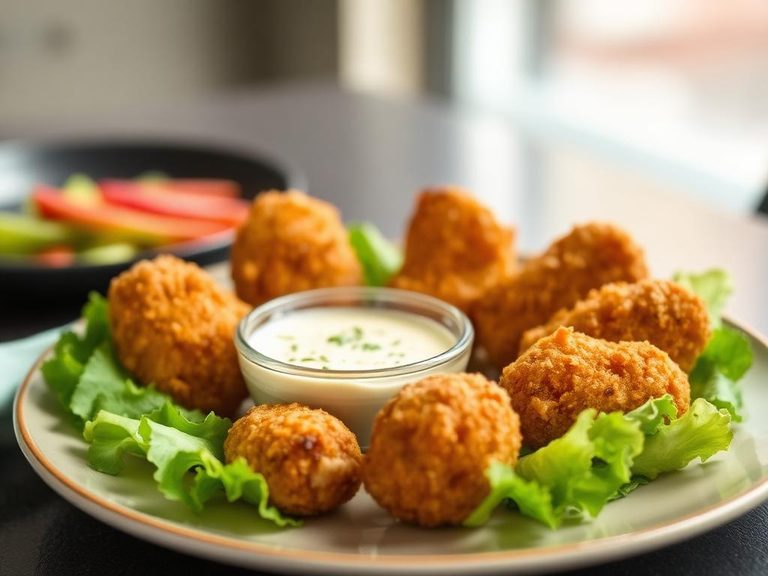
🌍 Where it's eaten
💡 Did you know?
Despite its name, Russian dressing was likely invented in the United States, possibly in New Hampshire, and is thought to have been named for the Russian-sounding 'Thousand Island' dressing or the use of caviar as a garnish in some early versions.
Full nutrition (scales with serving)
| Water | 65.0 g |
| Energy | 141 kcal |
| Energy | 592 kj |
| Protein | 0.50 g |
| Total lipid (fat) | 4.0 g |
| Ash | 2.9 g |
| Carbohydrate, by difference | 27.6 g |
| Fiber, total dietary | 0.30 g |
| Total Sugars | 21.9 g |
| Calcium, Ca | 19.0 mg |
| Iron, Fe | 0.60 mg |
| Magnesium, Mg | 0.00 mg |
| Phosphorus, P | 37.0 mg |
| Potassium, K | 157 mg |
| Sodium, Na | 868 mg |
| Zinc, Zn | 0.10 mg |
| Copper, Cu | 0.01 mg |
| Selenium, Se | 1.6 ug |
| Vitamin C, total ascorbic acid | 6.0 mg |
| Thiamin | 0.01 mg |
| Riboflavin | 0.01 mg |
| Niacin | 0.00 mg |
| Pantothenic acid | 0.14 mg |
| Vitamin B-6 | 0.01 mg |
| Folate, total | 3.0 ug |
| Folic acid | 0.00 ug |
| Folate, food | 3.0 ug |
| Folate, DFE | 3.0 ug |
| Choline, total | 4.6 mg |
| Vitamin B-12 | 0.12 ug |
| Vitamin B-12, added | 0.00 ug |
| Vitamin A, RAE | 2.0 ug |
| Retinol | 0.00 ug |
| Carotene, beta | 20.0 ug |
| Carotene, alpha | 1.0 ug |
| Cryptoxanthin, beta | 0.00 ug |
| Vitamin A, IU | 33.0 iu |
| Lycopene | 628 ug |
| Lutein + zeaxanthin | 0.00 ug |
| Vitamin E (alpha-tocopherol) | 0.40 mg |
| Vitamin E, added | 0.00 mg |
| Vitamin D (D2 + D3), International Units | 0.00 iu |
| Vitamin D (D2 + D3) | 0.00 ug |
| Vitamin K (phylloquinone) | 6.7 ug |
| Alcohol, ethyl | 0.00 g |
| Caffeine | 0.00 mg |
| Theobromine | 0.00 mg |
Fat & fatty acid profile (per 100g)
| Fatty acids, total saturated | 0.60 g |
| SFA 4:0 | 0.00 g |
| SFA 6:0 | 0.00 g |
| SFA 8:0 | 0.00 g |
| SFA 10:0 | 0.00 g |
| SFA 12:0 | 0.00 g |
| SFA 14:0 | 0.00 g |
| SFA 16:0 | 0.40 g |
| SFA 18:0 | 0.20 g |
| Fatty acids, total monounsaturated | 0.90 g |
| MUFA 16:1 | 0.00 g |
| MUFA 18:1 | 0.90 g |
| MUFA 20:1 | 0.00 g |
| MUFA 22:1 | 0.00 g |
| Fatty acids, total polyunsaturated | 2.3 g |
| PUFA 18:2 | 2.0 g |
| PUFA 18:3 | 0.30 g |
| PUFA 18:4 | 0.00 g |
| PUFA 20:4 | 0.00 g |
| PUFA 20:5 n-3 (EPA) | 0.00 g |
| PUFA 22:5 n-3 (DPA) | 0.00 g |
| PUFA 22:6 n-3 (DHA) | 0.00 g |
| Cholesterol | 6.0 mg |
| Phytosterols | 10.0 mg |
Amino acid profile (per 100g)
| Tryptophan | 0.01 g |
| Threonine | 0.03 g |
| Isoleucine | 0.03 g |
| Leucine | 0.04 g |
| Lysine | 0.03 g |
| Methionine | 0.01 g |
| Cystine | 0.01 g |
| Phenylalanine | 0.02 g |
| Tyrosine | 0.02 g |
| Valine | 0.03 g |
| Arginine | 0.04 g |
| Histidine | 0.01 g |
| Alanine | 0.03 g |
| Aspartic acid | 0.04 g |
| Glutamic acid | 0.06 g |
| Glycine | 0.01 g |
| Proline | 0.02 g |
| Serine | 0.04 g |
FAQ
How is Russian dressing different from Thousand Island dressing?
Russian dressing is typically spicier and less sweet, often containing horseradish or chili sauce, while Thousand Island is sweeter and milder, frequently including chopped pickles or relish.
Is low-calorie Russian dressing a healthy choice?
It is lower in fat than traditional versions but remains high in sugar. It's best used in moderation as a flavor enhancer rather than a primary sauce.
Can I use it in cooking beyond salads?
Yes, it makes a great glaze for roasted meats like chicken or salmon, a base for a quick pasta sauce, or a flavorful dip for vegetable platters.