Shallots, freeze-dried
Whole food · Vegetables and Vegetable Products

Photo: Wikipedia
Freeze-dried shallots are intensely aromatic, crunchy flakes that capture the sweet, delicate essence of fresh shallots without the moisture. The dehydration process concentrates their flavor, resulting in a potent, slightly caramelized onion note with a brittle, airy texture that dissolves quickly. Nutritionally, they are a concentrated source of carbohydrates and fiber, offering a quick flavor boost with minimal fat.
💚 Why it's loved
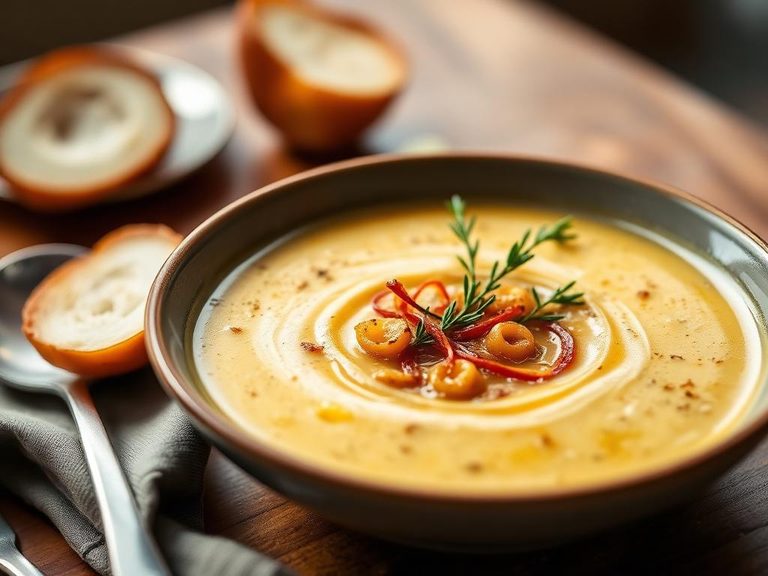
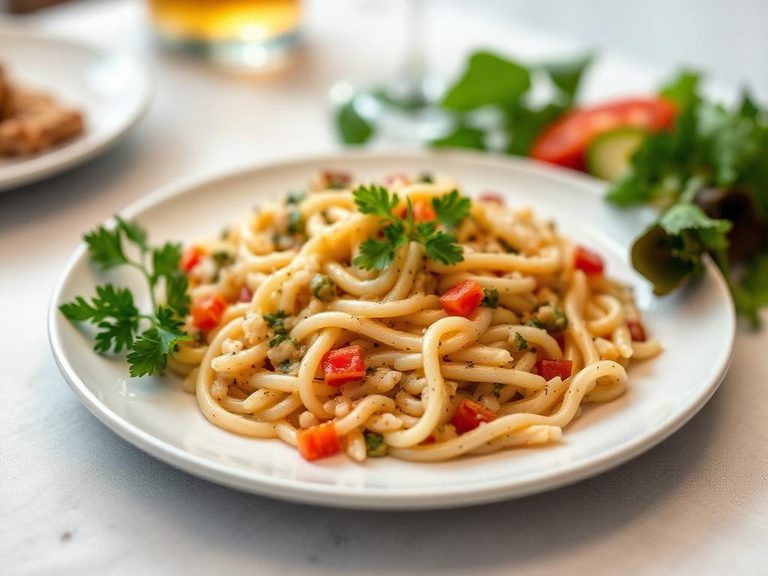
People love freeze-dried shallots for their intense, sweet onion flavor that is more nuanced than dried onion flakes. Their incredible convenience and long shelf life make them a pantry staple for adding a gourmet touch to soups, salads, and sauces instantly.
⚠️ Watch-outs & how to enjoy it better
The high carbohydrate content (80.7g per 100g) can contribute to blood sugar spikes if consumed in large quantities without balancing nutrients. To counteract this, pair them with protein or healthy fats (like nuts or cheese) and use them as a flavor accent rather than a main ingredient, practicing portion control.
Key benefits
- Provides a concentrated source of prebiotic fiber (15.7g per 100g).
- Offers a quick, shelf-stable way to add deep, sweet onion flavor.
- High in carbohydrates for a quick energy source.
- Lightweight and easy to store for long periods.
- Adds texture and flavor to dishes without added fat.
🍽️ Popular dishes
🌍 Where it's eaten
💡 Did you know?
Shallots are botanically classified as a variety of the common onion (Allium cepa) but are often considered a distinct species (Allium cepa var. aggregatum) due to their unique growth habit of producing multiple bulbs from a single bulb.
Full nutrition (scales with serving)
| Water | 2.0 g |
| Energy | 348 kcal |
| Energy | 1457 kj |
| Protein | 12.3 g |
| Total lipid (fat) | 0.50 g |
| Ash | 4.5 g |
| Carbohydrate, by difference | 80.7 g |
| Fiber, total dietary | 15.7 g |
| Total Sugars | 38.2 g |
| Calcium, Ca | 183 mg |
| Iron, Fe | 6.0 mg |
| Magnesium, Mg | 104 mg |
| Phosphorus, P | 296 mg |
| Potassium, K | 1650 mg |
| Sodium, Na | 59.0 mg |
| Zinc, Zn | 1.9 mg |
| Copper, Cu | 0.42 mg |
| Manganese, Mn | 1.4 mg |
| Selenium, Se | 5.7 ug |
| Vitamin C, total ascorbic acid | 39.0 mg |
| Thiamin | 0.30 mg |
| Riboflavin | 0.10 mg |
| Niacin | 1.0 mg |
| Pantothenic acid | 1.4 mg |
| Vitamin B-6 | 1.7 mg |
| Folate, total | 116 ug |
| Folic acid | 0.00 ug |
| Folate, food | 116 ug |
| Folate, DFE | 116 ug |
| Choline, total | 55.0 mg |
| Vitamin B-12 | 0.00 ug |
| Vitamin A, RAE | 1.0 ug |
| Retinol | 0.00 ug |
| Carotene, beta | 13.0 ug |
| Carotene, alpha | 0.00 ug |
| Cryptoxanthin, beta | 0.00 ug |
| Vitamin A, IU | 21.0 iu |
| Lycopene | 0.00 ug |
| Lutein + zeaxanthin | 38.0 ug |
| Vitamin E (alpha-tocopherol) | 0.18 mg |
| Vitamin D (D2 + D3), International Units | 0.00 iu |
| Vitamin D (D2 + D3) | 0.00 ug |
| Vitamin K (phylloquinone) | 3.9 ug |
| Alcohol, ethyl | 0.00 g |
| Caffeine | 0.00 mg |
| Theobromine | 0.00 mg |
Fat & fatty acid profile (per 100g)
| Fatty acids, total saturated | 0.08 g |
| SFA 4:0 | 0.00 g |
| SFA 6:0 | 0.00 g |
| SFA 8:0 | 0.00 g |
| SFA 10:0 | 0.00 g |
| SFA 12:0 | 0.00 g |
| SFA 14:0 | 0.00 g |
| SFA 16:0 | 0.07 g |
| SFA 18:0 | 0.01 g |
| Fatty acids, total monounsaturated | 0.07 g |
| MUFA 16:1 | 0.00 g |
| MUFA 18:1 | 0.07 g |
| MUFA 20:1 | 0.00 g |
| MUFA 22:1 | 0.00 g |
| Fatty acids, total polyunsaturated | 0.20 g |
| PUFA 18:2 | 0.18 g |
| PUFA 18:3 | 0.01 g |
| PUFA 18:4 | 0.00 g |
| PUFA 20:4 | 0.00 g |
| PUFA 20:5 n-3 (EPA) | 0.00 g |
| PUFA 22:5 n-3 (DPA) | 0.00 g |
| PUFA 22:6 n-3 (DHA) | 0.00 g |
| Fatty acids, total trans | 0.00 g |
| Cholesterol | 0.00 mg |
Amino acid profile (per 100g)
| Tryptophan | 0.14 g |
| Threonine | 0.48 g |
| Isoleucine | 0.52 g |
| Leucine | 0.73 g |
| Lysine | 0.61 g |
| Methionine | 0.13 g |
| Phenylalanine | 0.40 g |
| Tyrosine | 0.36 g |
| Valine | 0.54 g |
| Arginine | 0.89 g |
| Histidine | 0.21 g |
| Alanine | 0.56 g |
| Aspartic acid | 1.1 g |
| Glutamic acid | 2.5 g |
| Glycine | 0.61 g |
| Proline | 0.81 g |
| Serine | 0.56 g |
FAQ
How do freeze-dried shallots compare to fresh shallots in flavor?
Freeze-dried shallots have a more concentrated, slightly sweeter, and less pungent flavor than fresh shallots. The dehydration process intensifies their natural sugars, making them ideal for adding a deep, savory note without the sharp bite of raw onion.
Can I use freeze-dried shallots as a direct substitute for fresh shallots in recipes?
Yes, but with adjustments. Freeze-dried shallots are much more potent, so use about 1/3 to 1/2 the amount of fresh shallots called for. They also rehydrate quickly, so you can add them directly to liquids or crush them into a powder for dry rubs.
What is the best way to store freeze-dried shallots?
Store them in an airtight container in a cool, dark, and dry place. Properly stored, they can last for years. Avoid exposure to moisture, which can cause them to lose their crispness and flavor.