Tapioca, pearl, dry
Whole food · Cereal Grains and Pasta

Photo: Wikipedia
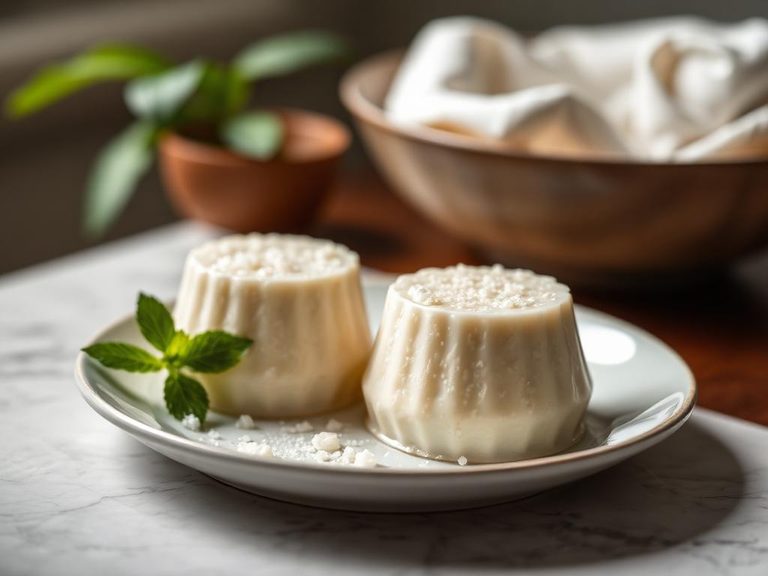
Dry tapioca pearls are small, hard, opaque spheres made from cassava starch. When cooked, they transform into chewy, translucent orbs with a neutral, starchy taste and a signature bouncy, 'Q' texture. Nutritionally, they are a dense source of pure carbohydrate energy with virtually no protein or fat.
💚 Why it's loved
People adore tapioca pearls for their unique, satisfying chewiness that adds fun texture to drinks and desserts. They are a beloved staple in global bubble tea culture and comfort foods.
⚠️ Watch-outs & how to enjoy it better
As a high-carb, low-fiber food, it can cause rapid blood sugar spikes, especially in large servings. To counteract this, pair it with protein or healthy fats (like milk in boba tea) and practice portion control. Also, ensure pearls are fully hydrated and cooked through to avoid digestive discomfort.
Key benefits
- Excellent quick-energy source from complex carbs
- Naturally gluten-free and suitable for celiac diets
- Provides resistant starch which may support gut health
- Neutral flavor makes it a versatile textural ingredient
🍽️ Popular dishes
🌍 Where it's eaten
💡 Did you know?
The signature 'QQ' (chewy) texture of tapioca pearls is so prized in Taiwan that 'QQ' has become a common adjective in Mandarin to describe any food with a perfect, bouncy chew.
Full nutrition (scales with serving)
| Water | 11.0 g |
| Energy | 358 kcal |
| Energy | 1498 kj |
| Protein | 0.19 g |
| Total lipid (fat) | 0.02 g |
| Ash | 0.11 g |
| Carbohydrate, by difference | 88.7 g |
| Fiber, total dietary | 0.90 g |
| Total Sugars | 3.4 g |
| Calcium, Ca | 20.0 mg |
| Iron, Fe | 1.6 mg |
| Magnesium, Mg | 1.0 mg |
| Phosphorus, P | 7.0 mg |
| Potassium, K | 11.0 mg |
| Sodium, Na | 1.0 mg |
| Zinc, Zn | 0.12 mg |
| Copper, Cu | 0.02 mg |
| Manganese, Mn | 0.11 mg |
| Selenium, Se | 0.80 ug |
| Vitamin C, total ascorbic acid | 0.00 mg |
| Thiamin | 0.00 mg |
| Riboflavin | 0.00 mg |
| Niacin | 0.00 mg |
| Pantothenic acid | 0.14 mg |
| Vitamin B-6 | 0.01 mg |
| Folate, total | 4.0 ug |
| Folic acid | 0.00 ug |
| Folate, food | 4.0 ug |
| Folate, DFE | 4.0 ug |
| Choline, total | 1.2 mg |
| Vitamin B-12 | 0.00 ug |
| Vitamin B-12, added | 0.00 ug |
| Vitamin A, RAE | 0.00 ug |
| Retinol | 0.00 ug |
| Carotene, beta | 0.00 ug |
| Carotene, alpha | 0.00 ug |
| Cryptoxanthin, beta | 0.00 ug |
| Vitamin A, IU | 0.00 iu |
| Lycopene | 0.00 ug |
| Lutein + zeaxanthin | 0.00 ug |
| Vitamin E (alpha-tocopherol) | 0.00 mg |
| Vitamin E, added | 0.00 mg |
| Vitamin D (D2 + D3), International Units | 0.00 iu |
| Vitamin D (D2 + D3) | 0.00 ug |
| Vitamin K (phylloquinone) | 0.00 ug |
| Alcohol, ethyl | 0.00 g |
| Caffeine | 0.00 mg |
| Theobromine | 0.00 mg |
Fat & fatty acid profile (per 100g)
| Fatty acids, total saturated | 0.01 g |
| SFA 4:0 | 0.00 g |
| SFA 6:0 | 0.00 g |
| SFA 8:0 | 0.00 g |
| SFA 10:0 | 0.00 g |
| SFA 12:0 | 0.00 g |
| SFA 14:0 | 0.00 g |
| SFA 16:0 | 0.01 g |
| SFA 18:0 | 0.00 g |
| Fatty acids, total monounsaturated | 0.01 g |
| MUFA 16:1 | 0.00 g |
| MUFA 18:1 | 0.01 g |
| MUFA 20:1 | 0.00 g |
| MUFA 22:1 | 0.00 g |
| Fatty acids, total polyunsaturated | 0.00 g |
| PUFA 18:2 | 0.00 g |
| PUFA 18:3 | 0.00 g |
| PUFA 18:4 | 0.00 g |
| PUFA 20:4 | 0.00 g |
| PUFA 20:5 n-3 (EPA) | 0.00 g |
| PUFA 22:5 n-3 (DPA) | 0.00 g |
| PUFA 22:6 n-3 (DHA) | 0.00 g |
| Cholesterol | 0.00 mg |
Amino acid profile (per 100g)
| Tryptophan | 0.00 g |
| Threonine | 0.00 g |
| Isoleucine | 0.00 g |
| Leucine | 0.01 g |
| Lysine | 0.01 g |
| Methionine | 0.00 g |
| Cystine | 0.00 g |
| Phenylalanine | 0.00 g |
| Tyrosine | 0.00 g |
| Valine | 0.01 g |
| Arginine | 0.02 g |
| Histidine | 0.00 g |
| Alanine | 0.01 g |
| Aspartic acid | 0.01 g |
| Glutamic acid | 0.03 g |
| Glycine | 0.00 g |
| Proline | 0.01 g |
| Serine | 0.01 g |
FAQ
What's the difference between tapioca pearls and boba?
They are essentially the same thing. 'Boba' is the Taiwanese term for the tapioca pearls used in bubble tea, and the name has become synonymous with the drink itself.
Can I use tapioca pearls as a thickener?
Yes, but with caution. Tapioca starch (the powder) is a common thickener. The pearls themselves will add texture, not just thickness, and are best for specific dishes like puddings or soups where chewiness is desired.
Why are my tapioca pearls hard in the middle?
They were likely undercooked or not soaked properly. Dry pearls require a long simmer (often 30+ minutes) followed by a resting period off heat to fully hydrate to the center.