Snacks, sesame sticks, wheat-based, salted
Whole food · Snacks

Photo: Wikipedia
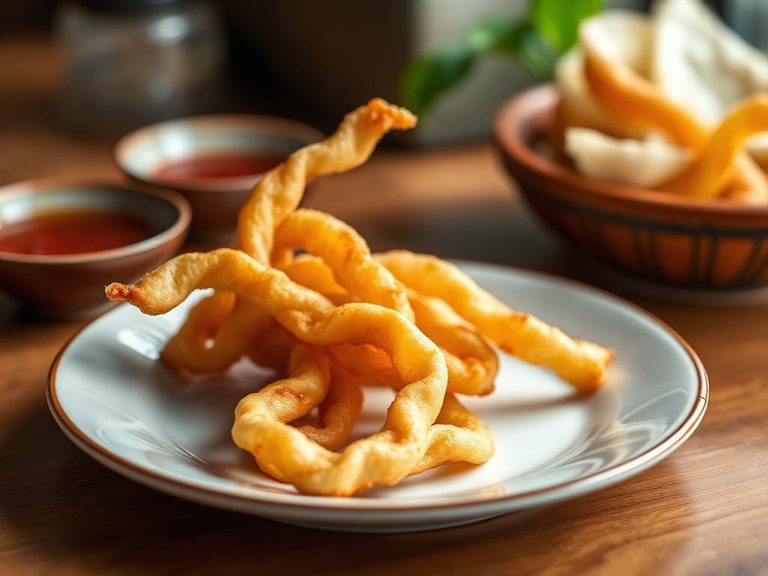
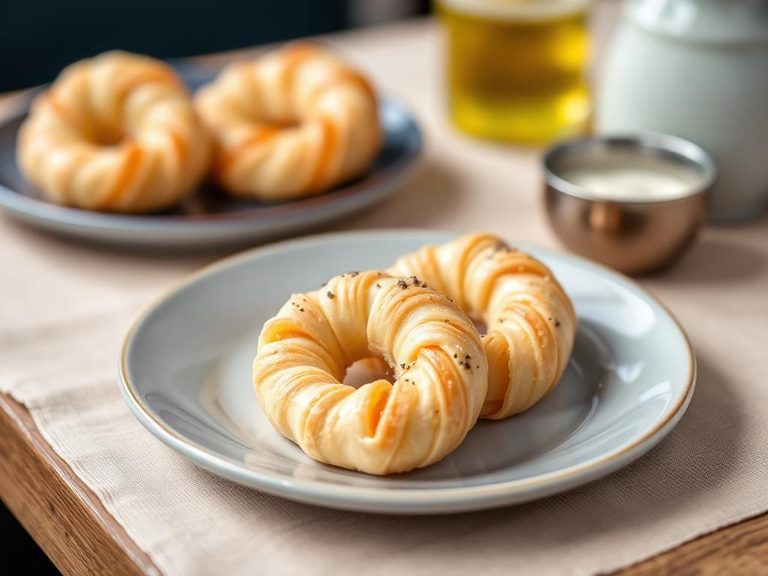
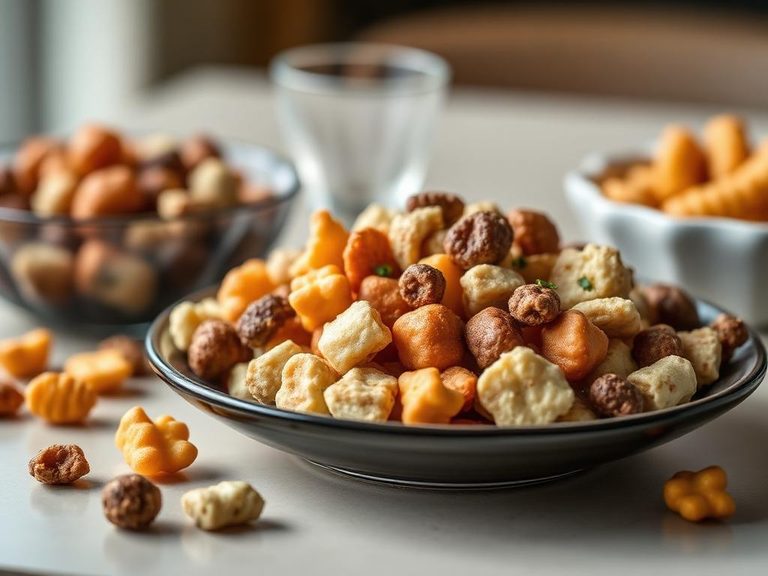
These are crunchy, golden-brown sticks made from wheat flour and coated generously in sesame seeds, then deep-fried or baked until shatteringly crisp. They offer a savory, nutty flavor with a satisfying, oily crunch that's both salty and subtly sweet from the toasted seeds. Nutritionally, they are a dense energy source, packing over half their calories from fat, primarily from the sesame and frying oil.
💚 Why it's loved
People love them for their addictive, savory crunch and the rich, toasty flavor of sesame seeds, which makes them a perfect standalone snack or a textural addition to other dishes. They are a beloved, nostalgic comfort food in many cultures, often enjoyed during festivals or as a casual treat.
⚠️ Watch-outs & how to enjoy it better
The high fat content (from deep-frying) and sodium can make them a poor choice for those monitoring heart health or blood pressure. The refined wheat and low fiber mean they can cause a rapid blood sugar spike, and sesame is a common allergen. To enjoy them more healthily, pair a small portion with a protein-rich food like hummus or yogurt, and be mindful of serving size.
Key benefits
- Provides quick energy from carbohydrates and fats
- Contains plant-based protein from wheat and sesame
- Source of dietary fiber and minerals like calcium and magnesium from sesame seeds
- Offers a satisfying, crunchy texture that can curb snack cravings
🍽️ Popular dishes

🌍 Where it's eaten
💡 Did you know?
Sesame seeds are one of the oldest oilseed crops known, domesticated over 4,000 years ago, and their high oil content is what gives these sticks their distinctive rich flavor and helps them stay crisp for a long time.
Full nutrition (scales with serving)
| Water | 2.0 g |
| Energy | 541 kcal |
| Energy | 2264 kj |
| Protein | 10.9 g |
| Total lipid (fat) | 36.7 g |
| Ash | 3.9 g |
| Carbohydrate, by difference | 46.5 g |
| Fiber, total dietary | 2.8 g |
| Total Sugars | 0.19 g |
| Calcium, Ca | 170 mg |
| Iron, Fe | 0.74 mg |
| Magnesium, Mg | 45.0 mg |
| Phosphorus, P | 138 mg |
| Potassium, K | 177 mg |
| Sodium, Na | 1488 mg |
| Zinc, Zn | 1.2 mg |
| Copper, Cu | 0.41 mg |
| Manganese, Mn | 0.90 mg |
| Selenium, Se | 17.1 ug |
| Vitamin C, total ascorbic acid | 0.00 mg |
| Thiamin | 0.12 mg |
| Riboflavin | 0.06 mg |
| Niacin | 1.6 mg |
| Pantothenic acid | 0.23 mg |
| Vitamin B-6 | 0.09 mg |
| Folate, total | 22.0 ug |
| Folic acid | 0.00 ug |
| Folate, food | 22.0 ug |
| Folate, DFE | 22.0 ug |
| Choline, total | 17.0 mg |
| Vitamin B-12 | 0.00 ug |
| Vitamin B-12, added | 0.00 ug |
| Vitamin A, RAE | 0.00 ug |
| Retinol | 0.00 ug |
| Carotene, beta | 3.0 ug |
| Carotene, alpha | 0.00 ug |
| Cryptoxanthin, beta | 0.00 ug |
| Vitamin A, IU | 5.0 iu |
| Lycopene | 0.00 ug |
| Lutein + zeaxanthin | 19.0 ug |
| Vitamin E (alpha-tocopherol) | 3.9 mg |
| Vitamin E, added | 0.00 mg |
| Vitamin D (D2 + D3), International Units | 0.00 iu |
| Vitamin D (D2 + D3) | 0.00 ug |
| Vitamin K (phylloquinone) | 8.0 ug |
| Alcohol, ethyl | 0.00 g |
| Caffeine | 0.00 mg |
| Theobromine | 0.00 mg |
Fat & fatty acid profile (per 100g)
| Fatty acids, total saturated | 6.5 g |
| SFA 4:0 | 0.00 g |
| SFA 6:0 | 0.00 g |
| SFA 8:0 | 0.00 g |
| SFA 10:0 | 0.01 g |
| SFA 12:0 | 0.01 g |
| SFA 14:0 | 0.11 g |
| SFA 16:0 | 5.0 g |
| SFA 18:0 | 1.4 g |
| Fatty acids, total monounsaturated | 10.9 g |
| MUFA 16:1 | 0.07 g |
| MUFA 18:1 | 10.8 g |
| MUFA 20:1 | 0.00 g |
| MUFA 22:1 | 0.00 g |
| Fatty acids, total polyunsaturated | 17.4 g |
| PUFA 18:2 | 16.4 g |
| PUFA 18:3 | 0.97 g |
| PUFA 18:4 | 0.00 g |
| PUFA 20:4 | 0.00 g |
| PUFA 20:5 n-3 (EPA) | 0.00 g |
| PUFA 22:5 n-3 (DPA) | 0.00 g |
| PUFA 22:6 n-3 (DHA) | 0.00 g |
| Cholesterol | 0.00 mg |
Amino acid profile (per 100g)
| Tryptophan | 0.14 g |
| Threonine | 0.33 g |
| Isoleucine | 0.42 g |
| Leucine | 0.77 g |
| Lysine | 0.36 g |
| Methionine | 0.19 g |
| Cystine | 0.20 g |
| Phenylalanine | 0.55 g |
| Tyrosine | 0.35 g |
| Valine | 0.47 g |
| Arginine | 0.65 g |
| Histidine | 0.26 g |
| Alanine | 0.39 g |
| Aspartic acid | 0.72 g |
| Glutamic acid | 3.1 g |
| Glycine | 0.44 g |
| Proline | 0.99 g |
| Serine | 0.55 g |
FAQ
Are sesame sticks the same as breadsticks?
No. Traditional breadsticks (grissini) are typically baked, leaner, and have a drier, more biscuit-like texture. Sesame sticks are usually fried, richer, and defined by their sesame seed coating.
Why are they so high in fat?
The primary reasons are the deep-frying process and the natural oil content of sesame seeds. A significant portion of the 36.7g of fat per 100g comes from the frying oil absorbed during cooking.
Can I make a healthier version at home?
Yes. You can bake them in the oven instead of frying to significantly reduce added fat. Using whole wheat flour and reducing the salt will also improve their nutritional profile.