

Sweet potatoes, orange flesh, without skin, raw
Whole food · Vegetables and Vegetable Products
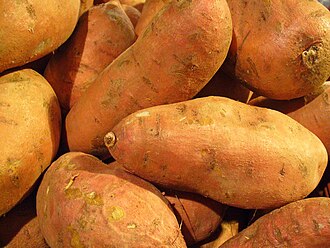
Photo: Wikipedia
This is the vibrant, peeled flesh of a raw orange sweet potato, offering a crisp, starchy bite with a subtle, earthy sweetness. Its striking color is a direct indicator of its high beta-carotene content, a powerful antioxidant. Nutritionally, it's a low-calorie, complex carbohydrate source that provides a steady energy release.
Calorie split: 8% protein · 88% carbs · 4% fat
↓ Full nutrition💚 Why it's loved
People cherish its natural, honey-like sweetness and incredible versatility—it can be roasted to caramelized perfection, mashed into a creamy side, or even grated into baked goods. It's a staple comfort food across countless global cuisines.
⚠️ Watch-outs & how to enjoy it better
Raw sweet potato contains antinutrients like oxalates and lectins that can inhibit mineral absorption and cause digestive discomfort. To counteract this, always cook it thoroughly (boiling, roasting, or steaming) and consider pairing it with a source of fat (like olive oil) or protein to enhance nutrient uptake and balance blood sugar response.
Key benefits
- Excellent source of beta-carotene, converted to vitamin A by the body.
- Provides a good amount of vitamin C and manganese.
- Naturally low in fat and contains no cholesterol.
- A source of resistant starch when raw, which can benefit gut health.
🍽️ Popular dishes
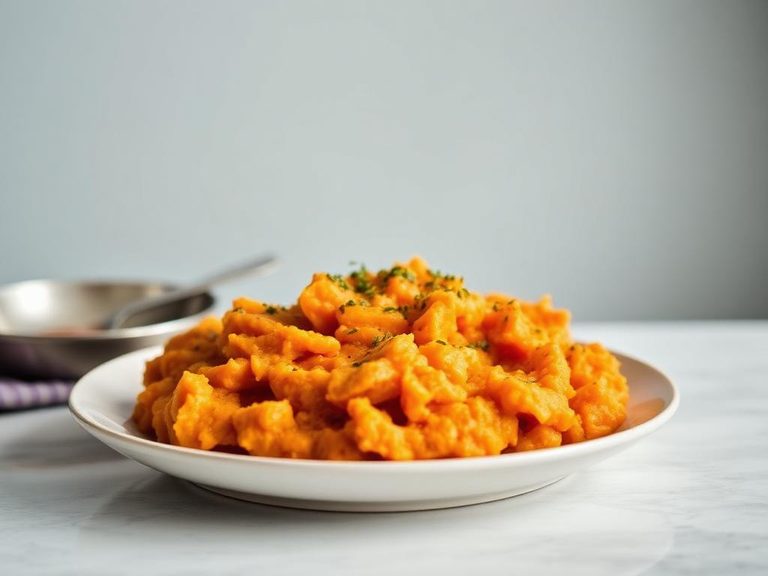
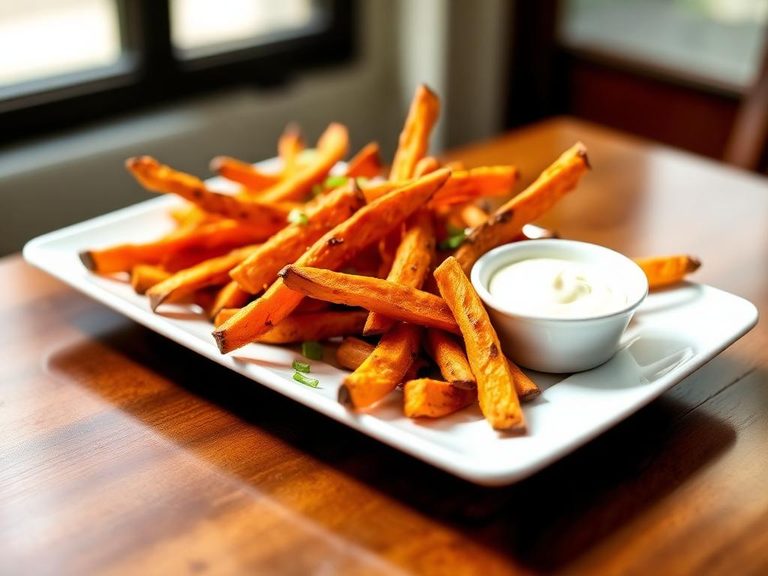
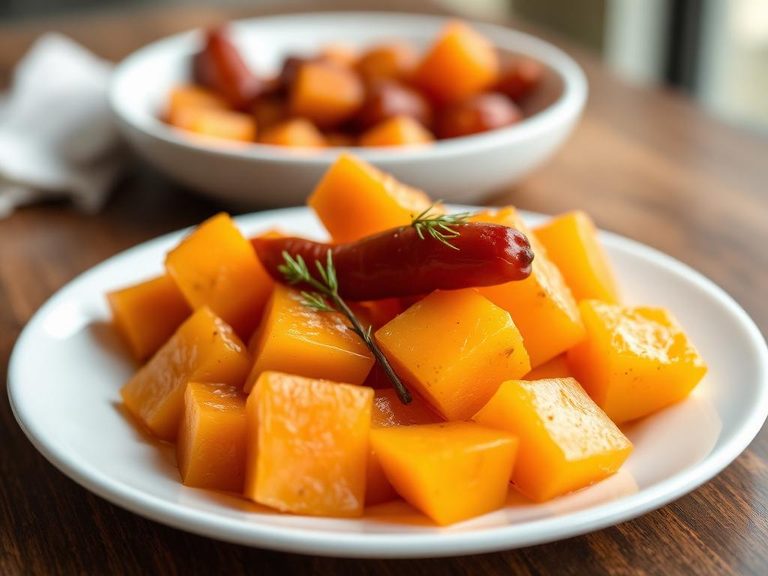
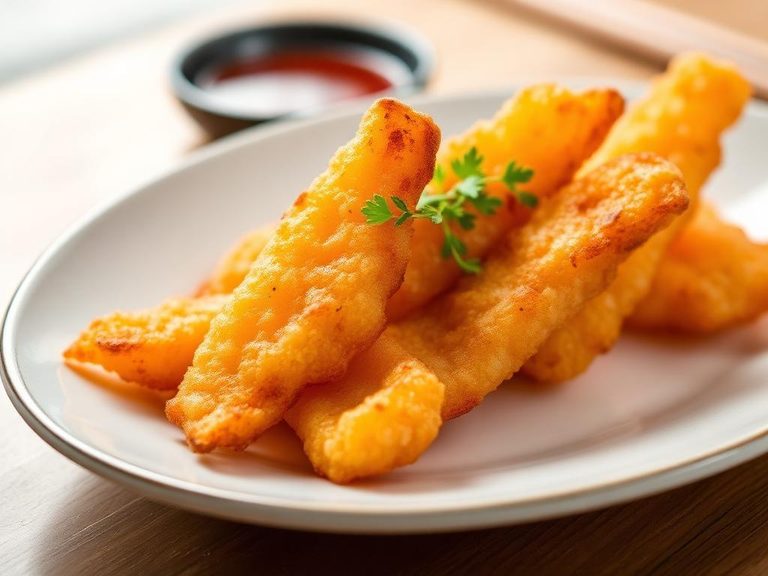
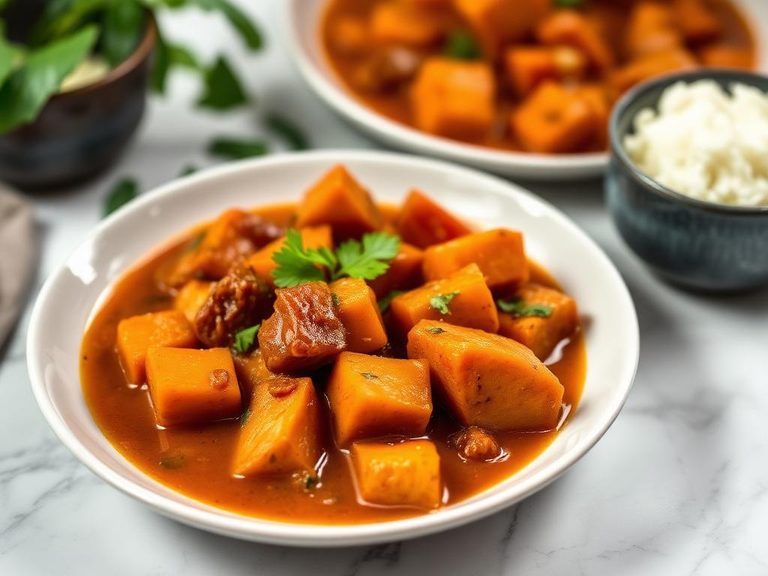
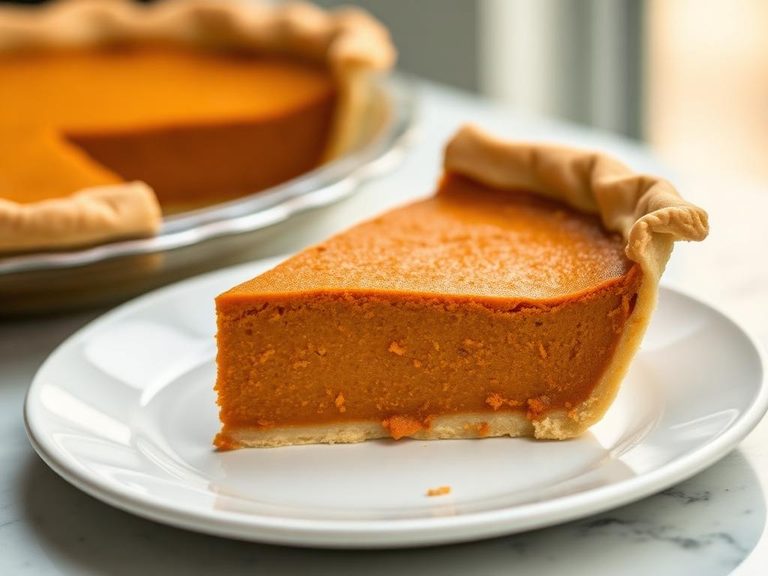
🌍 Where it's eaten
💡 Did you know?
The 'sweet' in sweet potato isn't just from sugar; when cooked, its starches convert to maltose, giving it a natural caramel-like sweetness without any added ingredients.
Full nutrition (USDA data · scales with serving)
| Water | 79.5 g |
| Energy (Atwater General Factors) | 79.0 kcal |
| Energy (Atwater Specific Factors) | 77.4 kcal |
| Nitrogen | 0.25 g |
| Protein | 1.6 g |
| Total lipid (fat) | 0.38 g |
| Ash | 1.2 g |
| Carbohydrate, by difference | 17.3 g |
| Total dietary fiber (AOAC 2011.25) | 4.4 g |
| High Molecular Weight Dietary Fiber (HMWDF) | 4.3 g |
| Low Molecular Weight Dietary Fiber (LMWDF) | 0.16 g |
| Sugars, Total | 6.1 g |
| Sucrose | 3.1 g |
| Glucose | 0.98 g |
| Fructose | 0.93 g |
| Lactose | 0.00 g |
| Maltose | 1.1 g |
| Calcium, Ca | 22.3 mg |
| Iron, Fe | 0.40 mg |
| Magnesium, Mg | 19.1 mg |
| Phosphorus, P | 36.7 mg |
| Potassium, K | 486 mg |
| Sodium, Na | 0.00 mg |
| Zinc, Zn | 0.34 mg |
| Copper, Cu | 0.19 mg |
| Manganese, Mn | 0.42 mg |
| Selenium, Se | 0.00 ug |
| Molybdenum, Mo | 0.00 ug |
| Vitamin C, total ascorbic acid | 14.8 mg |
| Thiamin | 0.04 mg |
| Niacin | 0.43 mg |
| Vitamin B-6 | 0.12 mg |
| Vitamin K (phylloquinone) | 0.20 ug |
| Vitamin K (Dihydrophylloquinone) | 0.00 ug |
| Vitamin K (Menaquinone-4) | 0.00 ug |
Fat & fatty acid profile (per 100g)
Estimated from Babyfood, vegetables, sweet potatoes strained — USDA does not publish this profile for Sweet potatoes.
| Fatty acids, total saturated | 0.02 g |
| SFA 4:0 | 0.00 g |
| SFA 6:0 | 0.00 g |
| SFA 8:0 | 0.00 g |
| SFA 10:0 | 0.00 g |
| SFA 12:0 | 0.00 g |
| SFA 14:0 | 0.00 g |
| SFA 16:0 | 0.02 g |
| SFA 18:0 | 0.00 g |
| Fatty acids, total monounsaturated | 0.00 g |
| MUFA 16:1 | 0.00 g |
| MUFA 18:1 | 0.00 g |
| MUFA 20:1 | 0.00 g |
| MUFA 22:1 | 0.00 g |
| Fatty acids, total polyunsaturated | 0.04 g |
| PUFA 18:2 | 0.04 g |
| PUFA 18:3 | 0.01 g |
| PUFA 18:4 | 0.00 g |
| PUFA 20:4 | 0.00 g |
| PUFA 20:5 n-3 (EPA) | 0.00 g |
| PUFA 22:5 n-3 (DPA) | 0.00 g |
| PUFA 22:6 n-3 (DHA) | 0.00 g |
| Cholesterol | 0.00 mg |
Amino acid profile (per 100g)
Estimated from Babyfood, vegetables, sweet potatoes strained — USDA does not publish this profile for Sweet potatoes.
| Tryptophan | 0.02 g |
| Threonine | 0.05 g |
| Isoleucine | 0.05 g |
| Leucine | 0.08 g |
| Lysine | 0.04 g |
| Methionine | 0.02 g |
| Cystine | 0.01 g |
| Phenylalanine | 0.06 g |
| Tyrosine | 0.04 g |
| Valine | 0.07 g |
| Arginine | 0.05 g |
| Histidine | 0.03 g |
| Alanine | 0.06 g |
| Aspartic acid | 0.20 g |
| Glutamic acid | 0.12 g |
| Glycine | 0.05 g |
| Proline | 0.06 g |
| Serine | 0.05 g |
FAQ
Is the nutrition different from a white potato?
Yes. Sweet potatoes have more vitamin A (from beta-carotene), are slightly lower in calories and carbs, and have a lower glycemic index when boiled or baked with the skin on.
Why is my raw sweet potato white inside?
That's a different variety, often called a white or Japanese sweet potato. The orange flesh comes specifically from varieties like Beauregard or Jewel, which are bred for high beta-carotene.
Can I eat it raw?
While not toxic, it's not recommended. Raw sweet potato is very hard, difficult to digest, and contains antinutrients. Cooking breaks down these compounds, makes nutrients more bioavailable, and develops its signature sweet flavor and pleasant texture.
Nutrient density (calculated · NRF9.3)
Nutrient Rich Foods index: beneficial nutrients (protein, fiber, vitamins, minerals) minus saturated fat, added sugar & sodium, per 100 kcal.
NRF9.3 index — Fulgoni, Keast & Drewnowski, 2009. Computed from USDA nutrients.
Weight-loss friendliness (composite index)
Energy density 0.79 kcal/g · 8% calories from protein · 0.0 g fiber · 0.0 g sugar per 100 g.
Composite of energy density (Rolls et al., 1999), protein & fiber satiety, minus sugar. A calculated heuristic — ranks satiety-per-calorie, not a clinical measure.
Dietary load (calculated from USDA values)
Potential renal acid load. Positive = acid-forming, negative = alkaline-forming.
Sodium-to-potassium ratio: 0.00 (lower is better — aim for ≤ 1)
Sodium:potassium per WHO potassium guidance. Computed from USDA nutrients.