

Sweet and sour pork with rice
Common food
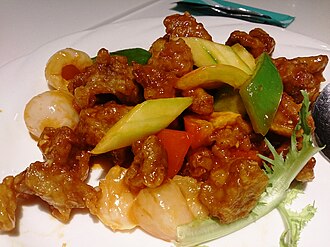
Photo: Wikipedia
Sweet and sour pork with rice is a vibrant, glossy stir-fry where crispy, battered pork pieces are tossed in a tangy, fruity sauce and served over steamed white rice. The dish offers a delightful contrast between the crunchy, savory pork and the sticky, sweet-and-sour glaze. Per 100g, it provides a moderate energy boost with a balanced macronutrient profile, though it is relatively low in fiber.
Calorie split: 21% protein · 36% carbs · 43% fat
↓ Full nutrition💚 Why it's loved
People love it for the irresistible harmony of sweet, tangy, and savory flavors, along with the satisfying crunch of the pork. It's a beloved comfort food and a staple in Chinese-American cuisine, often evoking nostalgia and a sense of celebratory dining.
⚠️ Watch-outs & how to enjoy it better
The dish can be high in sodium and added sugars, and the deep-fried pork adds significant saturated fat, which may concern those monitoring blood sugar or heart health. To counteract this, consider pairing it with a large portion of steamed or stir-fried non-starchy vegetables (like broccoli or bok choy) to add fiber and volume, which helps slow sugar absorption and increases satiety. Opting for a smaller portion of the pork and sauce while doubling the rice and vegetables is another effective strategy.
Key benefits
- Provides a quick source of energy from carbohydrates.
- Offers a good amount of protein from the pork for muscle maintenance.
- Contains some essential B vitamins from the pork component.
- The rice provides a gluten-free grain base.
- A complete, satisfying meal in one dish.
🍽️ Popular dishes
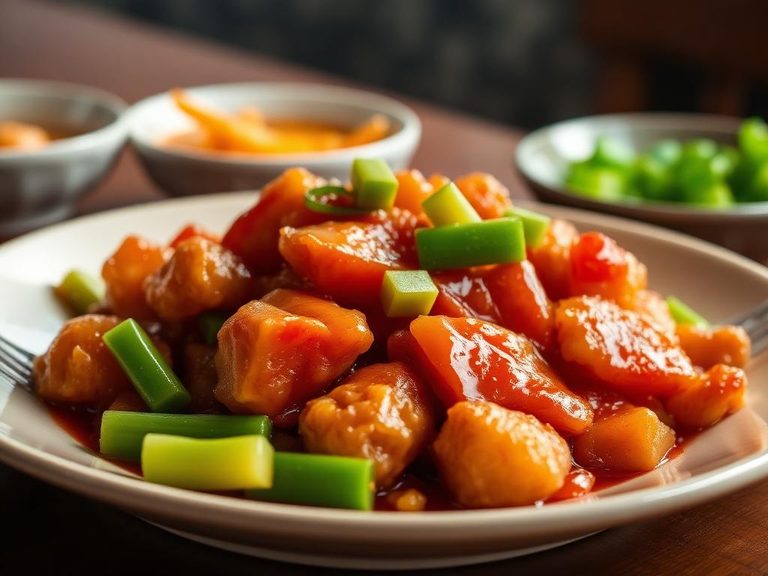
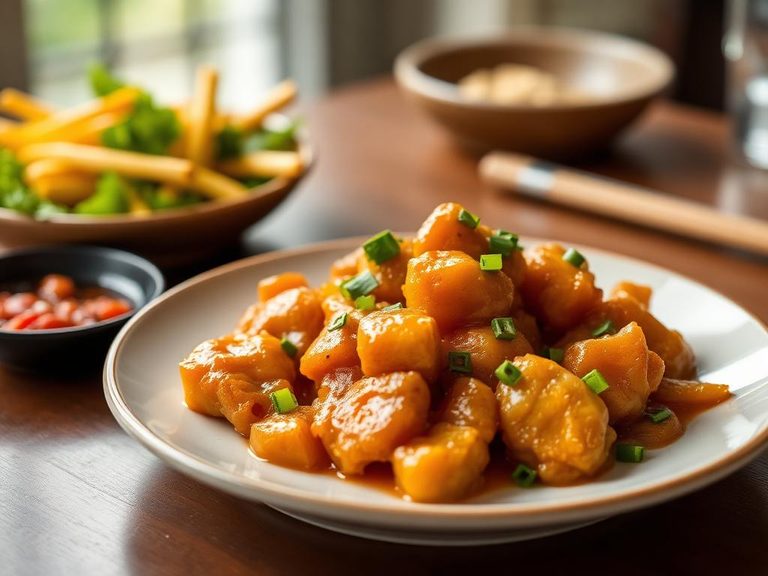
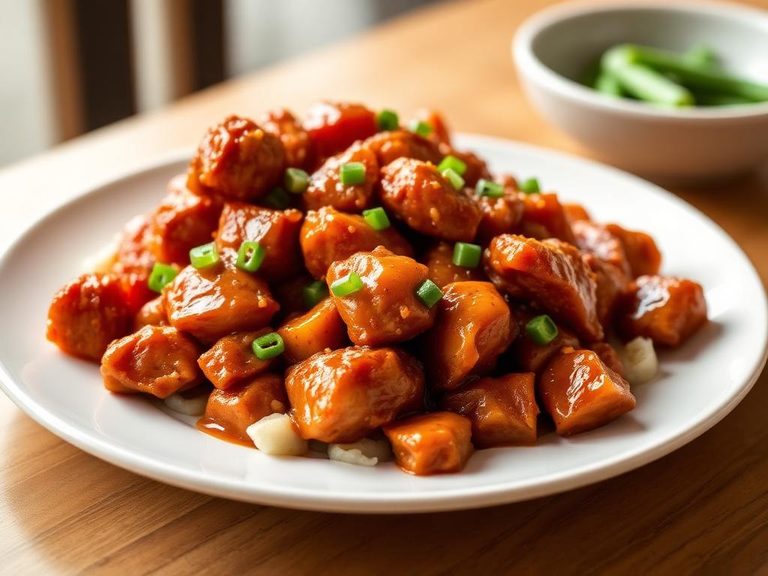
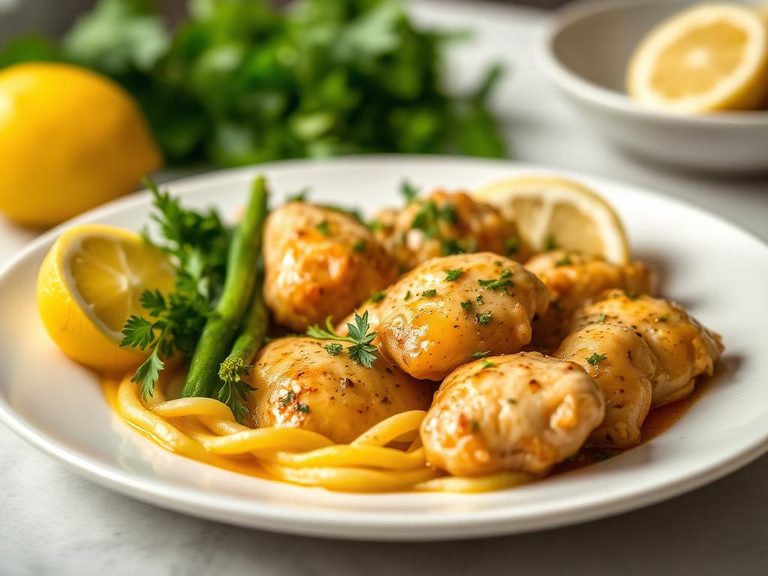
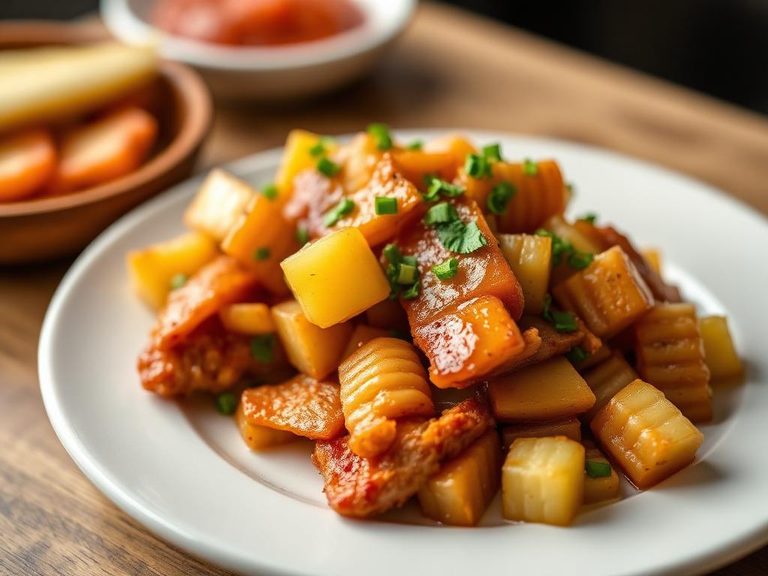
🌍 Where it's eaten
💡 Did you know?
The iconic red color in many Western versions of sweet and sour sauce often comes from food dye, not traditional ingredients like red yeast rice or ketchup, which are sometimes used.
Full nutrition (USDA data · scales with serving)
| Water | 63.2 g |
| Energy | 187 kcal |
| Protein | 9.8 g |
| Total lipid (fat) | 8.8 g |
| Carbohydrate, by difference | 16.5 g |
| Fiber, total dietary | 0.60 g |
| Total Sugars | 7.2 g |
| Calcium, Ca | 24.0 mg |
| Iron, Fe | 1.2 mg |
| Magnesium, Mg | 16.0 mg |
| Phosphorus, P | 94.0 mg |
| Potassium, K | 194 mg |
| Sodium, Na | 261 mg |
| Zinc, Zn | 1.8 mg |
| Copper, Cu | 0.10 mg |
| Selenium, Se | 16.5 ug |
| Vitamin C, total ascorbic acid | 11.7 mg |
| Thiamin | 0.24 mg |
| Riboflavin | 0.15 mg |
| Niacin | 1.9 mg |
| Vitamin B-6 | 0.23 mg |
| Folate, total | 19.0 ug |
| Folic acid | 12.0 ug |
| Folate, food | 7.0 ug |
| Folate, DFE | 28.0 ug |
| Choline, total | 38.1 mg |
| Vitamin B-12 | 0.31 ug |
| Vitamin B-12, added | 0.00 ug |
| Vitamin A, RAE | 3.0 ug |
| Retinol | 0.00 ug |
| Carotene, beta | 28.0 ug |
| Carotene, alpha | 2.0 ug |
| Cryptoxanthin, beta | 0.00 ug |
| Lycopene | 334 ug |
| Lutein + zeaxanthin | 31.0 ug |
| Vitamin E (alpha-tocopherol) | 0.81 mg |
| Vitamin E, added | 0.00 mg |
| Vitamin D (D2 + D3) | 0.40 ug |
| Vitamin K (phylloquinone) | 4.7 ug |
| Alcohol, ethyl | 0.00 g |
| Caffeine | 0.00 mg |
| Theobromine | 0.00 mg |
Fat & fatty acid profile (per 100g)
| Fatty acids, total saturated | 2.4 g |
| SFA 4:0 | 0.00 g |
| SFA 6:0 | 0.00 g |
| SFA 8:0 | 0.00 g |
| SFA 10:0 | 0.01 g |
| SFA 12:0 | 0.00 g |
| SFA 14:0 | 0.06 g |
| SFA 16:0 | 1.5 g |
| SFA 18:0 | 0.75 g |
| Fatty acids, total monounsaturated | 3.8 g |
| MUFA 16:1 | 0.13 g |
| MUFA 18:1 | 3.6 g |
| MUFA 20:1 | 0.06 g |
| MUFA 22:1 | 0.00 g |
| Fatty acids, total polyunsaturated | 2.0 g |
| PUFA 18:2 | 1.8 g |
| PUFA 18:3 | 0.19 g |
| PUFA 18:4 | 0.00 g |
| PUFA 20:4 | 0.03 g |
| PUFA 20:5 n-3 (EPA) | 0.00 g |
| PUFA 22:5 n-3 (DPA) | 0.00 g |
| PUFA 22:6 n-3 (DHA) | 0.00 g |
| Cholesterol | 32.0 mg |
Amino acid profile (per 100g)
Estimated from Restaurant, Chinese, sweet and sour chicken — USDA does not publish this profile for Sweet and sour pork with rice.
| Tryptophan | 0.11 g |
| Threonine | 0.39 g |
| Isoleucine | 0.40 g |
| Leucine | 0.73 g |
| Lysine | 0.69 g |
| Methionine | 0.23 g |
| Cystine | 0.13 g |
| Phenylalanine | 0.37 g |
| Tyrosine | 0.26 g |
| Valine | 0.42 g |
| Arginine | 0.55 g |
| Histidine | 0.29 g |
| Alanine | 0.49 g |
| Aspartic acid | 0.81 g |
| Glutamic acid | 1.9 g |
| Glycine | 0.39 g |
| Proline | 0.47 g |
| Serine | 0.38 g |
FAQ
Is sweet and sour pork with rice gluten-free?
Not typically. The pork is usually battered and fried with wheat flour, and the sauce may contain soy sauce or other gluten-containing ingredients. Gluten-free versions require specific substitutions for the batter and sauce.
How can I make it healthier at home?
You can bake or air-fry the pork instead of deep-frying it to reduce fat. Use less sugar in the sauce, incorporate more vegetables like bell peppers and pineapple chunks, and serve it with brown rice for added fiber.
Why is the pork sometimes tough?
Pork can become tough if overcooked. Using tender cuts like pork loin, velveting the meat (a quick marinade with cornstarch and egg white), and stir-frying quickly over high heat helps keep it juicy.
Nutrient density (calculated · NRF9.3)
Nutrient Rich Foods index: beneficial nutrients (protein, fiber, vitamins, minerals) minus saturated fat, added sugar & sodium, per 100 kcal.
NRF9.3 index — Fulgoni, Keast & Drewnowski, 2009. Computed from USDA nutrients.
Weight-loss friendliness (composite index)
Energy density 1.87 kcal/g · 21% calories from protein · 0.6 g fiber · 7.2 g sugar per 100 g.
Composite of energy density (Rolls et al., 1999), protein & fiber satiety, minus sugar. A calculated heuristic — ranks satiety-per-calorie, not a clinical measure.
Dietary load (calculated from USDA values)
Potential renal acid load. Positive = acid-forming, negative = alkaline-forming.
Sodium-to-potassium ratio: 1.35 (lower is better — aim for ≤ 1)
Sodium:potassium per WHO potassium guidance. Computed from USDA nutrients.