

Spices, mace, ground
Whole food · Spices and Herbs

Photo: Wikipedia
Ground mace is the lacy, crimson-hued aril (outer covering) of the nutmeg seed, dried and ground into a warm, aromatic powder. It offers a more delicate, sweeter, and slightly more peppery flavor than its cousin nutmeg, with a subtle, resinous warmth. Nutritionally, it is exceptionally dense in fiber (over 20g per 100g) and healthy fats, making it a potent, flavor-packed addition to dishes.
Calorie split: 5% protein · 39% carbs · 56% fat
↓ Full nutrition💚 Why it's loved
People love mace for its complex, sophisticated warmth that elevates both sweet and savory dishes without overpowering them. It's a hallmark of festive baking and classic European spice blends, cherished for its ability to add depth to custards, meats, and mulled wines.
⚠️ Watch-outs & how to enjoy it better
In large quantities, mace's potent compounds (like myristicin) can be overwhelming and may cause digestive discomfort or, in extreme cases, mild psychoactive effects. It should be used sparingly, especially by those new to it, and is best introduced in small pinches. To counteract its intensity, always start with less than the recipe calls for and pair it with creamy or fatty ingredients (like dairy or butter) which mellow its sharpness.
Key benefits
- Exceptionally high in dietary fiber (20.2g per 100g)
- Rich in plant-based fats, including beneficial monounsaturated and polyunsaturated types
- Contains antioxidant compounds like macelignan and myristicin
- Provides essential minerals such as manganese, copper, and magnesium
- A potent flavor enhancer, allowing for reduced salt or sugar in recipes
🍽️ Popular dishes
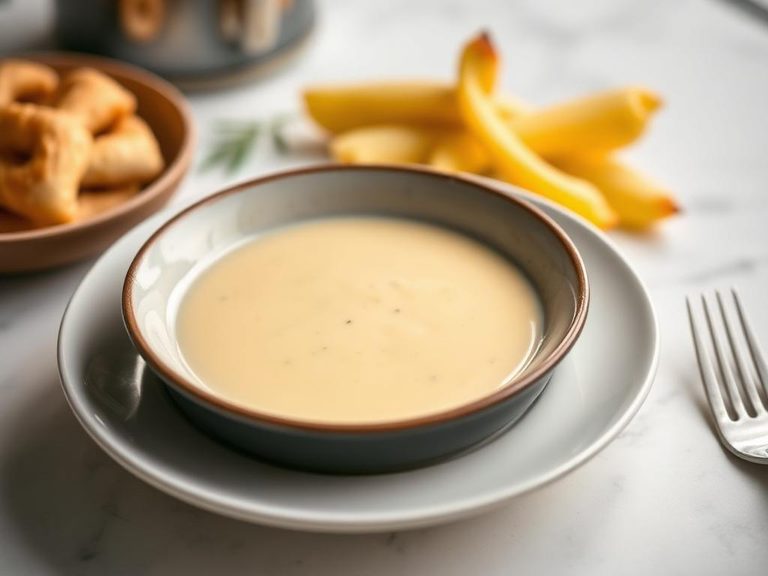
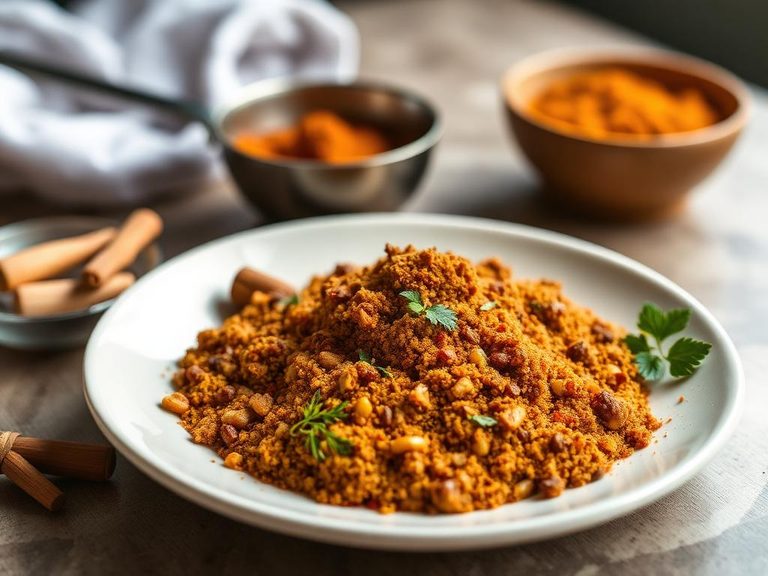
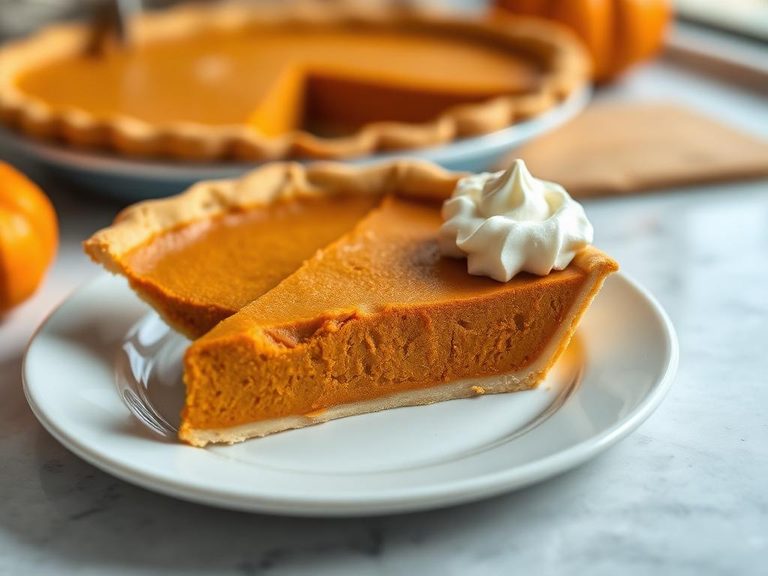
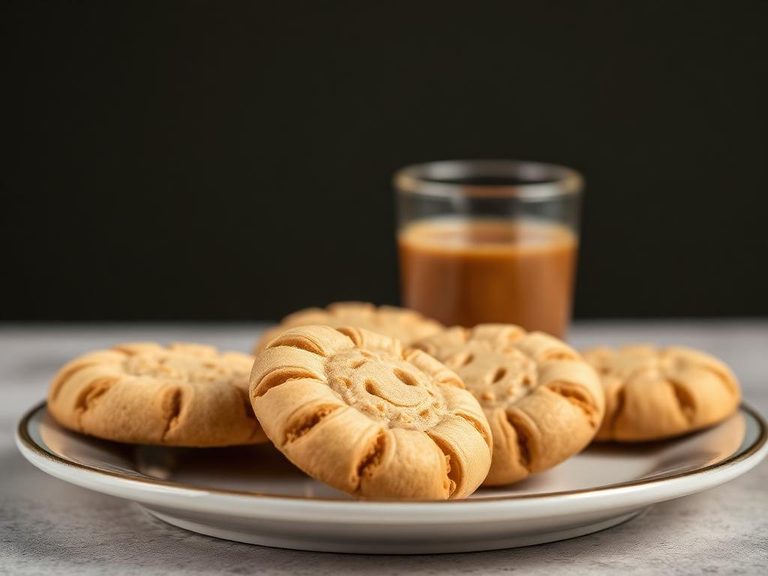


🌍 Where it's eaten
💡 Did you know?
Mace and nutmeg come from the same fruit; the red, lacy mace is carefully separated from the hard inner nutmeg seed by hand, making it more labor-intensive and often more expensive than nutmeg.
Full nutrition (USDA data · scales with serving)
| Water | 8.2 g |
| Energy | 475 kcal |
| Energy | 1989 kj |
| Protein | 6.7 g |
| Total lipid (fat) | 32.4 g |
| Ash | 2.2 g |
| Carbohydrate, by difference | 50.5 g |
| Fiber, total dietary | 20.2 g |
| Calcium, Ca | 252 mg |
| Iron, Fe | 13.9 mg |
| Magnesium, Mg | 163 mg |
| Phosphorus, P | 110 mg |
| Potassium, K | 463 mg |
| Sodium, Na | 80.0 mg |
| Zinc, Zn | 2.3 mg |
| Copper, Cu | 2.5 mg |
| Manganese, Mn | 1.5 mg |
| Selenium, Se | 2.7 ug |
| Vitamin C, total ascorbic acid | 21.0 mg |
| Thiamin | 0.31 mg |
| Riboflavin | 0.45 mg |
| Niacin | 1.4 mg |
| Vitamin B-6 | 0.16 mg |
| Folate, total | 76.0 ug |
| Folic acid | 0.00 ug |
| Folate, food | 76.0 ug |
| Folate, DFE | 76.0 ug |
| Vitamin B-12 | 0.00 ug |
| Vitamin A, RAE | 40.0 ug |
| Retinol | 0.00 ug |
| Vitamin A, IU | 800 iu |
| Vitamin D (D2 + D3), International Units | 0.00 iu |
| Vitamin D (D2 + D3) | 0.00 ug |
| Alcohol, ethyl | 0.00 g |
| Caffeine | 0.00 mg |
| Theobromine | 0.00 mg |
Fat & fatty acid profile (per 100g)
| Fatty acids, total saturated | 9.5 g |
| SFA 4:0 | 0.00 g |
| SFA 6:0 | 0.00 g |
| SFA 8:0 | 0.00 g |
| SFA 10:0 | 0.00 g |
| SFA 12:0 | 0.00 g |
| SFA 14:0 | 0.93 g |
| SFA 16:0 | 7.7 g |
| SFA 18:0 | 0.43 g |
| Fatty acids, total monounsaturated | 11.2 g |
| MUFA 16:1 | 0.58 g |
| MUFA 18:1 | 10.6 g |
| MUFA 20:1 | 0.00 g |
| MUFA 22:1 | 0.00 g |
| Fatty acids, total polyunsaturated | 4.4 g |
| PUFA 18:2 | 4.3 g |
| PUFA 18:3 | 0.08 g |
| PUFA 18:4 | 0.00 g |
| PUFA 20:4 | 0.00 g |
| PUFA 20:5 n-3 (EPA) | 0.00 g |
| PUFA 22:5 n-3 (DPA) | 0.00 g |
| PUFA 22:6 n-3 (DHA) | 0.00 g |
| Cholesterol | 0.00 mg |
| Phytosterols | 73.0 mg |
Amino acid profile (per 100g)
Estimated from Spices, garlic powder — USDA does not publish this profile for Spices.
| Tryptophan | 0.12 g |
| Threonine | 0.37 g |
| Isoleucine | 0.41 g |
| Leucine | 0.73 g |
| Lysine | 0.77 g |
| Methionine | 0.11 g |
| Cystine | 0.25 g |
| Phenylalanine | 0.53 g |
| Tyrosine | 0.45 g |
| Valine | 0.67 g |
| Arginine | 3.4 g |
| Histidine | 0.26 g |
| Alanine | 0.48 g |
| Aspartic acid | 1.9 g |
| Glutamic acid | 3.7 g |
| Glycine | 0.53 g |
| Proline | 1.4 g |
| Serine | 0.51 g |
| Hydroxyproline | 0.00 g |
FAQ
What's the difference between mace and nutmeg?
Mace is the dried, lacy red covering (aril) of the nutmeg seed. It has a more delicate, sweeter, and slightly more peppery flavor than the nutmeg seed itself, which is more robust and pungent.
Can I substitute nutmeg for mace?
Yes, in a pinch, but the flavor will be different. Use about half the amount of nutmeg called for in the recipe, as it has a stronger, more dominant taste. Mace is preferred for its subtlety in delicate dishes like custards.
Is ground mace the same as 'mace blade'?
No. 'Mace blade' refers to the whole, dried pieces of the aril, which look like reddish-orange strips. Ground mace is simply these blades ground into a powder. Blades offer a fresher, more nuanced flavor when grated just before use.
Nutrient density (calculated · NRF9.3)
Nutrient Rich Foods index: beneficial nutrients (protein, fiber, vitamins, minerals) minus saturated fat, added sugar & sodium, per 100 kcal.
NRF9.3 index — Fulgoni, Keast & Drewnowski, 2009. Computed from USDA nutrients.
Weight-loss friendliness (composite index)
Energy density 4.75 kcal/g · 6% calories from protein · 20.2 g fiber · 0.0 g sugar per 100 g.
Composite of energy density (Rolls et al., 1999), protein & fiber satiety, minus sugar. A calculated heuristic — ranks satiety-per-calorie, not a clinical measure.
Dietary load (calculated from USDA values)
Potential renal acid load. Positive = acid-forming, negative = alkaline-forming.
Sodium-to-potassium ratio: 0.17 (lower is better — aim for ≤ 1)
Sodium:potassium per WHO potassium guidance. Computed from USDA nutrients.