

Spices, bay leaf
Whole food · Spices and Herbs

Photo: Wikipedia
The bay leaf is the aromatic, leathery leaf of the bay laurel tree, prized not for its texture but for its deep, herbal fragrance that infuses soups, stews, and sauces. Its nutrition profile is dominated by a remarkable 26.3 grams of fiber per 100g, making it a potent source of insoluble roughage, though it is typically used in small, non-consumed quantities.
Calorie split: 8% protein · 74% carbs · 19% fat
↓ Full nutrition💚 Why it's loved
Chefs love bay leaves for their ability to add a subtle, savory depth and a hint of eucalyptus-like aroma to long-simmered dishes, a flavor that cannot be replicated by any other herb. They are a cornerstone of the bouquet garni and a symbol of foundational flavor in many cuisines.
⚠️ Watch-outs & how to enjoy it better
Bay leaves are tough, fibrous, and can become sharp or bitter if left in a dish too long or consumed whole. Always remove the whole leaf before serving; if you accidentally chew a piece, spit it out immediately to avoid a bitter taste and potential mouth irritation.
Key benefits
- Exceptionally high in dietary fiber, aiding digestive bulk.
- Rich in antioxidants like polyphenols and flavonoids.
- Contains trace minerals such as manganese and iron.
- May support healthy blood sugar and lipid levels in culinary amounts.
- Adds complex flavor without adding sodium or fat.
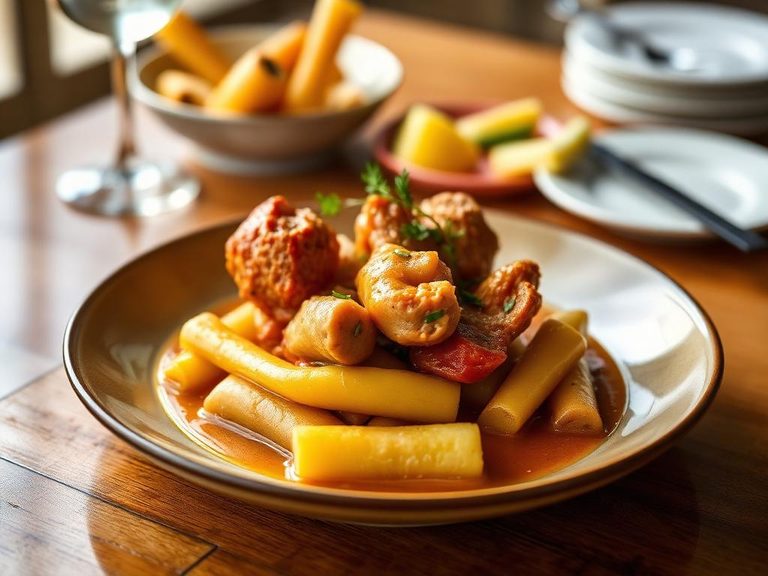
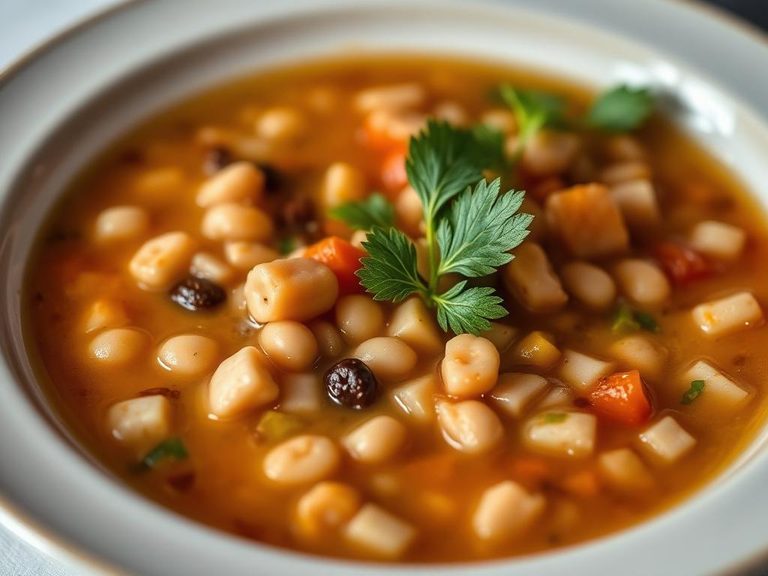
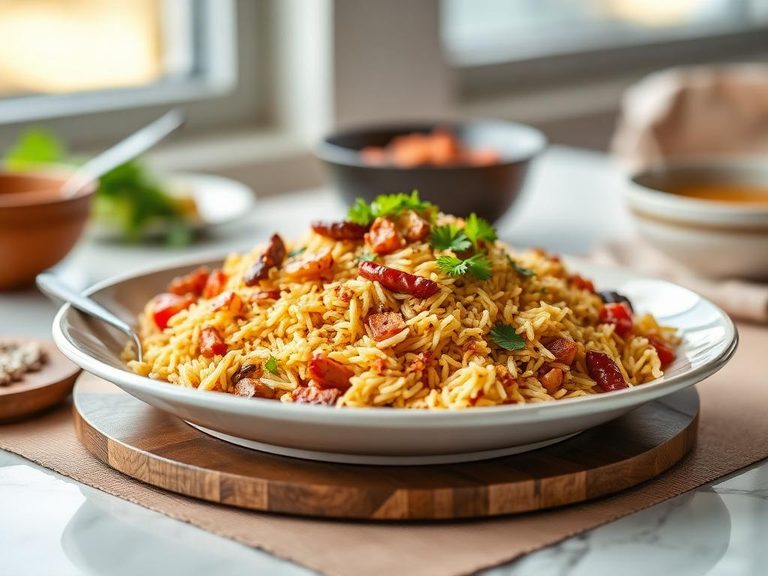
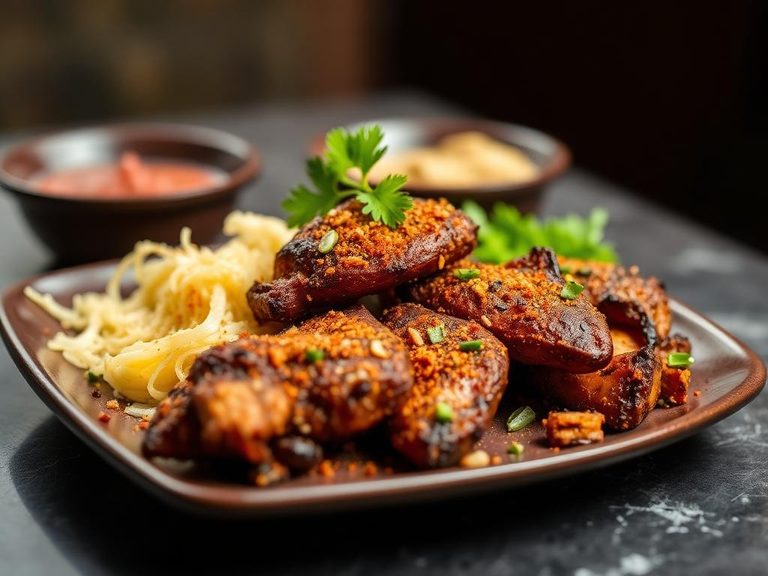
🍽️ Popular dishes
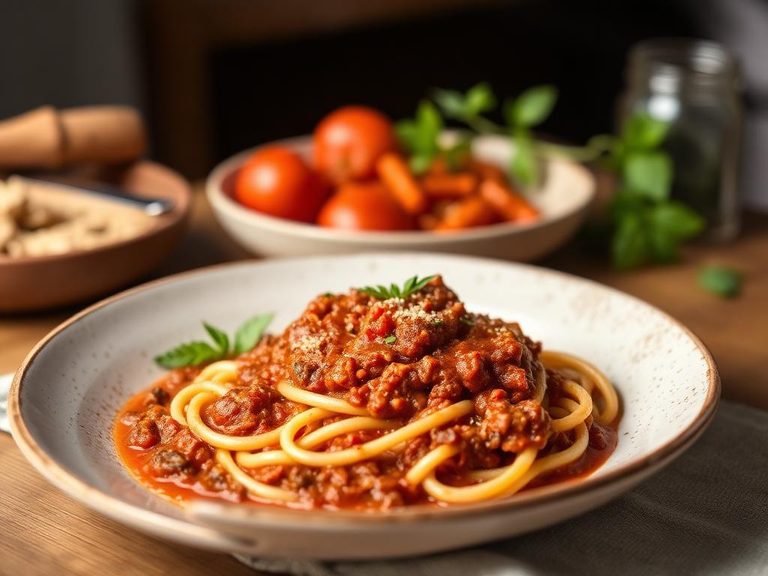
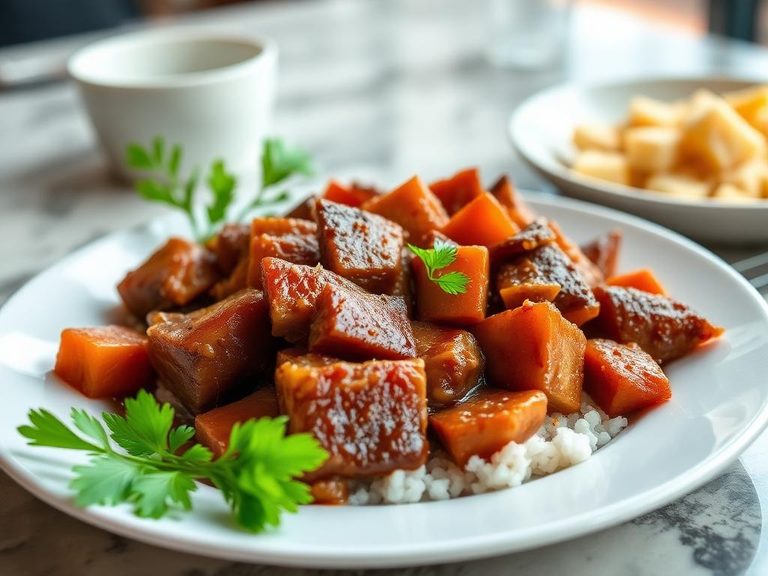
🌍 Where it's eaten
💡 Did you know?
The bay laurel is the source of the ancient Greek and Roman 'laurel wreath,' a symbol of victory and honor awarded to poets, scholars, and triumphant generals.
Full nutrition (USDA data · scales with serving)
| Water | 5.4 g |
| Energy | 313 kcal |
| Energy | 1312 kj |
| Protein | 7.6 g |
| Total lipid (fat) | 8.4 g |
| Ash | 3.6 g |
| Carbohydrate, by difference | 75.0 g |
| Fiber, total dietary | 26.3 g |
| Calcium, Ca | 834 mg |
| Iron, Fe | 43.0 mg |
| Magnesium, Mg | 120 mg |
| Phosphorus, P | 113 mg |
| Potassium, K | 529 mg |
| Sodium, Na | 23.0 mg |
| Zinc, Zn | 3.7 mg |
| Copper, Cu | 0.42 mg |
| Manganese, Mn | 8.2 mg |
| Selenium, Se | 2.8 ug |
| Vitamin C, total ascorbic acid | 46.5 mg |
| Thiamin | 0.01 mg |
| Riboflavin | 0.42 mg |
| Niacin | 2.0 mg |
| Vitamin B-6 | 1.7 mg |
| Folate, total | 180 ug |
| Folic acid | 0.00 ug |
| Folate, food | 180 ug |
| Folate, DFE | 180 ug |
| Vitamin B-12 | 0.00 ug |
| Vitamin A, RAE | 309 ug |
| Retinol | 0.00 ug |
| Vitamin A, IU | 6185 iu |
| Vitamin D (D2 + D3), International Units | 0.00 iu |
| Vitamin D (D2 + D3) | 0.00 ug |
| Alcohol, ethyl | 0.00 g |
Fat & fatty acid profile (per 100g)
| Fatty acids, total saturated | 2.3 g |
| SFA 4:0 | 0.00 g |
| SFA 6:0 | 0.00 g |
| SFA 8:0 | 0.01 g |
| SFA 10:0 | 0.01 g |
| SFA 12:0 | 0.53 g |
| SFA 14:0 | 0.21 g |
| SFA 16:0 | 1.3 g |
| SFA 18:0 | 0.16 g |
| Fatty acids, total monounsaturated | 1.6 g |
| MUFA 16:1 | 0.14 g |
| MUFA 18:1 | 1.5 g |
| MUFA 20:1 | 0.00 g |
| MUFA 22:1 | 0.00 g |
| Fatty acids, total polyunsaturated | 2.3 g |
| PUFA 18:2 | 1.2 g |
| PUFA 18:3 | 1.1 g |
| PUFA 18:4 | 0.00 g |
| PUFA 20:4 | 0.00 g |
| PUFA 20:5 n-3 (EPA) | 0.00 g |
| PUFA 22:5 n-3 (DPA) | 0.00 g |
| PUFA 22:6 n-3 (DHA) | 0.00 g |
| Fatty acids, total trans | 0.00 g |
| Cholesterol | 0.00 mg |
Amino acid profile (per 100g)
Estimated from Spices, garlic powder — USDA does not publish this profile for Spices.
| Tryptophan | 0.12 g |
| Threonine | 0.37 g |
| Isoleucine | 0.41 g |
| Leucine | 0.73 g |
| Lysine | 0.77 g |
| Methionine | 0.11 g |
| Cystine | 0.25 g |
| Phenylalanine | 0.53 g |
| Tyrosine | 0.45 g |
| Valine | 0.67 g |
| Arginine | 3.4 g |
| Histidine | 0.26 g |
| Alanine | 0.48 g |
| Aspartic acid | 1.9 g |
| Glutamic acid | 3.7 g |
| Glycine | 0.53 g |
| Proline | 1.4 g |
| Serine | 0.51 g |
| Hydroxyproline | 0.00 g |
FAQ
Can you eat bay leaves?
While non-toxic, whole bay leaves are too tough and sharp to eat comfortably. They are used for infusion and removed. Ground bay leaf powder is sometimes used in spice blends but in very small amounts.
How long should a bay leaf simmer?
For optimal flavor infusion, add a whole bay leaf during the last 30-45 minutes of cooking soups, stews, or sauces. Prolonged boiling (over an hour) can release bitter compounds.
What's the difference between Turkish and Californian bay leaves?
Turkish (Mediterranean) bay leaves (Laurus nobilis) are the classic, milder variety. Californian bay leaves (Umbellularia californica) are from a different tree, have a stronger, more pungent flavor, and should be used more sparingly.
Nutrient density (calculated · NRF9.3)
Nutrient Rich Foods index: beneficial nutrients (protein, fiber, vitamins, minerals) minus saturated fat, added sugar & sodium, per 100 kcal.
NRF9.3 index — Fulgoni, Keast & Drewnowski, 2009. Computed from USDA nutrients.
Weight-loss friendliness (composite index)
Energy density 3.13 kcal/g · 10% calories from protein · 26.3 g fiber · 0.0 g sugar per 100 g.
Composite of energy density (Rolls et al., 1999), protein & fiber satiety, minus sugar. A calculated heuristic — ranks satiety-per-calorie, not a clinical measure.
Dietary load (calculated from USDA values)
Potential renal acid load. Positive = acid-forming, negative = alkaline-forming.
Sodium-to-potassium ratio: 0.04 (lower is better — aim for ≤ 1)
Sodium:potassium per WHO potassium guidance. Computed from USDA nutrients.