

Rennin, vanilla, dry mix, prepared with whole milk
Whole food · Sweets

Photo: Wikipedia
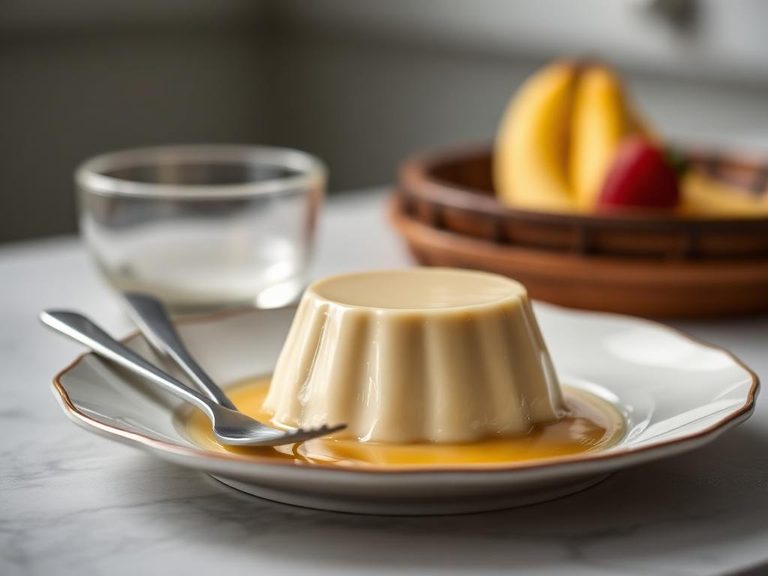
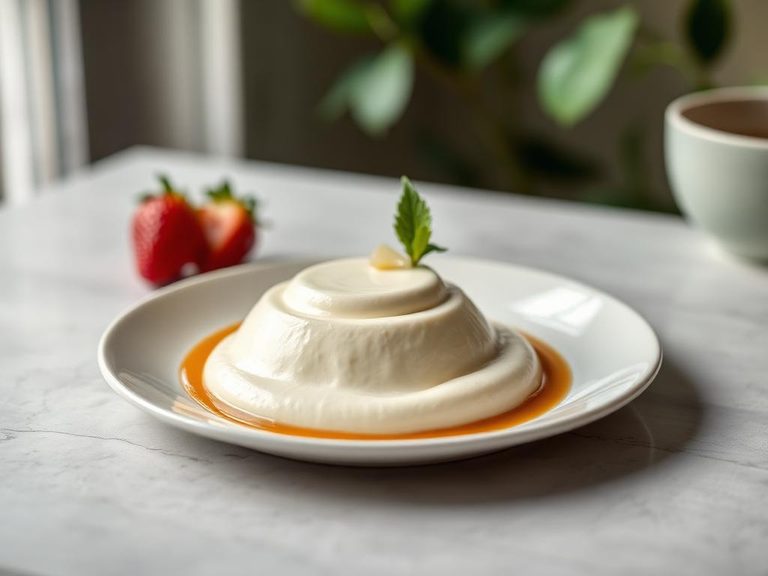
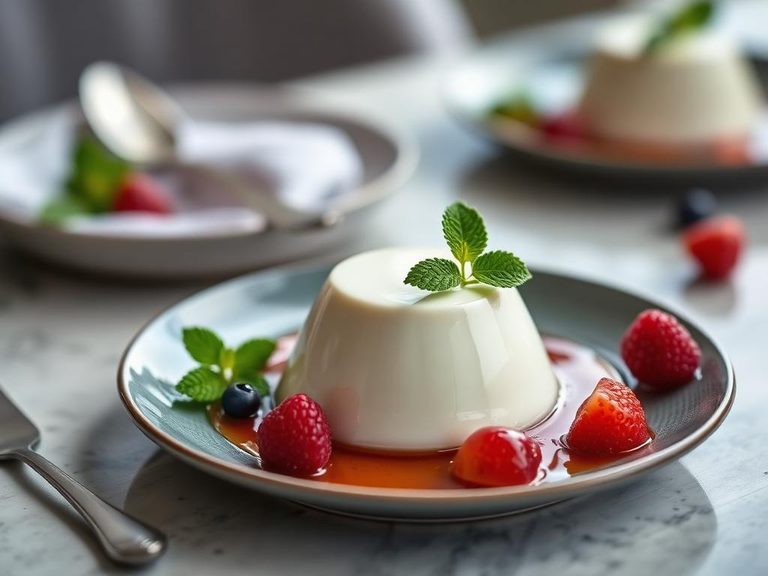
This is a creamy, sweet, and comforting dessert made by preparing a dry vanilla-flavored rennin (rennet) mix with whole milk. It sets into a soft, smooth, and delicate custard-like pudding with a rich vanilla aroma. Nutritionally, it's a moderate-energy food, providing a balanced mix of protein, carbohydrates, and fats in each serving.
Calorie split: 14% protein · 55% carbs · 31% fat
↓ Full nutrition💚 Why it's loved
People adore its nostalgic, creamy vanilla flavor and the satisfyingly soft, spoonable texture that feels like a treat. It's a beloved, versatile comfort food that can be enjoyed plain or topped with fruits, nuts, or a sprinkle of cinnamon.
⚠️ Watch-outs & how to enjoy it better
The primary concern is its added sugar content, which can contribute to blood sugar spikes, especially for those monitoring their glucose levels. To counteract this, enjoy a controlled portion alongside a source of protein or fiber, like a handful of almonds or a side of berries, to slow sugar absorption.
Key benefits
- Good source of protein from whole milk
- Provides calcium and vitamin D for bone health
- Offers quick energy from carbohydrates
- Contains healthy fats for satiety
- Simple and quick to prepare
🍽️ Popular dishes

🌍 Where it's eaten
💡 Did you know?
Rennin, the key setting agent, is an enzyme traditionally extracted from the stomachs of young calves, making this dessert a classic example of using animal-derived enzymes in cooking.
Full nutrition (USDA data · scales with serving)
| Water | 81.0 g |
| Energy | 89.0 kcal |
| Energy | 371 kj |
| Protein | 3.0 g |
| Total lipid (fat) | 3.1 g |
| Ash | 0.71 g |
| Carbohydrate, by difference | 12.2 g |
| Fiber, total dietary | 0.00 g |
| Calcium, Ca | 119 mg |
| Iron, Fe | 0.05 mg |
| Magnesium, Mg | 12.0 mg |
| Phosphorus, P | 93.0 mg |
| Potassium, K | 140 mg |
| Sodium, Na | 46.0 mg |
| Zinc, Zn | 0.35 mg |
| Copper, Cu | 0.01 mg |
| Manganese, Mn | 0.00 mg |
| Selenium, Se | 1.9 ug |
| Vitamin C, total ascorbic acid | 0.90 mg |
| Thiamin | 0.04 mg |
| Riboflavin | 0.15 mg |
| Niacin | 0.08 mg |
| Pantothenic acid | 0.29 mg |
| Vitamin B-6 | 0.04 mg |
| Folate, total | 5.0 ug |
| Folic acid | 0.00 ug |
| Folate, food | 5.0 ug |
| Folate, DFE | 5.0 ug |
| Vitamin B-12 | 0.33 ug |
| Vitamin A, RAE | 27.0 ug |
| Retinol | 26.0 ug |
| Carotene, beta | 17.0 ug |
| Vitamin A, IU | 115 iu |
| Vitamin D (D2 + D3), International Units | 37.0 iu |
| Vitamin D (D2 + D3) | 0.90 ug |
| Alcohol, ethyl | 0.00 g |
| Caffeine | 0.00 mg |
| Theobromine | 0.00 mg |
Fat & fatty acid profile (per 100g)
| Fatty acids, total saturated | 1.8 g |
| SFA 4:0 | 0.10 g |
| SFA 6:0 | 0.06 g |
| SFA 8:0 | 0.03 g |
| SFA 10:0 | 0.08 g |
| SFA 12:0 | 0.09 g |
| SFA 14:0 | 0.31 g |
| SFA 16:0 | 0.81 g |
| SFA 18:0 | 0.37 g |
| Fatty acids, total monounsaturated | 0.84 g |
| MUFA 16:1 | 0.07 g |
| MUFA 18:1 | 0.77 g |
| MUFA 20:1 | 0.00 g |
| MUFA 22:1 | 0.00 g |
| Fatty acids, total polyunsaturated | 0.11 g |
| PUFA 18:2 | 0.07 g |
| PUFA 18:3 | 0.04 g |
| PUFA 18:4 | 0.00 g |
| PUFA 20:4 | 0.00 g |
| PUFA 20:5 n-3 (EPA) | 0.00 g |
| PUFA 22:5 n-3 (DPA) | 0.00 g |
| PUFA 22:6 n-3 (DHA) | 0.00 g |
| Cholesterol | 13.0 mg |
| Phytosterols | 0.00 mg |
Amino acid profile (per 100g)
| Tryptophan | 0.04 g |
| Threonine | 0.14 g |
| Isoleucine | 0.18 g |
| Leucine | 0.30 g |
| Lysine | 0.24 g |
| Methionine | 0.08 g |
| Cystine | 0.03 g |
| Phenylalanine | 0.15 g |
| Tyrosine | 0.15 g |
| Valine | 0.20 g |
| Arginine | 0.11 g |
| Histidine | 0.08 g |
| Alanine | 0.10 g |
| Aspartic acid | 0.23 g |
| Glutamic acid | 0.63 g |
| Glycine | 0.06 g |
| Proline | 0.29 g |
| Serine | 0.17 g |
FAQ
What is rennin and how does it work?
Rennin (or chymosin) is a protease enzyme that coagulates milk. It works by cleaving a specific protein in milk (kappa-casein), causing the milk proteins to form a gel-like network, setting the liquid into a soft curd or pudding.
How is this different from gelatin-based puddings?
Rennin creates a softer, more delicate, and less rubbery texture than gelatin. Gelatin forms a firm, elastic gel, while rennin-set puddings have a creamier, spoonable consistency similar to a very soft custard.
Can I use a plant-based milk with this mix?
Generally, no. Rennin requires the specific casein proteins found in animal milk to form a proper gel. Plant-based milks lack these proteins and will not set correctly, resulting in a liquid mixture.
Nutrient density (calculated · NRF9.3)
Nutrient Rich Foods index: beneficial nutrients (protein, fiber, vitamins, minerals) minus saturated fat, added sugar & sodium, per 100 kcal.
NRF9.3 index — Fulgoni, Keast & Drewnowski, 2009. Computed from USDA nutrients.
Weight-loss friendliness (composite index)
Energy density 0.89 kcal/g · 14% calories from protein · 0.0 g fiber · 0.0 g sugar per 100 g.
Composite of energy density (Rolls et al., 1999), protein & fiber satiety, minus sugar. A calculated heuristic — ranks satiety-per-calorie, not a clinical measure.
Dietary load (calculated from USDA values)
Potential renal acid load. Positive = acid-forming, negative = alkaline-forming.
Sodium-to-potassium ratio: 0.33 (lower is better — aim for ≤ 1)
Sodium:potassium per WHO potassium guidance. Computed from USDA nutrients.