

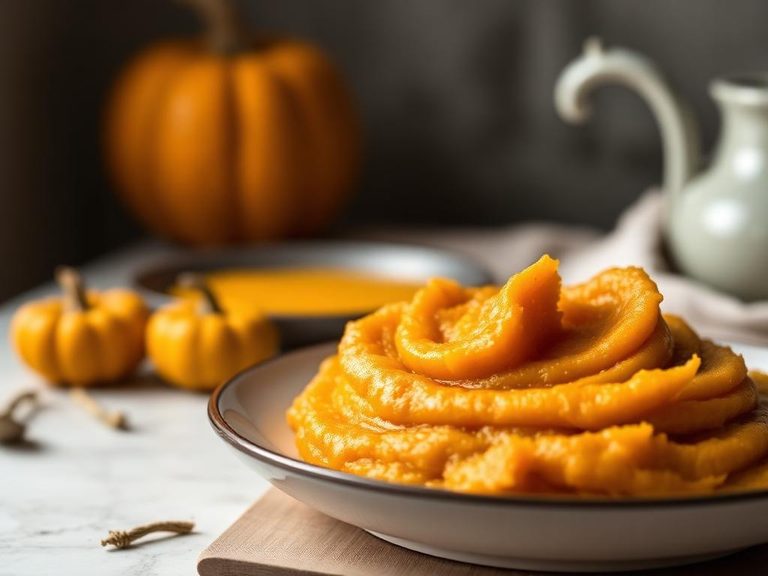
Pumpkin, cooked, boiled, drained, with salt
Whole food · Vegetables and Vegetable Products

Photo: Wikipedia
This is pumpkin flesh that has been boiled until tender and drained, often with a pinch of salt to enhance its natural flavor. The texture is soft and slightly fibrous, with a mild, sweet taste that becomes more pronounced with cooking. Nutritionally, it's a very low-calorie food, providing a good source of fiber and beta-carotene (which converts to vitamin A) for minimal calories.
Calorie split: 14% protein · 83% carbs · 3% fat
↓ Full nutrition💚 Why it's loved
People love its natural, mild sweetness and velvety texture when cooked, which makes it a comforting and versatile base for soups, curries, and pies. It's also cherished in many cultures as a symbol of harvest and autumn, featured in festive dishes.
⚠️ Watch-outs & how to enjoy it better
The main downside is its high glycemic load, which can cause blood-sugar spikes if eaten alone in large amounts. To counteract this, pair it with protein (like beans or meat) and healthy fats (like olive oil or nuts) to slow digestion. Also, be mindful of added salt during boiling; choose low-sodium preparation or rinse lightly if needed.
Key benefits
- Excellent source of beta-carotene (vitamin A precursor)
- Very low in calories and fat
- Good source of dietary fiber
- Contains potassium and antioxidants
- Hydrating due to high water content
🍽️ Popular dishes
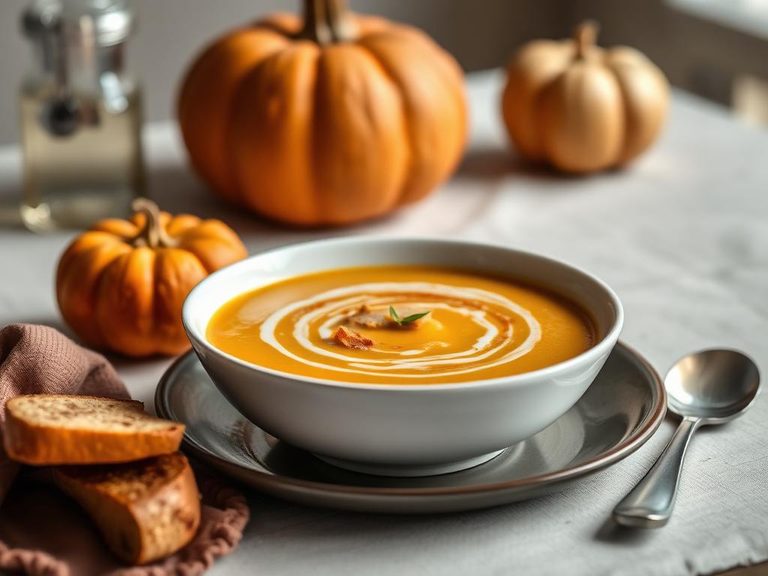
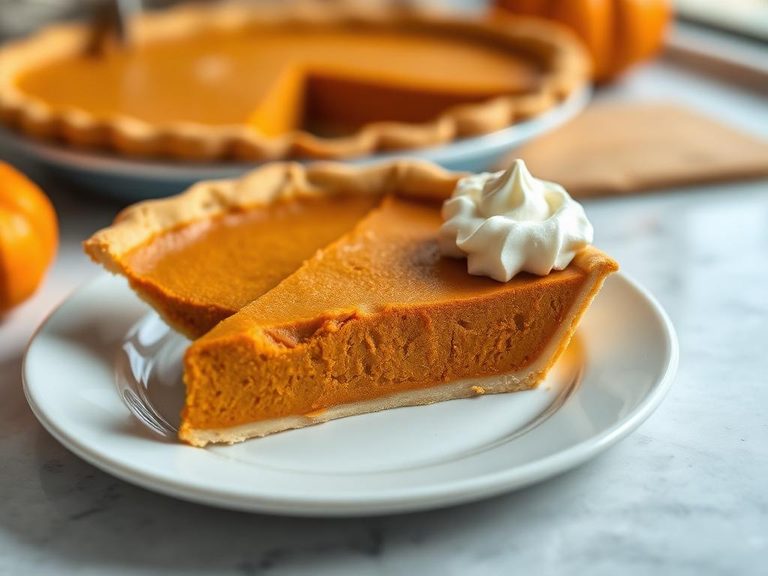
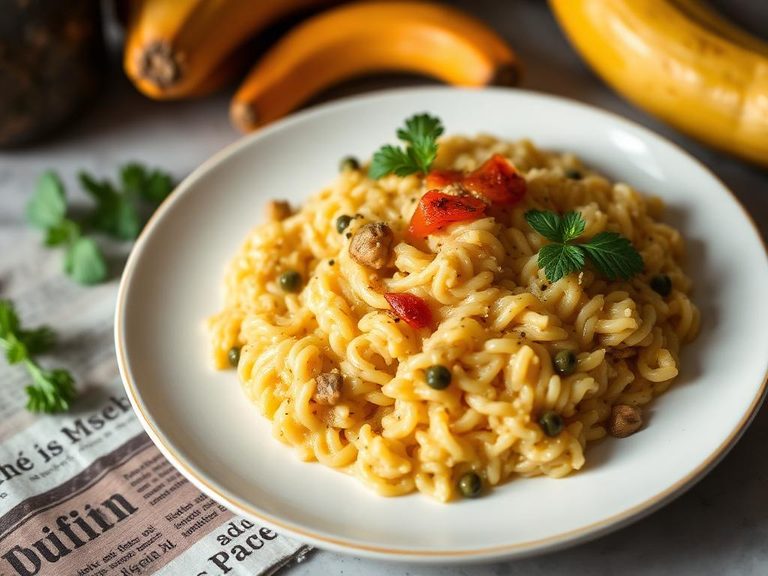
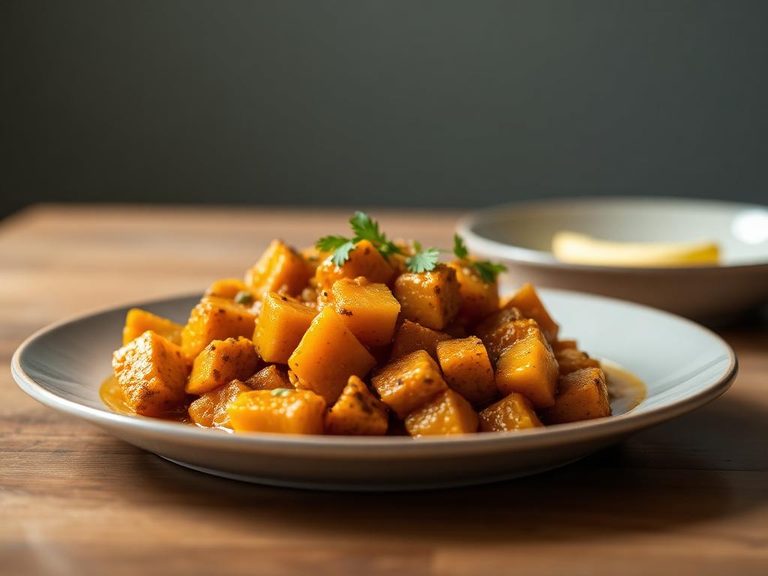
🌍 Where it's eaten
💡 Did you know?
Pumpkins are over 90% water, which is why boiled pumpkin loses significant volume and weight during cooking.
Full nutrition (USDA data · scales with serving)
| Water | 93.7 g |
| Energy | 18.0 kcal |
| Energy | 74.0 kj |
| Protein | 0.72 g |
| Total lipid (fat) | 0.07 g |
| Ash | 1.2 g |
| Carbohydrate, by difference | 4.3 g |
| Fiber, total dietary | 1.1 g |
| Total Sugars | 2.1 g |
| Calcium, Ca | 15.0 mg |
| Iron, Fe | 0.57 mg |
| Magnesium, Mg | 9.0 mg |
| Phosphorus, P | 30.0 mg |
| Potassium, K | 230 mg |
| Sodium, Na | 237 mg |
| Zinc, Zn | 0.23 mg |
| Copper, Cu | 0.09 mg |
| Manganese, Mn | 0.09 mg |
| Selenium, Se | 0.20 ug |
| Vitamin C, total ascorbic acid | 4.7 mg |
| Thiamin | 0.03 mg |
| Riboflavin | 0.08 mg |
| Niacin | 0.41 mg |
| Pantothenic acid | 0.20 mg |
| Vitamin B-6 | 0.04 mg |
| Folate, total | 9.0 ug |
| Folic acid | 0.00 ug |
| Folate, food | 9.0 ug |
| Folate, DFE | 9.0 ug |
| Choline, total | 6.2 mg |
| Vitamin B-12 | 0.00 ug |
| Vitamin B-12, added | 0.00 ug |
| Vitamin A, RAE | 288 ug |
| Retinol | 0.00 ug |
| Carotene, beta | 2096 ug |
| Carotene, alpha | 2715 ug |
| Cryptoxanthin, beta | 0.00 ug |
| Vitamin A, IU | 5755 iu |
| Lycopene | 0.00 ug |
| Lutein + zeaxanthin | 1014 ug |
| Vitamin E (alpha-tocopherol) | 0.80 mg |
| Vitamin E, added | 0.00 mg |
| Vitamin D (D2 + D3), International Units | 0.00 iu |
| Vitamin D (D2 + D3) | 0.00 ug |
| Vitamin K (phylloquinone) | 0.80 ug |
| Caffeine | 0.00 mg |
| Theobromine | 0.00 mg |
Fat & fatty acid profile (per 100g)
| Fatty acids, total saturated | 0.04 g |
| SFA 12:0 | 0.00 g |
| SFA 14:0 | 0.01 g |
| SFA 16:0 | 0.03 g |
| SFA 18:0 | 0.00 g |
| Fatty acids, total monounsaturated | 0.01 g |
| MUFA 16:1 | 0.01 g |
| MUFA 18:1 | 0.01 g |
| Fatty acids, total polyunsaturated | 0.00 g |
| PUFA 18:2 | 0.00 g |
| PUFA 18:3 | 0.00 g |
| Fatty acids, total trans | 0.00 g |
| Cholesterol | 0.00 mg |
Amino acid profile (per 100g)
| Tryptophan | 0.01 g |
| Threonine | 0.02 g |
| Isoleucine | 0.02 g |
| Leucine | 0.03 g |
| Lysine | 0.04 g |
| Methionine | 0.01 g |
| Cystine | 0.00 g |
| Phenylalanine | 0.02 g |
| Tyrosine | 0.03 g |
| Valine | 0.03 g |
| Arginine | 0.04 g |
| Histidine | 0.01 g |
| Alanine | 0.02 g |
| Aspartic acid | 0.07 g |
| Glutamic acid | 0.13 g |
| Glycine | 0.02 g |
| Proline | 0.02 g |
| Serine | 0.03 g |
FAQ
Is boiled pumpkin healthier than roasted?
Both are healthy, but boiling can leach some water-soluble vitamins (like vitamin C) into the cooking water. Roasting may retain more nutrients and concentrates flavor without added fat.
Can I freeze boiled pumpkin?
Yes, it freezes well. Drain it thoroughly, cool it, and store in airtight containers or bags for up to 3 months. It's perfect for quick soups or purees later.
Why does my boiled pumpkin taste bland?
Pumpkin has a mild flavor. Enhance it by adding a pinch of salt during cooking, or spices like cinnamon, nutmeg, or a splash of cream after draining.
Nutrient density (calculated · NRF9.3)
Nutrient Rich Foods index: beneficial nutrients (protein, fiber, vitamins, minerals) minus saturated fat, added sugar & sodium, per 100 kcal.
NRF9.3 index — Fulgoni, Keast & Drewnowski, 2009. Computed from USDA nutrients.
Weight-loss friendliness (composite index)
Energy density 0.18 kcal/g · 16% calories from protein · 1.1 g fiber · 2.1 g sugar per 100 g.
Composite of energy density (Rolls et al., 1999), protein & fiber satiety, minus sugar. A calculated heuristic — ranks satiety-per-calorie, not a clinical measure.
Dietary load (calculated from USDA values)
Potential renal acid load. Positive = acid-forming, negative = alkaline-forming.
Sodium-to-potassium ratio: 1.03 (lower is better — aim for ≤ 1)
Sodium:potassium per WHO potassium guidance. Computed from USDA nutrients.