

Pudding, flavors other than chocolate, ready-to-eat
Common food
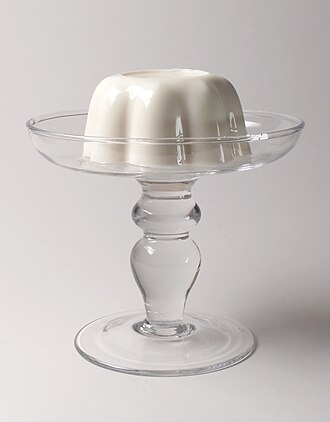
Photo: Wikipedia
This is a smooth, creamy, ready-to-eat pudding made from a base of milk or cream, sugar, and a thickener like cornstarch or gelatin, flavored with vanilla, butterscotch, coconut, or fruit. Its texture is luxuriously soft and wobbly, offering a comforting, sweet mouthfeel. Nutritionally, it's a high-carb, moderate-sugar treat with minimal protein and fat.
Calorie split: 4% protein · 69% carbs · 26% fat
↓ Full nutrition💚 Why it's loved
People love it for its nostalgic, comforting sweetness and the satisfying, silky texture that melts in the mouth. Its mild flavor makes it a perfect canvas for toppings like whipped cream, fruit compote, or a sprinkle of cinnamon.
⚠️ Watch-outs & how to enjoy it better
The high sugar content (16.97g per 100g) can cause rapid blood-sugar spikes, making it less suitable for those managing diabetes or insulin resistance. It often contains common allergens like dairy and may have added thickeners or artificial flavors. To counteract this, pair a small portion with a source of protein (like nuts) or fiber (like berries) to slow sugar absorption, and always check labels for specific allergens.
Key benefits
- Provides quick energy from carbohydrates
- Low in fat, especially saturated fat
- Source of calcium from its dairy base
- Convenient, no-prep dessert or snack
- Versatile base for adding fresh fruit or toppings
🍽️ Popular dishes
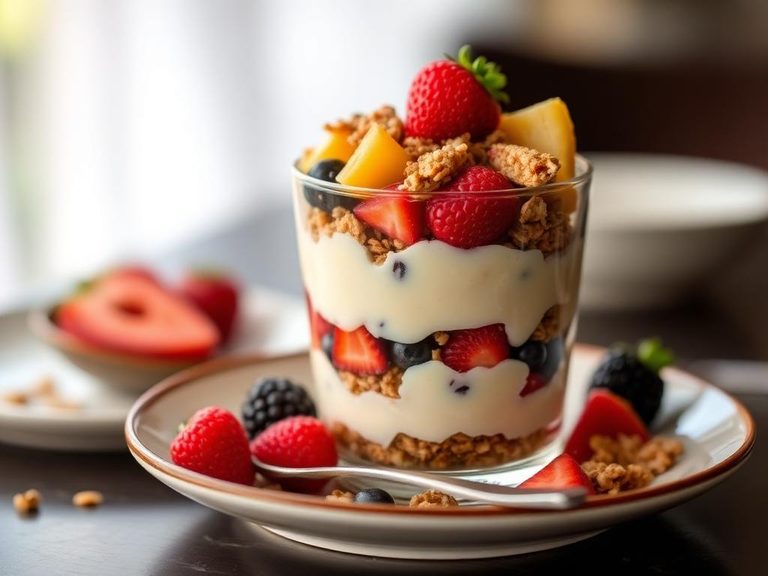
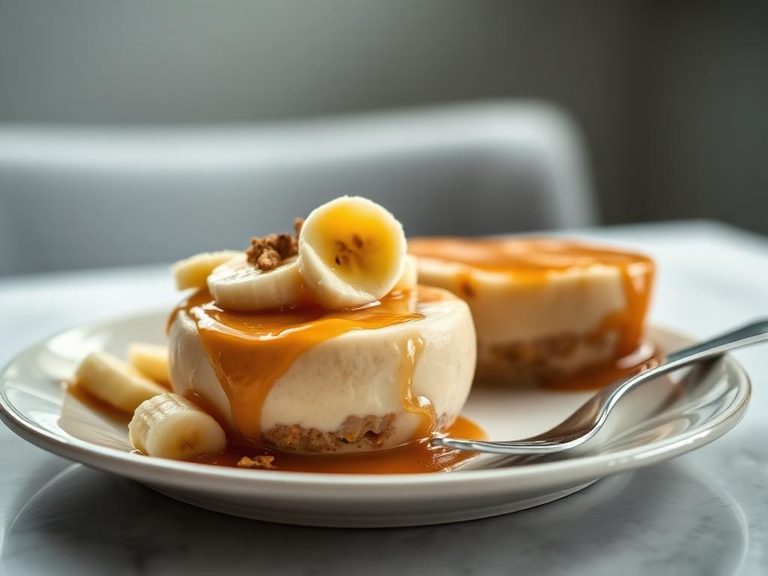
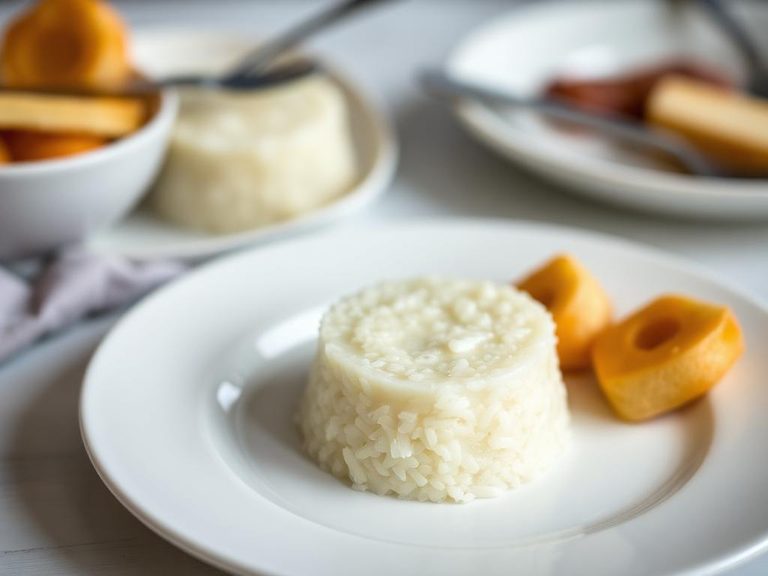
🌍 Where it's eaten
💡 Did you know?
The word 'pudding' originally referred to a savory, sausage-like dish in medieval England; its meaning shifted to sweet, creamy desserts over centuries, primarily in the 19th century.
Full nutrition (USDA data · scales with serving)
| Water | 71.7 g |
| Energy | 130 kcal |
| Protein | 1.4 g |
| Total lipid (fat) | 3.8 g |
| Carbohydrate, by difference | 22.6 g |
| Fiber, total dietary | 0.00 g |
| Total Sugars | 17.0 g |
| Calcium, Ca | 49.0 mg |
| Iron, Fe | 0.09 mg |
| Magnesium, Mg | 4.0 mg |
| Phosphorus, P | 41.0 mg |
| Potassium, K | 65.0 mg |
| Sodium, Na | 172 mg |
| Zinc, Zn | 0.16 mg |
| Copper, Cu | 0.02 mg |
| Selenium, Se | 0.00 ug |
| Vitamin C, total ascorbic acid | 0.20 mg |
| Thiamin | 0.02 mg |
| Riboflavin | 0.07 mg |
| Niacin | 0.06 mg |
| Vitamin B-6 | 0.02 mg |
| Folate, total | 2.0 ug |
| Folic acid | 0.00 ug |
| Folate, food | 2.0 ug |
| Folate, DFE | 2.0 ug |
| Choline, total | 6.2 mg |
| Vitamin B-12 | 0.15 ug |
| Vitamin B-12, added | 0.00 ug |
| Vitamin A, RAE | 2.0 ug |
| Retinol | 2.0 ug |
| Carotene, beta | 0.00 ug |
| Carotene, alpha | 0.00 ug |
| Cryptoxanthin, beta | 0.00 ug |
| Lycopene | 0.00 ug |
| Lutein + zeaxanthin | 0.00 ug |
| Vitamin E (alpha-tocopherol) | 0.30 mg |
| Vitamin E, added | 0.00 mg |
| Vitamin D (D2 + D3) | 0.00 ug |
| Vitamin K (phylloquinone) | 0.60 ug |
| Alcohol, ethyl | 0.00 g |
| Caffeine | 0.00 mg |
| Theobromine | 0.00 mg |
Fat & fatty acid profile (per 100g)
| Fatty acids, total saturated | 1.0 g |
| SFA 4:0 | 0.01 g |
| SFA 6:0 | 0.00 g |
| SFA 8:0 | 0.00 g |
| SFA 10:0 | 0.00 g |
| SFA 12:0 | 0.00 g |
| SFA 14:0 | 0.01 g |
| SFA 16:0 | 0.51 g |
| SFA 18:0 | 0.47 g |
| Fatty acids, total monounsaturated | 2.3 g |
| MUFA 16:1 | 0.01 g |
| MUFA 18:1 | 2.3 g |
| MUFA 20:1 | 0.01 g |
| MUFA 22:1 | 0.00 g |
| Fatty acids, total polyunsaturated | 0.09 g |
| PUFA 18:2 | 0.09 g |
| PUFA 18:3 | 0.00 g |
| PUFA 18:4 | 0.00 g |
| PUFA 20:4 | 0.00 g |
| PUFA 20:5 n-3 (EPA) | 0.00 g |
| PUFA 22:5 n-3 (DPA) | 0.00 g |
| PUFA 22:6 n-3 (DHA) | 0.00 g |
| Cholesterol | 1.0 mg |
Amino acid profile (per 100g)
Estimated from Puddings, banana, dry mix, regular, with added oil — USDA does not publish this profile for Pudding.
| Tryptophan | 0.00 g |
| Threonine | 0.00 g |
| Isoleucine | 0.00 g |
| Leucine | 0.01 g |
| Lysine | 0.00 g |
| Methionine | 0.00 g |
| Cystine | 0.00 g |
| Phenylalanine | 0.00 g |
| Tyrosine | 0.00 g |
| Valine | 0.00 g |
| Arginine | 0.00 g |
| Histidine | 0.00 g |
| Alanine | 0.00 g |
| Aspartic acid | 0.00 g |
| Glutamic acid | 0.01 g |
| Glycine | 0.00 g |
| Proline | 0.00 g |
| Serine | 0.00 g |
FAQ
Is this type of pudding a good source of protein?
No, with only 1.45g of protein per 100g, it is not a significant protein source. It is primarily a carbohydrate and sugar-based food.
Can I use this pudding in baking?
Yes, it's often used as a filling for cream pies, layered in trifles, or as a moistening agent in some cake recipes. Its set texture holds up well.
How does it differ from custard?
Pudding is typically thickened with starch (like cornstarch) and cooked on the stovetop, while custard is thickened primarily with eggs and often baked. Custard has a richer, more eggy flavor.
Nutrient density (calculated · NRF9.3)
Nutrient Rich Foods index: beneficial nutrients (protein, fiber, vitamins, minerals) minus saturated fat, added sugar & sodium, per 100 kcal.
NRF9.3 index — Fulgoni, Keast & Drewnowski, 2009. Computed from USDA nutrients.
Weight-loss friendliness (composite index)
Energy density 1.30 kcal/g · 4% calories from protein · 0.0 g fiber · 17.0 g sugar per 100 g.
Composite of energy density (Rolls et al., 1999), protein & fiber satiety, minus sugar. A calculated heuristic — ranks satiety-per-calorie, not a clinical measure.
Dietary load (calculated from USDA values)
Potential renal acid load. Positive = acid-forming, negative = alkaline-forming.
Sodium-to-potassium ratio: 2.65 (lower is better — aim for ≤ 1)
Sodium:potassium per WHO potassium guidance. Computed from USDA nutrients.