

Pretzels, soft, filled with cheese
Common food

Photo: Wikipedia
A soft, pillowy pretzel dough, often with a distinctive chewy crust, is generously stuffed with a molten, savory cheese filling. The experience is a delightful contrast of the slightly salty, yeasty bread and the rich, creamy cheese interior. Nutritionally, it's a dense source of carbohydrates for energy, but with a modest protein boost from the cheese filling.
Calorie split: 12% protein · 74% carbs · 14% fat
↓ Full nutrition💚 Why it's loved
People adore the comforting, indulgent combination of warm, chewy bread and gooey cheese, making it a popular street food and snack. Its versatility allows it to be enjoyed plain, with mustard, or as part of a more elaborate meal, appealing to both children and adults.
⚠️ Watch-outs & how to enjoy it better
The high carbohydrate content and potential for added sodium can be a concern for those managing blood sugar or sodium intake. To counteract, pair with a side of vegetables or lean protein, practice portion control by choosing a smaller size, and opt for lower-sodium cheese fillings if available.
Key benefits
- Provides quick energy from its high carbohydrate content.
- Offers a moderate protein source from the cheese filling.
- Can be a satisfying, portable snack or meal component.
- The cheese filling adds calcium and fat for satiety.
🍽️ Popular dishes
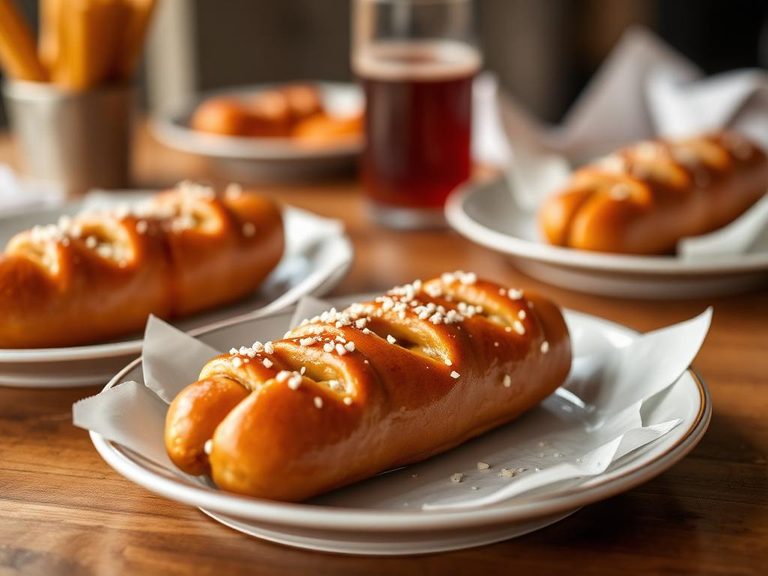
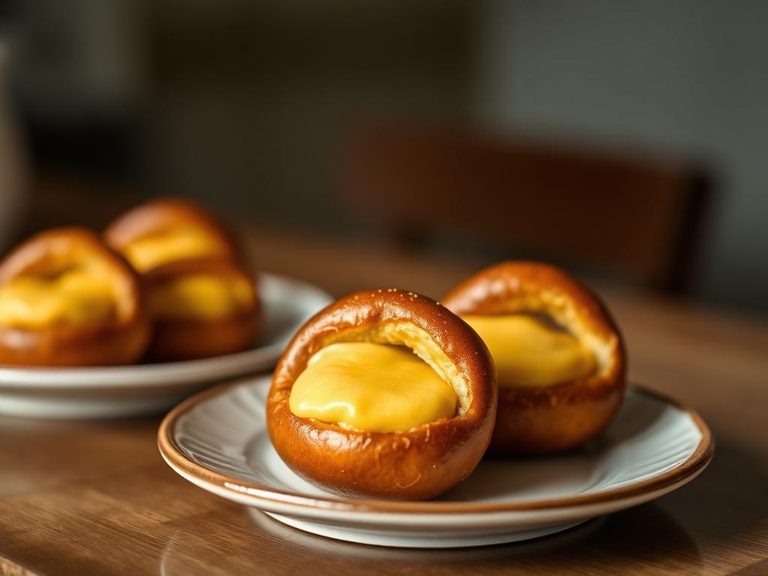
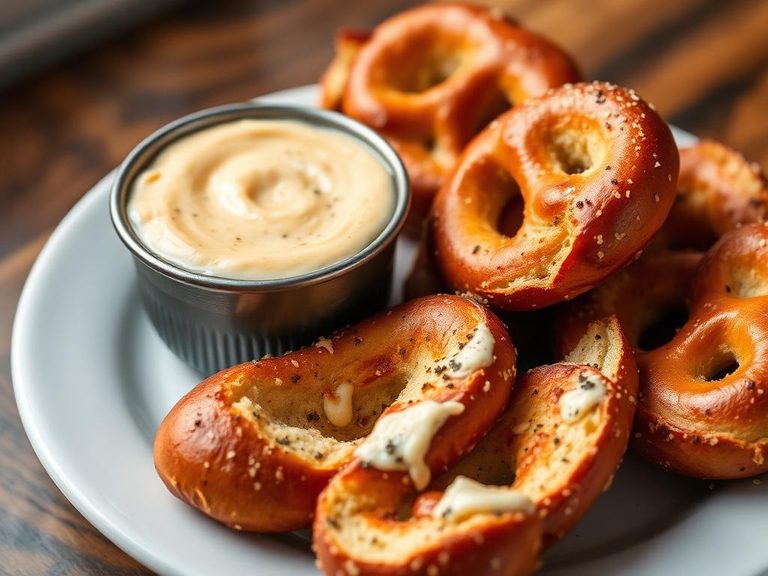

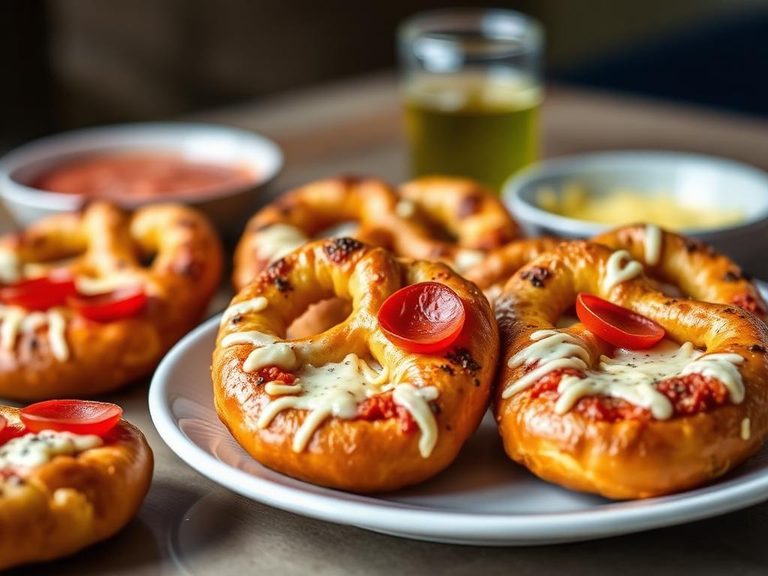
🌍 Where it's eaten
💡 Did you know?
The traditional pretzel shape is said to resemble arms crossed in prayer, and its name may derive from the Latin word 'pretiola' meaning 'little reward.'
Full nutrition (USDA data · scales with serving)
| Water | 19.3 g |
| Energy | 339 kcal |
| Protein | 10.2 g |
| Total lipid (fat) | 5.4 g |
| Carbohydrate, by difference | 62.4 g |
| Fiber, total dietary | 1.5 g |
| Total Sugars | 0.45 g |
| Calcium, Ca | 110 mg |
| Iron, Fe | 3.4 mg |
| Magnesium, Mg | 22.0 mg |
| Phosphorus, P | 138 mg |
| Potassium, K | 92.0 mg |
| Sodium, Na | 310 mg |
| Zinc, Zn | 1.3 mg |
| Copper, Cu | 0.11 mg |
| Selenium, Se | 18.4 ug |
| Vitamin C, total ascorbic acid | 0.00 mg |
| Thiamin | 0.36 mg |
| Riboflavin | 0.30 mg |
| Niacin | 3.7 mg |
| Vitamin B-6 | 0.03 mg |
| Folate, total | 24.0 ug |
| Folic acid | 0.00 ug |
| Folate, food | 24.0 ug |
| Folate, DFE | 24.0 ug |
| Choline, total | 17.1 mg |
| Vitamin B-12 | 0.20 ug |
| Vitamin B-12, added | 0.00 ug |
| Vitamin A, RAE | 26.0 ug |
| Retinol | 26.0 ug |
| Carotene, beta | 0.00 ug |
| Carotene, alpha | 0.00 ug |
| Cryptoxanthin, beta | 0.00 ug |
| Lycopene | 0.00 ug |
| Lutein + zeaxanthin | 15.0 ug |
| Vitamin E (alpha-tocopherol) | 0.54 mg |
| Vitamin E, added | 0.00 mg |
| Vitamin D (D2 + D3) | 0.10 ug |
| Vitamin K (phylloquinone) | 2.5 ug |
| Alcohol, ethyl | 0.00 g |
| Caffeine | 0.00 mg |
| Theobromine | 0.00 mg |
Fat & fatty acid profile (per 100g)
| Fatty acids, total saturated | 2.1 g |
| SFA 4:0 | 0.05 g |
| SFA 6:0 | 0.04 g |
| SFA 8:0 | 0.03 g |
| SFA 10:0 | 0.07 g |
| SFA 12:0 | 0.08 g |
| SFA 14:0 | 0.25 g |
| SFA 16:0 | 1.1 g |
| SFA 18:0 | 0.47 g |
| Fatty acids, total monounsaturated | 1.5 g |
| MUFA 16:1 | 0.04 g |
| MUFA 18:1 | 1.5 g |
| MUFA 20:1 | 0.01 g |
| MUFA 22:1 | 0.00 g |
| Fatty acids, total polyunsaturated | 0.92 g |
| PUFA 18:2 | 0.87 g |
| PUFA 18:3 | 0.06 g |
| PUFA 18:4 | 0.00 g |
| PUFA 20:4 | 0.00 g |
| PUFA 20:5 n-3 (EPA) | 0.00 g |
| PUFA 22:5 n-3 (DPA) | 0.00 g |
| PUFA 22:6 n-3 (DHA) | 0.00 g |
| Cholesterol | 8.0 mg |
Amino acid profile (per 100g)
Estimated from Snacks, pretzels, hard, confectioner's coating, chocolate-flavor — USDA does not publish this profile for Pretzels.
| Tryptophan | 0.10 g |
| Threonine | 0.25 g |
| Isoleucine | 0.29 g |
| Leucine | 0.53 g |
| Lysine | 0.25 g |
| Methionine | 0.13 g |
| Cystine | 0.15 g |
| Phenylalanine | 0.36 g |
| Tyrosine | 0.23 g |
| Valine | 0.33 g |
| Arginine | 0.31 g |
| Histidine | 0.16 g |
| Alanine | 0.27 g |
| Aspartic acid | 0.42 g |
| Glutamic acid | 2.2 g |
| Glycine | 0.27 g |
| Proline | 0.74 g |
| Serine | 0.36 g |
FAQ
What is the best way to reheat a cheese-stuffed pretzel?
For optimal texture, reheat in a preheated oven at 350°F (175°C) for 5-7 minutes, or until the cheese is melted and the pretzel is warm. A quick microwave (30-45 seconds) works but may make the pretzel slightly chewy.
Can I freeze cheese-stuffed pretzels?
Yes, they freeze well. Wrap them individually in plastic wrap and place in a freezer bag. Reheat directly from frozen in the oven at 350°F (175°C) for 10-15 minutes.
Are cheese-stuffed pretzels a good source of fiber?
No, they are relatively low in fiber (about 1.5g per 100g). For a fiber boost, consider pairing them with a side of fruit or a fiber-rich dip like hummus.
Nutrient density (calculated · NRF9.3)
Nutrient Rich Foods index: beneficial nutrients (protein, fiber, vitamins, minerals) minus saturated fat, added sugar & sodium, per 100 kcal.
NRF9.3 index — Fulgoni, Keast & Drewnowski, 2009. Computed from USDA nutrients.
Weight-loss friendliness (composite index)
Energy density 3.39 kcal/g · 12% calories from protein · 1.5 g fiber · 0.5 g sugar per 100 g.
Composite of energy density (Rolls et al., 1999), protein & fiber satiety, minus sugar. A calculated heuristic — ranks satiety-per-calorie, not a clinical measure.
Dietary load (calculated from USDA values)
Potential renal acid load. Positive = acid-forming, negative = alkaline-forming.
Sodium-to-potassium ratio: 3.37 (lower is better — aim for ≤ 1)
Sodium:potassium per WHO potassium guidance. Computed from USDA nutrients.