

Potato, hash brown, from fresh, with cheese
Common food

Photo: Wikipedia
Crispy, golden-brown shreds of fresh potato pan-fried to a satisfying crunch and studded with pockets of melted, savory cheese. This comfort food classic balances a rich, buttery mouthfeel with the earthy, starchy base of the potato, elevated by the sharp, salty tang of the cheese. At around 223 calories per 100g, it's a calorie-dense side that delivers a significant hit of fat and carbohydrates for quick energy.
Calorie split: 9% protein · 29% carbs · 62% fat
↓ Full nutrition💚 Why it's loved
People adore it for the irresistible contrast of textures—the shatteringly crispy edges giving way to a soft, cheesy interior. It's a beloved, versatile staple in diner culture, often served as a hearty side or a base for loaded toppings.
⚠️ Watch-outs & how to enjoy it better
The high fat and calorie content can be a concern for those monitoring intake, and the simple carbs can cause a rapid blood-sugar spike. To mitigate this, pair it with a protein source like eggs or grilled chicken, practice portion control, and consider using a moderate amount of a strong-flavored cheese to enhance satisfaction without excess fat.
Key benefits
- Provides a quick source of energy from carbohydrates.
- Contains some protein from both the potato and cheese.
- Offers dietary fiber, especially if the potato skin is included.
- Can be a comforting, satisfying food that supports mood.
🍽️ Popular dishes
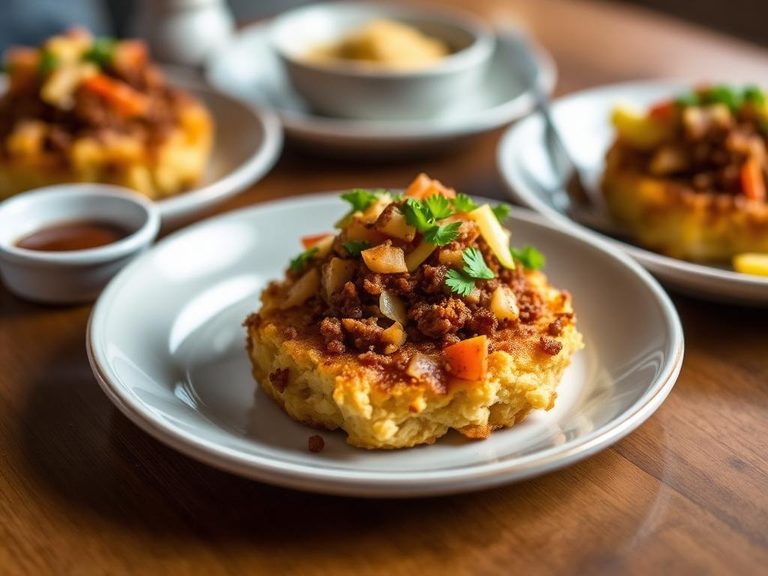
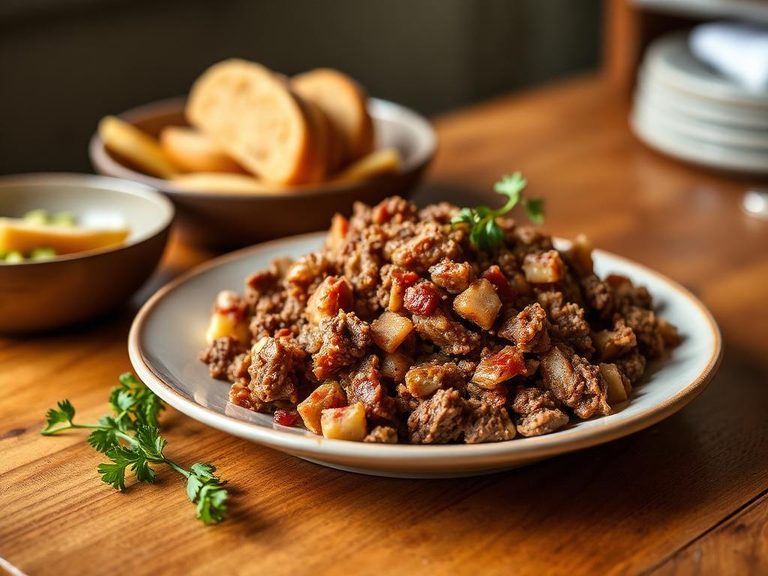
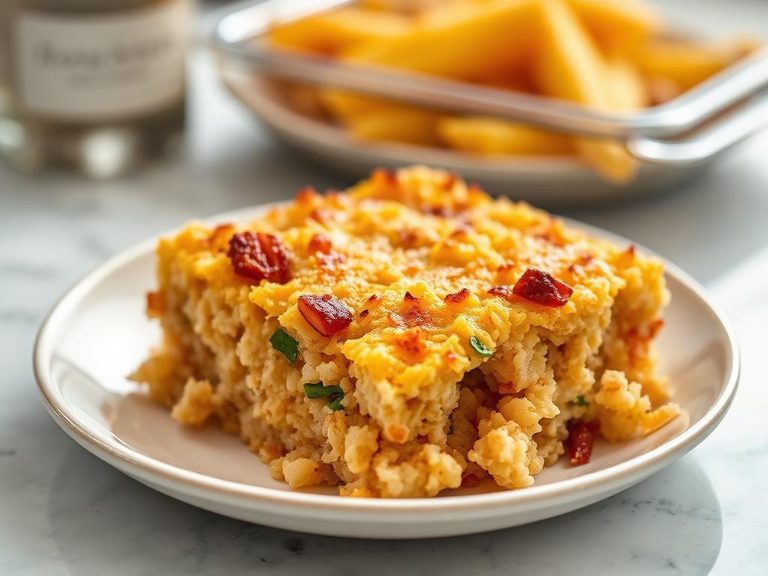
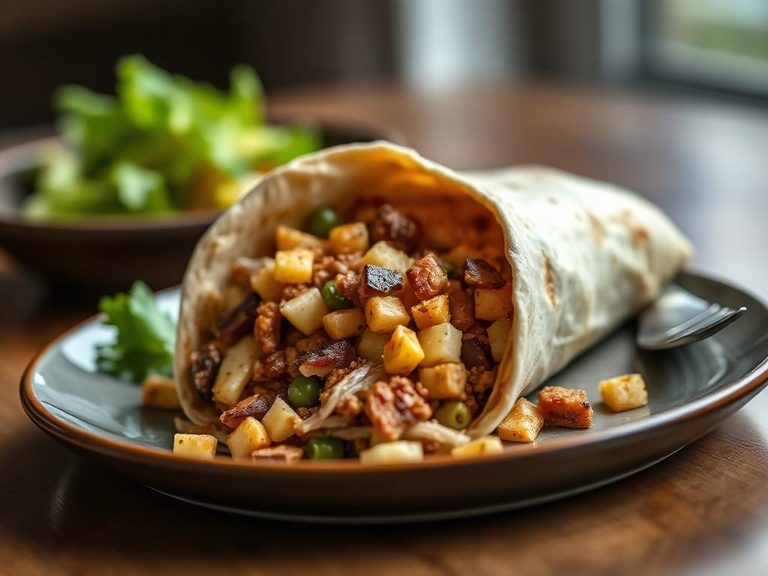
🌍 Where it's eaten
💡 Did you know?
The term 'hash' comes from the French 'hacher,' meaning to chop, and hash browns were originally a way to use up leftover boiled potatoes.
Full nutrition (USDA data · scales with serving)
| Water | 61.1 g |
| Energy | 223 kcal |
| Protein | 5.1 g |
| Total lipid (fat) | 15.5 g |
| Carbohydrate, by difference | 16.2 g |
| Fiber, total dietary | 1.4 g |
| Total Sugars | 1.1 g |
| Calcium, Ca | 113 mg |
| Iron, Fe | 0.57 mg |
| Magnesium, Mg | 24.0 mg |
| Phosphorus, P | 112 mg |
| Potassium, K | 354 mg |
| Sodium, Na | 389 mg |
| Zinc, Zn | 0.78 mg |
| Copper, Cu | 0.13 mg |
| Selenium, Se | 4.5 ug |
| Vitamin C, total ascorbic acid | 8.3 mg |
| Thiamin | 0.07 mg |
| Riboflavin | 0.09 mg |
| Niacin | 1.0 mg |
| Vitamin B-6 | 0.24 mg |
| Folate, total | 17.0 ug |
| Folic acid | 0.00 ug |
| Folate, food | 17.0 ug |
| Folate, DFE | 17.0 ug |
| Choline, total | 13.2 mg |
| Vitamin B-12 | 0.15 ug |
| Vitamin B-12, added | 0.00 ug |
| Vitamin A, RAE | 47.0 ug |
| Retinol | 47.0 ug |
| Carotene, beta | 2.0 ug |
| Carotene, alpha | 0.00 ug |
| Cryptoxanthin, beta | 0.00 ug |
| Lycopene | 0.00 ug |
| Lutein + zeaxanthin | 11.0 ug |
| Vitamin E (alpha-tocopherol) | 2.1 mg |
| Vitamin E, added | 0.00 mg |
| Vitamin D (D2 + D3) | 0.10 ug |
| Vitamin K (phylloquinone) | 11.6 ug |
| Alcohol, ethyl | 0.00 g |
| Caffeine | 0.00 mg |
| Theobromine | 0.00 mg |
Fat & fatty acid profile (per 100g)
| Fatty acids, total saturated | 4.3 g |
| SFA 4:0 | 0.10 g |
| SFA 6:0 | 0.08 g |
| SFA 8:0 | 0.05 g |
| SFA 10:0 | 0.13 g |
| SFA 12:0 | 0.14 g |
| SFA 14:0 | 0.47 g |
| SFA 16:0 | 2.3 g |
| SFA 18:0 | 0.80 g |
| Fatty acids, total monounsaturated | 5.5 g |
| MUFA 16:1 | 0.11 g |
| MUFA 18:1 | 5.4 g |
| MUFA 20:1 | 0.08 g |
| MUFA 22:1 | 0.00 g |
| Fatty acids, total polyunsaturated | 4.2 g |
| PUFA 18:2 | 3.7 g |
| PUFA 18:3 | 0.48 g |
| PUFA 18:4 | 0.00 g |
| PUFA 20:4 | 0.01 g |
| PUFA 20:5 n-3 (EPA) | 0.00 g |
| PUFA 22:5 n-3 (DPA) | 0.00 g |
| PUFA 22:6 n-3 (DHA) | 0.00 g |
| Cholesterol | 15.0 mg |
Amino acid profile (per 100g)
Estimated from Snacks, potato chips, made from dried potatoes, reduced fat — USDA does not publish this profile for Potato.
| Tryptophan | 0.04 g |
| Threonine | 0.24 g |
| Isoleucine | 0.25 g |
| Leucine | 0.37 g |
| Lysine | 0.35 g |
| Methionine | 0.07 g |
| Cystine | 0.07 g |
| Phenylalanine | 0.26 g |
| Tyrosine | 0.22 g |
| Valine | 0.33 g |
| Arginine | 0.27 g |
| Histidine | 0.13 g |
| Alanine | 0.20 g |
| Aspartic acid | 1.1 g |
| Glutamic acid | 0.94 g |
| Glycine | 0.19 g |
| Proline | 0.20 g |
| Serine | 0.23 g |
FAQ
What is the difference between hash browns and home fries?
Hash browns are typically shredded or grated potatoes, while home fries are cubed or diced and often parboiled before frying.
How do I make hash browns crispy?
Squeeze out excess moisture from the shredded potatoes, use a hot pan with sufficient oil or butter, and avoid overcrowding the pan.
Are hash browns gluten-free?
Plain hash browns are naturally gluten-free, but cross-contamination can occur in restaurants, and some pre-packaged versions may contain additives.
Nutrient density (calculated · NRF9.3)
Nutrient Rich Foods index: beneficial nutrients (protein, fiber, vitamins, minerals) minus saturated fat, added sugar & sodium, per 100 kcal.
NRF9.3 index — Fulgoni, Keast & Drewnowski, 2009. Computed from USDA nutrients.
Weight-loss friendliness (composite index)
Energy density 2.23 kcal/g · 9% calories from protein · 1.4 g fiber · 1.1 g sugar per 100 g.
Composite of energy density (Rolls et al., 1999), protein & fiber satiety, minus sugar. A calculated heuristic — ranks satiety-per-calorie, not a clinical measure.
Dietary load (calculated from USDA values)
Potential renal acid load. Positive = acid-forming, negative = alkaline-forming.
Sodium-to-potassium ratio: 1.10 (lower is better — aim for ≤ 1)
Sodium:potassium per WHO potassium guidance. Computed from USDA nutrients.