

Pinto beans and white rice
Common food

Photo: Wikipedia
Pinto beans and white rice is a comforting, earthy staple where creamy, speckled beans meet fluffy, neutral grains. The beans provide a soft, starchy bite with a mild, nutty flavor, while the rice acts as a perfect canvas. Nutritionally, it's a plant-based powerhouse, offering a solid 6g of protein and over 5g of fiber per 100g, making it a filling, high-carb energy source.
Calorie split: 15% protein · 62% carbs · 24% fat
↓ Full nutrition💚 Why it's loved
People love this classic pairing for its hearty, satisfying comfort and incredible versatility—it absorbs spices and sauces beautifully. It's a beloved, affordable canvas for countless global cuisines, from Latin American to Cajun kitchens.
⚠️ Watch-outs & how to enjoy it better
The combination is high in carbohydrates, which can cause blood sugar spikes if eaten alone, especially for those with insulin sensitivity. Beans contain oligosaccharides that can cause gas. To counteract this, pair the dish with a source of fat or protein (like cheese, avocado, or meat), and for beans, soak them overnight and cook thoroughly to improve digestibility.
Key benefits
- Excellent source of plant-based protein and dietary fiber.
- Provides sustained energy from complex carbohydrates.
- Naturally low in sugar and a good source of minerals like iron and magnesium.
- A complete protein when combined, as beans and rice complement each other's amino acids.
🍽️ Popular dishes
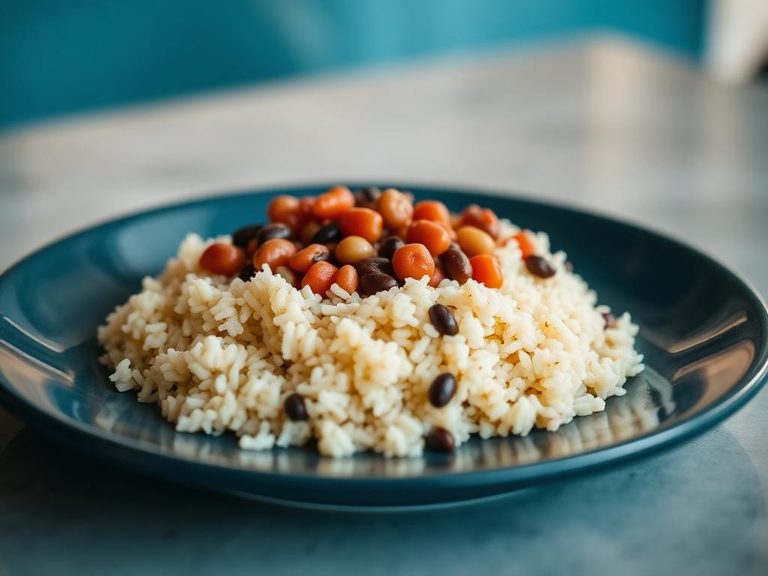
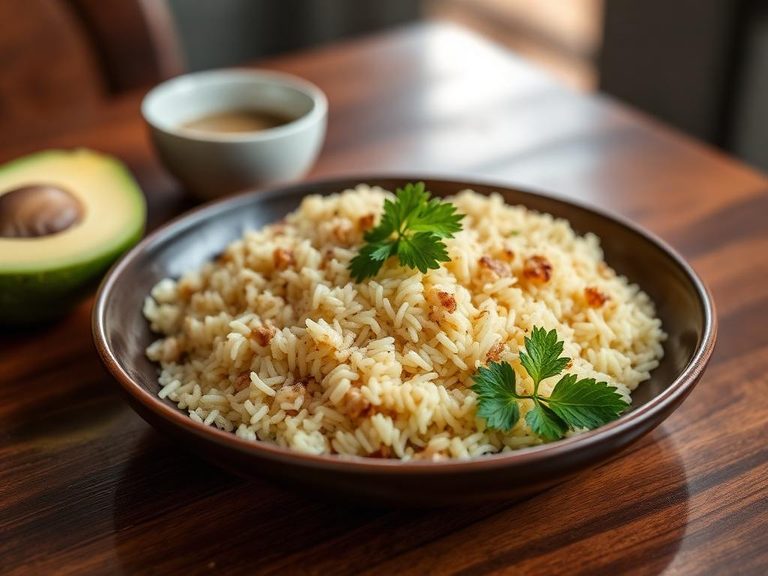

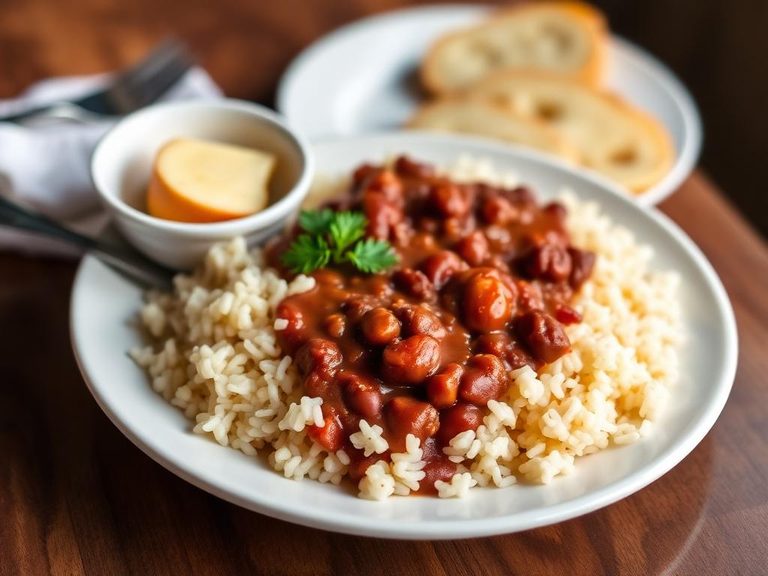

🌍 Where it's eaten
💡 Did you know?
The name 'pinto' means 'painted' in Spanish, referring to the bean's distinctive mottled, speckled appearance.
Full nutrition (USDA data · scales with serving)
| Water | 62.3 g |
| Energy | 167 kcal |
| Protein | 6.1 g |
| Total lipid (fat) | 4.4 g |
| Carbohydrate, by difference | 25.8 g |
| Fiber, total dietary | 5.2 g |
| Total Sugars | 0.21 g |
| Calcium, Ca | 30.0 mg |
| Iron, Fe | 1.6 mg |
| Magnesium, Mg | 33.0 mg |
| Phosphorus, P | 99.0 mg |
| Potassium, K | 257 mg |
| Sodium, Na | 228 mg |
| Zinc, Zn | 0.74 mg |
| Copper, Cu | 0.15 mg |
| Selenium, Se | 6.4 ug |
| Vitamin C, total ascorbic acid | 0.40 mg |
| Thiamin | 0.17 mg |
| Riboflavin | 0.04 mg |
| Niacin | 0.76 mg |
| Vitamin B-6 | 0.16 mg |
| Folate, total | 114 ug |
| Folic acid | 22.0 ug |
| Folate, food | 92.0 ug |
| Folate, DFE | 130 ug |
| Choline, total | 20.5 mg |
| Vitamin B-12 | 0.00 ug |
| Vitamin B-12, added | 0.00 ug |
| Vitamin A, RAE | 0.00 ug |
| Retinol | 0.00 ug |
| Carotene, beta | 0.00 ug |
| Carotene, alpha | 0.00 ug |
| Cryptoxanthin, beta | 0.00 ug |
| Lycopene | 0.00 ug |
| Lutein + zeaxanthin | 0.00 ug |
| Vitamin E (alpha-tocopherol) | 1.3 mg |
| Vitamin E, added | 0.00 mg |
| Vitamin D (D2 + D3) | 0.00 ug |
| Vitamin K (phylloquinone) | 5.9 ug |
| Alcohol, ethyl | 0.00 g |
| Caffeine | 0.00 mg |
| Theobromine | 0.00 mg |
Fat & fatty acid profile (per 100g)
| Fatty acids, total saturated | 0.63 g |
| SFA 4:0 | 0.00 g |
| SFA 6:0 | 0.00 g |
| SFA 8:0 | 0.00 g |
| SFA 10:0 | 0.00 g |
| SFA 12:0 | 0.00 g |
| SFA 14:0 | 0.00 g |
| SFA 16:0 | 0.48 g |
| SFA 18:0 | 0.12 g |
| Fatty acids, total monounsaturated | 1.8 g |
| MUFA 16:1 | 0.01 g |
| MUFA 18:1 | 1.7 g |
| MUFA 20:1 | 0.03 g |
| MUFA 22:1 | 0.00 g |
| Fatty acids, total polyunsaturated | 1.7 g |
| PUFA 18:2 | 1.4 g |
| PUFA 18:3 | 0.25 g |
| PUFA 18:4 | 0.00 g |
| PUFA 20:4 | 0.00 g |
| PUFA 20:5 n-3 (EPA) | 0.00 g |
| PUFA 22:5 n-3 (DPA) | 0.00 g |
| PUFA 22:6 n-3 (DHA) | 0.00 g |
| Cholesterol | 0.00 mg |
Amino acid profile (per 100g)
Estimated from Beans, pinto, mature seeds, sprouted, cooked, boiled, drained, with salt — USDA does not publish this profile for Pinto beans and white rice.
| Tryptophan | 0.02 g |
| Threonine | 0.08 g |
| Isoleucine | 0.08 g |
| Leucine | 0.13 g |
| Lysine | 0.11 g |
| Methionine | 0.02 g |
| Cystine | 0.02 g |
| Phenylalanine | 0.09 g |
| Tyrosine | 0.06 g |
| Valine | 0.10 g |
| Arginine | 0.10 g |
| Histidine | 0.05 g |
| Alanine | 0.08 g |
| Aspartic acid | 0.24 g |
| Glutamic acid | 0.23 g |
| Glycine | 0.06 g |
| Proline | 0.07 g |
| Serine | 0.10 g |
FAQ
Are pinto beans and white rice a complete protein?
Yes, when eaten together. Rice is low in the amino acid lysine, which beans provide, while beans are low in methionine, which rice provides. Together they form a complete protein.
How can I reduce the gas from beans?
Soak dried beans for 8-12 hours, discard the soaking water, and cook them thoroughly. Starting with small portions and gradually increasing can also help your digestive system adjust.
Is this dish gluten-free?
The basic combination of beans and rice is naturally gluten-free. However, always check any added seasonings, broths, or sauces for hidden gluten.
Nutrient density (calculated · NRF9.3)
Nutrient Rich Foods index: beneficial nutrients (protein, fiber, vitamins, minerals) minus saturated fat, added sugar & sodium, per 100 kcal.
NRF9.3 index — Fulgoni, Keast & Drewnowski, 2009. Computed from USDA nutrients.
Weight-loss friendliness (composite index)
Energy density 1.67 kcal/g · 15% calories from protein · 5.2 g fiber · 0.2 g sugar per 100 g.
Composite of energy density (Rolls et al., 1999), protein & fiber satiety, minus sugar. A calculated heuristic — ranks satiety-per-calorie, not a clinical measure.
Dietary load (calculated from USDA values)
Potential renal acid load. Positive = acid-forming, negative = alkaline-forming.
Sodium-to-potassium ratio: 0.89 (lower is better — aim for ≤ 1)
Sodium:potassium per WHO potassium guidance. Computed from USDA nutrients.