

Pie, coconut cream
Common food

Photo: Wikipedia
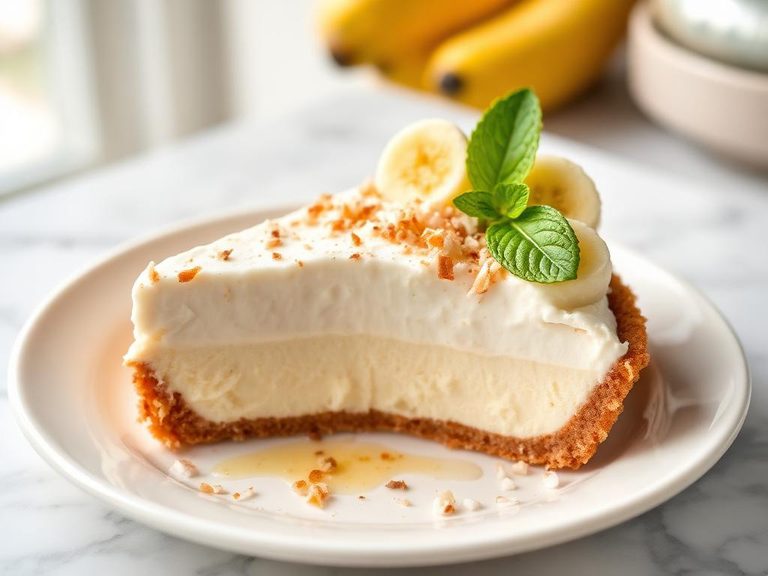
A classic dessert pie featuring a rich, creamy coconut custard filling in a flaky, buttery crust. The filling is smooth and sweet with a distinct tropical coconut flavor, while the crust provides a satisfying textural contrast. Per 100g, it offers a significant energy boost primarily from carbohydrates and fats, with a notable sugar content.
Calorie split: 3% protein · 43% carbs · 54% fat
↓ Full nutrition💚 Why it's loved
People adore the luxurious, velvety texture of the coconut cream filling and its sweet, tropical flavor that evokes a sense of comfort and indulgence. It's a beloved staple at holiday gatherings, potlucks, and diners, representing a classic, nostalgic dessert.
⚠️ Watch-outs & how to enjoy it better
Its high sugar and refined carbohydrate content can lead to rapid blood sugar spikes, making it a poor choice for those managing diabetes or insulin resistance. The calorie density and saturated fat from coconut and the crust also require mindful portion control. To counteract, pair a small slice with a source of protein (like a handful of nuts) or fiber to slow digestion, and consider it an occasional treat rather than a regular snack.
Key benefits
- Provides quick energy from its carbohydrate content.
- Contains medium-chain triglycerides (MCTs) from coconut, which are metabolized differently than other fats.
- Offers a small amount of dietary fiber from the coconut.
- Can be a comforting, morale-boosting treat in moderation.
🍽️ Popular dishes
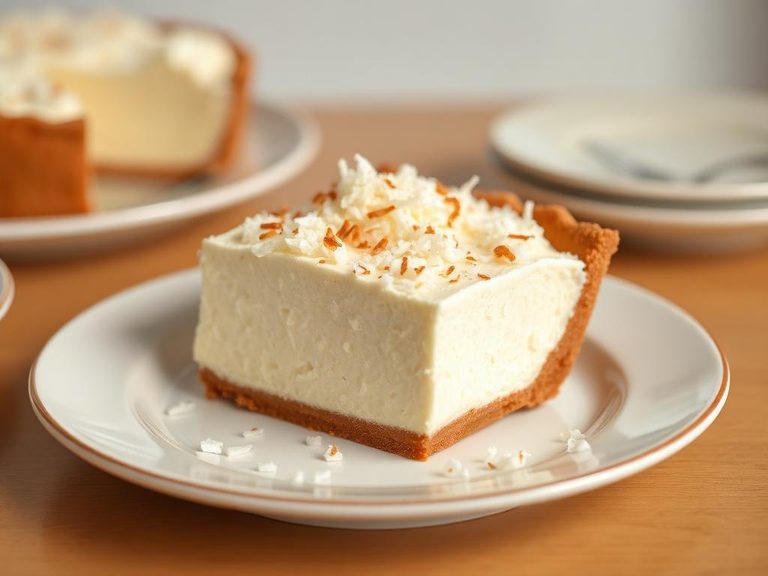
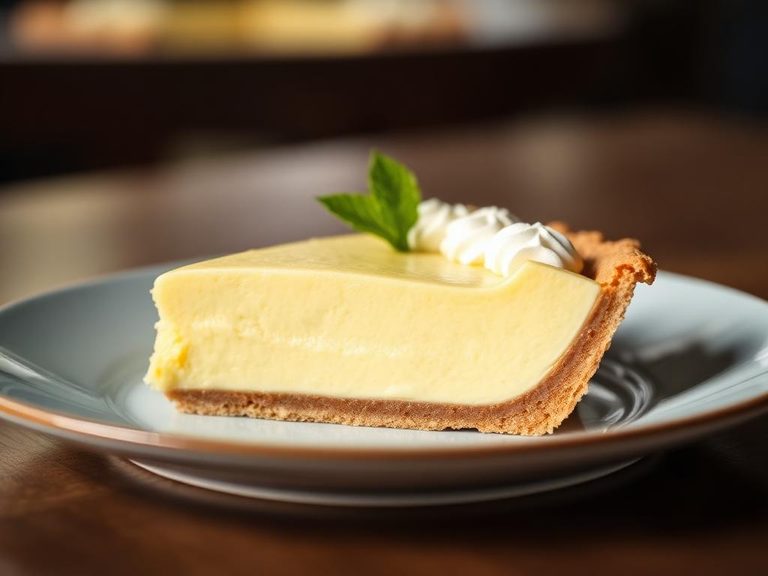
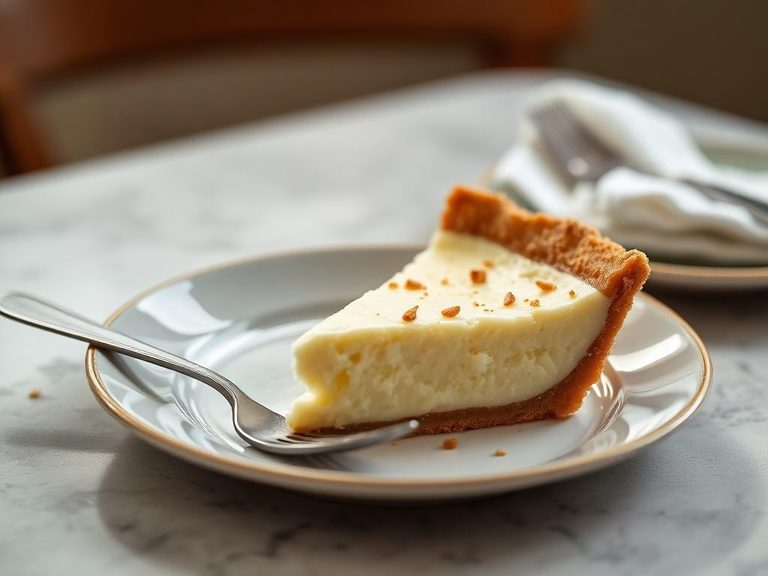
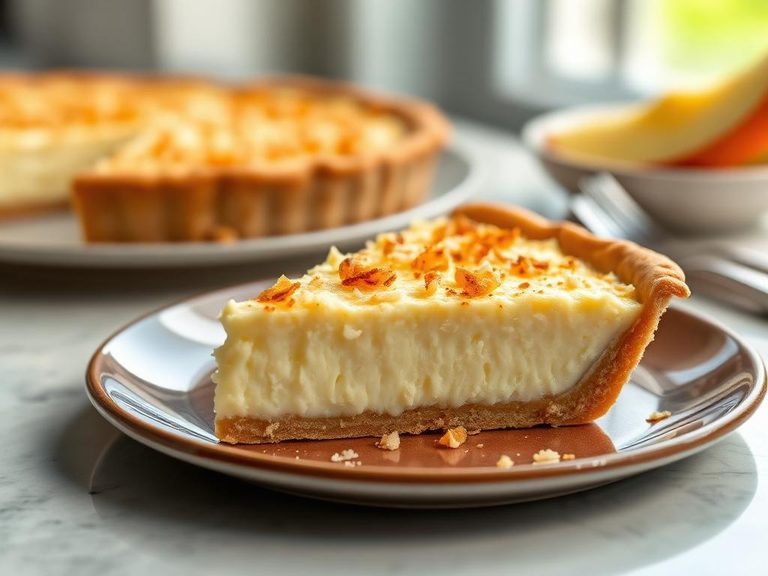
🌍 Where it's eaten
💡 Did you know?
The 'cream' in coconut cream pie is traditionally a cooked custard thickened with egg yolks and cornstarch, not actual dairy cream, with the coconut flavor coming from shredded coconut and coconut milk.
Full nutrition (USDA data · scales with serving)
| Water | 47.0 g |
| Energy | 297 kcal |
| Protein | 2.5 g |
| Total lipid (fat) | 17.8 g |
| Carbohydrate, by difference | 32.0 g |
| Fiber, total dietary | 1.1 g |
| Total Sugars | 18.7 g |
| Calcium, Ca | 40.0 mg |
| Iron, Fe | 0.72 mg |
| Magnesium, Mg | 8.0 mg |
| Phosphorus, P | 53.0 mg |
| Potassium, K | 91.0 mg |
| Sodium, Na | 169 mg |
| Zinc, Zn | 0.28 mg |
| Copper, Cu | 0.05 mg |
| Selenium, Se | 2.7 ug |
| Vitamin C, total ascorbic acid | 0.40 mg |
| Thiamin | 0.08 mg |
| Riboflavin | 0.11 mg |
| Niacin | 0.76 mg |
| Vitamin B-6 | 0.03 mg |
| Folate, total | 17.0 ug |
| Folic acid | 10.0 ug |
| Folate, food | 7.0 ug |
| Folate, DFE | 24.0 ug |
| Choline, total | 10.0 mg |
| Vitamin B-12 | 0.06 ug |
| Vitamin B-12, added | 0.00 ug |
| Vitamin A, RAE | 83.0 ug |
| Retinol | 83.0 ug |
| Carotene, beta | 0.00 ug |
| Carotene, alpha | 0.00 ug |
| Cryptoxanthin, beta | 0.00 ug |
| Lycopene | 0.00 ug |
| Lutein + zeaxanthin | 0.00 ug |
| Vitamin E (alpha-tocopherol) | 0.47 mg |
| Vitamin E, added | 0.00 mg |
| Vitamin D (D2 + D3) | 0.40 ug |
| Vitamin K (phylloquinone) | 2.6 ug |
| Alcohol, ethyl | 0.00 g |
| Caffeine | 0.00 mg |
| Theobromine | 0.00 mg |
Fat & fatty acid profile (per 100g)
| Fatty acids, total saturated | 8.8 g |
| SFA 4:0 | 0.18 g |
| SFA 6:0 | 0.16 g |
| SFA 8:0 | 0.21 g |
| SFA 10:0 | 0.32 g |
| SFA 12:0 | 1.0 g |
| SFA 14:0 | 1.2 g |
| SFA 16:0 | 3.8 g |
| SFA 18:0 | 1.8 g |
| Fatty acids, total monounsaturated | 5.5 g |
| MUFA 16:1 | 0.25 g |
| MUFA 18:1 | 5.6 g |
| MUFA 20:1 | 0.05 g |
| MUFA 22:1 | 0.00 g |
| Fatty acids, total polyunsaturated | 1.2 g |
| PUFA 18:2 | 0.91 g |
| PUFA 18:3 | 0.06 g |
| PUFA 18:4 | 0.00 g |
| PUFA 20:4 | 0.02 g |
| PUFA 20:5 n-3 (EPA) | 0.00 g |
| PUFA 22:5 n-3 (DPA) | 0.01 g |
| PUFA 22:6 n-3 (DHA) | 0.00 g |
| Cholesterol | 26.0 mg |
Amino acid profile (per 100g)
Estimated from Pie Crust, Cookie-type, Chocolate, Ready Crust — USDA does not publish this profile for Pie.
| Tryptophan | 0.08 g |
| Threonine | 0.20 g |
| Isoleucine | 0.23 g |
| Leucine | 0.38 g |
| Lysine | 0.24 g |
| Methionine | 0.07 g |
| Cystine | 0.11 g |
| Phenylalanine | 0.28 g |
| Tyrosine | 0.16 g |
| Valine | 0.32 g |
| Arginine | 0.29 g |
| Histidine | 0.11 g |
| Alanine | 0.24 g |
| Aspartic acid | 0.45 g |
| Glutamic acid | 1.3 g |
| Glycine | 0.24 g |
| Proline | 0.42 g |
| Serine | 0.26 g |
FAQ
Is coconut cream pie the same as coconut custard pie?
They are very similar and often used interchangeably. Technically, a coconut cream pie uses a cooked custard filling that is chilled and set, while a coconut custard pie is baked with the filling in the shell, resulting in a slightly different, often denser texture.
Why does my coconut cream pie filling sometimes become watery?
This is often due to the filling not being cooked to a high enough temperature to fully activate the thickener (like cornstarch) or not being chilled long enough to set properly. Ensure the custard boils gently and then chill the pie for at least 4 hours.
Can I make a lighter version?
Yes. You can use a lighter crust (like a graham cracker crust), reduce sugar in the filling, use light coconut milk, and top with a whipped topping instead of a heavy meringue. This will lower calories and fat but will still be a sweet treat.
Nutrient density (calculated · NRF9.3)
Nutrient Rich Foods index: beneficial nutrients (protein, fiber, vitamins, minerals) minus saturated fat, added sugar & sodium, per 100 kcal.
NRF9.3 index — Fulgoni, Keast & Drewnowski, 2009. Computed from USDA nutrients.
Weight-loss friendliness (composite index)
Energy density 2.97 kcal/g · 3% calories from protein · 1.1 g fiber · 18.7 g sugar per 100 g.
Composite of energy density (Rolls et al., 1999), protein & fiber satiety, minus sugar. A calculated heuristic — ranks satiety-per-calorie, not a clinical measure.
Dietary load (calculated from USDA values)
Potential renal acid load. Positive = acid-forming, negative = alkaline-forming.
Sodium-to-potassium ratio: 1.86 (lower is better — aim for ≤ 1)
Sodium:potassium per WHO potassium guidance. Computed from USDA nutrients.