

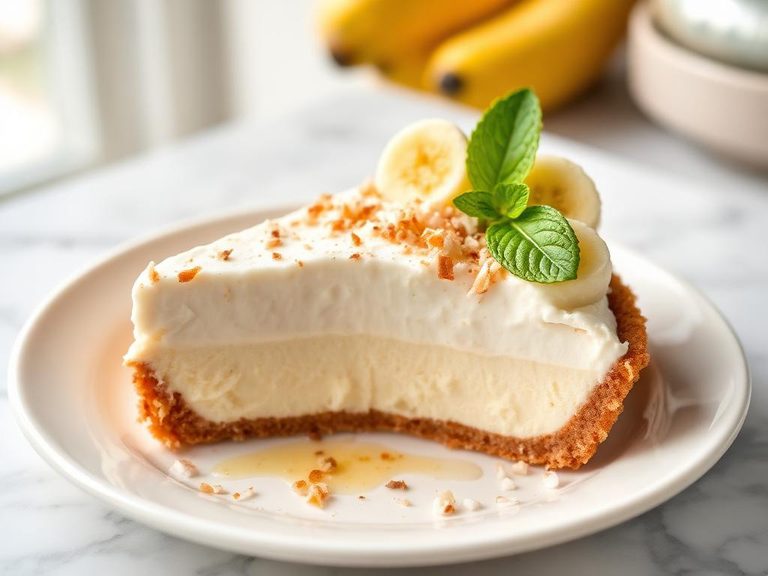
Pie, coconut cream, prepared from mix, no-bake type
Whole food · Baked Products

Photo: Wikipedia
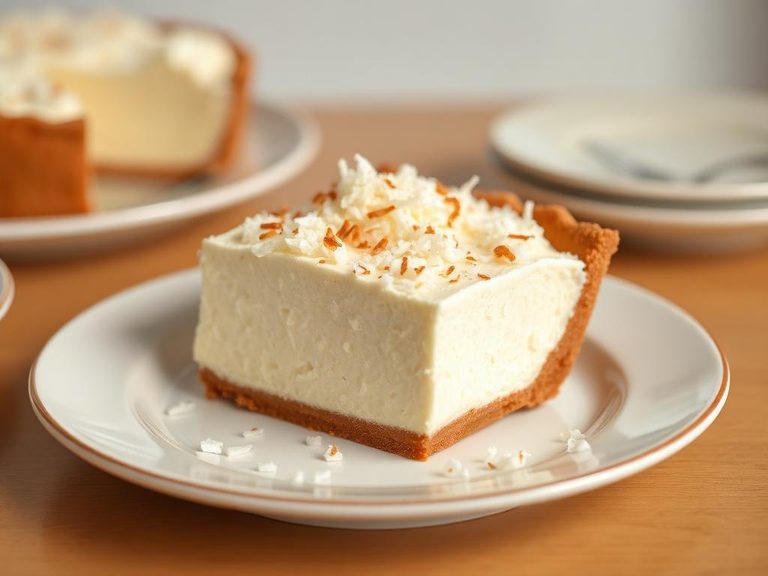
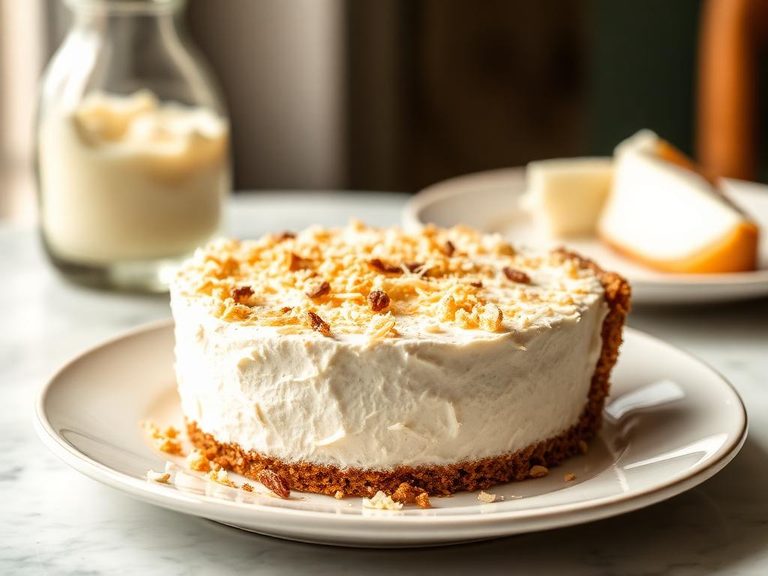
A no-bake coconut cream pie is a chilled, creamy dessert with a smooth, custard-like filling and a rich coconut flavor, often set in a pre-made graham cracker or pastry crust. Its texture is luxuriously silky, with a sweet, tropical taste that's balanced by the subtle tang of cream cheese or condensed milk. Nutritionally, it's a calorie-dense treat, packing a significant amount of fat and carbohydrates per serving.
Calorie split: 4% protein · 40% carbs · 56% fat
↓ Full nutrition💚 Why it's loved
People adore this pie for its effortless, no-fuss preparation and its decadent, vacation-like flavor that feels like an indulgent escape. It's a versatile crowd-pleaser that's perfect for potlucks, holidays, and any occasion where a cool, sweet treat is welcome.
⚠️ Watch-outs & how to enjoy it better
The high fat and refined carbohydrate content can lead to blood sugar spikes and is not ideal for those monitoring calorie or fat intake. To mitigate this, enjoy a modest slice alongside a source of protein (like a handful of nuts) or fiber (like a side of berries) to slow digestion. Be mindful of portion control, as the rich flavor can be deceptively filling.
Key benefits
- Provides quick energy from carbohydrates
- Contains some dietary fat for satiety
- Offers a small amount of protein
- No baking required, simplifying preparation
- Can be customized with various crusts and toppings
🍽️ Popular dishes
🌍 Where it's eaten
💡 Did you know?
The 'no-bake' method for cream pies gained massive popularity in the mid-20th century with the widespread availability of instant pudding mixes and pre-made pie crusts, revolutionizing home dessert-making.
Full nutrition (USDA data · scales with serving)
| Water | 49.7 g |
| Energy | 276 kcal |
| Energy | 1155 kj |
| Protein | 2.8 g |
| Total lipid (fat) | 17.6 g |
| Ash | 1.3 g |
| Carbohydrate, by difference | 28.5 g |
| Fiber, total dietary | 0.50 g |
| Calcium, Ca | 72.0 mg |
| Iron, Fe | 0.40 mg |
| Magnesium, Mg | 17.0 mg |
| Phosphorus, P | 169 mg |
| Potassium, K | 141 mg |
| Sodium, Na | 329 mg |
| Zinc, Zn | 0.38 mg |
| Copper, Cu | 0.08 mg |
| Manganese, Mn | 0.19 mg |
| Selenium, Se | 5.0 ug |
| Vitamin C, total ascorbic acid | 0.60 mg |
| Thiamin | 0.03 mg |
| Riboflavin | 0.10 mg |
| Niacin | 0.13 mg |
| Pantothenic acid | 0.26 mg |
| Vitamin B-6 | 0.04 mg |
| Folate, total | 15.0 ug |
| Folic acid | 11.0 ug |
| Folate, food | 4.0 ug |
| Folate, DFE | 23.0 ug |
| Vitamin B-12 | 0.21 ug |
| Vitamin A, RAE | 95.0 ug |
| Retinol | 90.0 ug |
| Vitamin A, IU | 405 iu |
Fat & fatty acid profile (per 100g)
| Fatty acids, total saturated | 8.9 g |
| SFA 4:0 | 0.25 g |
| SFA 6:0 | 0.16 g |
| SFA 8:0 | 0.27 g |
| SFA 10:0 | 0.34 g |
| SFA 12:0 | 1.4 g |
| SFA 14:0 | 1.3 g |
| SFA 16:0 | 3.2 g |
| SFA 18:0 | 1.9 g |
| Fatty acids, total monounsaturated | 6.6 g |
| MUFA 16:1 | 0.17 g |
| MUFA 18:1 | 6.3 g |
| MUFA 20:1 | 0.00 g |
| MUFA 22:1 | 0.00 g |
| Fatty acids, total polyunsaturated | 1.2 g |
| PUFA 18:2 | 1.1 g |
| PUFA 18:3 | 0.16 g |
| PUFA 18:4 | 0.00 g |
| PUFA 20:4 | 0.00 g |
| PUFA 20:5 n-3 (EPA) | 0.00 g |
| PUFA 22:5 n-3 (DPA) | 0.00 g |
| PUFA 22:6 n-3 (DHA) | 0.00 g |
| Cholesterol | 23.0 mg |
Amino acid profile (per 100g)
| Tryptophan | 0.04 g |
| Threonine | 0.11 g |
| Isoleucine | 0.14 g |
| Leucine | 0.24 g |
| Lysine | 0.16 g |
| Methionine | 0.06 g |
| Cystine | 0.04 g |
| Phenylalanine | 0.13 g |
| Tyrosine | 0.11 g |
| Valine | 0.15 g |
| Arginine | 0.12 g |
| Histidine | 0.07 g |
| Alanine | 0.10 g |
| Aspartic acid | 0.18 g |
| Glutamic acid | 0.69 g |
| Glycine | 0.08 g |
| Proline | 0.27 g |
| Serine | 0.14 g |
FAQ
Why is it called 'no-bake'?
The filling is set by chilling, typically using gelatin or the thickening properties of starches in a pudding mix, rather than by baking in an oven. The crust is also usually pre-made and used as-is.
Can I make this with fresh coconut?
Absolutely. Using freshly grated coconut or coconut milk will intensify the flavor, though you may need to adjust the sweetener and thickener amounts for optimal texture.
How long does it last in the fridge?
When properly covered, a no-bake coconut cream pie will keep well in the refrigerator for 3 to 4 days before the crust begins to soften significantly.
Nutrient density (calculated · NRF9.3)
Nutrient Rich Foods index: beneficial nutrients (protein, fiber, vitamins, minerals) minus saturated fat, added sugar & sodium, per 100 kcal.
NRF9.3 index — Fulgoni, Keast & Drewnowski, 2009. Computed from USDA nutrients.
Weight-loss friendliness (composite index)
Energy density 2.76 kcal/g · 4% calories from protein · 0.5 g fiber · 0.0 g sugar per 100 g.
Composite of energy density (Rolls et al., 1999), protein & fiber satiety, minus sugar. A calculated heuristic — ranks satiety-per-calorie, not a clinical measure.
Dietary load (calculated from USDA values)
Potential renal acid load. Positive = acid-forming, negative = alkaline-forming.
Sodium-to-potassium ratio: 2.33 (lower is better — aim for ≤ 1)
Sodium:potassium per WHO potassium guidance. Computed from USDA nutrients.