

Pecans, unsalted
Common food

Photo: Wikipedia
Pecans are rich, buttery nuts with a satisfying crunch and a deep, slightly sweet flavor. They are exceptionally high in healthy monounsaturated fats, making them one of the most calorie-dense and nutrient-packed nuts available.
Calorie split: 5% protein · 7% carbs · 88% fat
↓ Full nutrition💚 Why it's loved
People love pecans for their luxurious, buttery flavor and satisfying crunch, which elevates both sweet and savory dishes. They are a cornerstone of Southern U.S. cuisine and holiday baking, symbolizing comfort and tradition.
⚠️ Watch-outs & how to enjoy it better
Their very high calorie and fat content means portion control is key for weight management. As a tree nut, they are a common allergen; those with nut allergies must avoid them. Tip: Use them as a flavorful topping or in small pieces to add richness without overdoing calories.
Key benefits
- Excellent source of heart-healthy monounsaturated fats
- Rich in antioxidants like vitamin E and ellagic acid
- Good source of plant-based protein and dietary fiber
- Contains essential minerals like manganese and copper
- Naturally gluten-free and low in sugar
🍽️ Popular dishes


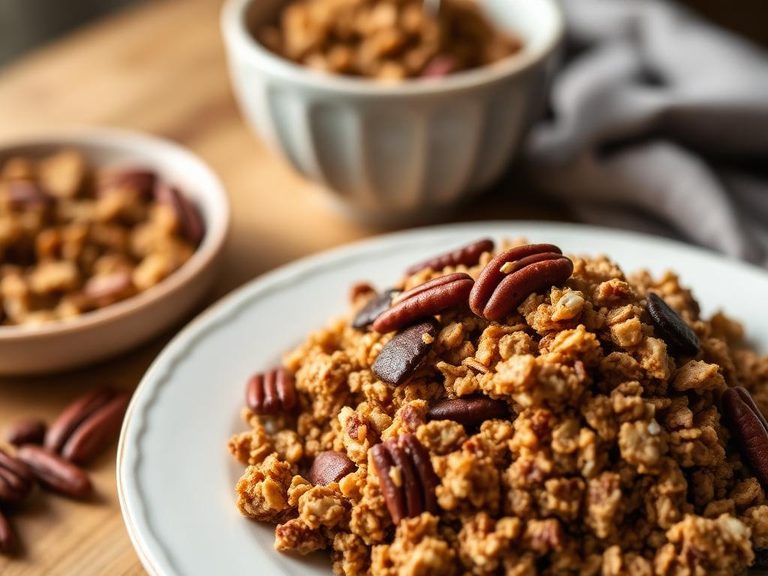
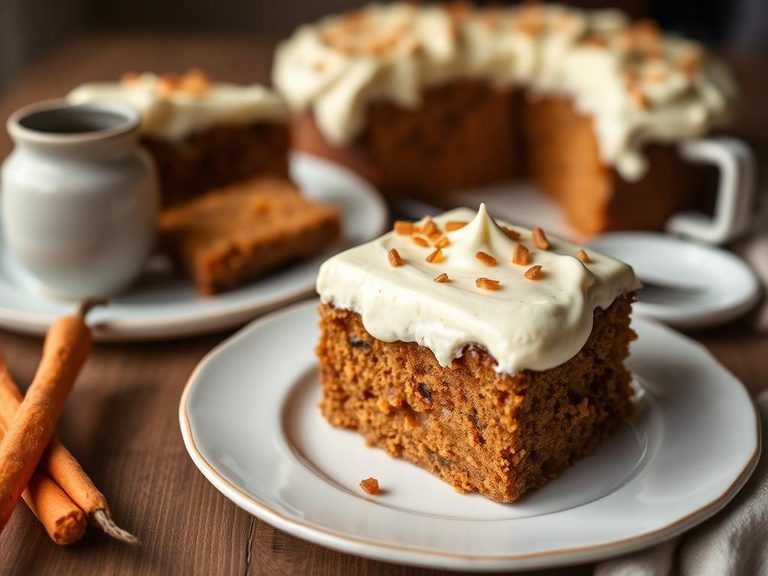

🌍 Where it's eaten
💡 Did you know?
Pecans are the only major tree nut native to North America, and the word 'pecan' is derived from a Native American word meaning 'a nut too hard to crack by hand.'
Full nutrition (USDA data · scales with serving)
| Water | 2.5 g |
| Energy | 754 kcal |
| Protein | 9.7 g |
| Total lipid (fat) | 74.1 g |
| Carbohydrate, by difference | 12.3 g |
| Fiber, total dietary | 5.6 g |
| Total Sugars | 3.9 g |
| Calcium, Ca | 53.0 mg |
| Iron, Fe | 2.3 mg |
| Magnesium, Mg | 100 mg |
| Phosphorus, P | 245 mg |
| Potassium, K | 349 mg |
| Sodium, Na | 0.00 mg |
| Zinc, Zn | 3.8 mg |
| Copper, Cu | 0.88 mg |
| Selenium, Se | 3.7 ug |
| Vitamin C, total ascorbic acid | 1.1 mg |
| Thiamin | 0.53 mg |
| Riboflavin | 0.13 mg |
| Niacin | 0.92 mg |
| Vitamin B-6 | 0.17 mg |
| Folate, total | 21.0 ug |
| Folic acid | 0.00 ug |
| Folate, food | 21.0 ug |
| Folate, DFE | 21.0 ug |
| Choline, total | 39.3 mg |
| Vitamin B-12 | 0.00 ug |
| Vitamin B-12, added | 0.00 ug |
| Vitamin A, RAE | 3.0 ug |
| Retinol | 0.00 ug |
| Carotene, beta | 28.0 ug |
| Carotene, alpha | 0.00 ug |
| Cryptoxanthin, beta | 9.0 ug |
| Lycopene | 0.00 ug |
| Lutein + zeaxanthin | 16.0 ug |
| Vitamin E (alpha-tocopherol) | 1.9 mg |
| Vitamin E, added | 0.00 mg |
| Vitamin D (D2 + D3) | 0.00 ug |
| Vitamin K (phylloquinone) | 7.0 ug |
| Alcohol, ethyl | 0.00 g |
| Caffeine | 0.00 mg |
| Theobromine | 0.00 mg |
Fat & fatty acid profile (per 100g)
| Fatty acids, total saturated | 6.7 g |
| SFA 4:0 | 0.00 g |
| SFA 6:0 | 0.00 g |
| SFA 8:0 | 0.00 g |
| SFA 10:0 | 0.00 g |
| SFA 12:0 | 0.00 g |
| SFA 14:0 | 0.00 g |
| SFA 16:0 | 4.5 g |
| SFA 18:0 | 1.8 g |
| Fatty acids, total monounsaturated | 39.4 g |
| MUFA 16:1 | 0.01 g |
| MUFA 18:1 | 40.6 g |
| MUFA 20:1 | 0.22 g |
| MUFA 22:1 | 0.00 g |
| Fatty acids, total polyunsaturated | 23.4 g |
| PUFA 18:2 | 21.0 g |
| PUFA 18:3 | 1.1 g |
| PUFA 18:4 | 0.00 g |
| PUFA 20:4 | 0.00 g |
| PUFA 20:5 n-3 (EPA) | 0.00 g |
| PUFA 22:5 n-3 (DPA) | 0.00 g |
| PUFA 22:6 n-3 (DHA) | 0.00 g |
| Cholesterol | 0.00 mg |
Amino acid profile (per 100g)
Estimated from Nuts, pecans, dry roasted, with salt added — USDA does not publish this profile for Pecans.
| Tryptophan | 0.10 g |
| Threonine | 0.32 g |
| Isoleucine | 0.35 g |
| Leucine | 0.62 g |
| Lysine | 0.30 g |
| Methionine | 0.19 g |
| Cystine | 0.16 g |
| Phenylalanine | 0.44 g |
| Tyrosine | 0.22 g |
| Valine | 0.43 g |
| Arginine | 1.2 g |
| Histidine | 0.27 g |
| Alanine | 0.41 g |
| Aspartic acid | 0.96 g |
| Glutamic acid | 1.9 g |
| Glycine | 0.47 g |
| Proline | 0.38 g |
| Serine | 0.49 g |
FAQ
What's the difference between pecans and walnuts?
Pecans are smoother, sweeter, and butterier, while walnuts are more bitter, earthy, and have a slightly spongy texture. Nutritionally, both are high in healthy fats, but pecans have more monounsaturated fat.
How should I store pecans?
Due to their high oil content, pecans can go rancid. Store them in an airtight container in the refrigerator for up to 6 months or the freezer for up to a year for best freshness.
Are pecans keto-friendly?
Yes, pecans are very low in net carbs and high in healthy fats, making them an excellent choice for ketogenic and low-carb diets.
Nutrient density (calculated · NRF9.3)
Nutrient Rich Foods index: beneficial nutrients (protein, fiber, vitamins, minerals) minus saturated fat, added sugar & sodium, per 100 kcal.
NRF9.3 index — Fulgoni, Keast & Drewnowski, 2009. Computed from USDA nutrients.
Weight-loss friendliness (composite index)
Energy density 7.54 kcal/g · 5% calories from protein · 5.6 g fiber · 3.9 g sugar per 100 g.
Composite of energy density (Rolls et al., 1999), protein & fiber satiety, minus sugar. A calculated heuristic — ranks satiety-per-calorie, not a clinical measure.
Dietary load (calculated from USDA values)
Potential renal acid load. Positive = acid-forming, negative = alkaline-forming.
Sodium-to-potassium ratio: 0.00 (lower is better — aim for ≤ 1)
Sodium:potassium per WHO potassium guidance. Computed from USDA nutrients.