

Peas, split, mature seeds, cooked, boiled, with salt
Whole food · Legumes and Legume Products

Photo: Wikipedia
Boiled split peas are the humble, earthy workhorse of the legume world, transformed by cooking into a soft, creamy, and subtly sweet puree or stew. Their nutritional profile is a standout, packing a massive 8.3g of fiber and over 8g of plant-based protein into a low-fat, low-calorie package, making them a cornerstone of hearty, healthful eating.
Calorie split: 28% protein · 69% carbs · 3% fat
↓ Full nutrition💚 Why it's loved
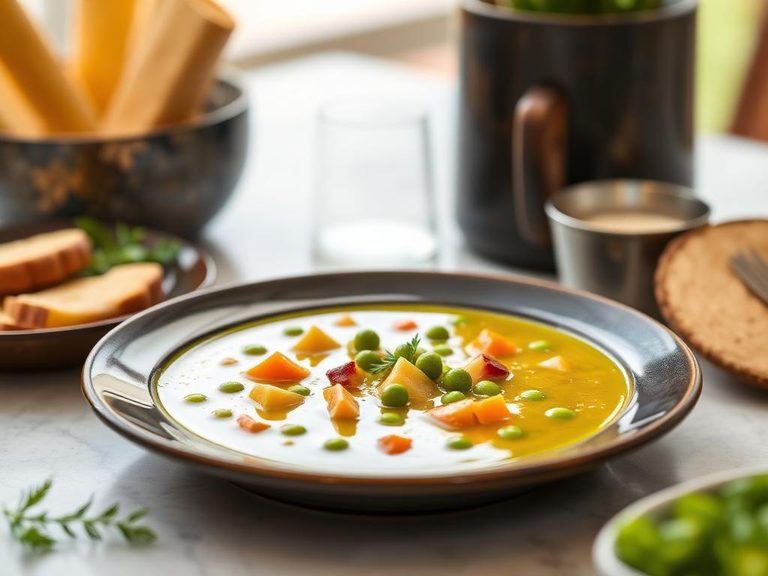
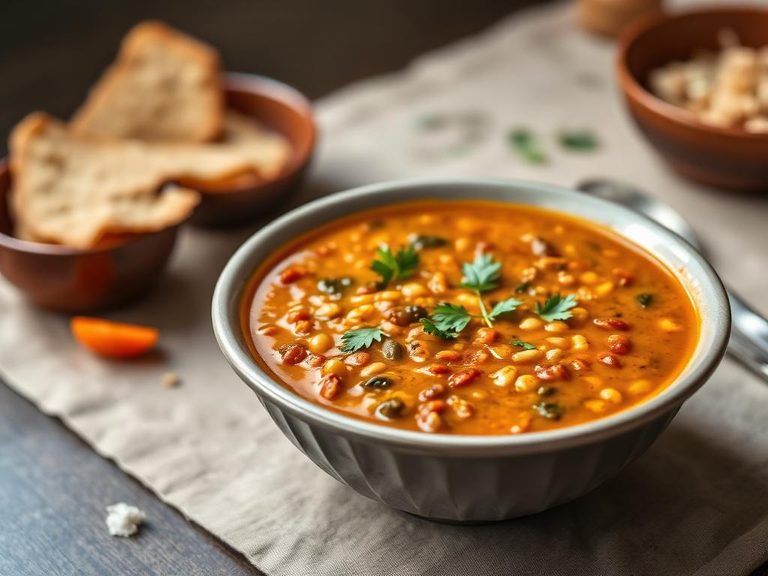
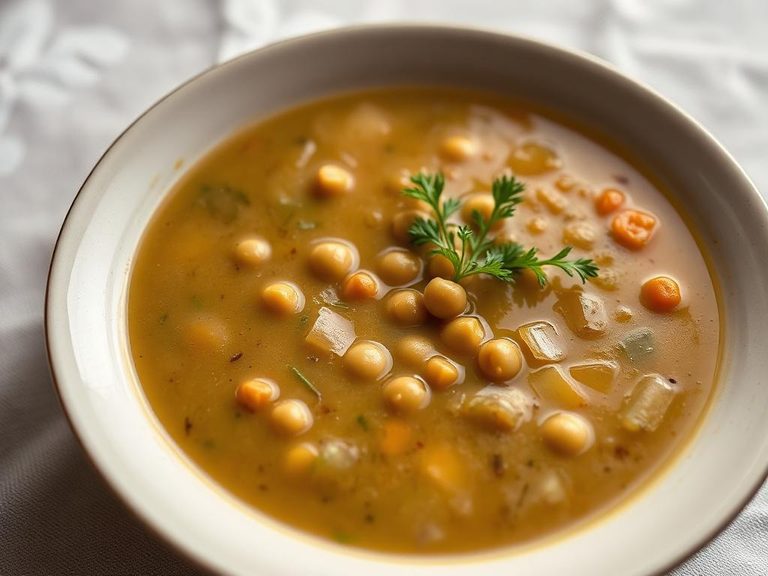
People adore split peas for their incredible ability to transform humble ingredients into deeply comforting, savory dishes like soups and dals, absorbing flavors beautifully while providing a satisfying, creamy texture without any dairy. They are a beloved, economical staple in cuisines from India to the Caribbean, symbolizing nourishment and home cooking.
⚠️ Watch-outs & how to enjoy it better
The high fiber content, while beneficial, can cause digestive discomfort like gas or bloating for some, especially when introduced suddenly. The added salt in canned or pre-cooked versions can be a concern for those monitoring sodium intake. To counteract, start with smaller portions, ensure thorough cooking, and opt for low-sodium varieties or cook from dry, controlling the salt yourself. Pairing with a source of fat or acid (like a dollop of yogurt or a squeeze of lemon) can also aid digestion and flavor balance.
Key benefits
- Exceptionally high in dietary fiber for digestive health and satiety.
- Excellent source of plant-based protein for muscle maintenance.
- Rich in micronutrients like folate, manganese, and phosphorus.
- Naturally low in fat and cholesterol-free.
- Provides complex carbohydrates for sustained energy.
🍽️ Popular dishes

🌍 Where it's eaten
💡 Did you know?
The classic thickening power of split pea soup comes not from added starch, but from the peas' own starch and fiber breaking down during long, slow cooking—a natural thickening process.
Full nutrition (USDA data · scales with serving)
| Water | 69.5 g |
| Energy | 116 kcal |
| Energy | 484 kj |
| Protein | 8.3 g |
| Total lipid (fat) | 0.39 g |
| Ash | 1.3 g |
| Carbohydrate, by difference | 20.5 g |
| Fiber, total dietary | 8.3 g |
| Total Sugars | 2.9 g |
| Calcium, Ca | 14.0 mg |
| Iron, Fe | 1.3 mg |
| Magnesium, Mg | 36.0 mg |
| Phosphorus, P | 99.0 mg |
| Potassium, K | 362 mg |
| Sodium, Na | 238 mg |
| Zinc, Zn | 1.0 mg |
| Copper, Cu | 0.18 mg |
| Manganese, Mn | 0.40 mg |
| Selenium, Se | 0.60 ug |
| Vitamin C, total ascorbic acid | 0.40 mg |
| Thiamin | 0.19 mg |
| Riboflavin | 0.06 mg |
| Niacin | 0.89 mg |
| Pantothenic acid | 0.59 mg |
| Vitamin B-6 | 0.05 mg |
| Folate, total | 65.0 ug |
| Folic acid | 0.00 ug |
| Folate, food | 65.0 ug |
| Folate, DFE | 65.0 ug |
| Choline, total | 32.8 mg |
| Vitamin B-12 | 0.00 ug |
| Vitamin B-12, added | 0.00 ug |
| Vitamin A, RAE | 0.00 ug |
| Retinol | 0.00 ug |
| Carotene, beta | 4.0 ug |
| Carotene, alpha | 0.00 ug |
| Cryptoxanthin, beta | 0.00 ug |
| Vitamin A, IU | 7.0 iu |
| Lycopene | 0.00 ug |
| Lutein + zeaxanthin | 0.00 ug |
| Vitamin E (alpha-tocopherol) | 0.03 mg |
| Vitamin E, added | 0.00 mg |
| Vitamin D (D2 + D3), International Units | 0.00 iu |
| Vitamin D (D2 + D3) | 0.00 ug |
| Vitamin K (phylloquinone) | 5.0 ug |
Fat & fatty acid profile (per 100g)
| Fatty acids, total saturated | 0.05 g |
| SFA 12:0 | 0.00 g |
| SFA 14:0 | 0.00 g |
| SFA 16:0 | 0.04 g |
| SFA 18:0 | 0.01 g |
| Fatty acids, total monounsaturated | 0.08 g |
| MUFA 18:1 | 0.08 g |
| MUFA 20:1 | 0.00 g |
| Fatty acids, total polyunsaturated | 0.17 g |
| PUFA 18:2 | 0.14 g |
| PUFA 18:3 | 0.03 g |
| Fatty acids, total trans | 0.00 g |
| Cholesterol | 0.00 mg |
Amino acid profile (per 100g)
| Tryptophan | 0.09 g |
| Threonine | 0.30 g |
| Isoleucine | 0.34 g |
| Leucine | 0.60 g |
| Lysine | 0.60 g |
| Methionine | 0.09 g |
| Cystine | 0.13 g |
| Phenylalanine | 0.38 g |
| Tyrosine | 0.24 g |
| Valine | 0.39 g |
| Arginine | 0.74 g |
| Histidine | 0.20 g |
| Alanine | 0.37 g |
| Aspartic acid | 0.98 g |
| Glutamic acid | 1.4 g |
| Glycine | 0.37 g |
| Proline | 0.34 g |
| Serine | 0.37 g |
FAQ
Do I need to soak dried split peas before cooking?
No, unlike whole dried peas or beans, split peas have their outer hull removed and cook relatively quickly (30-60 minutes) without pre-soaking, though soaking can slightly reduce cooking time.
What's the difference between green and yellow split peas?
Green split peas are more common, with a slightly earthier, sweeter flavor. Yellow split peas are milder and creamier when cooked. Nutritionally, they are very similar.
Why did my split pea soup turn out bitter?
Bitterness can come from using old peas, overcooking, or sometimes from the natural compounds in the peas. Adding a small amount of an acidic ingredient like lemon juice or vinegar at the end of cooking can balance this.
Nutrient density (calculated · NRF9.3)
Nutrient Rich Foods index: beneficial nutrients (protein, fiber, vitamins, minerals) minus saturated fat, added sugar & sodium, per 100 kcal.
NRF9.3 index — Fulgoni, Keast & Drewnowski, 2009. Computed from USDA nutrients.
Weight-loss friendliness (composite index)
Energy density 1.16 kcal/g · 29% calories from protein · 8.3 g fiber · 2.9 g sugar per 100 g.
Composite of energy density (Rolls et al., 1999), protein & fiber satiety, minus sugar. A calculated heuristic — ranks satiety-per-calorie, not a clinical measure.
Dietary load (calculated from USDA values)
Potential renal acid load. Positive = acid-forming, negative = alkaline-forming.
Sodium-to-potassium ratio: 0.66 (lower is better — aim for ≤ 1)
Sodium:potassium per WHO potassium guidance. Computed from USDA nutrients.