

Pear, canned, in syrup
Common food

Photo: Wikipedia
Canned pears are tender, golden segments of pear preserved in a sweet syrup, offering a soft, melt-in-your-mouth texture and a concentrated, honeyed fruit flavor. Nutritionally, they are a low-calorie, fat-free source of quick energy from natural and added sugars, with a modest amount of dietary fiber.
Calorie split: 1% protein · 98% carbs · 1% fat
↓ Full nutrition💚 Why it's loved
People love canned pears for their consistently sweet, delicate flavor and soft texture, which makes them a comforting, nostalgic treat and a versatile ingredient in both desserts and savory salads.
⚠️ Watch-outs & how to enjoy it better
The primary downside is the high sugar content from the syrup, which can cause blood-sugar spikes. To counteract this, choose pears canned in water or light syrup, drain them well, and pair with a source of protein or healthy fat like yogurt, nuts, or cottage cheese.
Key benefits
- Provides a quick source of energy from carbohydrates.
- Naturally fat-free and very low in protein.
- Contains dietary fiber, which aids digestion.
- Offers a convenient, year-round source of fruit.
- Shelf-stable and ready to eat with no preparation.
🍽️ Popular dishes
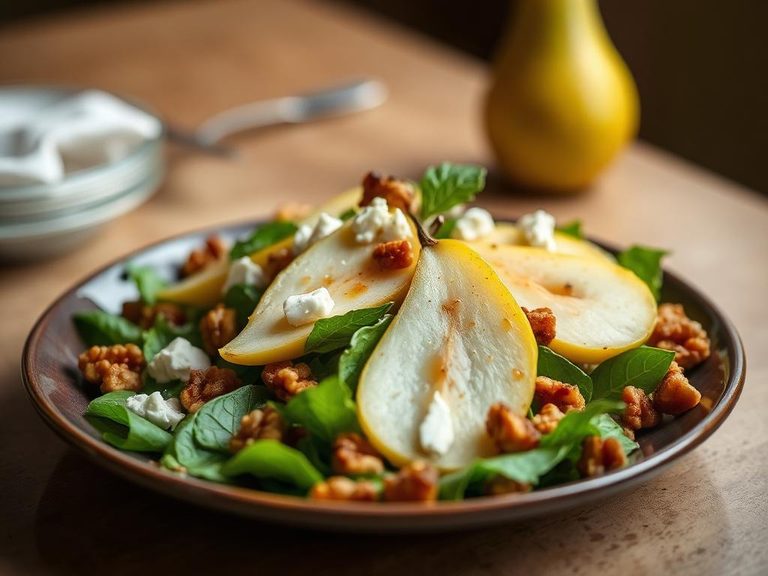
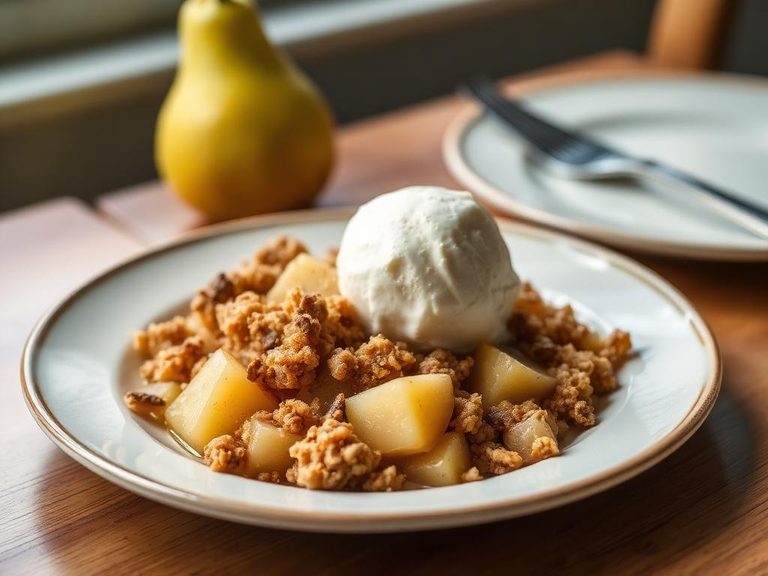


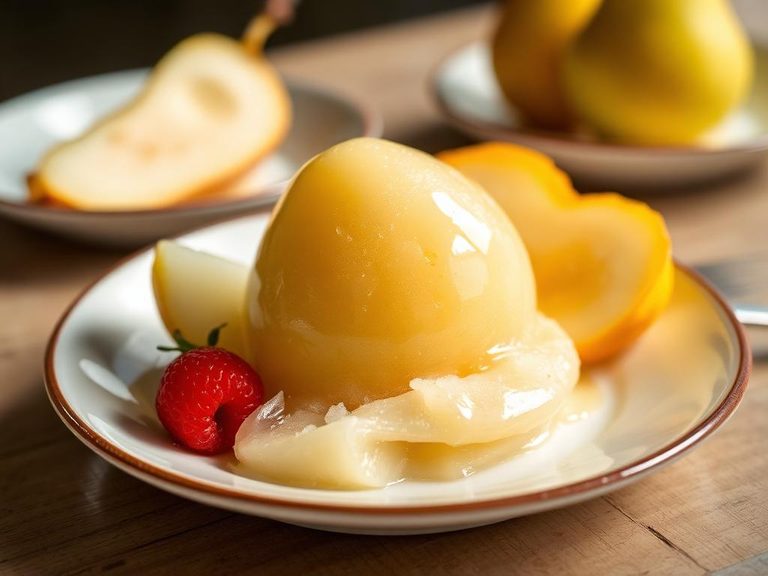
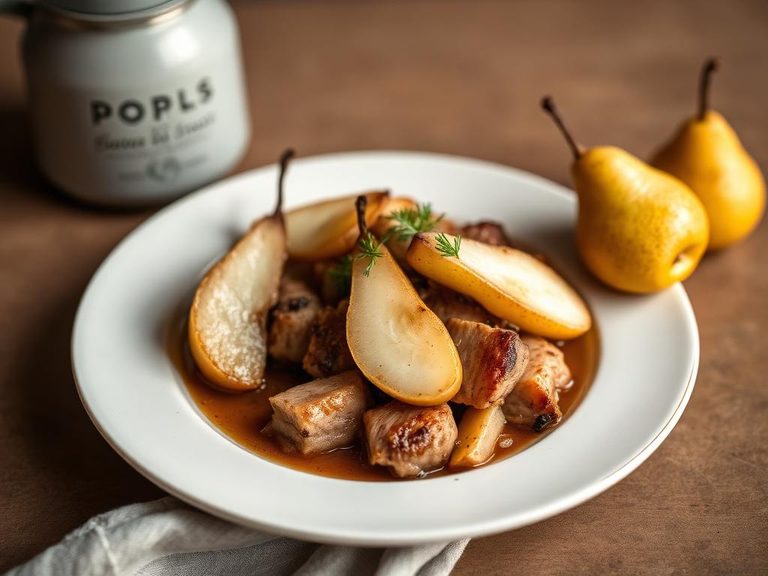
🌍 Where it's eaten
💡 Did you know?
The process of canning fruit was pioneered in the early 19th century, and canned pears became one of the first commercially successful canned goods in the United States.
Full nutrition (USDA data · scales with serving)
| Water | 84.5 g |
| Energy | 59.0 kcal |
| Protein | 0.18 g |
| Total lipid (fat) | 0.05 g |
| Carbohydrate, by difference | 15.2 g |
| Fiber, total dietary | 1.5 g |
| Total Sugars | 13.6 g |
| Calcium, Ca | 4.0 mg |
| Iron, Fe | 0.20 mg |
| Magnesium, Mg | 4.0 mg |
| Phosphorus, P | 6.0 mg |
| Potassium, K | 49.0 mg |
| Sodium, Na | 2.0 mg |
| Zinc, Zn | 0.08 mg |
| Copper, Cu | 0.05 mg |
| Selenium, Se | 0.00 ug |
| Vitamin C, total ascorbic acid | 0.90 mg |
| Thiamin | 0.01 mg |
| Riboflavin | 0.01 mg |
| Niacin | 0.05 mg |
| Vitamin B-6 | 0.01 mg |
| Folate, total | 1.0 ug |
| Folic acid | 0.00 ug |
| Folate, food | 1.0 ug |
| Folate, DFE | 1.0 ug |
| Choline, total | 3.1 mg |
| Vitamin B-12 | 0.00 ug |
| Vitamin B-12, added | 0.00 ug |
| Vitamin A, RAE | 0.00 ug |
| Retinol | 0.00 ug |
| Carotene, beta | 0.00 ug |
| Carotene, alpha | 0.00 ug |
| Cryptoxanthin, beta | 0.00 ug |
| Lycopene | 0.00 ug |
| Lutein + zeaxanthin | 31.0 ug |
| Vitamin E (alpha-tocopherol) | 0.07 mg |
| Vitamin E, added | 0.00 mg |
| Vitamin D (D2 + D3) | 0.00 ug |
| Vitamin K (phylloquinone) | 0.30 ug |
| Alcohol, ethyl | 0.00 g |
| Caffeine | 0.00 mg |
| Theobromine | 0.00 mg |
Fat & fatty acid profile (per 100g)
| Fatty acids, total saturated | 0.00 g |
| SFA 4:0 | 0.00 g |
| SFA 6:0 | 0.00 g |
| SFA 8:0 | 0.00 g |
| SFA 10:0 | 0.00 g |
| SFA 12:0 | 0.00 g |
| SFA 14:0 | 0.00 g |
| SFA 16:0 | 0.00 g |
| SFA 18:0 | 0.00 g |
| Fatty acids, total monounsaturated | 0.01 g |
| MUFA 16:1 | 0.00 g |
| MUFA 18:1 | 0.01 g |
| MUFA 20:1 | 0.00 g |
| MUFA 22:1 | 0.00 g |
| Fatty acids, total polyunsaturated | 0.01 g |
| PUFA 18:2 | 0.01 g |
| PUFA 18:3 | 0.00 g |
| PUFA 18:4 | 0.00 g |
| PUFA 20:4 | 0.00 g |
| PUFA 20:5 n-3 (EPA) | 0.00 g |
| PUFA 22:5 n-3 (DPA) | 0.00 g |
| PUFA 22:6 n-3 (DHA) | 0.00 g |
| Cholesterol | 0.00 mg |
Amino acid profile (per 100g)
Estimated from Pears, canned, juice pack, solids and liquids — USDA does not publish this profile for Pear.
| Threonine | 0.01 g |
| Isoleucine | 0.01 g |
| Leucine | 0.02 g |
| Lysine | 0.01 g |
| Methionine | 0.00 g |
| Cystine | 0.00 g |
| Phenylalanine | 0.01 g |
| Tyrosine | 0.00 g |
| Valine | 0.01 g |
| Arginine | 0.01 g |
| Histidine | 0.00 g |
| Alanine | 0.01 g |
| Aspartic acid | 0.07 g |
| Glutamic acid | 0.03 g |
| Glycine | 0.01 g |
| Proline | 0.01 g |
| Serine | 0.01 g |
FAQ
Are canned pears as healthy as fresh pears?
Canned pears retain most of the vitamins and fiber of fresh pears but are higher in sugar due to the syrup. For a healthier option, choose varieties packed in water or 100% juice and drain them.
Can I use the syrup from canned pears in recipes?
Yes, the syrup can be used to sweeten drinks, marinades, or dessert sauces. However, be mindful of its high sugar content and use it sparingly.
How should I store opened canned pears?
Transfer any unused pears and their liquid to a covered container and refrigerate. They will keep for 3-4 days.
Nutrient density (calculated · NRF9.3)
Nutrient Rich Foods index: beneficial nutrients (protein, fiber, vitamins, minerals) minus saturated fat, added sugar & sodium, per 100 kcal.
NRF9.3 index — Fulgoni, Keast & Drewnowski, 2009. Computed from USDA nutrients.
Weight-loss friendliness (composite index)
Energy density 0.59 kcal/g · 1% calories from protein · 1.5 g fiber · 13.6 g sugar per 100 g.
Composite of energy density (Rolls et al., 1999), protein & fiber satiety, minus sugar. A calculated heuristic — ranks satiety-per-calorie, not a clinical measure.
Dietary load (calculated from USDA values)
Potential renal acid load. Positive = acid-forming, negative = alkaline-forming.
Sodium-to-potassium ratio: 0.04 (lower is better — aim for ≤ 1)
Sodium:potassium per WHO potassium guidance. Computed from USDA nutrients.