

Mother's loaf, pork
Whole food · Sausages and Luncheon Meats

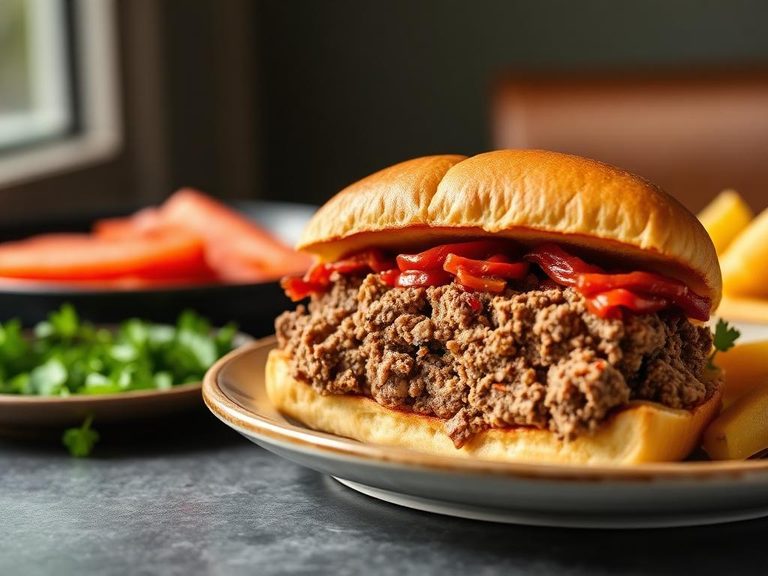
Photo: Wikipedia
Mother's loaf, pork is a savory, dense meatloaf made from ground pork, typically seasoned with herbs and onions. It has a moist, tender texture with a rich, savory flavor and a slightly caramelized crust when baked. Nutritionally, it's a high-fat, high-protein dish with minimal carbohydrates.
Calorie split: 17% protein · 11% carbs · 72% fat
↓ Full nutrition💚 Why it's loved
People love it for its comforting, homestyle flavor and hearty, satisfying texture that evokes nostalgia. It's also incredibly versatile, serving as a main dish, sandwich filler, or component in a bento box.
⚠️ Watch-outs & how to enjoy it better
Its high fat and calorie density can be a concern for those monitoring caloric intake or managing heart health. To counteract, pair it with a large portion of non-starchy vegetables like steamed broccoli or a fresh salad to add fiber and volume, and practice portion control by serving a modest slice alongside other dishes.
Key benefits
- Excellent source of high-quality protein for muscle maintenance
- Provides essential B vitamins like B12 and niacin
- Contains minerals like zinc and selenium
- Offers a concentrated source of energy from fats
🍽️ Popular dishes
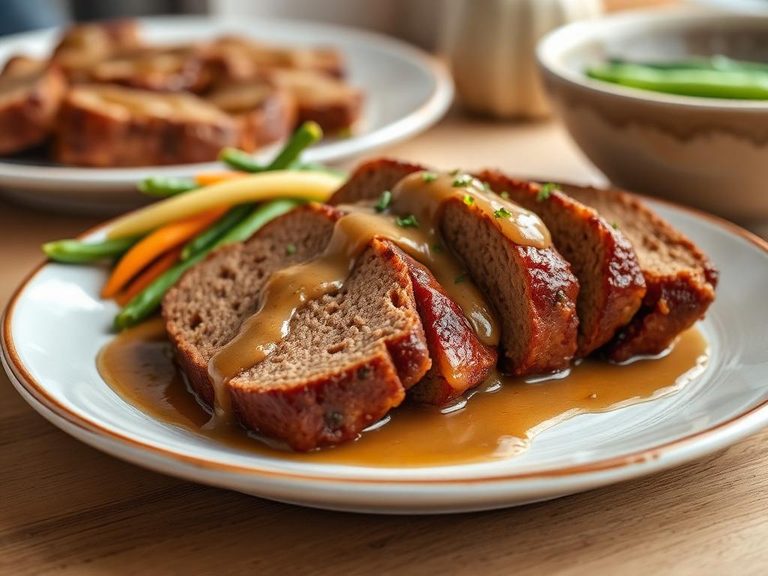
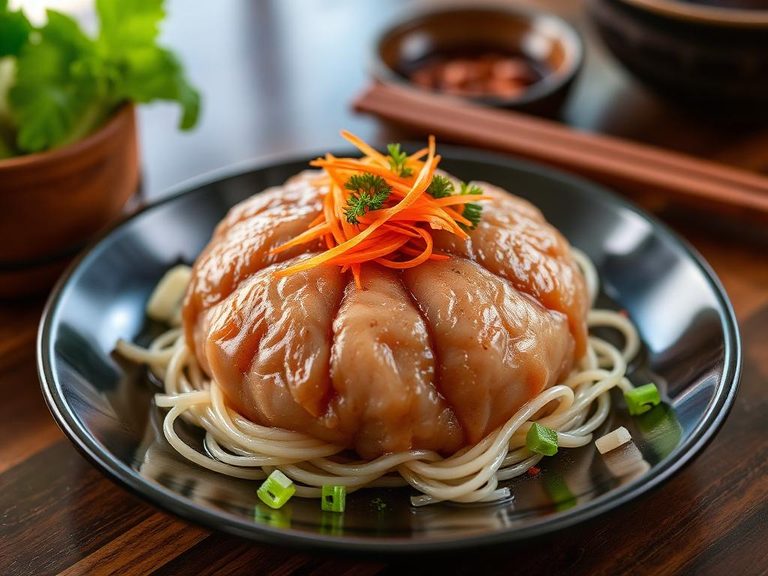
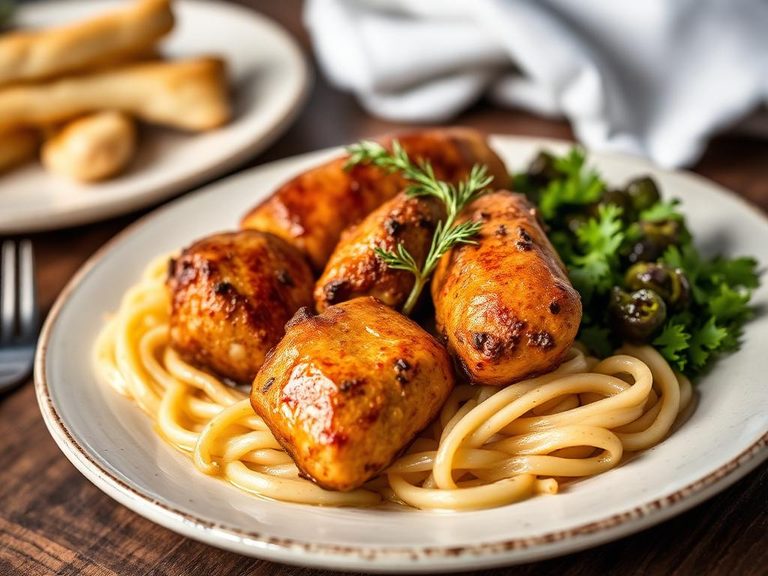
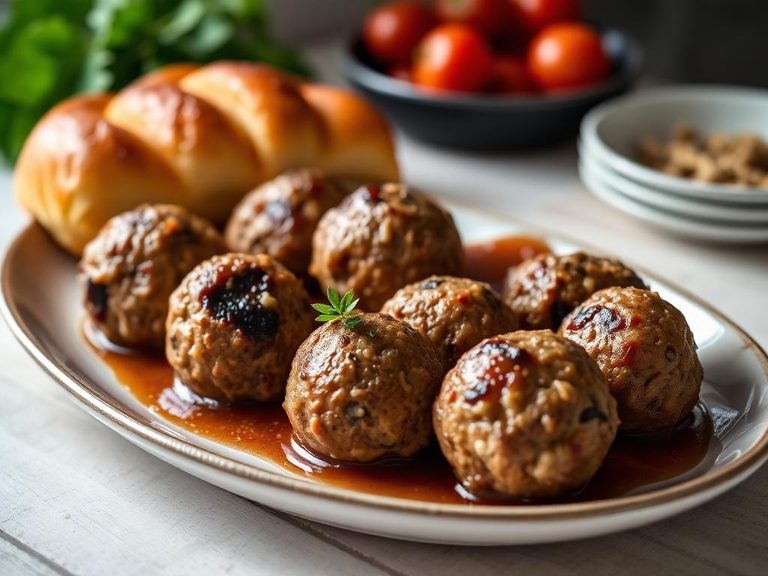
🌍 Where it's eaten
💡 Did you know?
The term 'meatloaf' in the U.S. saw a massive surge in popularity during the Great Depression as a way to extend expensive meat with cheaper fillers like breadcrumbs.
Full nutrition (USDA data · scales with serving)
| Water | 54.9 g |
| Energy | 282 kcal |
| Energy | 1180 kj |
| Protein | 12.1 g |
| Total lipid (fat) | 22.3 g |
| Ash | 3.2 g |
| Carbohydrate, by difference | 7.5 g |
| Fiber, total dietary | 0.00 g |
| Calcium, Ca | 43.0 mg |
| Iron, Fe | 1.3 mg |
| Magnesium, Mg | 16.0 mg |
| Phosphorus, P | 129 mg |
| Potassium, K | 225 mg |
| Sodium, Na | 1127 mg |
| Zinc, Zn | 1.4 mg |
| Copper, Cu | 0.09 mg |
| Manganese, Mn | 0.07 mg |
| Selenium, Se | 35.1 ug |
| Vitamin C, total ascorbic acid | 1.0 mg |
| Thiamin | 0.55 mg |
| Riboflavin | 0.17 mg |
| Niacin | 3.1 mg |
| Pantothenic acid | 0.47 mg |
| Vitamin B-6 | 0.18 mg |
| Folate, total | 8.0 ug |
| Folic acid | 0.00 ug |
| Folate, food | 8.0 ug |
| Folate, DFE | 8.0 ug |
| Vitamin B-12 | 1.1 ug |
| Vitamin A, RAE | 0.00 ug |
| Retinol | 0.00 ug |
| Vitamin A, IU | 0.00 iu |
| Vitamin D (D2 + D3), International Units | 40.0 iu |
| Vitamin D (D2 + D3) | 1.0 ug |
Fat & fatty acid profile (per 100g)
| Fatty acids, total saturated | 8.0 g |
| SFA 4:0 | 0.00 g |
| SFA 6:0 | 0.00 g |
| SFA 8:0 | 0.00 g |
| SFA 10:0 | 0.03 g |
| SFA 12:0 | 0.01 g |
| SFA 14:0 | 0.26 g |
| SFA 16:0 | 5.0 g |
| SFA 18:0 | 2.7 g |
| Fatty acids, total monounsaturated | 10.3 g |
| MUFA 16:1 | 0.67 g |
| MUFA 18:1 | 9.7 g |
| MUFA 20:1 | 0.00 g |
| MUFA 22:1 | 0.00 g |
| Fatty acids, total polyunsaturated | 2.6 g |
| PUFA 18:2 | 2.3 g |
| PUFA 18:3 | 0.26 g |
| PUFA 18:4 | 0.00 g |
| PUFA 20:4 | 0.00 g |
| PUFA 20:5 n-3 (EPA) | 0.00 g |
| PUFA 22:5 n-3 (DPA) | 0.00 g |
| PUFA 22:6 n-3 (DHA) | 0.00 g |
| Cholesterol | 45.0 mg |
| Phytosterols | 0.00 mg |
Amino acid profile (per 100g)
| Tryptophan | 0.17 g |
| Threonine | 0.60 g |
| Isoleucine | 0.64 g |
| Leucine | 1.1 g |
| Lysine | 1.2 g |
| Methionine | 0.36 g |
| Cystine | 0.20 g |
| Phenylalanine | 0.57 g |
| Tyrosine | 0.45 g |
| Valine | 0.67 g |
| Arginine | 0.91 g |
| Histidine | 0.53 g |
| Alanine | 0.76 g |
| Aspartic acid | 1.3 g |
| Glutamic acid | 2.3 g |
| Glycine | 0.63 g |
| Proline | 0.68 g |
| Serine | 0.57 g |
FAQ
What's the difference between pork meatloaf and a hamburger patty?
While both are ground meat dishes, meatloaf is typically baked in a loaf pan or free-form, contains binders like breadcrumbs and eggs, and is sliced for serving. A hamburger patty is usually just seasoned ground meat, shaped into a disc, and cooked quickly on a grill or skillet.
Can I make a leaner version of pork meatloaf?
Yes, you can use ground pork loin or a leaner grind, and incorporate more vegetables like finely grated zucchini, carrots, or mushrooms into the mixture to add moisture and reduce the overall fat content.
Why is my pork meatloaf dry?
Dryness often comes from overcooking or using meat that's too lean. Ensure you don't overmix the loaf (which makes it tough), use a meat thermometer to pull it out at 160°F (71°C), and consider adding a panade (milk-soaked breadcrumbs) for extra moisture.
Nutrient density (calculated · NRF9.3)
Nutrient Rich Foods index: beneficial nutrients (protein, fiber, vitamins, minerals) minus saturated fat, added sugar & sodium, per 100 kcal.
NRF9.3 index — Fulgoni, Keast & Drewnowski, 2009. Computed from USDA nutrients.
Weight-loss friendliness (composite index)
Energy density 2.82 kcal/g · 17% calories from protein · 0.0 g fiber · 0.0 g sugar per 100 g.
Composite of energy density (Rolls et al., 1999), protein & fiber satiety, minus sugar. A calculated heuristic — ranks satiety-per-calorie, not a clinical measure.
Dietary load (calculated from USDA values)
Potential renal acid load. Positive = acid-forming, negative = alkaline-forming.
Sodium-to-potassium ratio: 5.01 (lower is better — aim for ≤ 1)
Sodium:potassium per WHO potassium guidance. Computed from USDA nutrients.