

Japanese hambagu
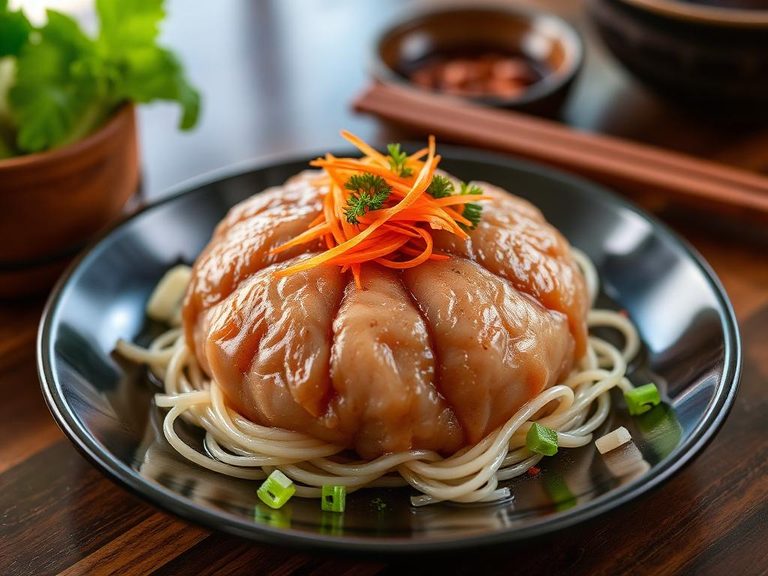
Japanese hambagu is a savory, pan-fried meat patty made from a blend of ground beef and pork, mixed with ingredients like onions, breadcrumbs, and eggs. Unlike a Western hamburger patty, it is typically served as a standalone dish with a rich, demi-glace sauce, rather than inside a bun. It is a beloved example of 'yoshoku'—Western-influenced Japanese cuisine.
🍽️ Nutrition at a glance
This dish is a good source of protein from the meat, but is also relatively high in fat due to the ground meat and cooking method. It provides key nutrients like iron, zinc, and B vitamins, with a typical serving containing roughly 400-500 calories.
Nutrition breakdown
| Calories | 450 kcal |
| Protein | 25 g |
| Carbs | 15 g |
| Fat | 32 g |
| Fiber | 1 g |
| Sugar | 4 g |
| Sodium | 600 mg |
| Iron | 3.5 mg |
| Zinc | 5 mg |
| Vitamin B12 | 2.5 mcg |
| Potassium | 350 mg |
| Phosphorus | 200 mg |
| Niacin (B3) | 6 mg |
| Vitamin B6 | 0.4 mg |
| Selenium | 20 mcg |
Per 1 hambagu patty with sauce (approx. 150 g) · estimated, varies by recipe
💡 What's interesting
Culturally, hambagu represents the Japanese adaptation of Western food, evolving into a unique comfort food staple often served in family restaurants and home cooking. Nutritionally, it is interesting because it incorporates finely chopped onions and sometimes grated apple or milk into the patty, adding moisture, subtle sweetness, and a softer texture compared to denser Western patties.
🍽️ Related dishes
AI estimate may be inaccurate · Terms