

Milk shake with malt
Common food

Photo: Wikipedia
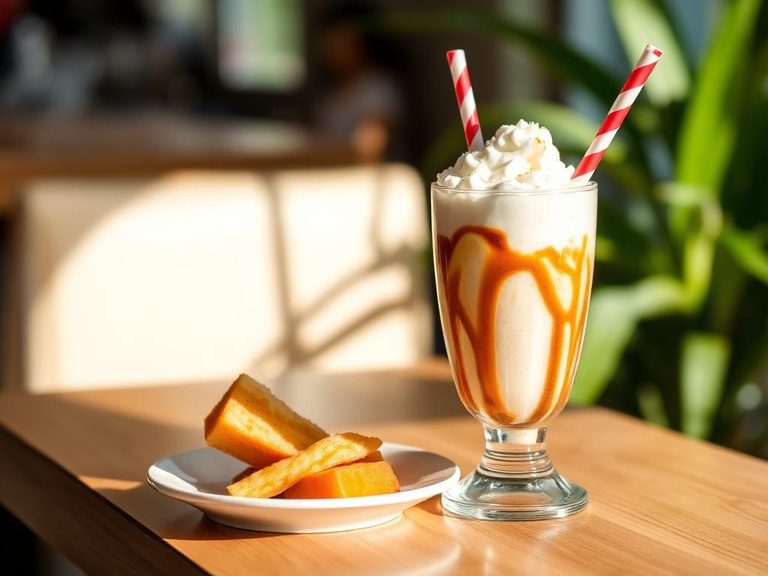
A malt milkshake is a thick, creamy, and nostalgic beverage blending milk, malted milk powder, and ice cream into a frothy, sweet indulgence. Its flavor is distinctly toasty and malty, with a smooth, velvety texture that coats the tongue. Nutritionally, it's a significant source of quick energy from carbohydrates and sugar, with a modest protein boost.
Calorie split: 12% protein · 44% carbs · 44% fat
↓ Full nutrition💚 Why it's loved
People adore its comforting, retro sweetness and the satisfying, thick texture that feels like a treat. It's a versatile classic, easily customized with flavors like chocolate or vanilla, and evokes a sense of nostalgic diner culture.
⚠️ Watch-outs & how to enjoy it better
Its high sugar and refined carbohydrate content can lead to rapid blood sugar spikes and subsequent energy crashes, making it unsuitable for those managing diabetes or insulin resistance. To counteract this, pair it with a source of protein or healthy fat (like nuts) to slow absorption, or opt for a smaller portion size.
Key benefits
- Provides quick energy from carbohydrates.
- Contains calcium and vitamin D from dairy ingredients.
- Offers a small amount of protein for muscle support.
- Can be a palatable way to increase calorie intake.
- Often fortified with vitamins and minerals from malted powder.
🍽️ Popular dishes
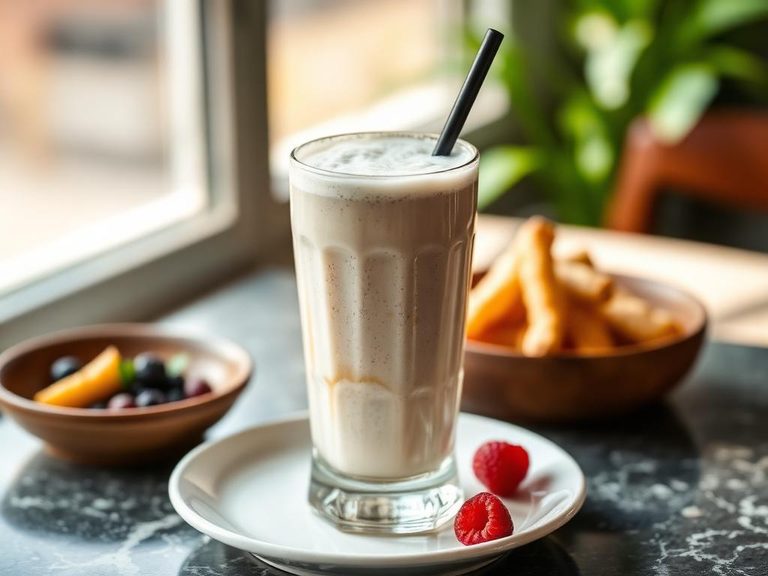
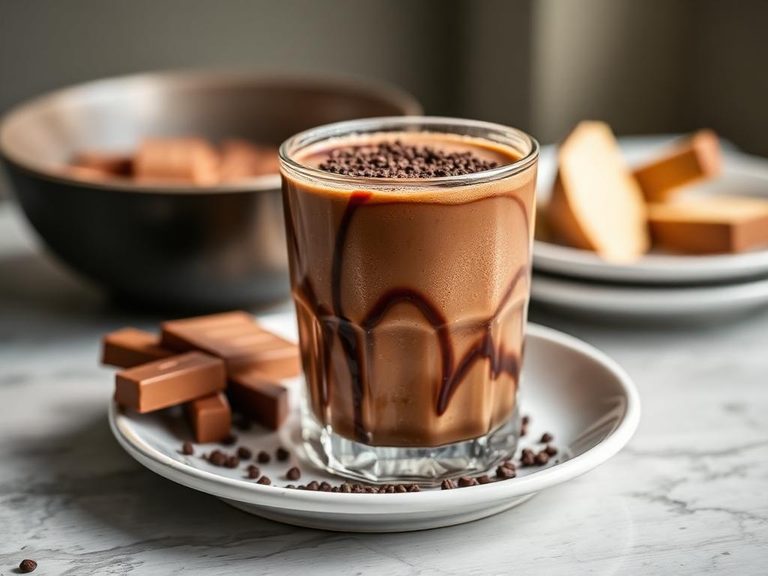
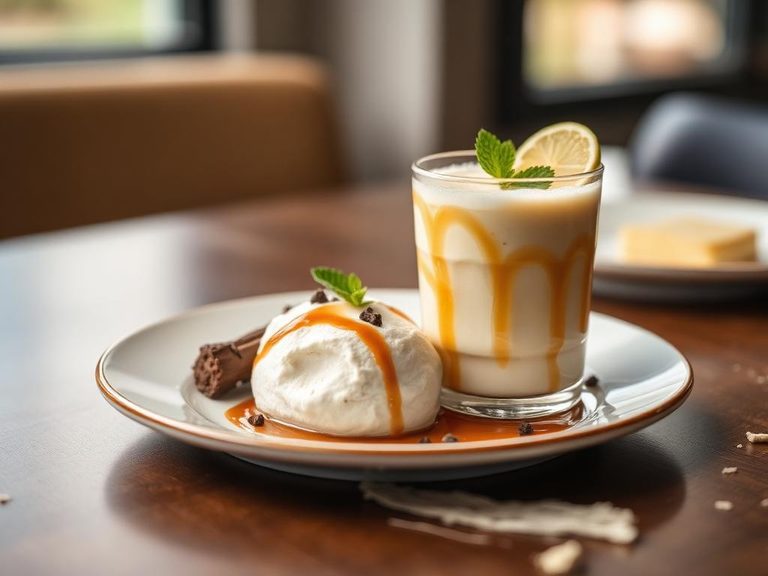
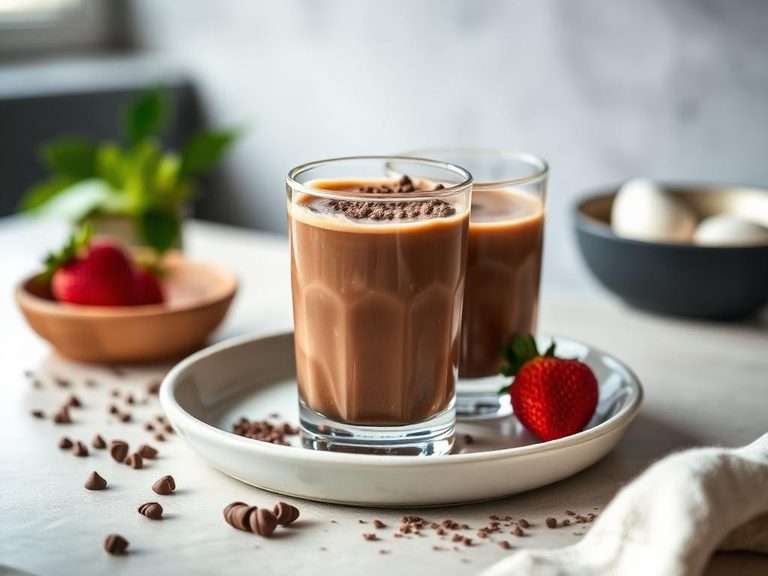
🌍 Where it's eaten
💡 Did you know?
The malted milkshake was popularized in the United States in the 1920s, and the term 'malt' refers to the malted barley powder used, which was originally developed as a nutritional supplement for infants.
Full nutrition (USDA data · scales with serving)
| Water | 75.6 g |
| Energy | 125 kcal |
| Protein | 3.8 g |
| Total lipid (fat) | 6.1 g |
| Carbohydrate, by difference | 13.6 g |
| Fiber, total dietary | 0.20 g |
| Total Sugars | 12.0 g |
| Calcium, Ca | 131 mg |
| Iron, Fe | 0.06 mg |
| Magnesium, Mg | 16.0 mg |
| Phosphorus, P | 112 mg |
| Potassium, K | 190 mg |
| Sodium, Na | 66.0 mg |
| Zinc, Zn | 0.53 mg |
| Copper, Cu | 0.02 mg |
| Selenium, Se | 2.4 ug |
| Vitamin C, total ascorbic acid | 0.30 mg |
| Thiamin | 0.07 mg |
| Riboflavin | 0.20 mg |
| Niacin | 0.30 mg |
| Vitamin B-6 | 0.07 mg |
| Folate, total | 3.0 ug |
| Folic acid | 0.00 ug |
| Folate, food | 3.0 ug |
| Folate, DFE | 3.0 ug |
| Choline, total | 22.1 mg |
| Vitamin B-12 | 0.50 ug |
| Vitamin B-12, added | 0.00 ug |
| Vitamin A, RAE | 63.0 ug |
| Retinol | 61.0 ug |
| Carotene, beta | 11.0 ug |
| Carotene, alpha | 0.00 ug |
| Cryptoxanthin, beta | 0.00 ug |
| Lycopene | 0.00 ug |
| Lutein + zeaxanthin | 0.00 ug |
| Vitamin E (alpha-tocopherol) | 0.15 mg |
| Vitamin E, added | 0.00 mg |
| Vitamin D (D2 + D3) | 0.80 ug |
| Vitamin K (phylloquinone) | 0.50 ug |
| Alcohol, ethyl | 0.00 g |
| Caffeine | 0.00 mg |
| Theobromine | 0.00 mg |
Fat & fatty acid profile (per 100g)
| Fatty acids, total saturated | 3.7 g |
| SFA 4:0 | 0.17 g |
| SFA 6:0 | 0.11 g |
| SFA 8:0 | 0.07 g |
| SFA 10:0 | 0.15 g |
| SFA 12:0 | 0.17 g |
| SFA 14:0 | 0.60 g |
| SFA 16:0 | 1.7 g |
| SFA 18:0 | 0.67 g |
| Fatty acids, total monounsaturated | 1.5 g |
| MUFA 16:1 | 0.11 g |
| MUFA 18:1 | 1.4 g |
| MUFA 20:1 | 0.00 g |
| MUFA 22:1 | 0.00 g |
| Fatty acids, total polyunsaturated | 0.28 g |
| PUFA 18:2 | 0.21 g |
| PUFA 18:3 | 0.07 g |
| PUFA 18:4 | 0.00 g |
| PUFA 20:4 | 0.00 g |
| PUFA 20:5 n-3 (EPA) | 0.00 g |
| PUFA 22:5 n-3 (DPA) | 0.00 g |
| PUFA 22:6 n-3 (DHA) | 0.00 g |
| Cholesterol | 23.0 mg |
Amino acid profile (per 100g)
Estimated from Milk shakes, thick chocolate — USDA does not publish this profile for Milk shake with malt.
| Tryptophan | 0.04 g |
| Threonine | 0.14 g |
| Isoleucine | 0.18 g |
| Leucine | 0.30 g |
| Lysine | 0.24 g |
| Methionine | 0.08 g |
| Cystine | 0.03 g |
| Phenylalanine | 0.15 g |
| Tyrosine | 0.15 g |
| Valine | 0.20 g |
| Arginine | 0.11 g |
| Histidine | 0.08 g |
| Alanine | 0.10 g |
| Aspartic acid | 0.23 g |
| Glutamic acid | 0.64 g |
| Glycine | 0.07 g |
| Proline | 0.29 g |
| Serine | 0.17 g |
FAQ
What is the difference between a milkshake and a malt?
A malt, or malted milkshake, includes malted milk powder in addition to the standard milkshake ingredients (milk, ice cream, flavoring). This adds a distinct toasty, nutty flavor and can slightly thicken the texture.
Is a malt milkshake a good source of protein?
While it contains some protein from the dairy ingredients (milk and ice cream), it is not considered a high-protein food. Its primary macronutrient is carbohydrate, mainly from sugar.
Can I make a malt milkshake at home without a machine?
Yes, you can blend softened ice cream, milk, and malted milk powder in a standard blender until smooth. The key is to use less milk for a thicker shake.
Nutrient density (calculated · NRF9.3)
Nutrient Rich Foods index: beneficial nutrients (protein, fiber, vitamins, minerals) minus saturated fat, added sugar & sodium, per 100 kcal.
NRF9.3 index — Fulgoni, Keast & Drewnowski, 2009. Computed from USDA nutrients.
Weight-loss friendliness (composite index)
Energy density 1.25 kcal/g · 12% calories from protein · 0.2 g fiber · 12.0 g sugar per 100 g.
Composite of energy density (Rolls et al., 1999), protein & fiber satiety, minus sugar. A calculated heuristic — ranks satiety-per-calorie, not a clinical measure.
Dietary load (calculated from USDA values)
Potential renal acid load. Positive = acid-forming, negative = alkaline-forming.
Sodium-to-potassium ratio: 0.35 (lower is better — aim for ≤ 1)
Sodium:potassium per WHO potassium guidance. Computed from USDA nutrients.