

Macadamia nuts
Common food

Photo: Wikipedia
Macadamia nuts are the buttery, rich kernels of the Macadamia tree, native to Australia. Their texture is uniquely crisp yet creamy, with a sweet, delicate flavor that intensifies when roasted. Nutritionally, they are a powerhouse of monounsaturated fats, which are heart-healthy fats also found in olive oil.
Calorie split: 4% protein · 7% carbs · 89% fat
↓ Full nutrition💚 Why it's loved
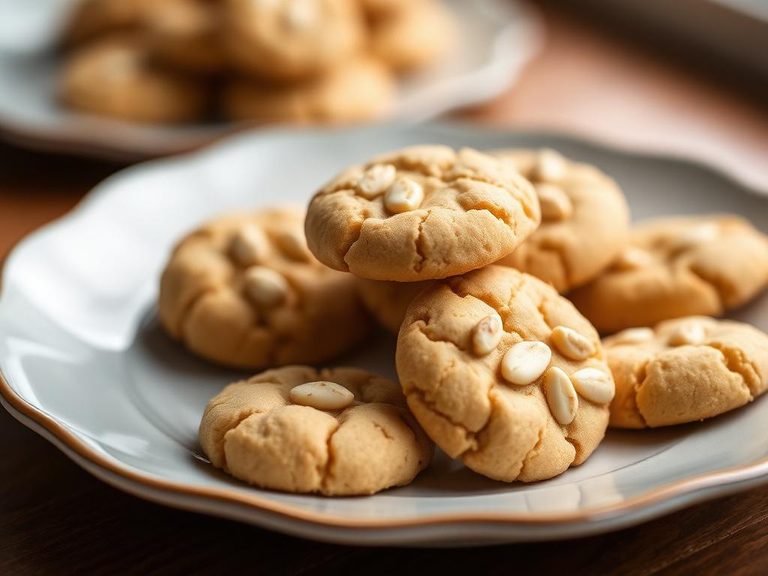
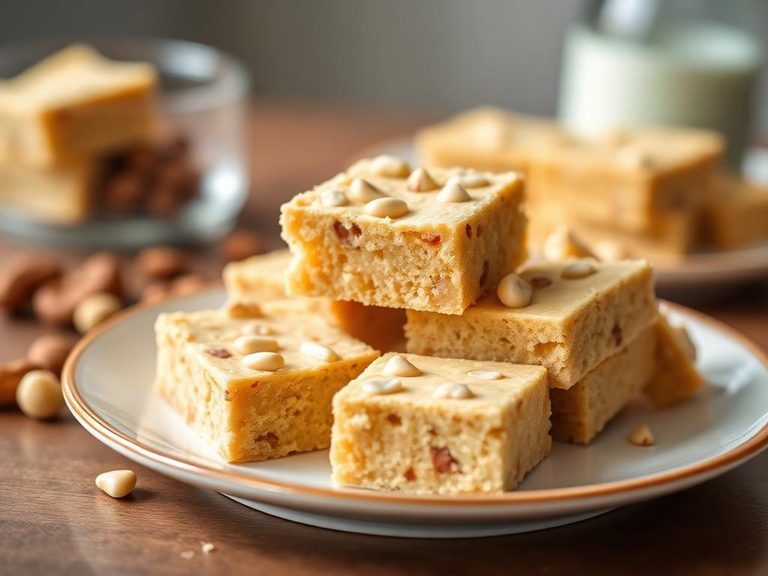
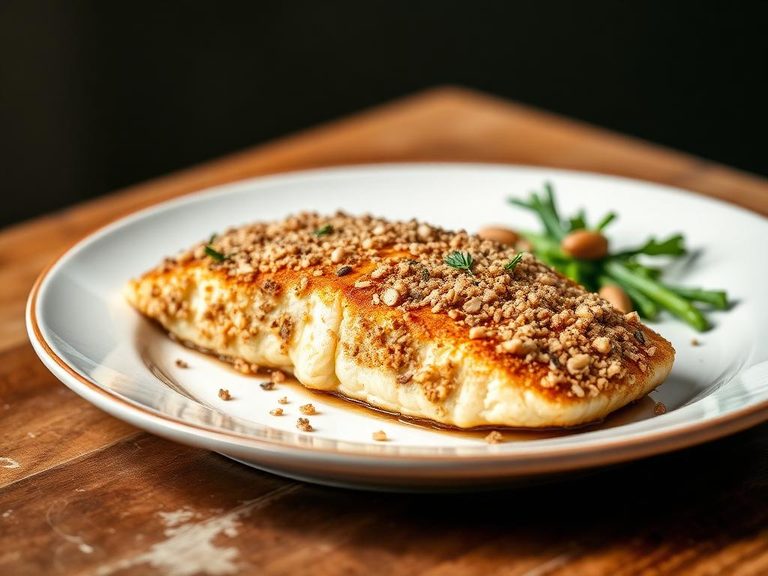
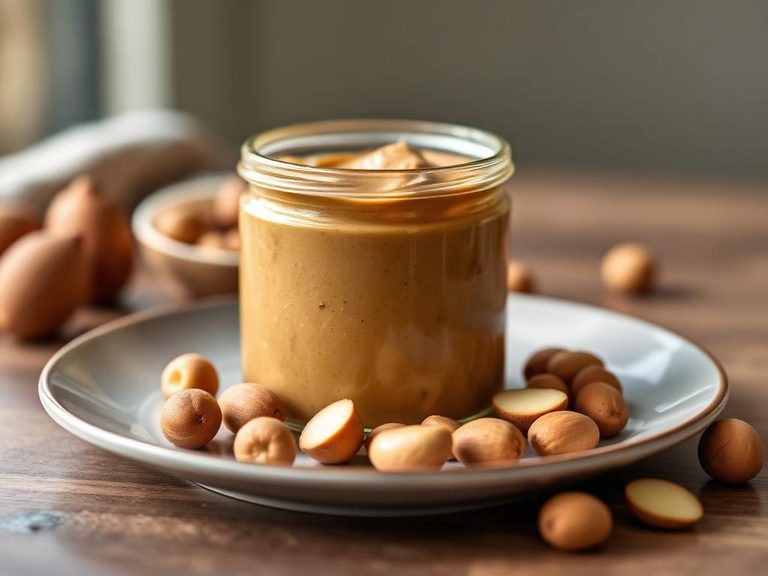
People adore them for their luxurious, melt-in-your-mouth texture and subtle sweetness that elevates both sweet and savory dishes. They are a staple in gourmet baking, from cookies to tarts, and are prized in health-conscious diets for their satisfying richness.
⚠️ Watch-outs & how to enjoy it better
They are very calorie-dense, so overconsumption can hinder weight management goals. As a tree nut, they are a common allergen, and their high fat content can cause digestive discomfort in some individuals if eaten in large quantities. To counteract this, practice strict portion control (a small handful is a serving), and if you have a sensitive stomach, try pairing them with high-fiber foods like fruit to aid digestion.
Key benefits
- High in monounsaturated fats (oleic acid)
- Source of plant-based protein and fiber
- Contains essential minerals like manganese and thiamin
- Naturally gluten-free and low in sugar
🍽️ Popular dishes
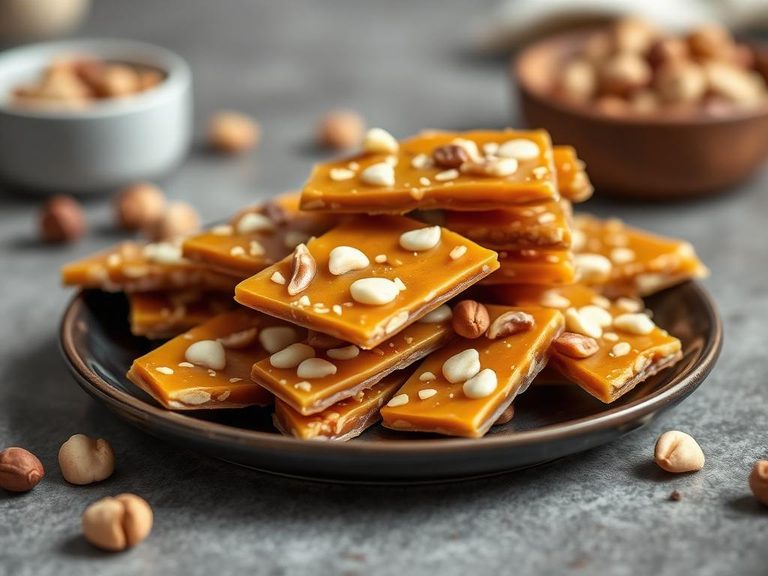
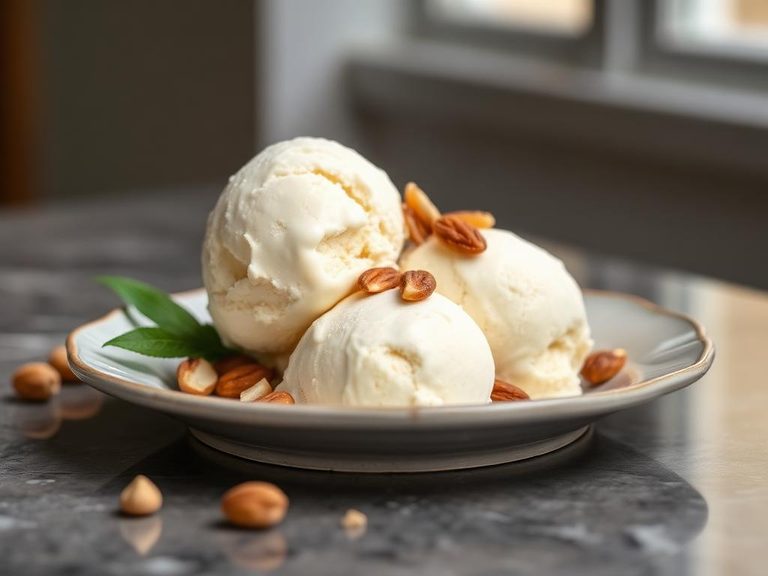
🌍 Where it's eaten
💡 Did you know?
Macadamia nuts have the hardest shell of any nut, requiring about 300 pounds of pressure per square inch to crack, which is why they were traditionally cracked with rocks by Indigenous Australians.
Full nutrition (USDA data · scales with serving)
| Water | 1.6 g |
| Energy | 716 kcal |
| Protein | 7.8 g |
| Total lipid (fat) | 76.1 g |
| Carbohydrate, by difference | 12.8 g |
| Fiber, total dietary | 8.0 g |
| Total Sugars | 4.1 g |
| Calcium, Ca | 70.0 mg |
| Iron, Fe | 2.6 mg |
| Magnesium, Mg | 118 mg |
| Phosphorus, P | 198 mg |
| Potassium, K | 363 mg |
| Sodium, Na | 353 mg |
| Zinc, Zn | 1.3 mg |
| Copper, Cu | 0.57 mg |
| Selenium, Se | 11.7 ug |
| Vitamin C, total ascorbic acid | 0.70 mg |
| Thiamin | 0.71 mg |
| Riboflavin | 0.09 mg |
| Niacin | 2.3 mg |
| Vitamin B-6 | 0.36 mg |
| Folate, total | 10.0 ug |
| Folic acid | 0.00 ug |
| Folate, food | 10.0 ug |
| Folate, DFE | 10.0 ug |
| Choline, total | 44.6 mg |
| Vitamin B-12 | 0.00 ug |
| Vitamin B-12, added | 0.00 ug |
| Vitamin A, RAE | 0.00 ug |
| Retinol | 0.00 ug |
| Carotene, beta | 0.00 ug |
| Carotene, alpha | 0.00 ug |
| Cryptoxanthin, beta | 0.00 ug |
| Lycopene | 0.00 ug |
| Lutein + zeaxanthin | 0.00 ug |
| Vitamin E (alpha-tocopherol) | 0.57 mg |
| Vitamin E, added | 0.00 mg |
| Vitamin D (D2 + D3) | 0.00 ug |
| Vitamin K (phylloquinone) | 0.00 ug |
| Alcohol, ethyl | 0.00 g |
| Caffeine | 0.00 mg |
| Theobromine | 0.00 mg |
Fat & fatty acid profile (per 100g)
| Fatty acids, total saturated | 11.9 g |
| SFA 4:0 | 0.00 g |
| SFA 6:0 | 0.00 g |
| SFA 8:0 | 0.00 g |
| SFA 10:0 | 0.00 g |
| SFA 12:0 | 0.07 g |
| SFA 14:0 | 0.67 g |
| SFA 16:0 | 5.9 g |
| SFA 18:0 | 2.3 g |
| Fatty acids, total monounsaturated | 59.3 g |
| MUFA 16:1 | 12.7 g |
| MUFA 18:1 | 44.4 g |
| MUFA 20:1 | 1.9 g |
| MUFA 22:1 | 0.24 g |
| Fatty acids, total polyunsaturated | 1.5 g |
| PUFA 18:2 | 1.3 g |
| PUFA 18:3 | 0.20 g |
| PUFA 18:4 | 0.00 g |
| PUFA 20:4 | 0.00 g |
| PUFA 20:5 n-3 (EPA) | 0.00 g |
| PUFA 22:5 n-3 (DPA) | 0.00 g |
| PUFA 22:6 n-3 (DHA) | 0.00 g |
| Cholesterol | 0.00 mg |
Amino acid profile (per 100g)
Estimated from Nuts, macadamia nuts, raw — USDA does not publish this profile for Macadamia nuts.
| Tryptophan | 0.07 g |
| Threonine | 0.37 g |
| Isoleucine | 0.31 g |
| Leucine | 0.60 g |
| Lysine | 0.02 g |
| Methionine | 0.02 g |
| Cystine | 0.01 g |
| Phenylalanine | 0.67 g |
| Tyrosine | 0.51 g |
| Valine | 0.36 g |
| Arginine | 1.4 g |
| Histidine | 0.20 g |
| Alanine | 0.39 g |
| Aspartic acid | 1.1 g |
| Glutamic acid | 2.3 g |
| Glycine | 0.45 g |
| Proline | 0.47 g |
| Serine | 0.42 g |
FAQ
Why are macadamia nuts so expensive?
They are expensive due to their long maturation period (7-10 years to bear fruit), labor-intensive harvesting, and the difficulty in cracking their extremely hard shells.
Are macadamia nuts keto-friendly?
Yes, they are very keto-friendly due to their high fat and very low net carb content, making them a popular choice for ketogenic diets.
Can I eat the shell of a macadamia nut?
No, the shell is inedible and extremely hard. Only the inner kernel is consumed.
Nutrient density (calculated · NRF9.3)
Nutrient Rich Foods index: beneficial nutrients (protein, fiber, vitamins, minerals) minus saturated fat, added sugar & sodium, per 100 kcal.
NRF9.3 index — Fulgoni, Keast & Drewnowski, 2009. Computed from USDA nutrients.
Weight-loss friendliness (composite index)
Energy density 7.16 kcal/g · 4% calories from protein · 8.0 g fiber · 4.1 g sugar per 100 g.
Composite of energy density (Rolls et al., 1999), protein & fiber satiety, minus sugar. A calculated heuristic — ranks satiety-per-calorie, not a clinical measure.
Dietary load (calculated from USDA values)
Potential renal acid load. Positive = acid-forming, negative = alkaline-forming.
Sodium-to-potassium ratio: 0.97 (lower is better — aim for ≤ 1)
Sodium:potassium per WHO potassium guidance. Computed from USDA nutrients.