

Light ice cream bar, chocolate
Common food
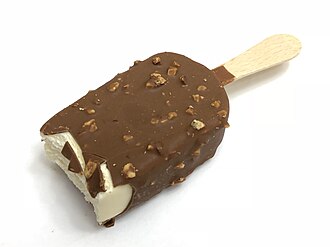
Photo: Wikipedia
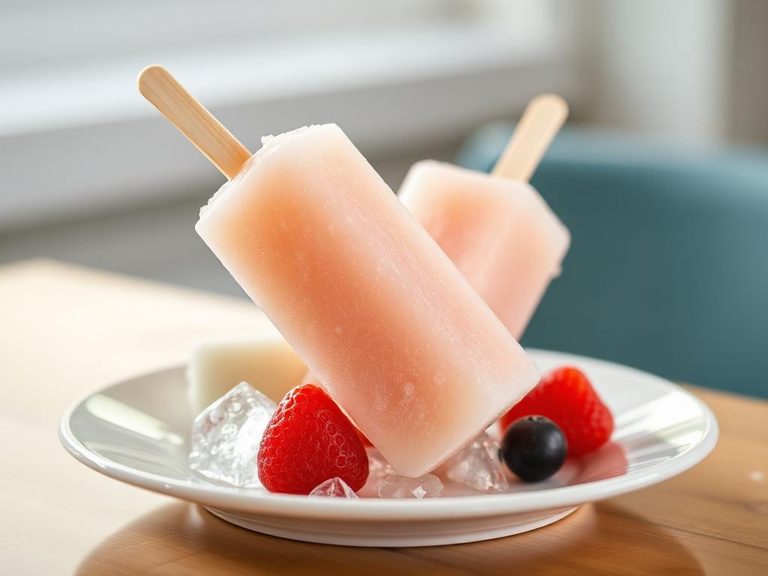
A light ice cream bar is a frozen dairy confection on a stick, typically coated in a thin shell of chocolate. It offers a creamy, sweet core with a satisfying snap from the chocolate exterior, designed to be a lower-calorie indulgence. Nutritionally, it provides a moderate energy boost from carbohydrates and fat, with a modest amount of protein.
Calorie split: 5% protein · 32% carbs · 62% fat
↓ Full nutrition💚 Why it's loved
People love it for the nostalgic, convenient pleasure of a chocolate-coated frozen treat on a stick, perfect for a quick cool-down or dessert. Its versatility makes it a go-to snack for both children and adults seeking a lighter option that doesn't sacrifice the classic ice cream experience.
⚠️ Watch-outs & how to enjoy it better
The primary downside is the high sugar content, which can cause blood-sugar spikes, especially for those with insulin sensitivity. To counteract this, pair it with a source of protein or healthy fat (like nuts or yogurt) to slow sugar absorption, and practice portion control by choosing a smaller size or sharing. It may also contain common allergens like milk, soy, and nuts, so always check the label.
Key benefits
- Lower calorie alternative to premium ice cream bars
- Provides a quick source of energy from carbohydrates
- Contains some protein for satiety
- Convenient, single-serving portion control
- Offers a satisfying sweet treat with less guilt
🍽️ Popular dishes

🌍 Where it's eaten
💡 Did you know?
The first chocolate-coated ice cream bar on a stick was patented in 1922 by Harry Burt, who called it the 'Good Humor Bar' and revolutionized ice cream distribution with his fleet of white trucks.
Full nutrition (USDA data · scales with serving)
| Water | 59.4 g |
| Energy | 240 kcal |
| Protein | 3.3 g |
| Total lipid (fat) | 16.9 g |
| Carbohydrate, by difference | 19.7 g |
| Fiber, total dietary | 1.0 g |
| Total Sugars | 11.1 g |
| Calcium, Ca | 104 mg |
| Iron, Fe | 0.58 mg |
| Magnesium, Mg | 18.0 mg |
| Phosphorus, P | 76.0 mg |
| Potassium, K | 149 mg |
| Sodium, Na | 55.0 mg |
| Zinc, Zn | 0.38 mg |
| Copper, Cu | 0.08 mg |
| Selenium, Se | 2.0 ug |
| Vitamin C, total ascorbic acid | 0.70 mg |
| Thiamin | 0.03 mg |
| Riboflavin | 0.12 mg |
| Niacin | 0.11 mg |
| Vitamin B-6 | 0.03 mg |
| Folate, total | 4.0 ug |
| Folic acid | 0.00 ug |
| Folate, food | 4.0 ug |
| Folate, DFE | 4.0 ug |
| Choline, total | 11.6 mg |
| Vitamin B-12 | 0.19 ug |
| Vitamin B-12, added | 0.00 ug |
| Vitamin A, RAE | 53.0 ug |
| Retinol | 49.0 ug |
| Carotene, beta | 53.0 ug |
| Carotene, alpha | 0.00 ug |
| Cryptoxanthin, beta | 0.00 ug |
| Lycopene | 0.00 ug |
| Lutein + zeaxanthin | 1.0 ug |
| Vitamin E (alpha-tocopherol) | 0.19 mg |
| Vitamin E, added | 0.00 mg |
| Vitamin D (D2 + D3) | 0.10 ug |
| Vitamin K (phylloquinone) | 1.6 ug |
| Alcohol, ethyl | 0.00 g |
| Caffeine | 3.0 mg |
| Theobromine | 48.0 mg |
Fat & fatty acid profile (per 100g)
| Fatty acids, total saturated | 13.4 g |
| SFA 4:0 | 0.15 g |
| SFA 6:0 | 0.16 g |
| SFA 8:0 | 1.00 g |
| SFA 10:0 | 0.77 g |
| SFA 12:0 | 5.4 g |
| SFA 14:0 | 2.5 g |
| SFA 16:0 | 2.3 g |
| SFA 18:0 | 0.95 g |
| Fatty acids, total monounsaturated | 1.8 g |
| MUFA 16:1 | 0.10 g |
| MUFA 18:1 | 1.7 g |
| MUFA 20:1 | 0.00 g |
| MUFA 22:1 | 0.00 g |
| Fatty acids, total polyunsaturated | 0.46 g |
| PUFA 18:2 | 0.40 g |
| PUFA 18:3 | 0.06 g |
| PUFA 18:4 | 0.00 g |
| PUFA 20:4 | 0.00 g |
| PUFA 20:5 n-3 (EPA) | 0.00 g |
| PUFA 22:5 n-3 (DPA) | 0.00 g |
| PUFA 22:6 n-3 (DHA) | 0.00 g |
| Cholesterol | 16.0 mg |
Amino acid profile (per 100g)
Estimated from Ice creams, vanilla, rich — USDA does not publish this profile for Light ice cream bar.
| Tryptophan | 0.04 g |
| Threonine | 0.14 g |
| Isoleucine | 0.18 g |
| Leucine | 0.30 g |
| Lysine | 0.25 g |
| Methionine | 0.08 g |
| Cystine | 0.03 g |
| Phenylalanine | 0.15 g |
| Tyrosine | 0.14 g |
| Valine | 0.20 g |
| Arginine | 0.14 g |
| Histidine | 0.08 g |
| Alanine | 0.14 g |
| Glutamic acid | 0.65 g |
| Glycine | 0.15 g |
| Proline | 0.34 g |
| Serine | 0.17 g |
FAQ
How does a light ice cream bar differ from a regular one?
A light ice cream bar typically has fewer calories and less fat than a regular bar, often by using lower-fat dairy or adding more air (overrun) to the mixture, while still aiming for a similar taste and texture.
Is it suitable for people with lactose intolerance?
Most light ice cream bars contain dairy and lactose, so they are not suitable for those with lactose intolerance unless specifically labeled as lactose-free. Some brands offer dairy-free versions using coconut or almond milk.
Can I eat it if I'm trying to lose weight?
While it's lower in calories than regular ice cream, it's still a sweet treat with sugar and fat. It can be part of a balanced diet in moderation, but mindful portion control and pairing with protein or fiber can help manage cravings.
Nutrient density (calculated · NRF9.3)
Nutrient Rich Foods index: beneficial nutrients (protein, fiber, vitamins, minerals) minus saturated fat, added sugar & sodium, per 100 kcal.
NRF9.3 index — Fulgoni, Keast & Drewnowski, 2009. Computed from USDA nutrients.
Weight-loss friendliness (composite index)
Energy density 2.40 kcal/g · 6% calories from protein · 1.0 g fiber · 11.1 g sugar per 100 g.
Composite of energy density (Rolls et al., 1999), protein & fiber satiety, minus sugar. A calculated heuristic — ranks satiety-per-calorie, not a clinical measure.
Dietary load (calculated from USDA values)
Potential renal acid load. Positive = acid-forming, negative = alkaline-forming.
Sodium-to-potassium ratio: 0.37 (lower is better — aim for ≤ 1)
Sodium:potassium per WHO potassium guidance. Computed from USDA nutrients.