

Lamb, chop
Common food
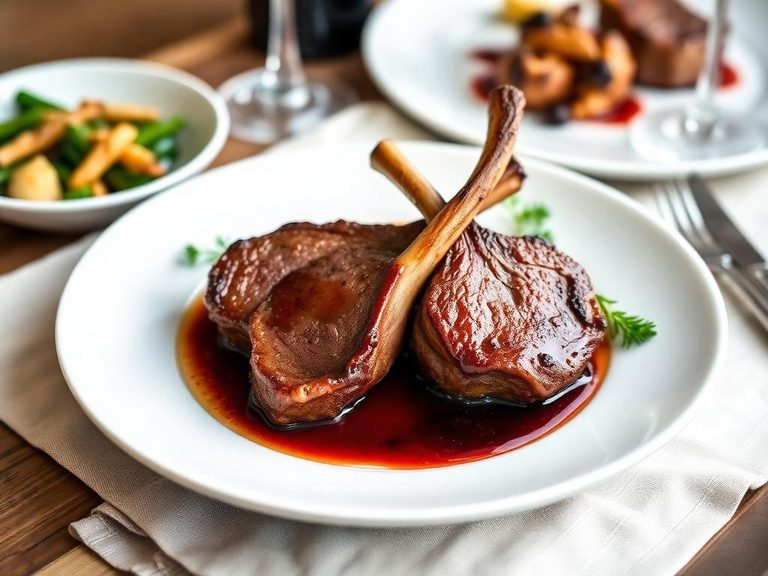
A lamb chop is a tender cut of meat from the rib or loin of a young sheep, prized for its rich, slightly gamey flavor and succulent, juicy texture. It is a nutrient-dense food, exceptionally high in protein and healthy fats, with virtually no carbohydrates. When cooked properly, it offers a satisfying, savory experience that is a centerpiece of many cuisines.
Calorie split: 43% protein · 0% carbs · 57% fat
↓ Full nutrition💚 Why it's loved
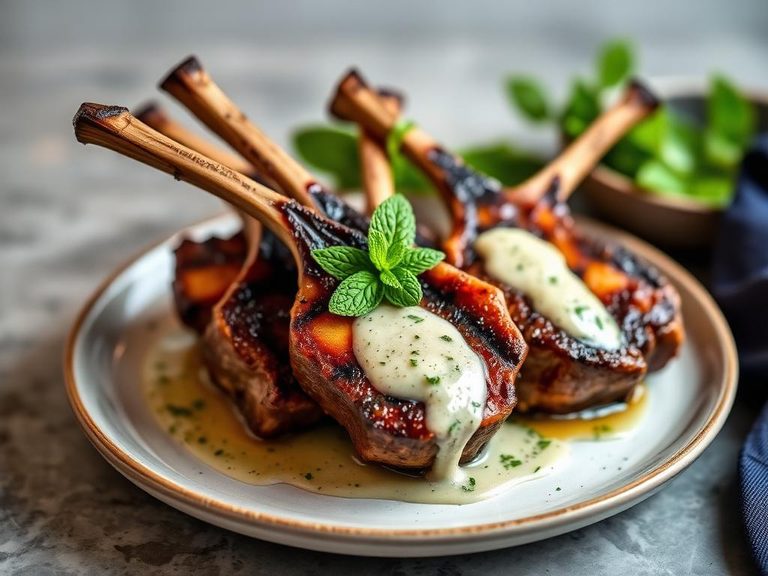
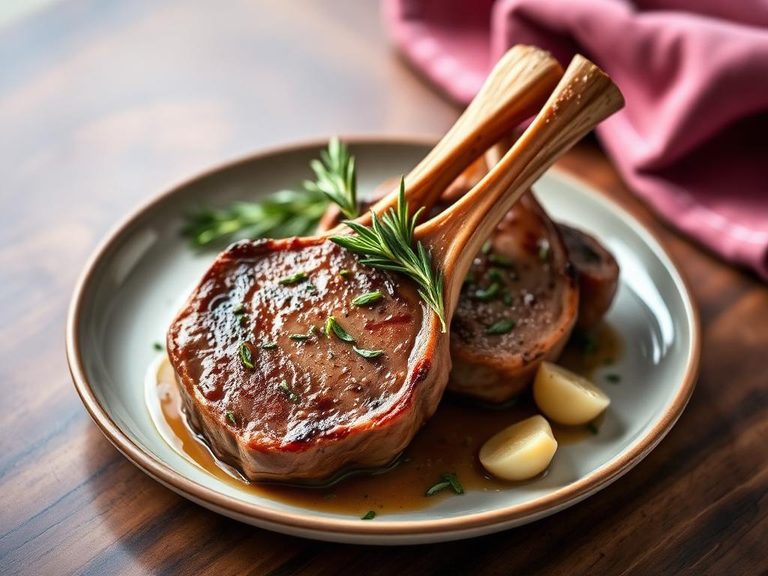
People love lamb chops for their deep, savory flavor that is both robust and delicate, often enhanced by herbs like rosemary and garlic. The cut's versatility allows it to be grilled, pan-seared, or roasted, making it a favorite for both quick weeknight meals and elegant dinner parties.
⚠️ Watch-outs & how to enjoy it better
Lamb chops can be high in saturated fat and cholesterol, which may be a concern for those managing heart health. To mitigate this, opt for leaner cuts like loin chops, trim excess visible fat, and pair with fiber-rich vegetables like roasted asparagus or a fresh salad to balance the meal.
Key benefits
- Excellent source of high-quality protein for muscle maintenance and growth.
- Rich in essential vitamins like B12, niacin, and zinc for energy metabolism and immune function.
- Contains healthy fats, including omega-3 fatty acids, especially from grass-fed lamb.
- Provides heme iron, which is highly bioavailable and helps prevent anemia.
🍽️ Popular dishes
🌍 Where it's eaten
💡 Did you know?
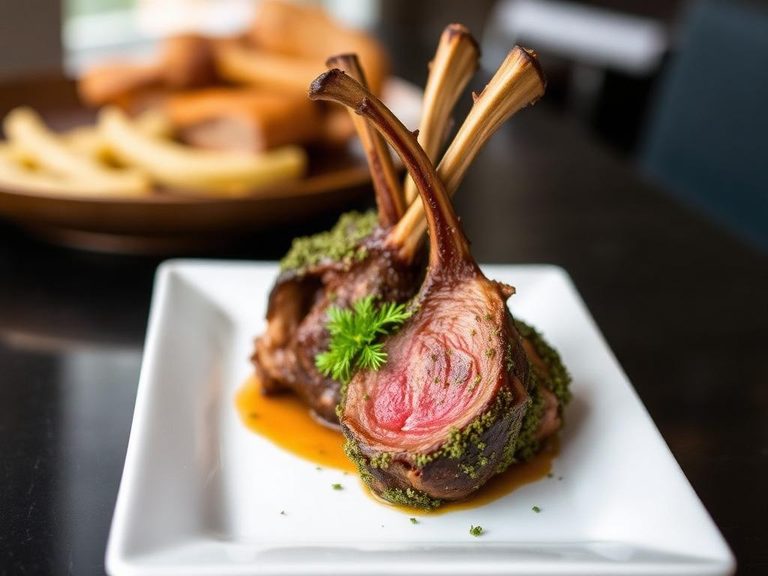
Lamb chops from the rack are often frenched, meaning the meat and fat are scraped from the rib bones to create an elegant, clean look for presentation.
Full nutrition (USDA data · scales with serving)
| Water | 55.8 g |
| Energy | 264 kcal |
| Protein | 27.4 g |
| Total lipid (fat) | 16.3 g |
| Carbohydrate, by difference | 0.00 g |
| Fiber, total dietary | 0.00 g |
| Total Sugars | 0.00 g |
| Calcium, Ca | 20.0 mg |
| Iron, Fe | 1.9 mg |
| Magnesium, Mg | 26.0 mg |
| Phosphorus, P | 209 mg |
| Potassium, K | 349 mg |
| Sodium, Na | 387 mg |
| Zinc, Zn | 3.8 mg |
| Copper, Cu | 0.14 mg |
| Selenium, Se | 29.9 ug |
| Vitamin C, total ascorbic acid | 0.00 mg |
| Thiamin | 0.10 mg |
| Riboflavin | 0.26 mg |
| Niacin | 6.9 mg |
| Vitamin B-6 | 0.14 mg |
| Folate, total | 21.0 ug |
| Folic acid | 0.00 ug |
| Folate, food | 21.0 ug |
| Folate, DFE | 21.0 ug |
| Choline, total | 100 mg |
| Vitamin B-12 | 2.5 ug |
| Vitamin B-12, added | 0.00 ug |
| Vitamin A, RAE | 0.00 ug |
| Retinol | 0.00 ug |
| Carotene, beta | 0.00 ug |
| Carotene, alpha | 0.00 ug |
| Cryptoxanthin, beta | 0.00 ug |
| Lycopene | 0.00 ug |
| Lutein + zeaxanthin | 0.00 ug |
| Vitamin E (alpha-tocopherol) | 0.14 mg |
| Vitamin E, added | 0.00 mg |
| Vitamin D (D2 + D3) | 0.10 ug |
| Vitamin K (phylloquinone) | 4.3 ug |
| Alcohol, ethyl | 0.00 g |
| Caffeine | 0.00 mg |
| Theobromine | 0.00 mg |
Fat & fatty acid profile (per 100g)
| Fatty acids, total saturated | 6.6 g |
| SFA 4:0 | 0.00 g |
| SFA 6:0 | 0.00 g |
| SFA 8:0 | 0.00 g |
| SFA 10:0 | 0.04 g |
| SFA 12:0 | 0.06 g |
| SFA 14:0 | 0.60 g |
| SFA 16:0 | 3.4 g |
| SFA 18:0 | 2.2 g |
| Fatty acids, total monounsaturated | 6.9 g |
| MUFA 16:1 | 0.48 g |
| MUFA 18:1 | 6.3 g |
| MUFA 20:1 | 0.00 g |
| MUFA 22:1 | 0.00 g |
| Fatty acids, total polyunsaturated | 1.2 g |
| PUFA 18:2 | 0.88 g |
| PUFA 18:3 | 0.20 g |
| PUFA 18:4 | 0.00 g |
| PUFA 20:4 | 0.06 g |
| PUFA 20:5 n-3 (EPA) | 0.00 g |
| PUFA 22:5 n-3 (DPA) | 0.00 g |
| PUFA 22:6 n-3 (DHA) | 0.00 g |
| Cholesterol | 97.0 mg |
Amino acid profile (per 100g)
Estimated from Lamb, New Zealand, imported, ground lamb, cooked, braised — USDA does not publish this profile for Lamb.
| Tryptophan | 0.25 g |
| Threonine | 1.1 g |
| Isoleucine | 1.0 g |
| Leucine | 1.7 g |
| Lysine | 2.0 g |
| Methionine | 0.74 g |
| Cystine | 0.30 g |
| Phenylalanine | 0.89 g |
| Tyrosine | 0.78 g |
| Valine | 1.2 g |
| Arginine | 1.5 g |
| Histidine | 0.48 g |
| Alanine | 1.1 g |
| Glutamic acid | 3.2 g |
| Glycine | 0.97 g |
| Proline | 0.72 g |
| Serine | 0.77 g |
FAQ
What is the best way to cook lamb chops for tenderness?
The best method is to sear them quickly over high heat to create a flavorful crust, then finish cooking to your desired doneness (medium-rare is ideal for tenderness). Avoid overcooking, as it can make the meat tough and dry.
Are lamb chops healthy?
Yes, they are a nutrient-dense food rich in protein, iron, and B vitamins. However, they are also high in saturated fat, so moderation is key, especially for those with specific health concerns.
How can I reduce the gamey taste of lamb?
Marinating the chops in acidic ingredients like lemon juice or vinegar, or using strong herbs like rosemary and garlic, can help mellow the gamey flavor. Choosing younger lamb (spring lamb) also tends to have a milder taste.
Nutrient density (calculated · NRF9.3)
Nutrient Rich Foods index: beneficial nutrients (protein, fiber, vitamins, minerals) minus saturated fat, added sugar & sodium, per 100 kcal.
NRF9.3 index — Fulgoni, Keast & Drewnowski, 2009. Computed from USDA nutrients.
Weight-loss friendliness (composite index)
Energy density 2.64 kcal/g · 41% calories from protein · 0.0 g fiber · 0.0 g sugar per 100 g.
Composite of energy density (Rolls et al., 1999), protein & fiber satiety, minus sugar. A calculated heuristic — ranks satiety-per-calorie, not a clinical measure.
Dietary load (calculated from USDA values)
Potential renal acid load. Positive = acid-forming, negative = alkaline-forming.
Sodium-to-potassium ratio: 1.11 (lower is better — aim for ≤ 1)
Sodium:potassium per WHO potassium guidance. Computed from USDA nutrients.