

Ice cream sandwich, chocolate
Common food

Photo: Wikipedia
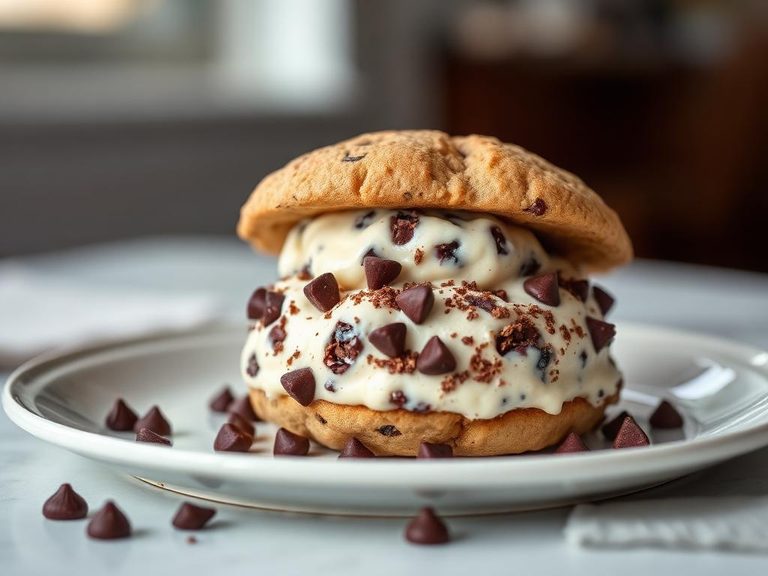
A classic ice cream sandwich consists of a layer of vanilla ice cream pressed between two soft, chewy chocolate wafers. The texture is a delightful contrast: the yielding, cake-like cookies give way to the cold, creamy center. Nutritionally, it's a high-energy treat, delivering a significant 28g of sugar and 39g of carbohydrates per 100g.
Calorie split: 6% protein · 56% carbs · 38% fat
↓ Full nutrition💚 Why it's loved
People love it for the perfect marriage of soft, fudgy cookie and cold, smooth ice cream, creating a nostalgic and universally recognizable treat. Its handheld, mess-free format makes it a beloved, convenient indulgence at fairs, delis, and ice cream trucks.
⚠️ Watch-outs & how to enjoy it better
The high sugar content can cause rapid blood sugar spikes, and it contains common allergens like dairy, wheat, and soy. To enjoy mindfully, pair it with a source of protein or fiber (like a handful of nuts) to slow sugar absorption, and practice portion control by sharing or choosing a smaller size.
Key benefits
- Provides a quick source of energy from carbohydrates and fats
- Offers a small amount of calcium and protein from the dairy ice cream
- Serves as a satisfying, portion-controlled dessert option
- Can be a nostalgic comfort food, offering psychological enjoyment
🍽️ Popular dishes
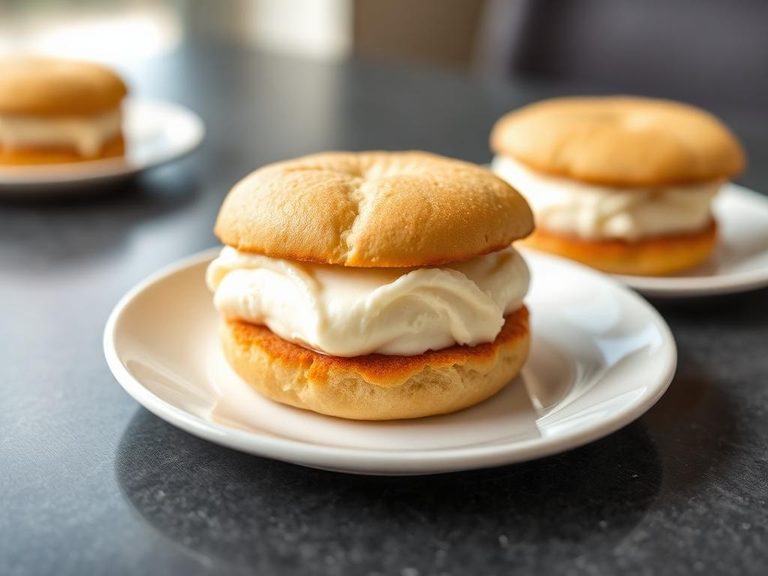
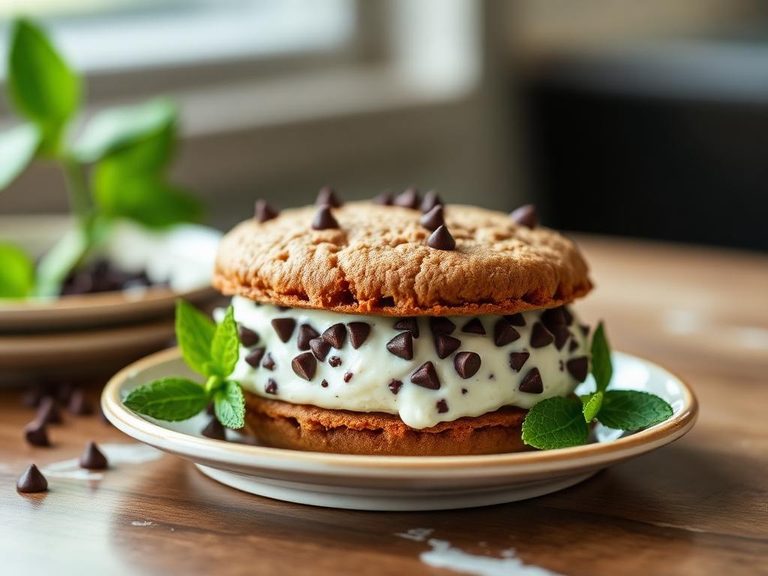
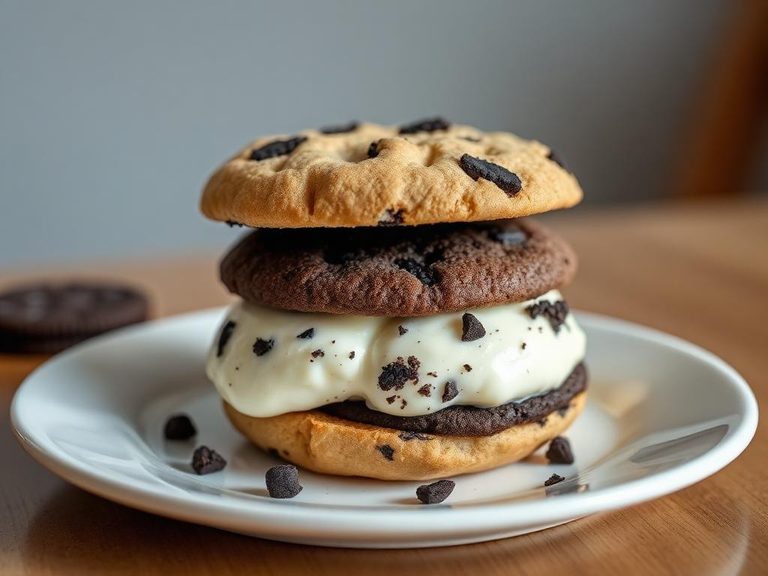
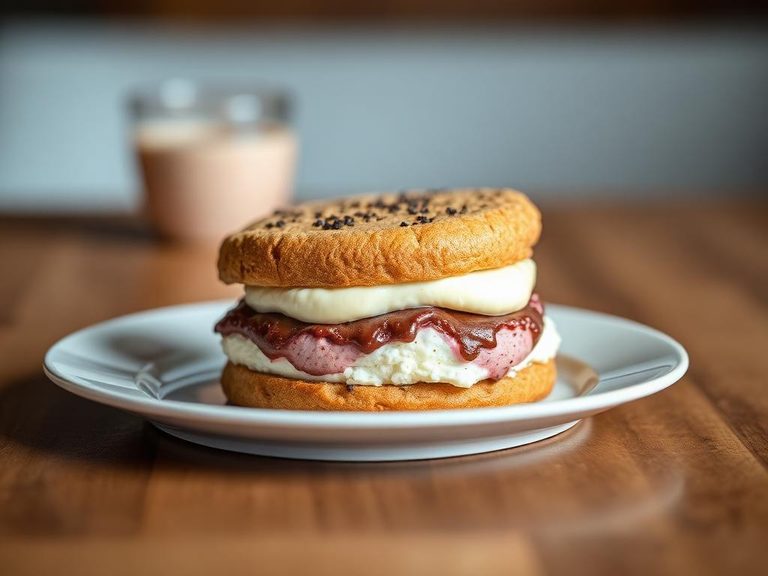
🌍 Where it's eaten
💡 Did you know?
The first known ice cream sandwich was sold from a New York City street cart in 1899 for just one cent, and it was served between two thin wafers, not the soft cookies we know today.
Full nutrition (USDA data · scales with serving)
| Water | 42.9 g |
| Energy | 270 kcal |
| Protein | 4.5 g |
| Total lipid (fat) | 11.8 g |
| Carbohydrate, by difference | 39.3 g |
| Fiber, total dietary | 1.8 g |
| Total Sugars | 28.4 g |
| Calcium, Ca | 90.0 mg |
| Iron, Fe | 1.7 mg |
| Magnesium, Mg | 35.0 mg |
| Phosphorus, P | 113 mg |
| Potassium, K | 239 mg |
| Sodium, Na | 202 mg |
| Zinc, Zn | 0.71 mg |
| Copper, Cu | 0.22 mg |
| Selenium, Se | 3.3 ug |
| Vitamin C, total ascorbic acid | 0.50 mg |
| Thiamin | 0.08 mg |
| Riboflavin | 0.21 mg |
| Niacin | 0.88 mg |
| Vitamin B-6 | 0.05 mg |
| Folate, total | 24.0 ug |
| Folic acid | 10.0 ug |
| Folate, food | 14.0 ug |
| Folate, DFE | 31.0 ug |
| Choline, total | 20.4 mg |
| Vitamin B-12 | 0.24 ug |
| Vitamin B-12, added | 0.00 ug |
| Vitamin A, RAE | 89.0 ug |
| Retinol | 88.0 ug |
| Carotene, beta | 14.0 ug |
| Carotene, alpha | 0.00 ug |
| Cryptoxanthin, beta | 0.00 ug |
| Lycopene | 0.00 ug |
| Lutein + zeaxanthin | 3.0 ug |
| Vitamin E (alpha-tocopherol) | 0.40 mg |
| Vitamin E, added | 0.00 mg |
| Vitamin D (D2 + D3) | 0.20 ug |
| Vitamin K (phylloquinone) | 0.80 ug |
| Alcohol, ethyl | 0.00 g |
| Caffeine | 5.0 mg |
| Theobromine | 135 mg |
Fat & fatty acid profile (per 100g)
| Fatty acids, total saturated | 6.2 g |
| SFA 4:0 | 0.26 g |
| SFA 6:0 | 0.15 g |
| SFA 8:0 | 0.12 g |
| SFA 10:0 | 0.22 g |
| SFA 12:0 | 0.41 g |
| SFA 14:0 | 0.88 g |
| SFA 16:0 | 2.7 g |
| SFA 18:0 | 1.4 g |
| Fatty acids, total monounsaturated | 3.6 g |
| MUFA 16:1 | 0.19 g |
| MUFA 18:1 | 3.4 g |
| MUFA 20:1 | 0.00 g |
| MUFA 22:1 | 0.00 g |
| Fatty acids, total polyunsaturated | 1.3 g |
| PUFA 18:2 | 1.2 g |
| PUFA 18:3 | 0.18 g |
| PUFA 18:4 | 0.00 g |
| PUFA 20:4 | 0.00 g |
| PUFA 20:5 n-3 (EPA) | 0.00 g |
| PUFA 22:5 n-3 (DPA) | 0.00 g |
| PUFA 22:6 n-3 (DHA) | 0.00 g |
| Cholesterol | 26.0 mg |
Amino acid profile (per 100g)
Estimated from Ice creams, vanilla, rich — USDA does not publish this profile for Ice cream sandwich.
| Tryptophan | 0.04 g |
| Threonine | 0.14 g |
| Isoleucine | 0.18 g |
| Leucine | 0.30 g |
| Lysine | 0.25 g |
| Methionine | 0.08 g |
| Cystine | 0.03 g |
| Phenylalanine | 0.15 g |
| Tyrosine | 0.14 g |
| Valine | 0.20 g |
| Arginine | 0.14 g |
| Histidine | 0.08 g |
| Alanine | 0.14 g |
| Glutamic acid | 0.65 g |
| Glycine | 0.15 g |
| Proline | 0.34 g |
| Serine | 0.17 g |
FAQ
How is the chocolate wafer different from a regular chocolate cookie?
The wafer is specifically designed to be soft and pliable, not crisp. It has a higher moisture content and often uses cake flour or cornstarch to achieve a cake-like texture that won't crack when pressed and frozen against the ice cream.
Can I make a homemade version that's less sweet?
Yes. You can use dark chocolate wafers with a higher cacao percentage for the cookies and opt for a lower-sugar or no-sugar-added ice cream. Reducing the sugar in the cookie dough recipe is also possible, though it may affect texture.
Why does the ice cream sometimes get icy when refrozen?
This happens due to ice crystal formation. When homemade sandwiches are refrozen, the water in the ice cream can form larger crystals. To minimize this, ensure the ice cream is very cold (not soft) when assembling, and wrap them tightly in plastic wrap or foil to prevent freezer burn.
Nutrient density (calculated · NRF9.3)
Nutrient Rich Foods index: beneficial nutrients (protein, fiber, vitamins, minerals) minus saturated fat, added sugar & sodium, per 100 kcal.
NRF9.3 index — Fulgoni, Keast & Drewnowski, 2009. Computed from USDA nutrients.
Weight-loss friendliness (composite index)
Energy density 2.70 kcal/g · 7% calories from protein · 1.8 g fiber · 28.4 g sugar per 100 g.
Composite of energy density (Rolls et al., 1999), protein & fiber satiety, minus sugar. A calculated heuristic — ranks satiety-per-calorie, not a clinical measure.
Dietary load (calculated from USDA values)
Potential renal acid load. Positive = acid-forming, negative = alkaline-forming.
Sodium-to-potassium ratio: 0.85 (lower is better — aim for ≤ 1)
Sodium:potassium per WHO potassium guidance. Computed from USDA nutrients.