

Grape leaves, raw
Whole food · Vegetables and Vegetable Products

Photo: Wikipedia
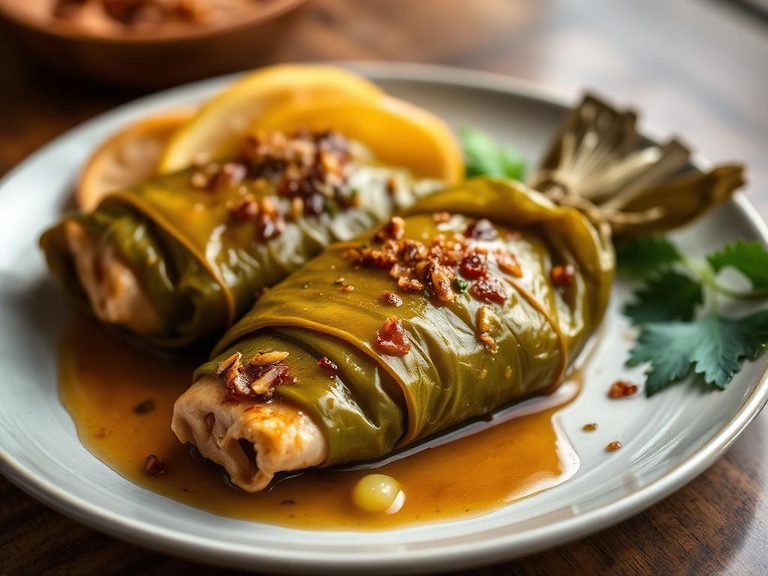
Grape leaves are the tender, young leaves of the grapevine, prized for their delicate, slightly tangy flavor and a texture that becomes silky and supple when cooked. Nutritionally, they are a standout for their exceptionally high fiber content (11g per 100g) and a solid protein profile for a leafy green. They are the essential, edible wrapper for iconic stuffed dishes across the Mediterranean and Middle East.
Calorie split: 20% protein · 63% carbs · 17% fat
↓ Full nutrition💚 Why it's loved
People love grape leaves for their unique, savory-sour flavor and their role as a culinary canvas, perfectly encasing flavorful fillings of rice, meat, and herbs. They are deeply cherished in cultural traditions, symbolizing hospitality and celebration in dishes like dolma and sarma.
⚠️ Watch-outs & how to enjoy it better
The primary downside is their high oxalate content, which can be a concern for those prone to kidney stones; to counteract this, blanch the leaves in boiling water for 1-2 minutes before use. Additionally, if pickled or brined, they can be very high in sodium, so rinsing them thoroughly and opting for low-sodium preparations is advisable.
Key benefits
- Exceptionally high in dietary fiber (11g per 100g).
- Good source of plant-based protein (5.6g per 100g).
- Rich in vitamins A, C, and K, and minerals like calcium and iron.
- Low in fat (2.12g per 100g).
- Contains beneficial antioxidants like flavonoids.
🍽️ Popular dishes
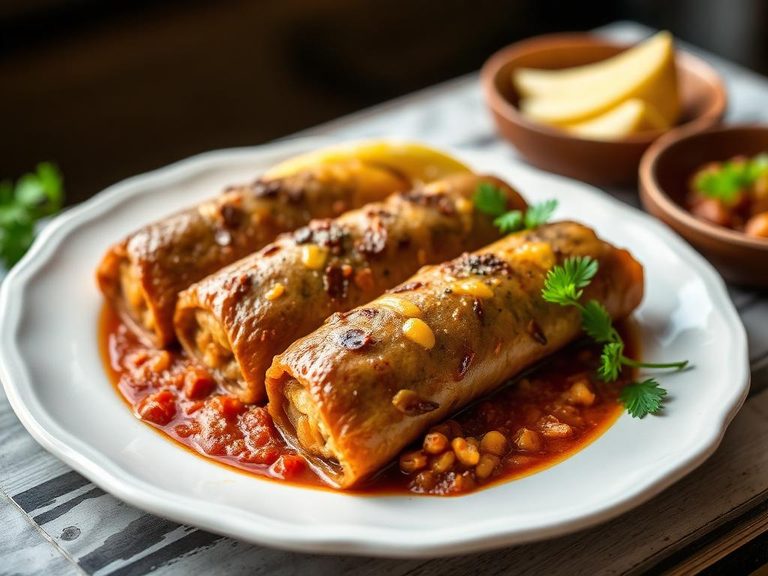
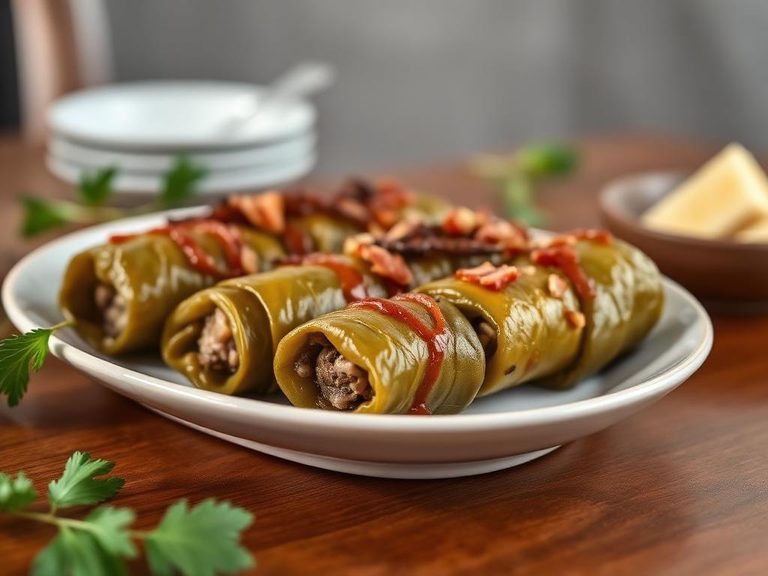
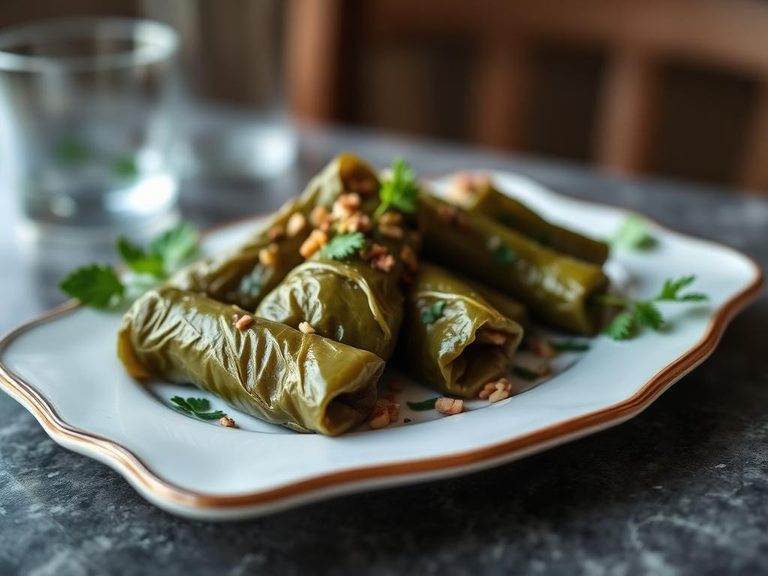
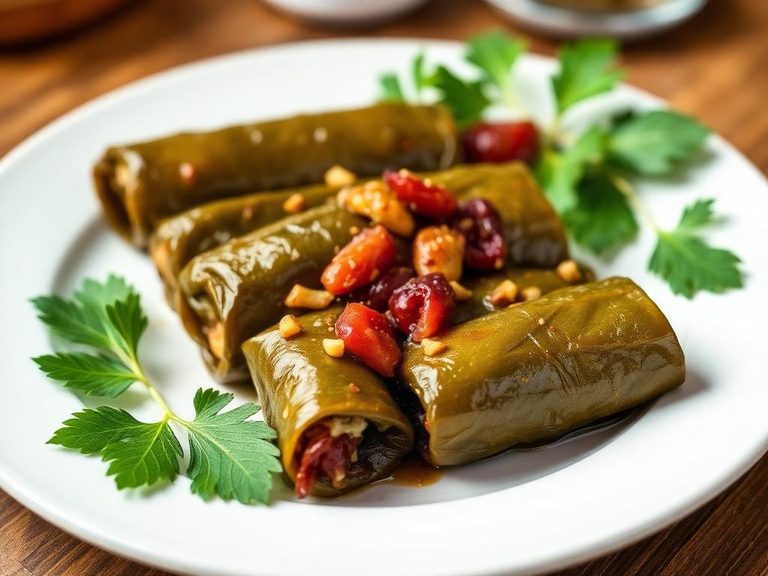
🌍 Where it's eaten
💡 Did you know?
The practice of using grape leaves as a wrapper is so ancient that it predates the use of corn husks or cabbage leaves in many cultures, with evidence of stuffed grape leaf dishes found in ancient Mesopotamian and Roman texts.
Full nutrition (USDA data · scales with serving)
| Water | 73.3 g |
| Energy | 93.0 kcal |
| Energy | 390 kj |
| Protein | 5.6 g |
| Total lipid (fat) | 2.1 g |
| Ash | 1.6 g |
| Carbohydrate, by difference | 17.3 g |
| Fiber, total dietary | 11.0 g |
| Total Sugars | 6.3 g |
| Calcium, Ca | 363 mg |
| Iron, Fe | 2.6 mg |
| Magnesium, Mg | 95.0 mg |
| Phosphorus, P | 91.0 mg |
| Potassium, K | 272 mg |
| Sodium, Na | 9.0 mg |
| Zinc, Zn | 0.67 mg |
| Copper, Cu | 0.41 mg |
| Manganese, Mn | 2.9 mg |
| Selenium, Se | 0.90 ug |
| Vitamin C, total ascorbic acid | 11.1 mg |
| Thiamin | 0.04 mg |
| Riboflavin | 0.35 mg |
| Niacin | 2.4 mg |
| Pantothenic acid | 0.23 mg |
| Vitamin B-6 | 0.40 mg |
| Folate, total | 83.0 ug |
| Folic acid | 0.00 ug |
| Folate, food | 83.0 ug |
| Folate, DFE | 83.0 ug |
| Choline, total | 12.8 mg |
| Vitamin B-12 | 0.00 ug |
| Vitamin B-12, added | 0.00 ug |
| Vitamin A, RAE | 1376 ug |
| Retinol | 0.00 ug |
| Carotene, beta | 16194 ug |
| Carotene, alpha | 629 ug |
| Cryptoxanthin, beta | 9.0 ug |
| Vitamin A, IU | 27521 iu |
| Lycopene | 0.00 ug |
| Lutein + zeaxanthin | 1747 ug |
| Vitamin E (alpha-tocopherol) | 2.0 mg |
| Vitamin E, added | 0.00 mg |
| Vitamin D (D2 + D3), International Units | 0.00 iu |
| Vitamin D (D2 + D3) | 0.00 ug |
| Vitamin K (phylloquinone) | 109 ug |
| Alcohol, ethyl | 0.00 g |
| Caffeine | 0.00 mg |
| Theobromine | 0.00 mg |
Fat & fatty acid profile (per 100g)
| Fatty acids, total saturated | 0.34 g |
| SFA 4:0 | 0.00 g |
| SFA 6:0 | 0.00 g |
| SFA 8:0 | 0.00 g |
| SFA 10:0 | 0.00 g |
| SFA 12:0 | 0.00 g |
| SFA 14:0 | 0.01 g |
| SFA 15:0 | 0.01 g |
| SFA 16:0 | 0.24 g |
| SFA 17:0 | 0.00 g |
| SFA 18:0 | 0.03 g |
| SFA 20:0 | 0.01 g |
| SFA 22:0 | 0.01 g |
| SFA 24:0 | 0.01 g |
| Fatty acids, total monounsaturated | 0.08 g |
| MUFA 14:1 | 0.00 g |
| MUFA 16:1 | 0.04 g |
| MUFA 18:1 | 0.04 g |
| MUFA 20:1 | 0.00 g |
| MUFA 22:1 | 0.00 g |
| Fatty acids, total polyunsaturated | 1.1 g |
| PUFA 18:2 | 0.15 g |
| PUFA 18:3 | 0.86 g |
| PUFA 18:4 | 0.00 g |
| PUFA 20:4 | 0.00 g |
| PUFA 20:5 n-3 (EPA) | 0.00 g |
| PUFA 22:5 n-3 (DPA) | 0.00 g |
| PUFA 22:6 n-3 (DHA) | 0.00 g |
| Fatty acids, total trans | 0.00 g |
| Cholesterol | 0.00 mg |
| Phytosterols | 21.0 mg |
| Stigmasterol | 2.0 mg |
| Beta-sitosterol | 20.0 mg |
FAQ
What do raw grape leaves taste like?
Raw grape leaves have a slightly tart, tangy, and mildly grassy flavor, with a tender yet sturdy texture that softens significantly when cooked.
Are grape leaves good for you?
Yes, they are highly nutritious, offering an excellent source of fiber, protein, and vitamins A, C, and K, along with antioxidants, making them a healthy addition to a balanced diet.
How do you prepare fresh grape leaves for cooking?
Fresh leaves should be washed, then blanched in boiling salted water for 1-2 minutes to soften them and reduce oxalates. They can then be stuffed and rolled, or used as a wrap.
Can you eat grape leaves raw?
While they can be eaten raw in small amounts (e.g., in salads), they are most commonly cooked or pickled, as cooking improves their texture and reduces oxalates.
Nutrient density (calculated · NRF9.3)
Nutrient Rich Foods index: beneficial nutrients (protein, fiber, vitamins, minerals) minus saturated fat, added sugar & sodium, per 100 kcal.
NRF9.3 index — Fulgoni, Keast & Drewnowski, 2009. Computed from USDA nutrients.
Weight-loss friendliness (composite index)
Energy density 0.93 kcal/g · 24% calories from protein · 11.0 g fiber · 6.3 g sugar per 100 g.
Composite of energy density (Rolls et al., 1999), protein & fiber satiety, minus sugar. A calculated heuristic — ranks satiety-per-calorie, not a clinical measure.
Dietary load (calculated from USDA values)
Potential renal acid load. Positive = acid-forming, negative = alkaline-forming.
Sodium-to-potassium ratio: 0.03 (lower is better — aim for ≤ 1)
Sodium:potassium per WHO potassium guidance. Computed from USDA nutrients.