

Grape juice, 100%
Common food
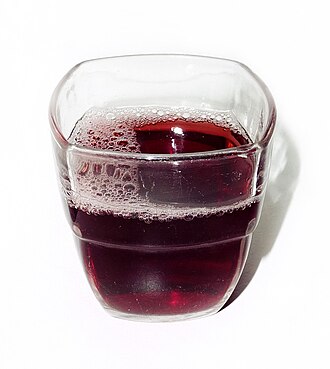
Photo: Wikipedia
Pure grape juice is a vibrant, deep purple liquid made from crushed grapes, offering a sweet, full-bodied flavor with a smooth, slightly viscous texture. It's a concentrated source of natural fruit sugars, primarily fructose and glucose, with minimal protein, fat, or fiber. This makes it a quick source of energy but also a potent carbohydrate drink.
Calorie split: 1% protein · 95% carbs · 4% fat
↓ Full nutrition💚 Why it's loved
People love its pure, unadulterated fruit sweetness and refreshing quality, especially chilled. It's a nostalgic, versatile drink enjoyed on its own, as a base for smoothies, or in cooking.
⚠️ Watch-outs & how to enjoy it better
The high concentration of natural sugars can lead to rapid blood-sugar spikes, which is a concern for individuals managing diabetes or insulin resistance. To mitigate this, pair it with a source of protein or healthy fat (like nuts or yogurt) to slow sugar absorption, or opt for a smaller, controlled portion. It also lacks the beneficial fiber of whole grapes.
Key benefits
- Provides a quick source of natural energy from fruit sugars.
- Contains antioxidants like polyphenols, particularly from dark grape varieties.
- A convenient way to consume fruit nutrients without chewing.
- Hydrating and naturally sweet, making it a popular non-alcoholic beverage.
🍽️ Popular dishes
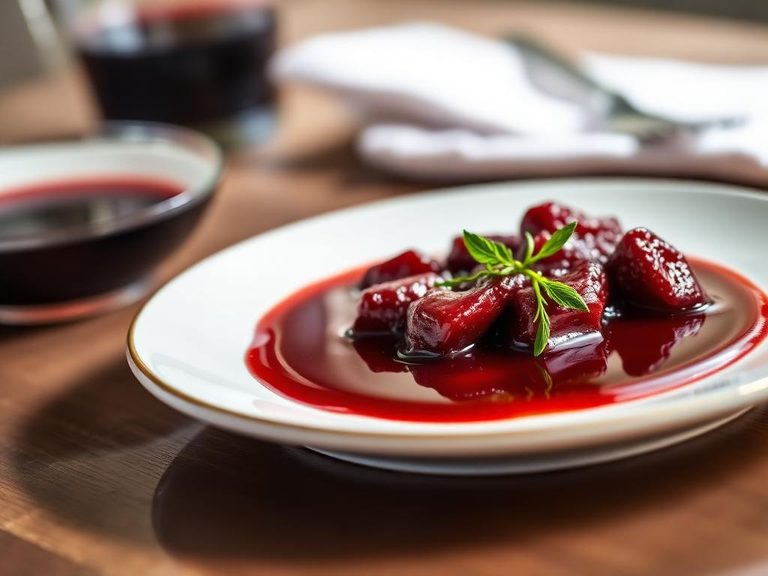
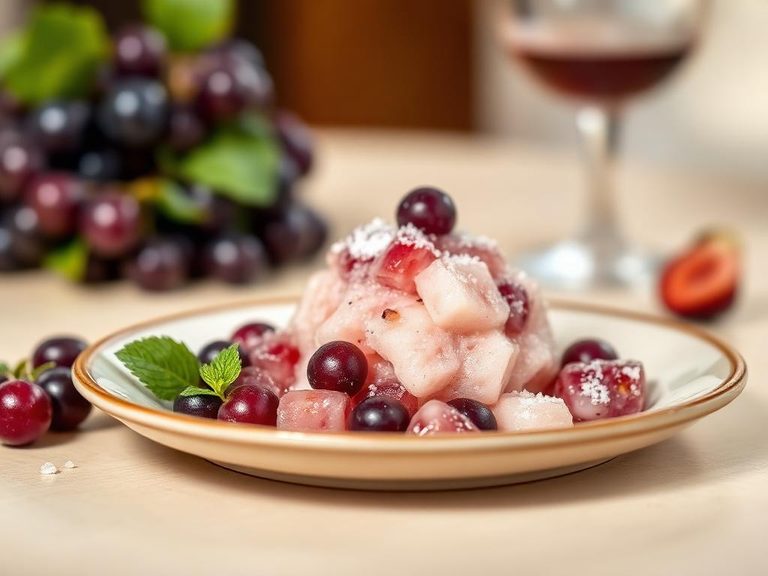
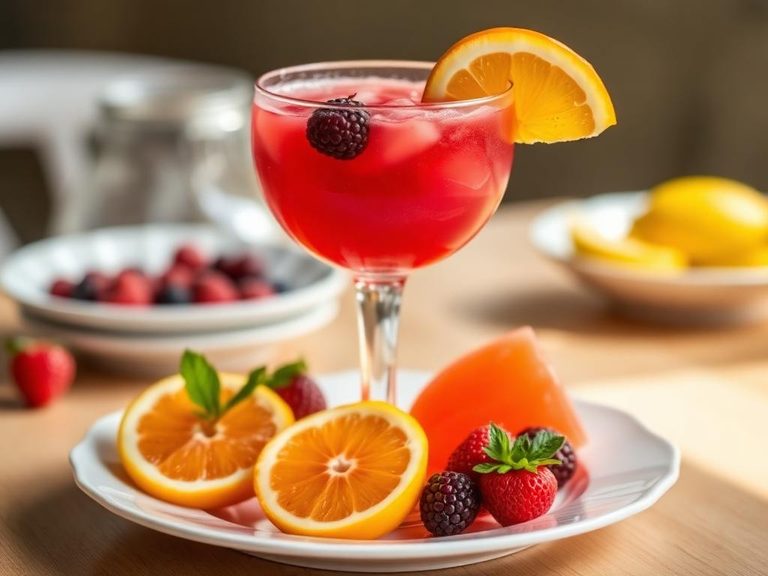
🌍 Where it's eaten
💡 Did you know?
Concord grape juice, a common American variety, gets its signature 'foxy' aroma from a compound called methyl anthranilate, which is also used to flavor candy and perfume.
Full nutrition (USDA data · scales with serving)
| Water | 83.7 g |
| Energy | 66.0 kcal |
| Protein | 0.18 g |
| Total lipid (fat) | 0.28 g |
| Carbohydrate, by difference | 15.7 g |
| Fiber, total dietary | 0.20 g |
| Total Sugars | 14.2 g |
| Calcium, Ca | 8.0 mg |
| Iron, Fe | 0.08 mg |
| Magnesium, Mg | 6.0 mg |
| Phosphorus, P | 12.0 mg |
| Potassium, K | 50.0 mg |
| Sodium, Na | 6.0 mg |
| Zinc, Zn | 0.04 mg |
| Copper, Cu | 0.01 mg |
| Selenium, Se | 0.00 ug |
| Vitamin C, total ascorbic acid | 50.4 mg |
| Thiamin | 0.01 mg |
| Riboflavin | 0.01 mg |
| Niacin | 0.01 mg |
| Vitamin B-6 | 0.03 mg |
| Folate, total | 2.0 ug |
| Folic acid | 0.00 ug |
| Folate, food | 2.0 ug |
| Folate, DFE | 2.0 ug |
| Choline, total | 3.2 mg |
| Vitamin B-12 | 0.00 ug |
| Vitamin B-12, added | 0.00 ug |
| Vitamin A, RAE | 0.00 ug |
| Retinol | 0.00 ug |
| Carotene, beta | 5.0 ug |
| Carotene, alpha | 0.00 ug |
| Cryptoxanthin, beta | 0.00 ug |
| Lycopene | 0.00 ug |
| Lutein + zeaxanthin | 57.0 ug |
| Vitamin E (alpha-tocopherol) | 0.00 mg |
| Vitamin E, added | 0.00 mg |
| Vitamin D (D2 + D3) | 0.00 ug |
| Vitamin K (phylloquinone) | 0.40 ug |
| Alcohol, ethyl | 0.00 g |
| Caffeine | 0.00 mg |
| Theobromine | 0.00 mg |
Fat & fatty acid profile (per 100g)
| Fatty acids, total saturated | 0.03 g |
| SFA 4:0 | 0.00 g |
| SFA 6:0 | 0.00 g |
| SFA 8:0 | 0.00 g |
| SFA 10:0 | 0.00 g |
| SFA 12:0 | 0.00 g |
| SFA 14:0 | 0.00 g |
| SFA 16:0 | 0.02 g |
| SFA 18:0 | 0.00 g |
| Fatty acids, total monounsaturated | 0.00 g |
| MUFA 16:1 | 0.00 g |
| MUFA 18:1 | 0.00 g |
| MUFA 20:1 | 0.00 g |
| MUFA 22:1 | 0.00 g |
| Fatty acids, total polyunsaturated | 0.02 g |
| PUFA 18:2 | 0.02 g |
| PUFA 18:3 | 0.01 g |
| PUFA 18:4 | 0.00 g |
| PUFA 20:4 | 0.00 g |
| PUFA 20:5 n-3 (EPA) | 0.00 g |
| PUFA 22:5 n-3 (DPA) | 0.00 g |
| PUFA 22:6 n-3 (DHA) | 0.00 g |
| Cholesterol | 0.00 mg |
Amino acid profile (per 100g)
Estimated from Grape juice, canned or bottled, unsweetened, without added ascorbic acid — USDA does not publish this profile for Grape juice.
| Threonine | 0.02 g |
| Isoleucine | 0.01 g |
| Leucine | 0.01 g |
| Lysine | 0.01 g |
| Methionine | 0.00 g |
| Phenylalanine | 0.01 g |
| Tyrosine | 0.00 g |
| Valine | 0.01 g |
| Arginine | 0.05 g |
| Histidine | 0.01 g |
| Alanine | 0.09 g |
| Aspartic acid | 0.02 g |
| Glutamic acid | 0.11 g |
| Glycine | 0.01 g |
| Proline | 0.02 g |
| Serine | 0.01 g |
FAQ
Is grape juice as healthy as eating whole grapes?
No. While juice retains some vitamins and antioxidants, the juicing process removes most of the beneficial dietary fiber found in whole grapes. This makes the sugars more concentrated and quicker to digest, which can affect blood sugar differently than eating the fruit.
What's the difference between grape juice from concentrate and not from concentrate?
'From concentrate' means the water was removed after pressing for easier shipping, then added back later. 'Not from concentrate' is simply pressed, pasteurized, and bottled. Nutritionally, they are very similar, though some argue not-from-concentrate has a fresher taste.
Can grape juice be used in cooking or baking?
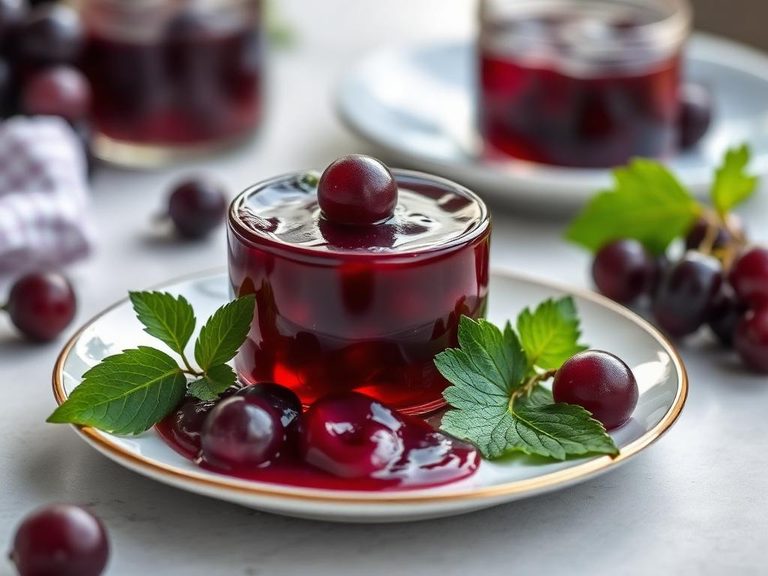
Absolutely. It's a classic ingredient for making jelly, reducing into a syrup for desserts, adding moisture and flavor to cakes, or as a base for marinades and sauces for meats like duck or pork.
Nutrient density (calculated · NRF9.3)
Nutrient Rich Foods index: beneficial nutrients (protein, fiber, vitamins, minerals) minus saturated fat, added sugar & sodium, per 100 kcal.
NRF9.3 index — Fulgoni, Keast & Drewnowski, 2009. Computed from USDA nutrients.
Weight-loss friendliness (composite index)
Energy density 0.66 kcal/g · 1% calories from protein · 0.2 g fiber · 14.2 g sugar per 100 g.
Composite of energy density (Rolls et al., 1999), protein & fiber satiety, minus sugar. A calculated heuristic — ranks satiety-per-calorie, not a clinical measure.
Dietary load (calculated from USDA values)
Potential renal acid load. Positive = acid-forming, negative = alkaline-forming.
Sodium-to-potassium ratio: 0.12 (lower is better — aim for ≤ 1)
Sodium:potassium per WHO potassium guidance. Computed from USDA nutrients.