

Grape jelly
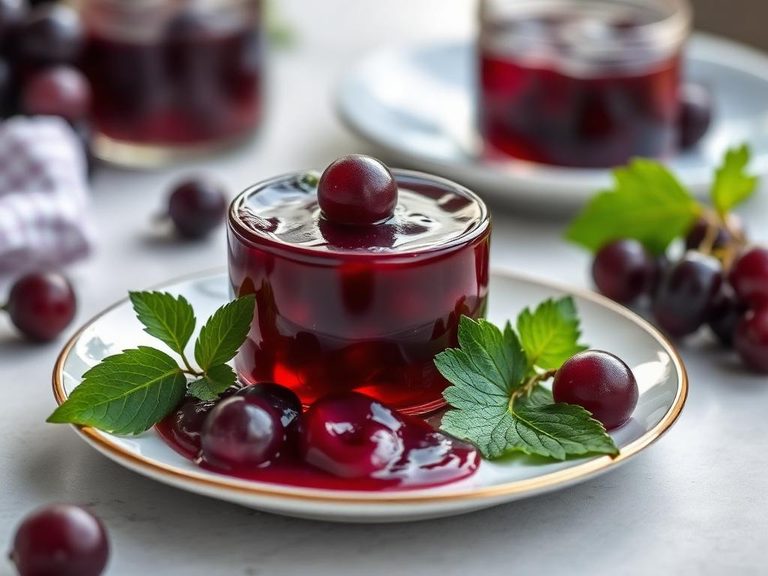
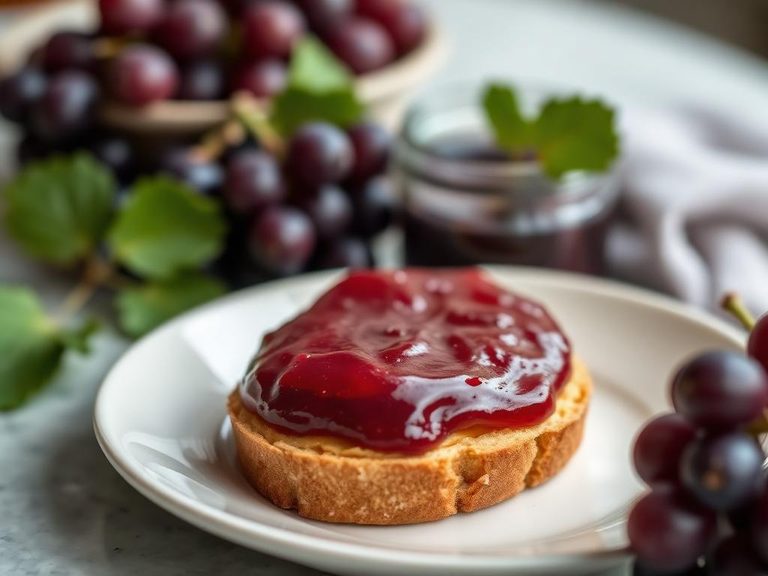
Grape jelly is a sweet, smooth fruit spread made from grape juice, sugar, and pectin, which helps it set into a firm, spreadable consistency. It is a staple in American cuisine, particularly popular for making classic peanut butter and jelly sandwiches.
🍳 View the full Grape jelly recipe →
🍽️ Nutrition at a glance
Grape jelly is very high in carbohydrates, almost entirely from simple sugars, with negligible fat or protein. A typical 1-tablespoon serving provides about 50 calories and small amounts of vitamin C, but is not a significant source of other key nutrients.
Nutrition breakdown
| Calories | 52 kcal |
| Protein | 0 g |
| Carbs | 13.5 g |
| Fat | 0 g |
| Fiber | 0 g |
| Sugar | 12.5 g |
| Potassium | 15 mg |
| Iron | 0.1 mg |
| Magnesium | 2 mg |
| Phosphorus | 3 mg |
| Calcium | 2 mg |
| Vitamin C | 0.5 mg |
| Niacin (B3) | 0.1 mg |
| Vitamin B6 | 0.01 mg |
Per 1 tablespoon (20 g) · estimated, varies by recipe
💡 What's interesting
Culturally, grape jelly is an iconic part of American lunchbox culture, symbolizing comfort and simplicity. Nutritionally, its unique high sugar content makes it a quick energy source but also means it should be enjoyed in moderation as part of a balanced diet.
🍽️ Related dishes


AI estimate may be inaccurate · Terms