

Goose, domesticated, meat and skin, raw
Whole food · Poultry Products

Photo: Wikipedia
Domesticated goose meat with its skin is a rich, dark poultry with a robust, gamey flavor and a firm, dense texture. The skin renders a significant amount of fat during cooking, which bastes the meat, resulting in a succulent, moist result. Nutritionally, it is a high-protein, high-fat food, providing over 33 grams of fat per 100g raw serving.
Calorie split: 17% protein · 0% carbs · 83% fat
↓ Full nutrition💚 Why it's loved
People adore goose for its deep, savory flavor that's more complex than chicken, making it a centerpiece for festive meals. Its versatility shines in both slow-roasted holiday dishes and confits, where the rendered fat is prized for cooking other foods.
⚠️ Watch-outs & how to enjoy it better
The high fat content, especially from the skin, can be a concern for those monitoring calorie or saturated fat intake. To counteract this, consider removing the skin after cooking or using the rendered fat sparingly as a cooking medium for vegetables. It is also a common allergen for some individuals.
Key benefits
- Excellent source of high-quality protein for muscle maintenance.
- Rich in B vitamins, particularly niacin and B12, for energy metabolism.
- Contains iron and zinc, important for immune function and blood health.
- Provides selenium, an antioxidant that supports thyroid function.
- The fat is a source of monounsaturated fats, similar to olive oil.
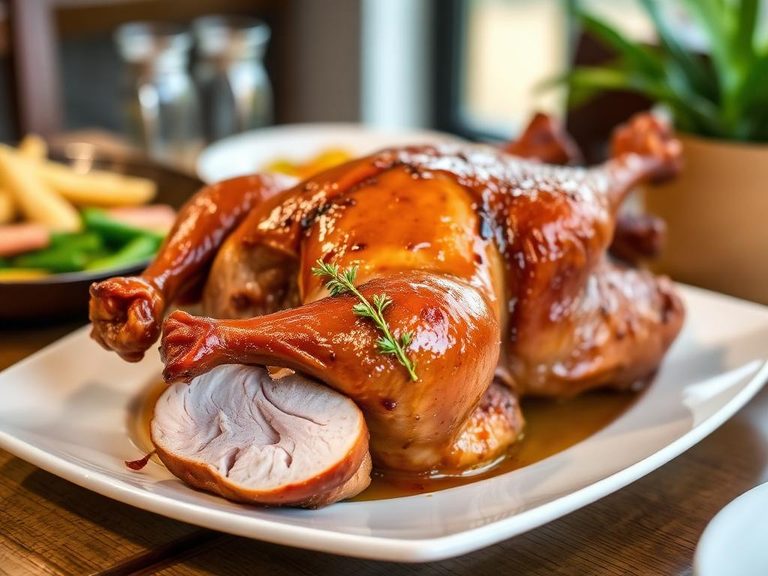
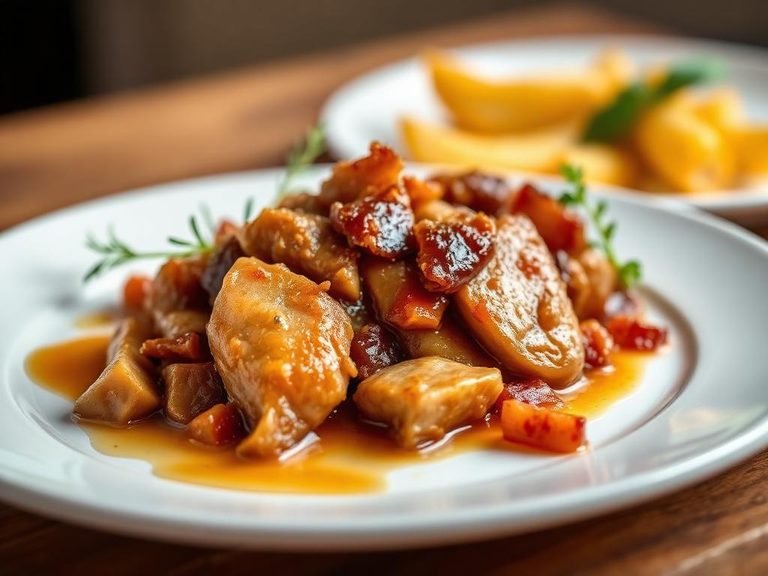
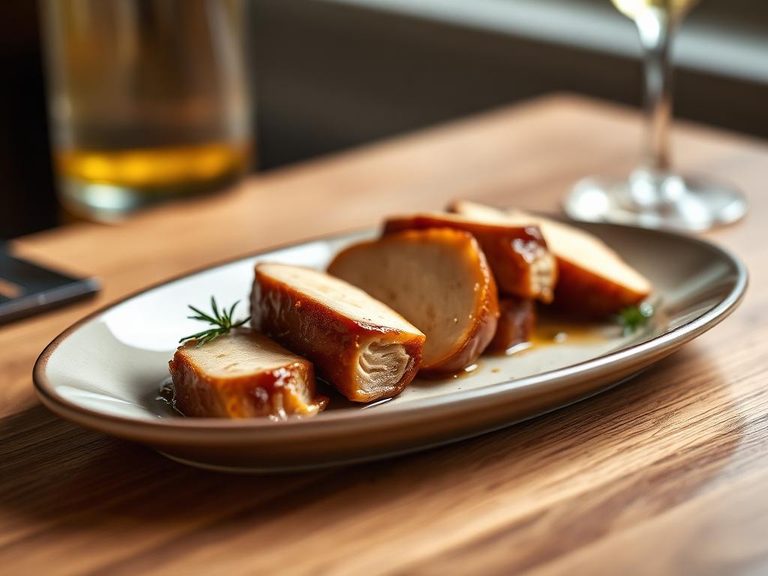
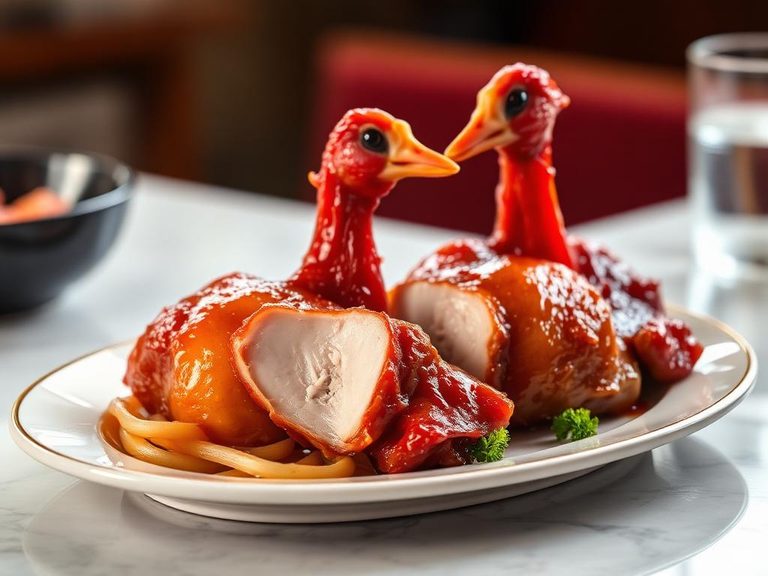
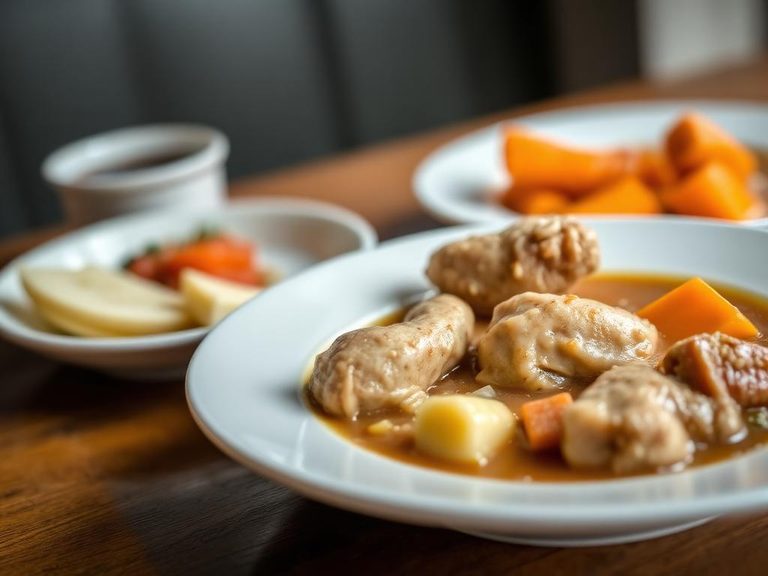
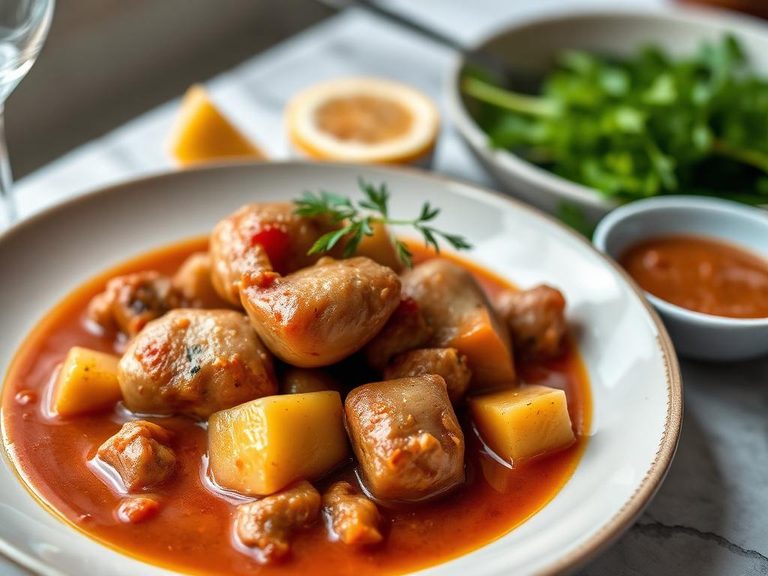
🍽️ Popular dishes
🌍 Where it's eaten
💡 Did you know?
The tradition of serving roast goose at Christmas in parts of Europe dates back to medieval times, where a goose was a common farmyard bird, unlike the more expensive turkey which was imported from the Americas.
Full nutrition (USDA data · scales with serving)
| Water | 49.7 g |
| Energy | 371 kcal |
| Energy | 1552 kj |
| Protein | 15.9 g |
| Total lipid (fat) | 33.6 g |
| Ash | 0.87 g |
| Carbohydrate, by difference | 0.00 g |
| Fiber, total dietary | 0.00 g |
| Calcium, Ca | 12.0 mg |
| Iron, Fe | 2.5 mg |
| Magnesium, Mg | 18.0 mg |
| Phosphorus, P | 234 mg |
| Potassium, K | 308 mg |
| Sodium, Na | 73.0 mg |
| Zinc, Zn | 1.7 mg |
| Copper, Cu | 0.27 mg |
| Manganese, Mn | 0.02 mg |
| Selenium, Se | 14.4 ug |
| Vitamin C, total ascorbic acid | 4.2 mg |
| Thiamin | 0.09 mg |
| Riboflavin | 0.24 mg |
| Niacin | 3.6 mg |
| Pantothenic acid | 1.3 mg |
| Vitamin B-6 | 0.39 mg |
| Folate, total | 4.0 ug |
| Folic acid | 0.00 ug |
| Folate, food | 4.0 ug |
| Folate, DFE | 4.0 ug |
| Vitamin B-12 | 0.34 ug |
| Vitamin A, RAE | 17.0 ug |
| Retinol | 17.0 ug |
| Vitamin A, IU | 55.0 iu |
| Alcohol, ethyl | 0.00 g |
Fat & fatty acid profile (per 100g)
| Fatty acids, total saturated | 9.8 g |
| SFA 4:0 | 0.00 g |
| SFA 6:0 | 0.00 g |
| SFA 8:0 | 0.00 g |
| SFA 10:0 | 0.00 g |
| SFA 12:0 | 0.03 g |
| SFA 14:0 | 0.17 g |
| SFA 16:0 | 7.0 g |
| SFA 18:0 | 2.3 g |
| Fatty acids, total monounsaturated | 17.8 g |
| MUFA 16:1 | 0.98 g |
| MUFA 18:1 | 16.7 g |
| MUFA 20:1 | 0.04 g |
| MUFA 22:1 | 0.00 g |
| Fatty acids, total polyunsaturated | 3.8 g |
| PUFA 18:2 | 3.3 g |
| PUFA 18:3 | 0.21 g |
| PUFA 18:4 | 0.00 g |
| PUFA 20:4 | 0.00 g |
| PUFA 20:5 n-3 (EPA) | 0.00 g |
| PUFA 22:5 n-3 (DPA) | 0.00 g |
| PUFA 22:6 n-3 (DHA) | 0.00 g |
| Cholesterol | 80.0 mg |
Amino acid profile (per 100g)
| Tryptophan | 0.21 g |
| Threonine | 0.71 g |
| Isoleucine | 0.75 g |
| Leucine | 1.3 g |
| Lysine | 1.3 g |
| Methionine | 0.38 g |
| Cystine | 0.25 g |
| Phenylalanine | 0.67 g |
| Tyrosine | 0.51 g |
| Valine | 0.78 g |
| Arginine | 0.99 g |
| Histidine | 0.44 g |
| Alanine | 0.98 g |
| Aspartic acid | 1.4 g |
| Glutamic acid | 2.4 g |
| Glycine | 1.0 g |
| Proline | 0.77 g |
| Serine | 0.63 g |
FAQ
How is goose meat different from duck meat?
Goose meat is generally darker, richer, and has a more pronounced, slightly gamy flavor than duck. It also has a higher fat content and a firmer, denser texture.
What's the best way to cook a whole goose to render the fat?
The classic method is slow-roasting. Prick the skin, season well, and cook at a moderate temperature (around 325°F/160°C) for a long time. This allows the thick layer of fat under the skin to melt and baste the meat, resulting in crisp skin and tender flesh.
Can I use the fat that renders out?
Absolutely! Rendered goose fat is a culinary treasure. Strain it, let it solidify in the fridge, and use it for roasting potatoes, sautéing vegetables, or making confit. It has a high smoke point and a wonderful, savory flavor.
Nutrient density (calculated · NRF9.3)
Nutrient Rich Foods index: beneficial nutrients (protein, fiber, vitamins, minerals) minus saturated fat, added sugar & sodium, per 100 kcal.
NRF9.3 index — Fulgoni, Keast & Drewnowski, 2009. Computed from USDA nutrients.
Weight-loss friendliness (composite index)
Energy density 3.71 kcal/g · 17% calories from protein · 0.0 g fiber · 0.0 g sugar per 100 g.
Composite of energy density (Rolls et al., 1999), protein & fiber satiety, minus sugar. A calculated heuristic — ranks satiety-per-calorie, not a clinical measure.
Dietary load (calculated from USDA values)
Potential renal acid load. Positive = acid-forming, negative = alkaline-forming.
Sodium-to-potassium ratio: 0.24 (lower is better — aim for ≤ 1)
Sodium:potassium per WHO potassium guidance. Computed from USDA nutrients.