Roast Goose
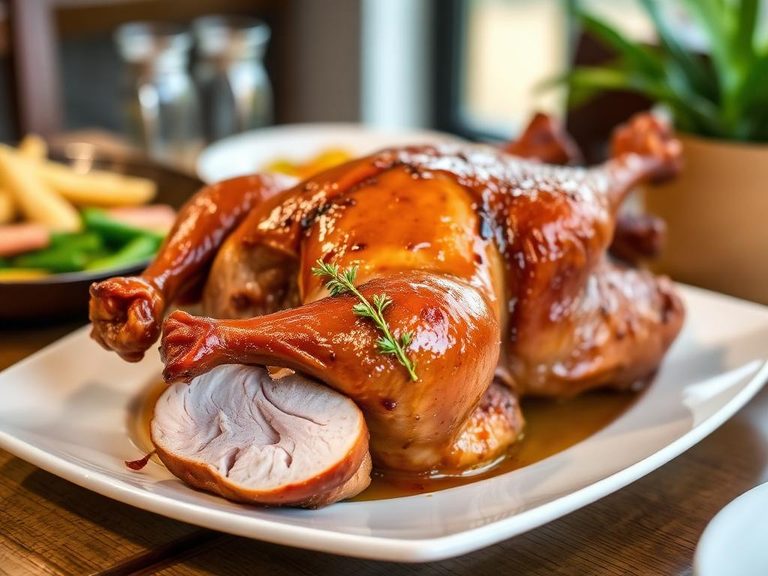
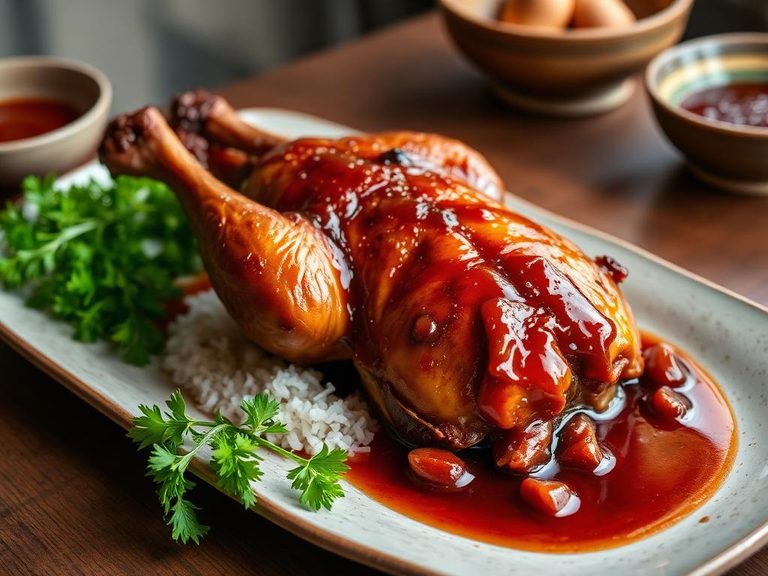
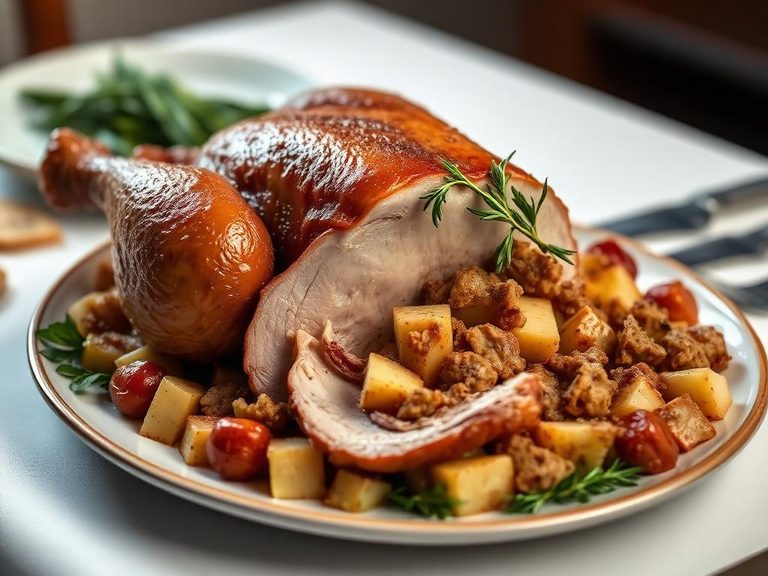
Roast Goose is a celebrated dish, particularly in Cantonese cuisine, featuring a whole goose that is marinated, air-dried, and roasted until the skin is perfectly crisp and the meat is succulent and flavorful. It is traditionally seasoned with a blend of spices like five-spice powder, and the cavity is often filled with aromatics such as star anise and ginger before roasting.
🍽️ Nutrition at a glance
This dish is high in protein and fat, with a negligible amount of carbohydrates. A typical serving provides a good source of iron, B vitamins (especially B12 and niacin), and selenium, with a calorie count that can vary widely based on the cut and skin consumption, generally ranging from 300 to 500 calories per serving.
Nutrition breakdown
| Calories | 450 kcal |
| Protein | 28 g |
| Carbs | 1 g |
| Fat | 36 g |
| Fiber | 0 g |
| Sugar | 0 g |
| Sodium | 680 mg |
| Iron | 3.5 mg |
| Niacin (B3) | 6.5 mg |
| Vitamin B12 | 0.8 mcg |
| Selenium | 22 mcg |
| Zinc | 3.2 mg |
| Phosphorus | 220 mg |
| Potassium | 280 mg |
| Vitamin B6 | 0.4 mg |
Per 1/4 of a roasted goose (approximately 200 g) · estimated, varies by recipe
💡 What's interesting
Culturally, roast goose is a centerpiece of festive banquets and a marker of culinary skill in Southern China, with the prized 'glass-like' crispy skin being a hallmark of mastery. Nutritionally, the dark meat of goose is richer in iron and zinc compared to poultry like chicken, though it also has a higher fat content.