Goose Jerky
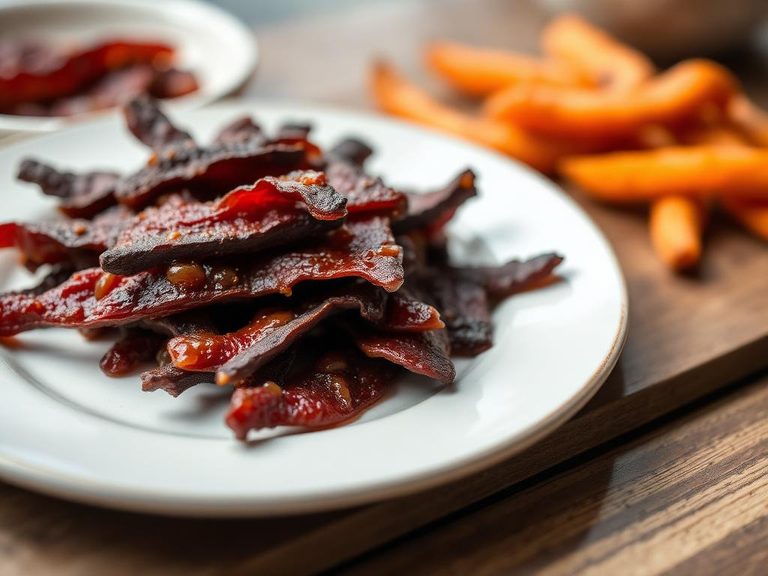
Goose jerky is a savory, chewy snack made by marinating and dehydrating thin slices of goose meat, a method that preserves the meat while concentrating its rich, gamey flavor. It is a traditional preserved food in various cultures, particularly in regions where goose is a common poultry, such as parts of Europe and Asia.
🍽️ Nutrition at a glance
Goose jerky is an excellent source of high-quality protein and is very low in carbohydrates, making it a nutrient-dense, energy-sustaining snack. A typical serving provides a significant amount of protein and essential minerals like iron and zinc, with a calorie count that varies based on the specific recipe and fat content.
Nutrition breakdown
| Calories | 80 kcal |
| Protein | 13 g |
| Carbs | 1 g |
| Fat | 2.5 g |
| Fiber | 0 g |
| Sugar | 0.5 g |
| Sodium | 350 mg |
| Iron | 1.5 mg |
| Zinc | 2 mg |
| Potassium | 180 mg |
| Phosphorus | 150 mg |
| Niacin (B3) | 3.5 mg |
| Vitamin B6 | 0.3 mg |
| Selenium | 12 mcg |
| Copper | 0.1 mg |
Per 1 oz (28 g) · estimated, varies by recipe
💡 What's interesting
Culturally, jerky-making is an ancient preservation technique, and using goose—a bird often associated with festive meals—transforms it into a portable, everyday snack. Nutritionally, goose meat is notably higher in iron and certain B vitamins compared to more common poultry like chicken.