Pickled Goose Eggs
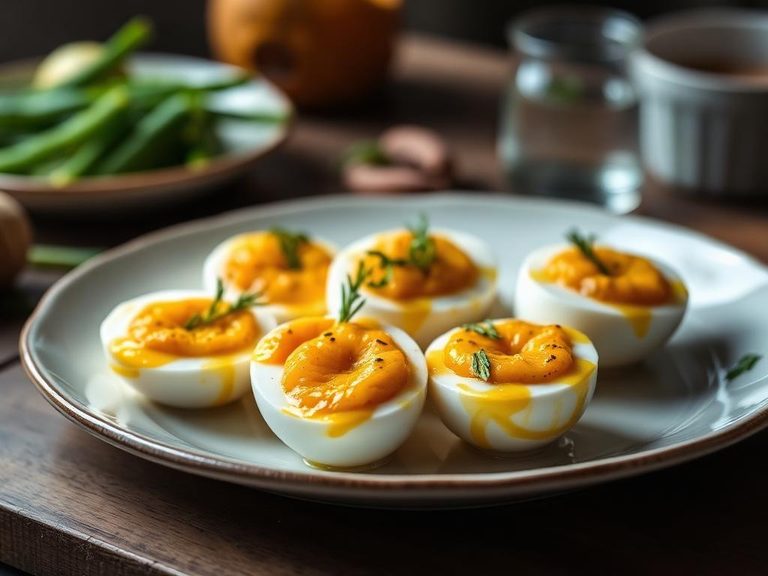
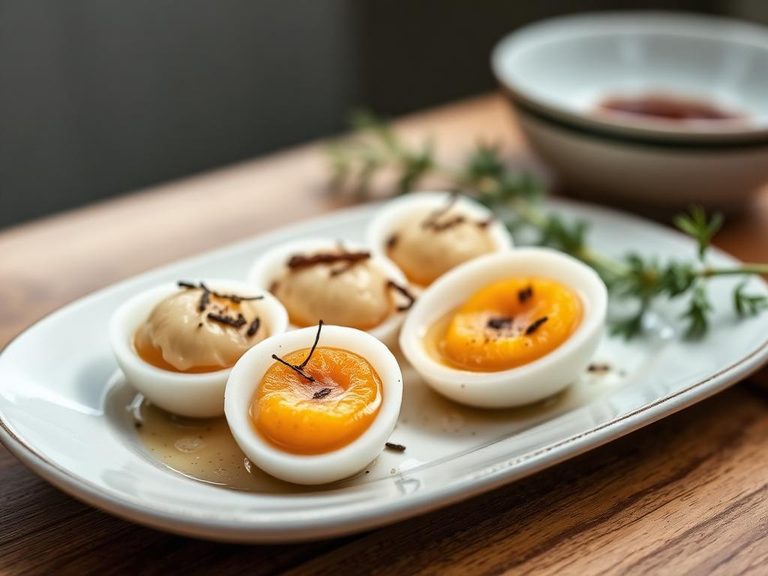
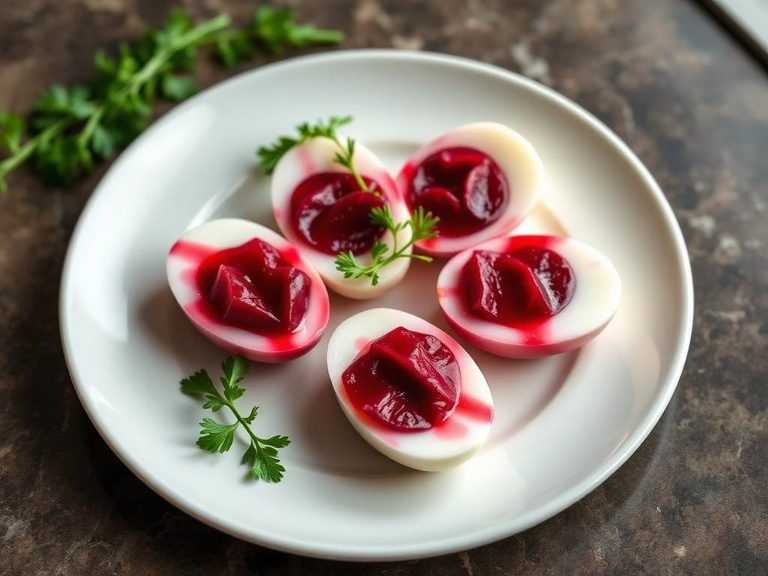
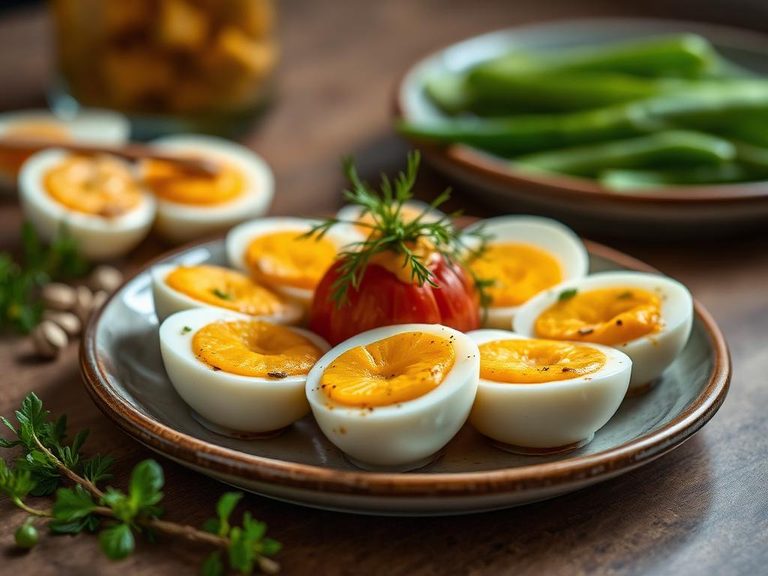
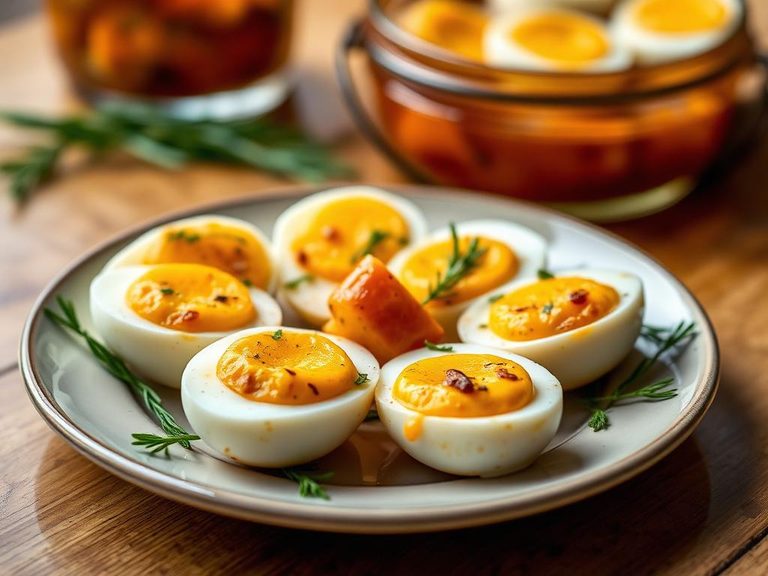
Pickled Goose Eggs are a savory snack or condiment made by preserving whole goose eggs in a brine of vinegar, salt, and spices. The eggs are typically hard-boiled before being submerged, resulting in a firm, intensely flavored yolk and a slightly chewy, deeply seasoned white. This preparation is popular in various cuisines, notably in parts of Eastern Europe, Russia, and some Asian culinary traditions.
🍽️ Nutrition at a glance
This dish is a high-protein, low-carbohydrate food, with most of its calories coming from protein and fat. A single egg provides a significant dose of vitamin B12, selenium, and choline, but is also very high in sodium due to the pickling brine.
Nutrition breakdown
| Calories | 210 kcal |
| Protein | 16 g |
| Carbs | 1 g |
| Fat | 15 g |
| Fiber | 0 g |
| Sugar | 0 g |
| Sodium | 1200 mg |
| Vitamin B12 | 3.2 mcg |
| Selenium | 32 mcg |
| Choline | 295 mg |
| Riboflavin (B2) | 0.3 mg |
| Phosphorus | 180 mg |
| Vitamin D | 1.5 mcg |
| Iron | 2.5 mg |
| Zinc | 1.8 mg |
Per 1 large pickled goose egg (approx. 144 g) · estimated, varies by recipe
💡 What's interesting
Culturally, pickled eggs have a long history as a way to preserve surplus eggs, especially before refrigeration was common. Nutritionally, the pickling process can increase the bioavailability of certain minerals while significantly altering the egg's sodium content.