Foie Gras
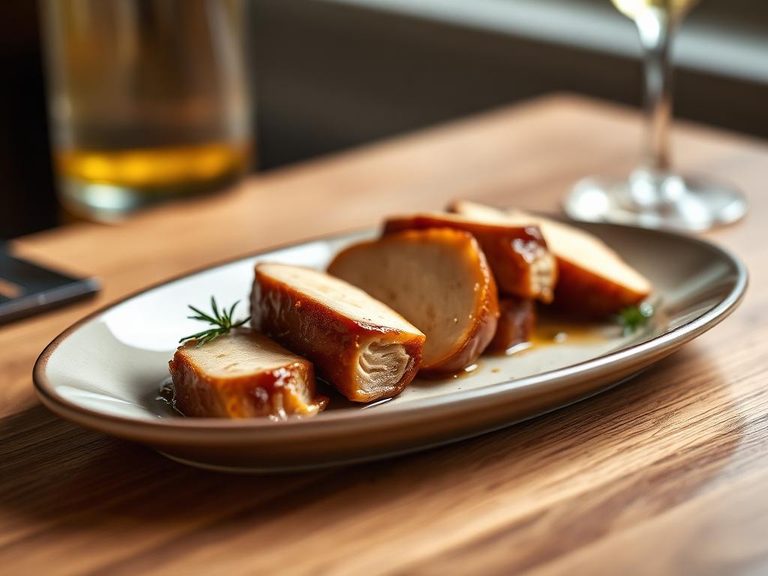
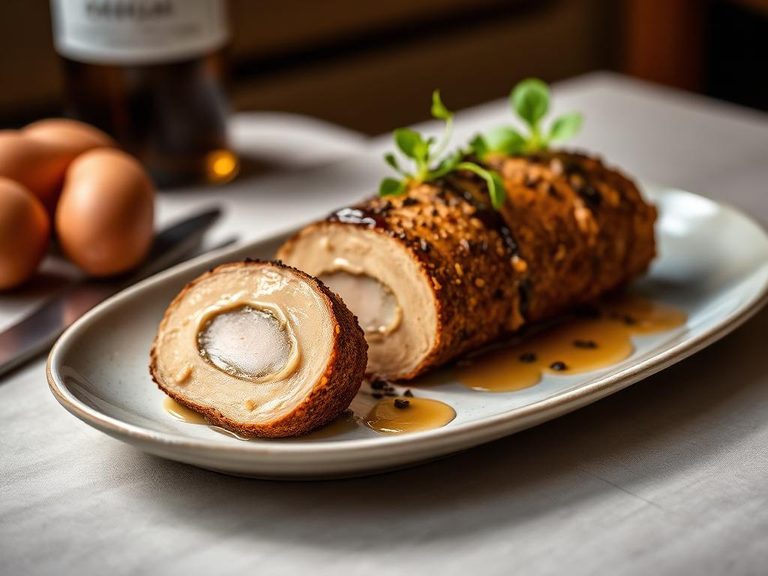
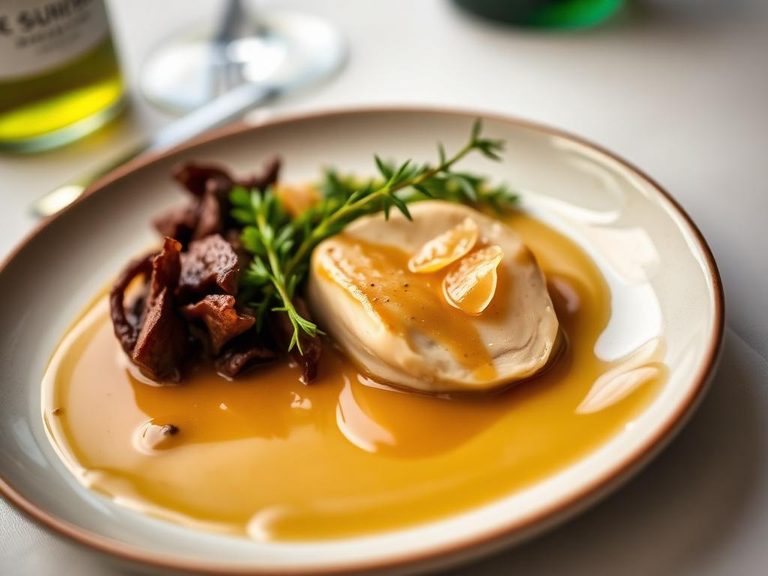
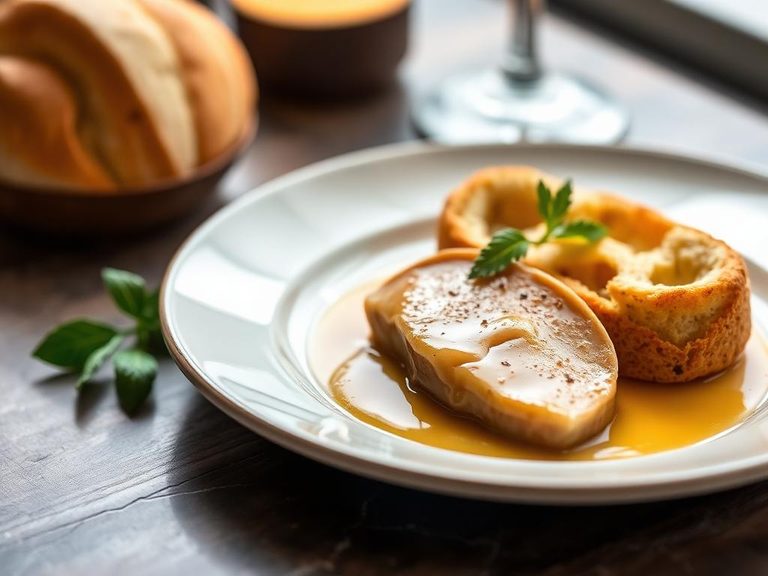
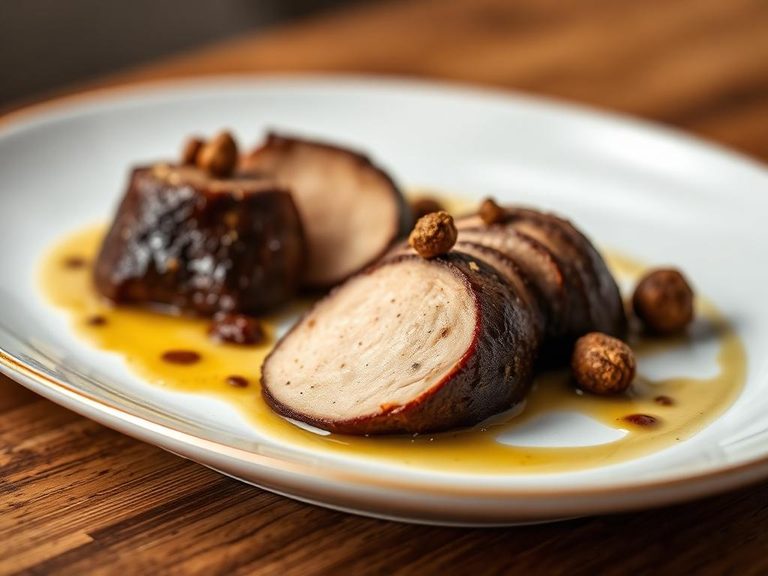
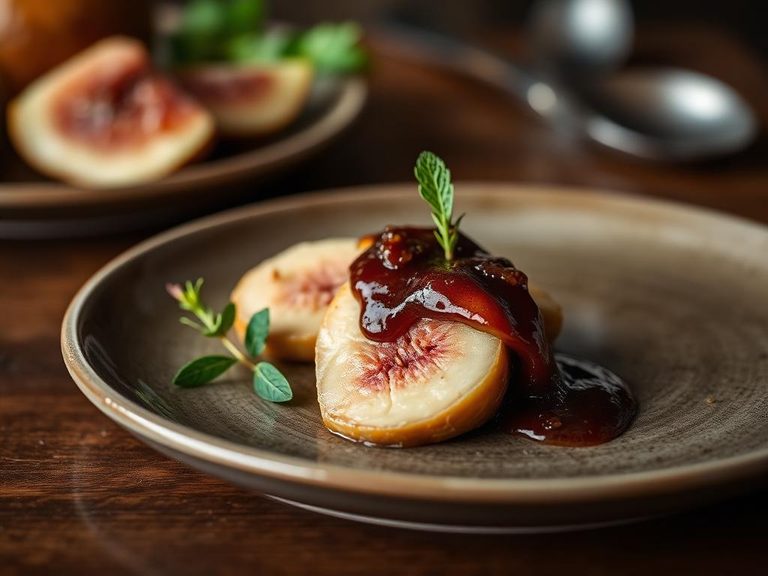
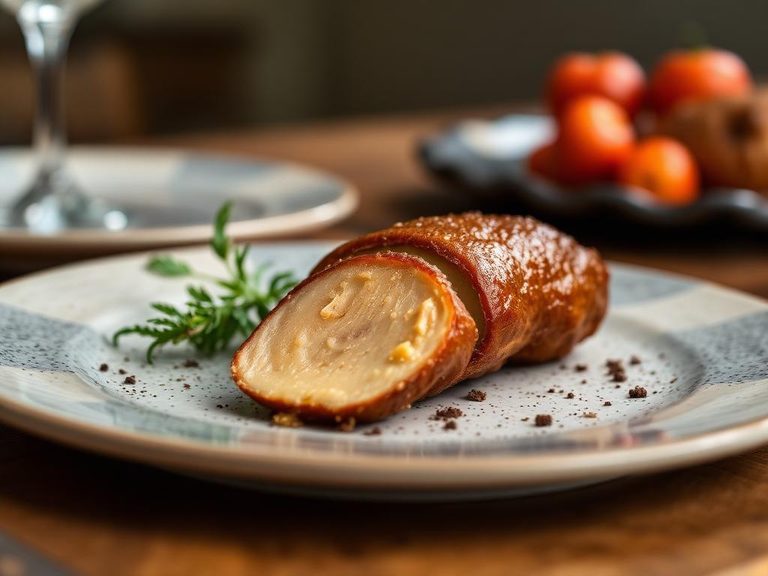
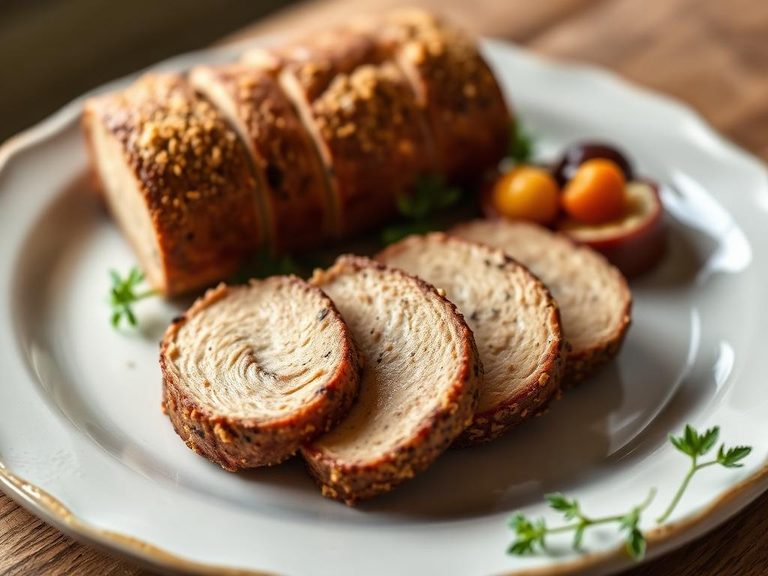
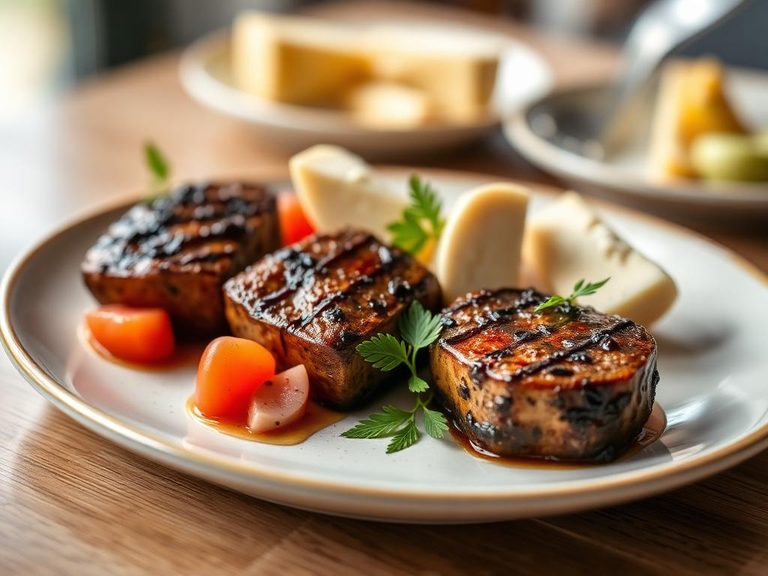
Foie Gras is a luxurious culinary delicacy traditionally made from the fattened liver of duck or goose, though veal liver is sometimes prepared in a similar rich, smooth style. The dish is celebrated for its buttery texture and deep flavor, often served seared, in terrines, or as a pâté, and has its roots in French haute cuisine.
🍳 View the full Foie Gras recipe →
🍽️ Nutrition at a glance
Foie Gras is exceptionally high in fat, particularly monounsaturated fats, and provides a good source of protein, vitamin A, and iron, with a rough calorie count of 400-500 calories per 100-gram serving.
Nutrition breakdown
| Calories | 300 kcal |
| Protein | 7 g |
| Carbs | 0 g |
| Fat | 30 g |
| Fiber | 0 g |
| Sugar | 0 g |
| Sodium | 65 mg |
| Vitamin A | 27000 IU |
| Vitamin B12 | 16 mcg |
| Riboflavin (B2) | 0.4 mg |
| Iron | 4.5 mg |
| Copper | 0.4 mg |
| Selenium | 30 mcg |
| Phosphorus | 170 mg |
| Choline | 150 mg |
Per 3 oz (85 g) · estimated, varies by recipe
💡 What's interesting
Culturally, foie gras is a symbol of French gastronomy and luxury, while nutritionally, its high fat content is a concentrated energy source, making it a subject of both culinary admiration and ethical debate.