Foie gras terrine
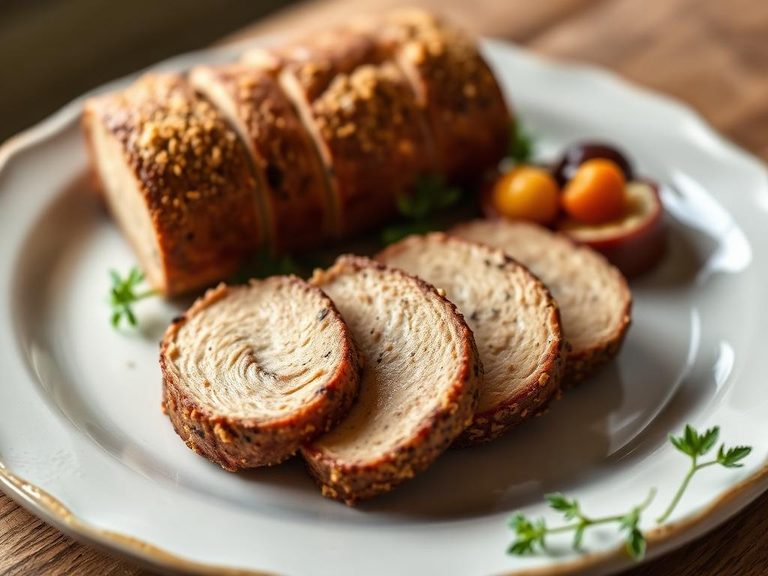
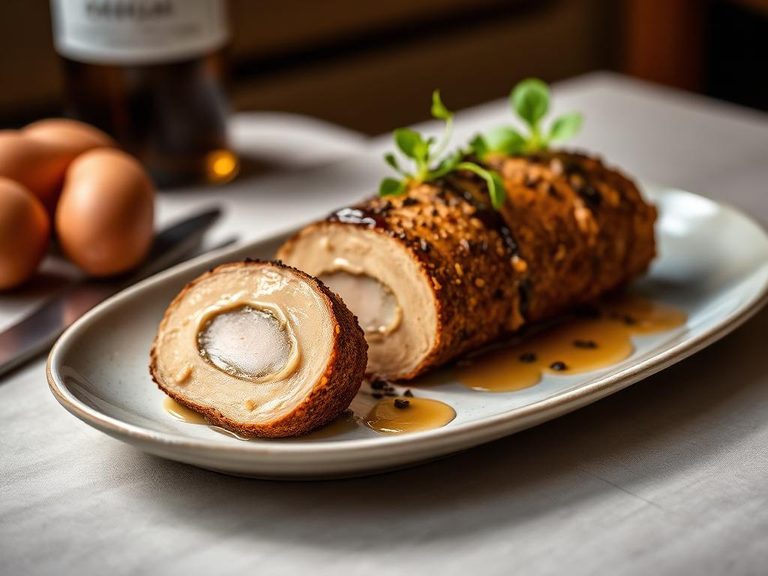
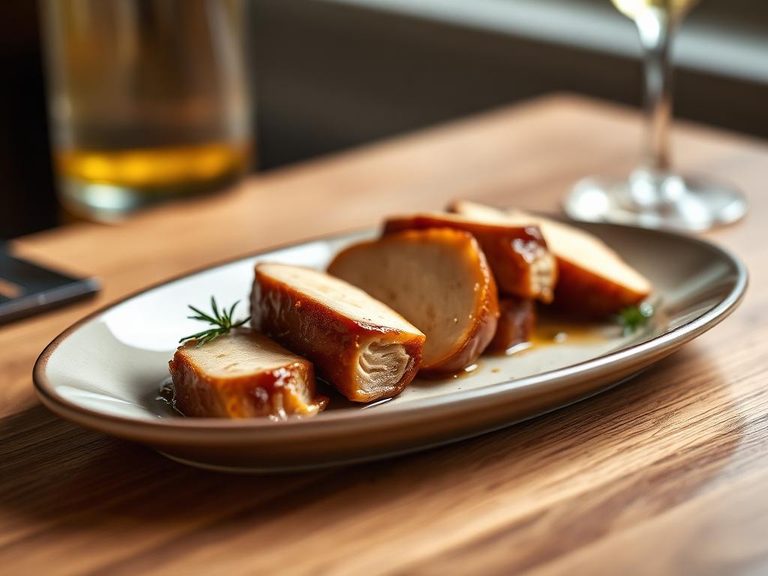
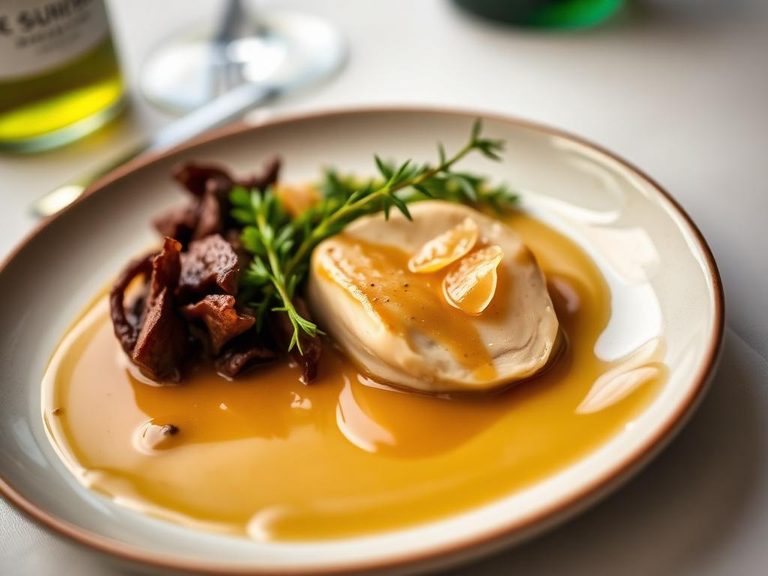
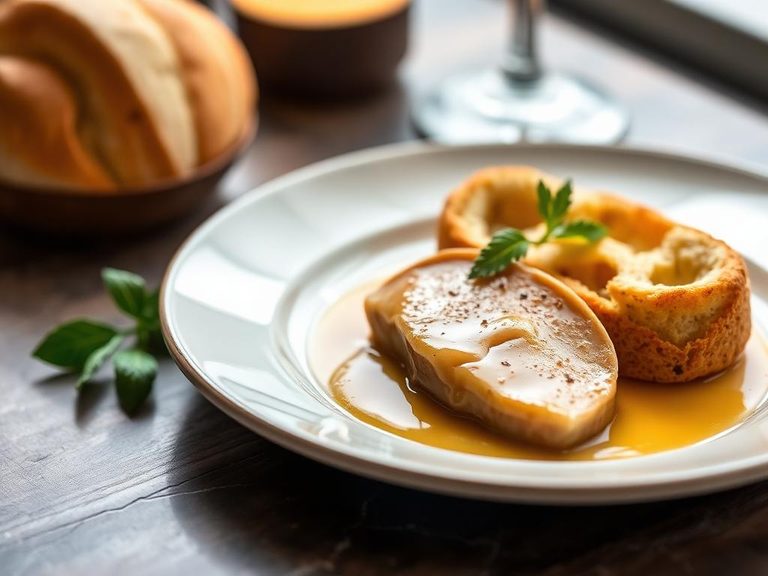
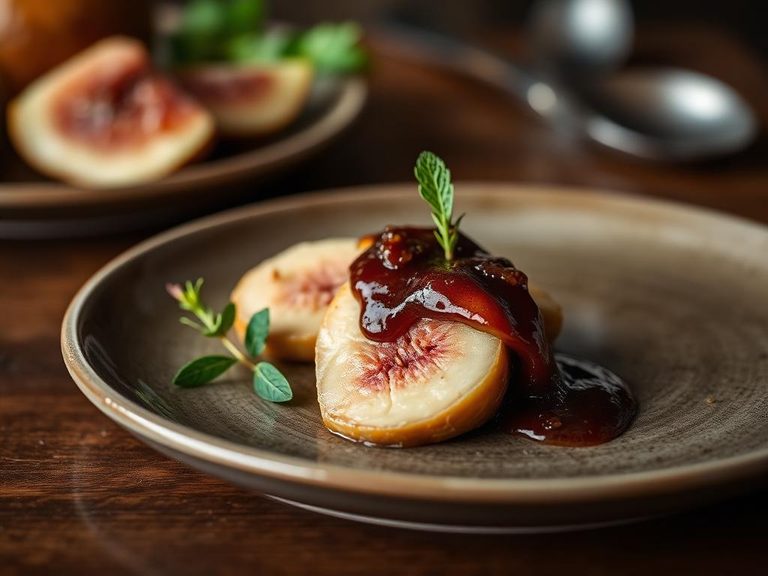
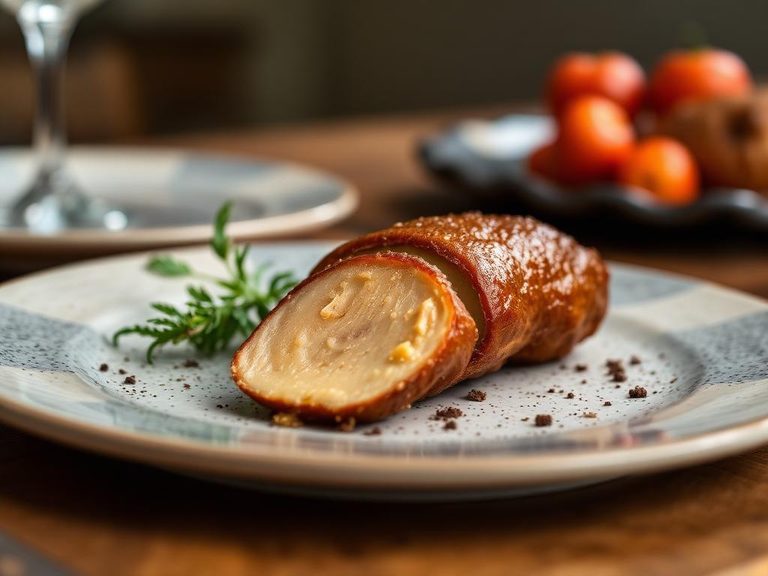
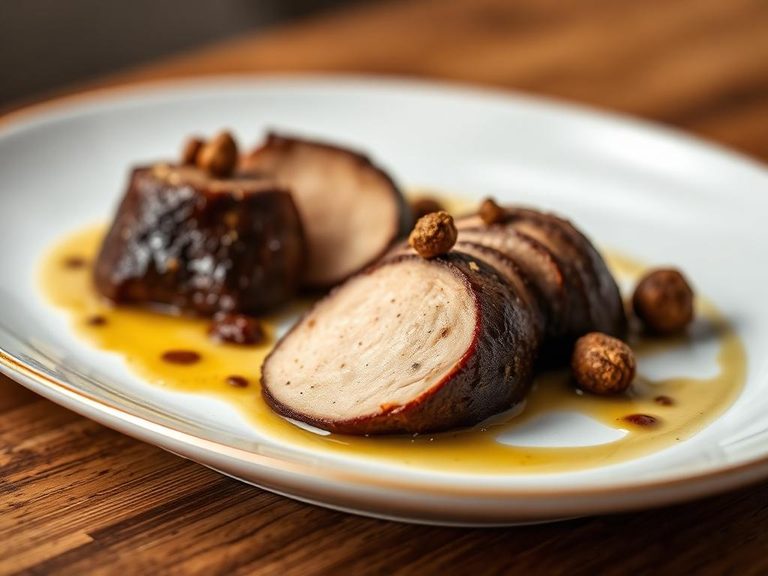
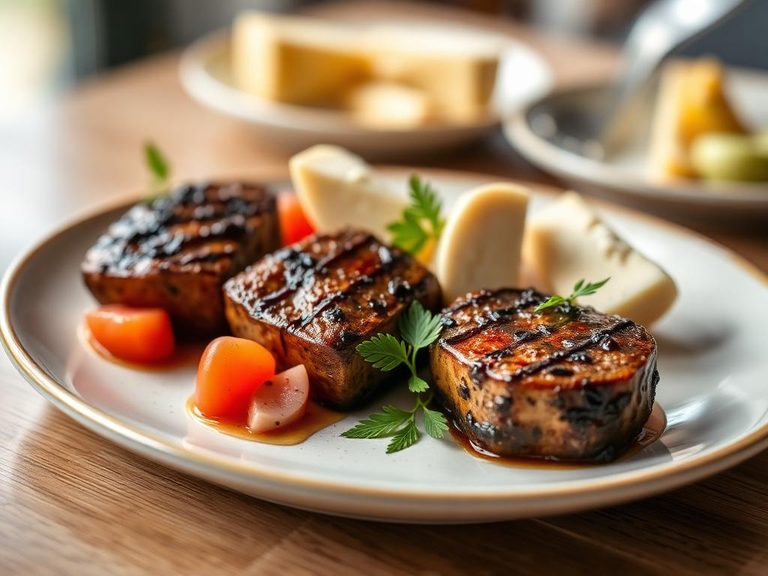
Foie gras terrine is a classic French charcuterie dish made from a smooth, rich paste of duck or goose liver, typically slow-cooked in a loaf-shaped mold (terrine) with ingredients like brandy, port, or spices such as truffle or thyme. It originates from the southwest of France, particularly regions like Périgord and Gascony, and is traditionally served chilled in slices as an appetizer or on toast.
🍽️ Nutrition at a glance
This dish is extremely high in fat (both saturated and monounsaturated), with minimal carbohydrates and a moderate amount of protein; a typical 100g serving contains around 450–500 calories and is a rich source of vitamins A, B12, and iron.
Nutrition breakdown
| Calories | 310 kcal |
| Protein | 6 g |
| Carbs | 2 g |
| Fat | 30 g |
| Fiber | 0 g |
| Sugar | 0.5 g |
| Sodium | 480 mg |
| Vitamin A | 2100 IU |
| Vitamin B12 | 3.2 mcg |
| Vitamin K | 15 mcg |
| Iron | 2.5 mg |
| Phosphorus | 120 mg |
| Selenium | 12 mcg |
| Copper | 0.3 mg |
| Choline | 95 mg |
Per 1 slice (85 g) · estimated, varies by recipe
💡 What's interesting
Foie gras terrine is culturally significant as a centerpiece of French haute cuisine and holiday feasts, often associated with luxury and tradition, while nutritionally it stands out for its high concentration of healthy fats and fat-soluble vitamins, though it is also a subject of ethical debate due to the production method known as gavage (force-feeding).