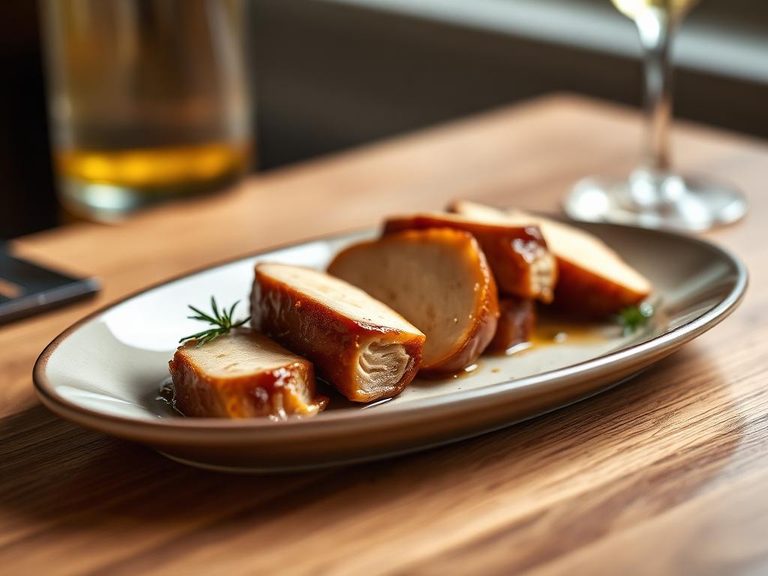
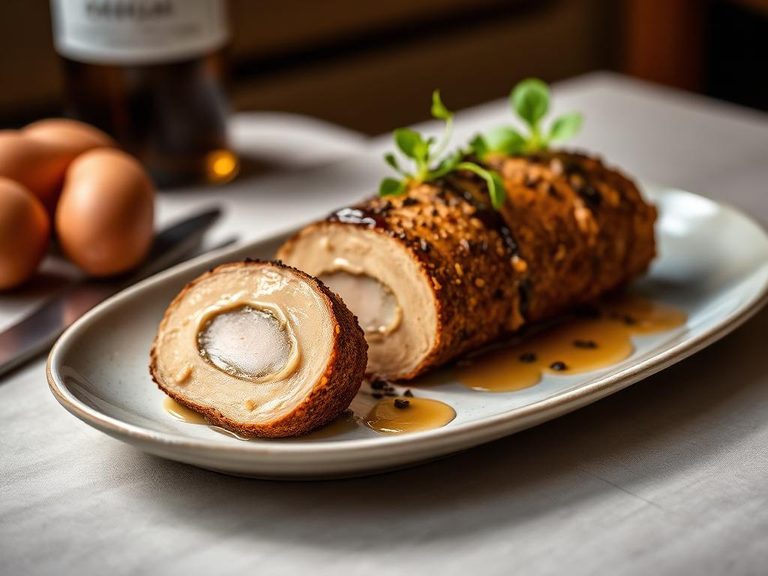
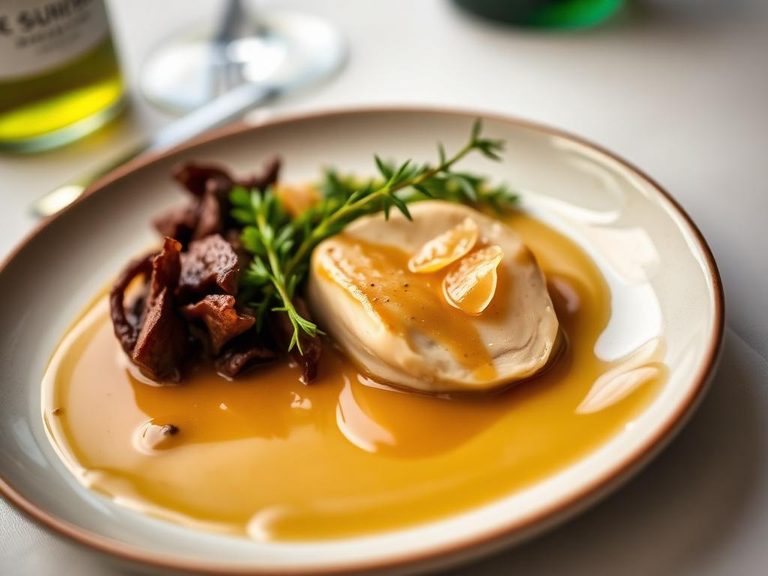
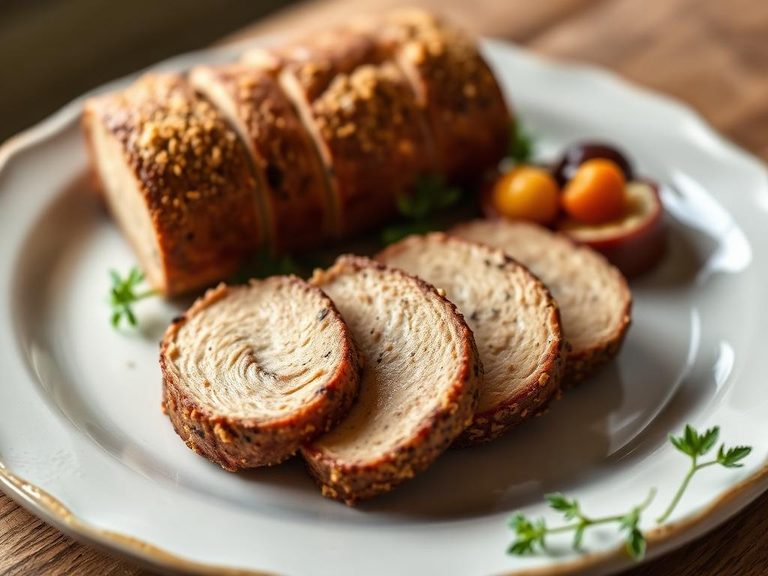
Foie gras torchon
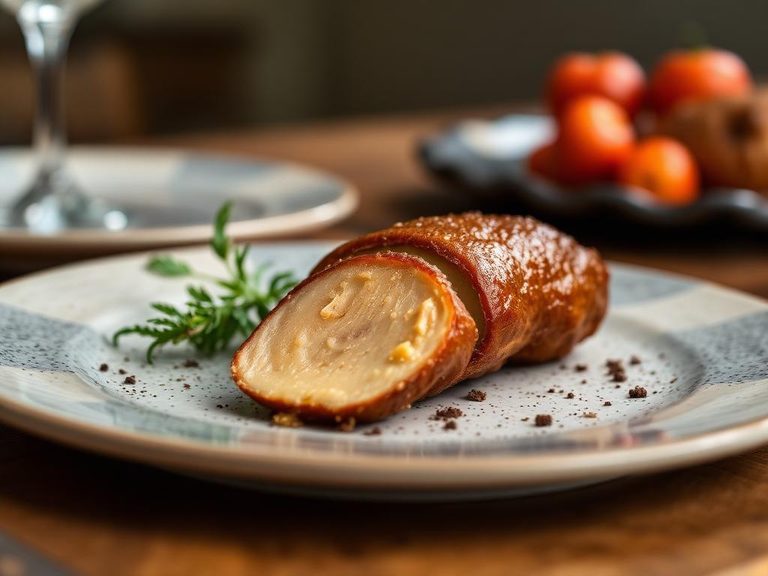
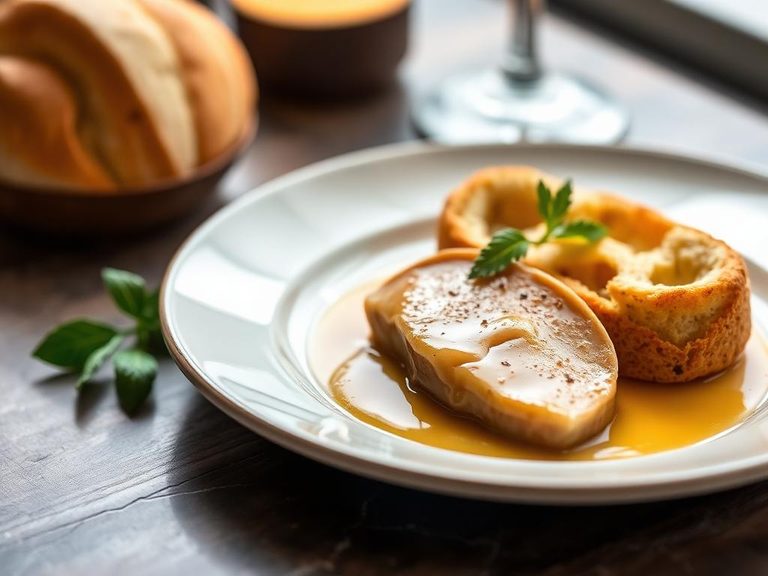
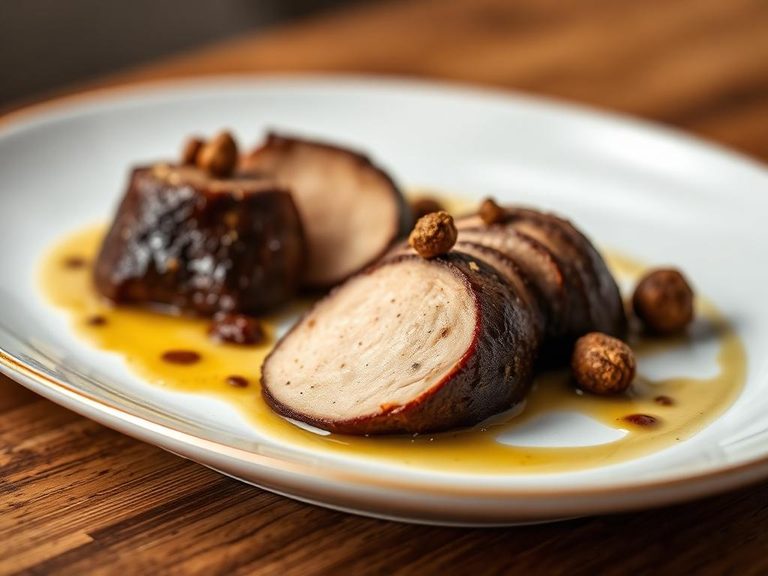
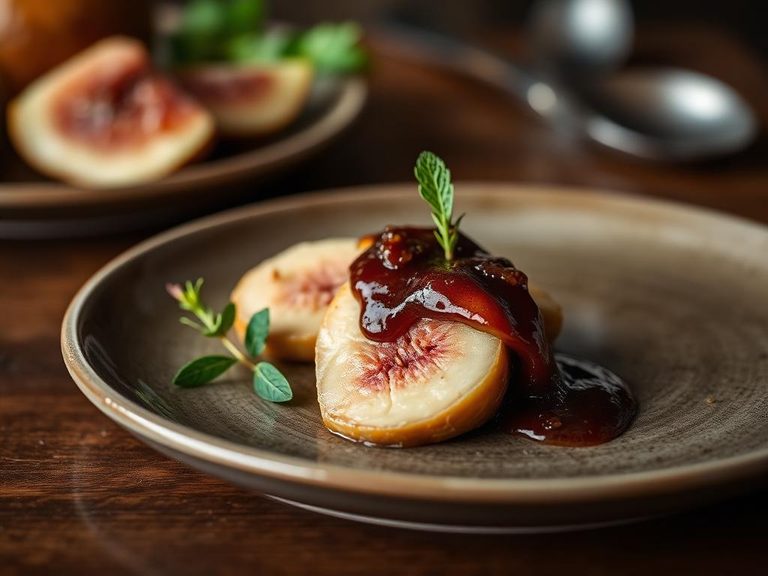
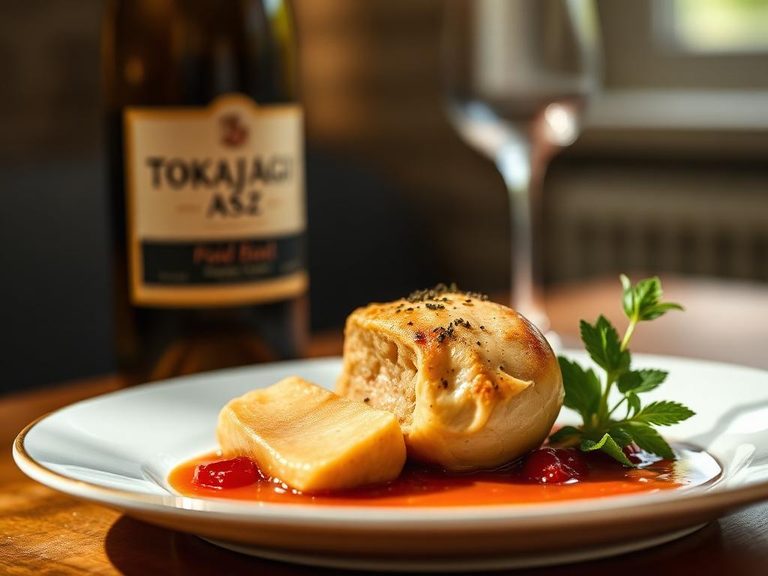
Foie gras torchon is a luxurious French delicacy made from the liver of a duck or goose that has been specially fattened. The liver is seasoned, wrapped tightly in a cloth (torchon), poached, and then chilled to create a smooth, sliceable cylindrical shape. It is a classic preparation from the southwest region of France.
🍽️ Nutrition at a glance
This dish is extremely high in fat, with a significant portion being saturated fat, and provides a good amount of protein. It is very low in carbohydrates and offers notable amounts of vitamins A, B12, and iron, with a typical serving containing around 300-400 calories.
Nutrition breakdown
| Calories | 330 kcal |
| Protein | 6 g |
| Carbs | 1 g |
| Fat | 34 g |
| Fiber | 0 g |
| Sugar | 0 g |
| Sodium | 180 mg |
| Vitamin A | 1350 mcg RAE |
| Vitamin B12 | 3.0 mcg |
| Iron | 2.5 mg |
| Copper | 0.3 mg |
| Selenium | 12 mcg |
| Riboflavin (B2) | 0.3 mg |
| Niacin (B3) | 2.0 mg |
| Phosphorus | 80 mg |
Per 1 slice (85 g) · estimated, varies by recipe
💡 What's interesting
The 'torchon' method, meaning 'kitchen towel,' is a traditional technique that shapes the liver into a perfect cylinder and ensures an even, velvety texture. Nutritionally, it is a concentrated source of fat-soluble vitamins, but its production involves a controversial practice of force-feeding known as 'gavage'.