Paired with foie gras or blue cheese
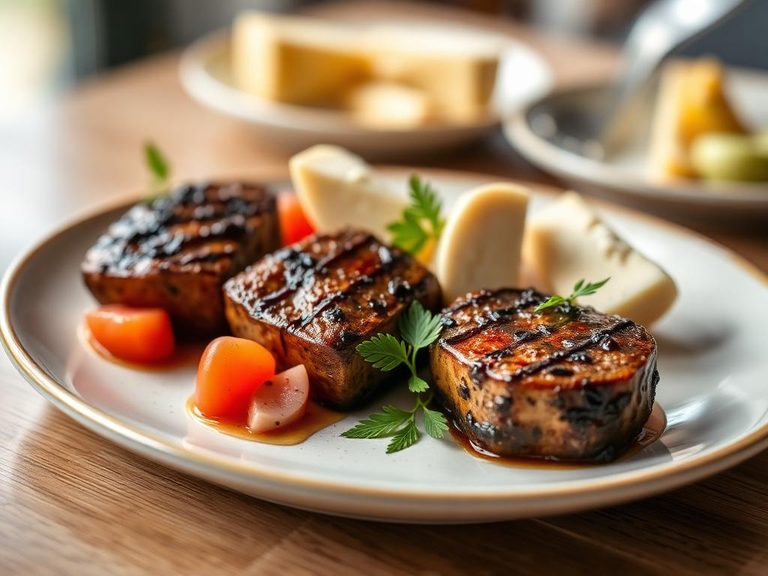
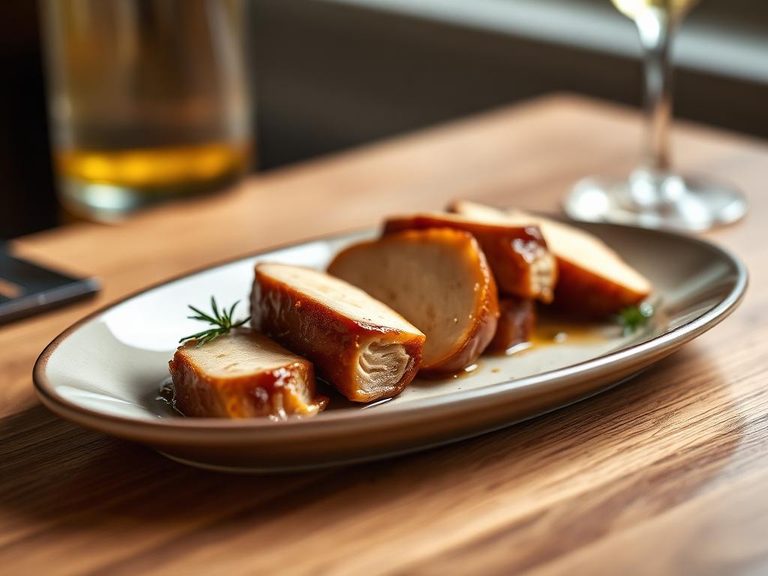
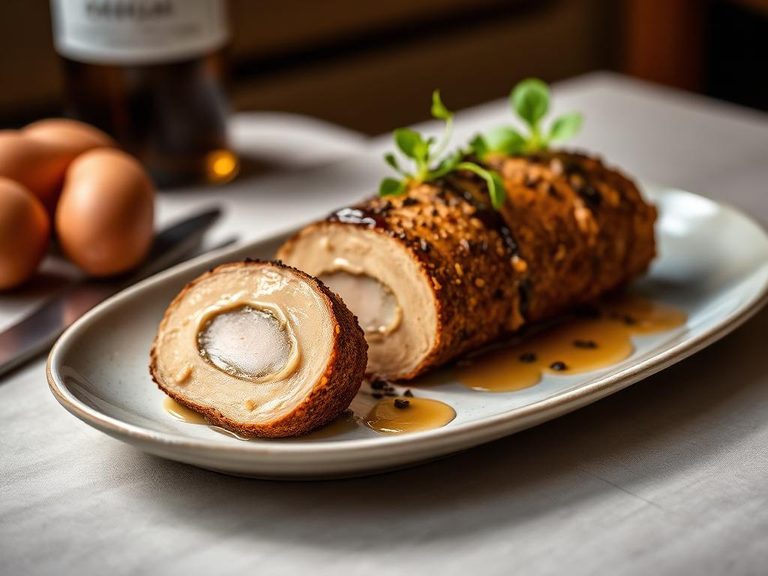
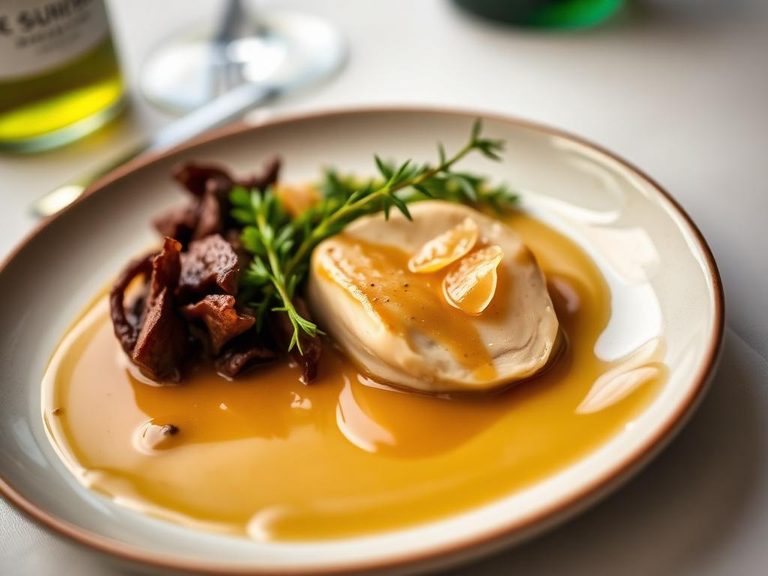
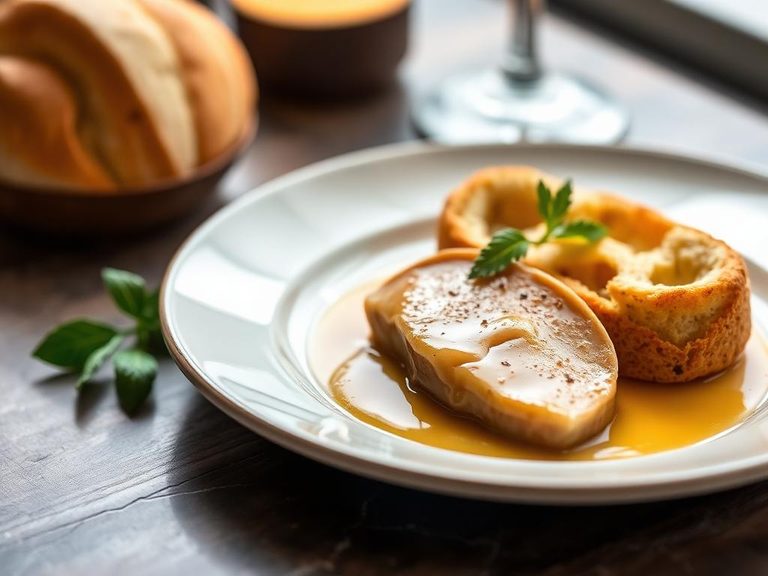
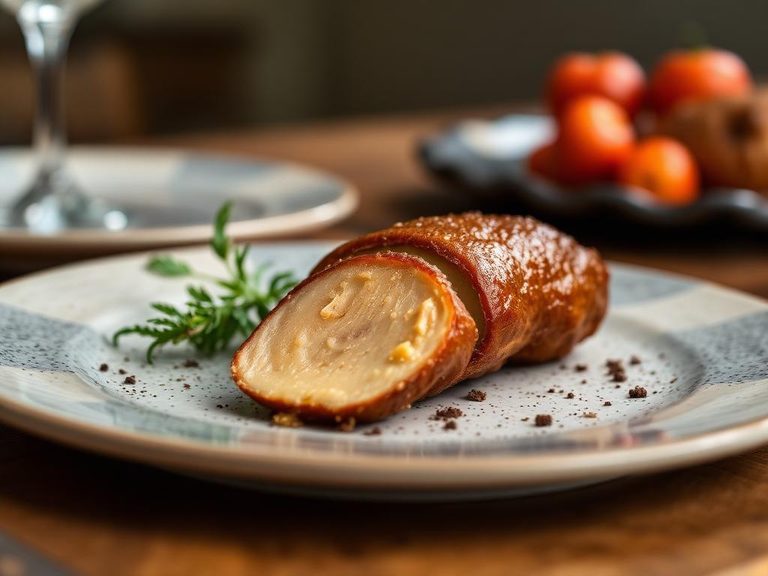
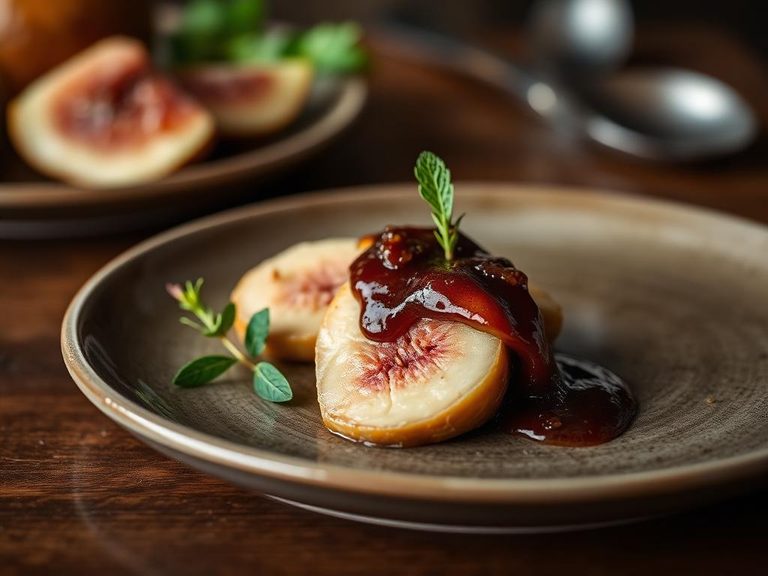
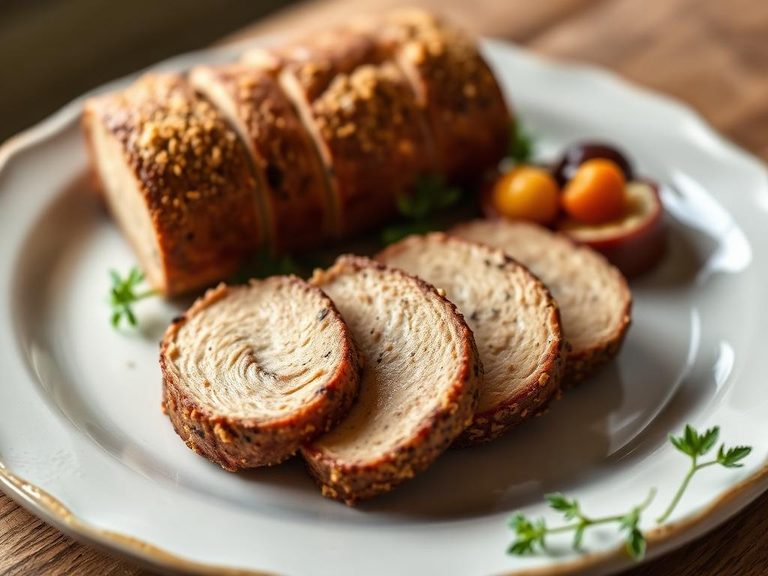
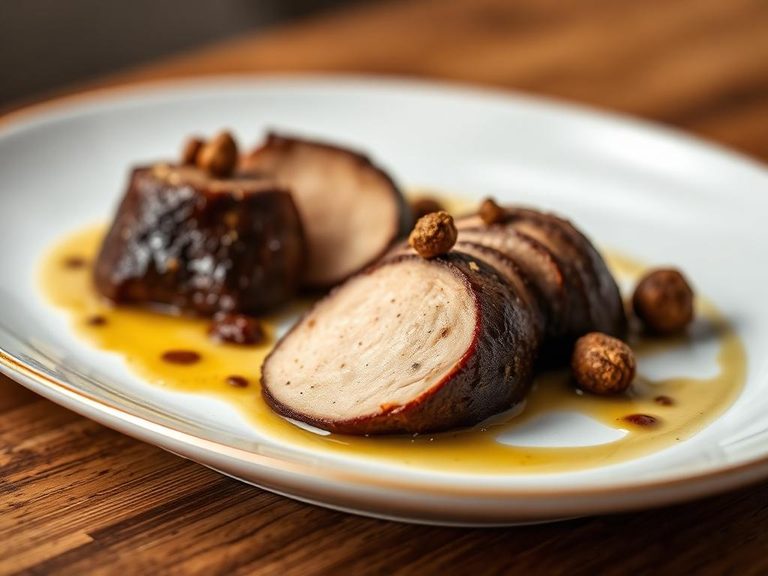
This refers to classic pairings where rich, fatty ingredients are served with contrasting elements. The most iconic is foie gras (duck or goose liver) often served with sweet fruit compotes, toasted brioche, or Sauternes wine. Blue cheese is frequently paired with honey, walnuts, or robust red wines to balance its pungent, salty flavor.
🍽️ Nutrition at a glance
These pairings are extremely high in fat and calories, with moderate protein and minimal carbohydrates. They provide significant amounts of fat-soluble vitamins (like A and K), calcium (from cheese), and antioxidants (from fruit or wine), with a single serving easily exceeding 500 calories.
Nutrition breakdown
| Calories | 380 kcal |
| Protein | 8 g |
| Carbs | 15 g |
| Fat | 32 g |
| Fiber | 1 g |
| Sugar | 10 g |
| Sodium | 350 mg |
| Vitamin A | 450 µg RAE |
| Vitamin B12 | 1.8 µg |
| Riboflavin (B2) | 0.3 mg |
| Iron | 2.5 mg |
| Selenium | 12 µg |
| Phosphorus | 120 mg |
| Vitamin K | 8 µg |
| Copper | 0.15 mg |
Per 1 serving of foie gras terrine (50g) with 1 slice brioche (30g) and 1 tbsp fruit compote (20g) · estimated, varies by recipe
💡 What's interesting
The concept of pairing rich, fatty foods with acidic, sweet, or bitter elements is a fundamental culinary principle to create balance and cleanse the palate. Nutritionally, while very calorie-dense, these pairings can provide concentrated sources of nutrients like vitamin A (from foie gras) and probiotics (from some blue cheeses).