

Matelote d'Oie
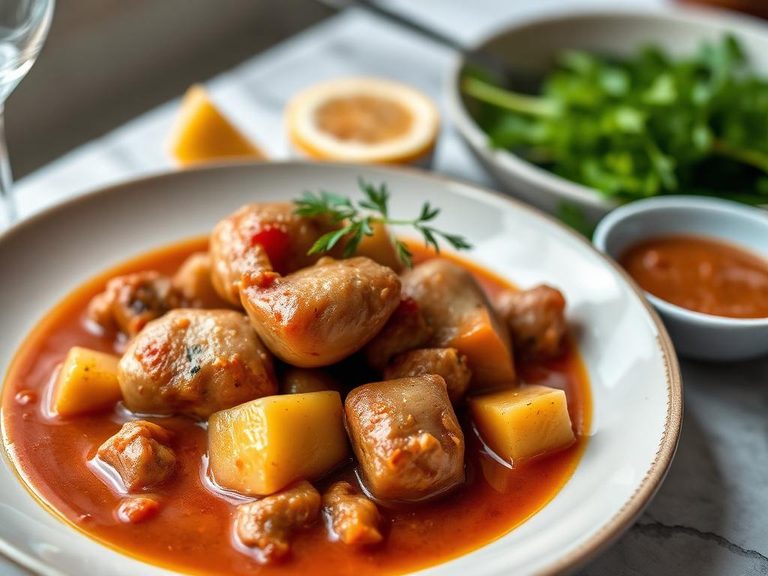
Matelote d'Oie is a traditional French stew originating from the Alsace and Lorraine regions, where it is celebrated as a rustic, celebratory dish. It typically features slow-cooked goose pieces, often the legs or thighs, braised with wine (commonly Riesling or Pinot Noir), aromatic vegetables like onions and carrots, and sometimes lardons or mushrooms for added depth.
🍽️ Nutrition at a glance
This dish is high in protein and fat due to the goose meat, providing essential nutrients like iron, zinc, and B vitamins, particularly B12. A typical serving (about 300-400 grams) can range from 500 to 700 calories, depending on the cut of meat and amount of fat rendered during cooking.
Nutrition breakdown
| Calories | 380 kcal |
| Protein | 28 g |
| Carbs | 8 g |
| Fat | 26 g |
| Fiber | 1.5 g |
| Sugar | 2 g |
| Sodium | 650 mg |
| Iron | 4.5 mg |
| Zinc | 6.2 mg |
| Phosphorus | 280 mg |
| Potassium | 420 mg |
| Vitamin B6 | 0.5 mg |
| Vitamin B12 | 1.8 mcg |
| Selenium | 22 mcg |
| Niacin (B3) | 6.5 mg |
Per 1 cup (240 g) · estimated, varies by recipe
💡 What's interesting
Matelote d'Oie is culturally significant in Alsatian cuisine, often prepared for festive occasions like Christmas or family gatherings, reflecting a tradition of using locally raised geese. Nutritionally, goose meat is richer in healthy monounsaturated fats compared to other poultry, and when slow-cooked, it becomes tender and flavorful, making it a hearty, warming dish ideal for colder climates.
AI estimate may be inaccurate · Terms