

Fruit juice, acai blend
Common food

Photo: Wikipedia
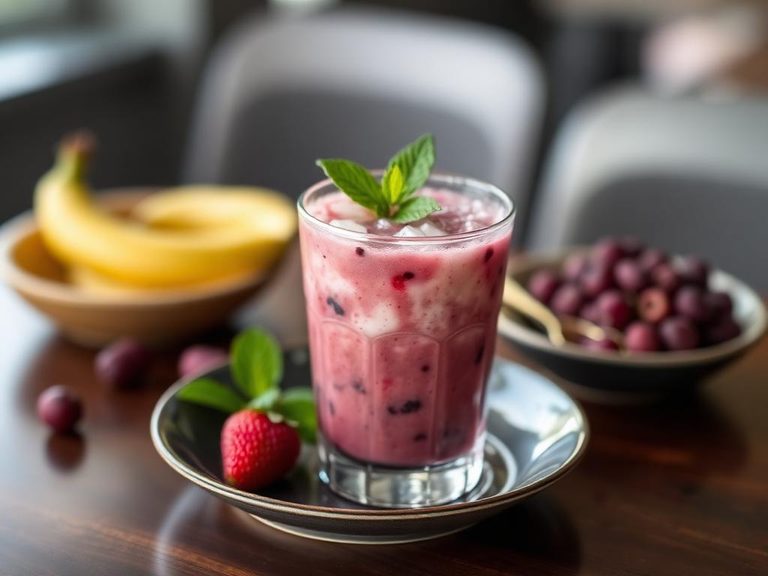
This is a vibrant, deep-purple juice blend centered on the açaí berry, known for its thick, smoothie-like texture and a taste that balances earthy, tart notes with a subtle berry sweetness. Nutritionally, it's a low-calorie, low-fat option that provides a quick source of carbohydrates and a small amount of fiber, making it a popular choice for a refreshing energy boost.
Calorie split: 5% protein · 83% carbs · 12% fat
↓ Full nutrition💚 Why it's loved
People love it for its unique, exotic flavor profile that's both refreshing and satisfying, often enjoyed as a health-conscious treat or a base for vibrant smoothie bowls. Its deep purple color and association with 'superfood' culture make it a visually appealing and trendy choice.
⚠️ Watch-outs & how to enjoy it better
The primary concern is the natural sugar content, which can cause blood-sugar spikes if consumed in large quantities, especially on an empty stomach. To counteract this, pair it with a source of protein or healthy fat (like nuts or seeds) and practice portion control by opting for a smaller serving size.
Key benefits
- Rich in antioxidants, particularly anthocyanins from açaí.
- Provides a quick source of natural carbohydrates for energy.
- Low in fat and contains no cholesterol.
- Contains a small amount of dietary fiber from the fruit pulp.
🍽️ Popular dishes
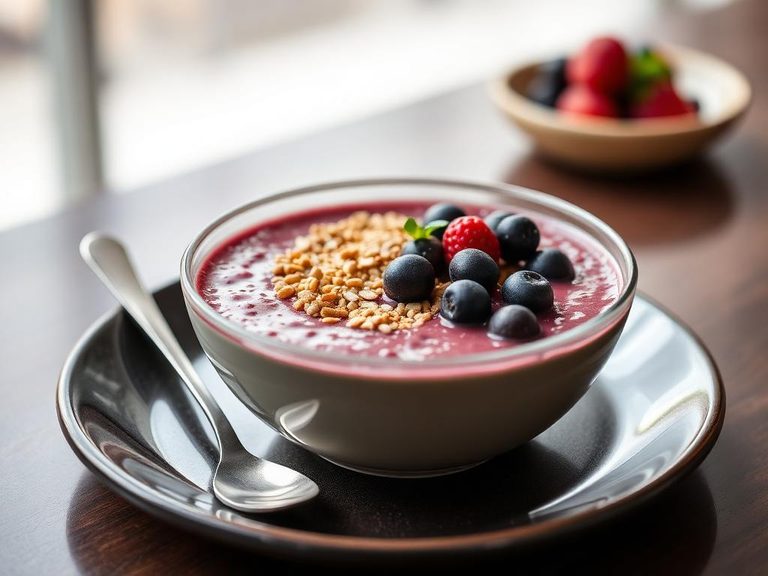
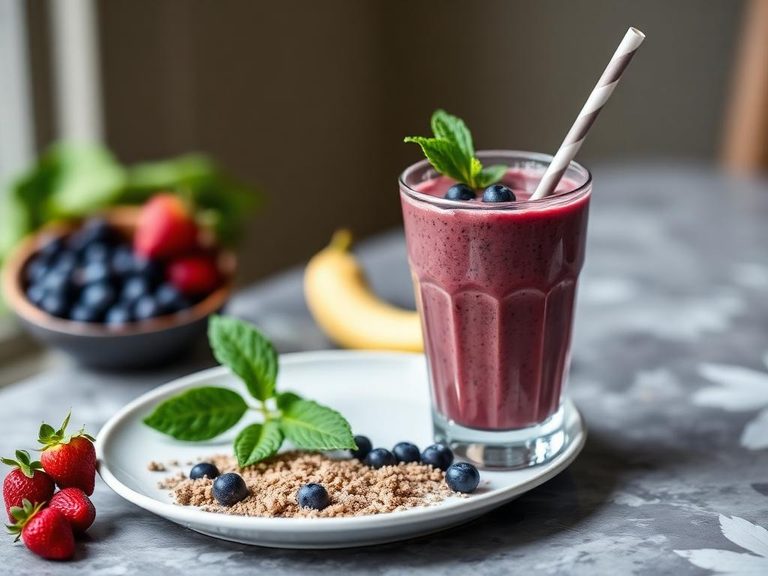
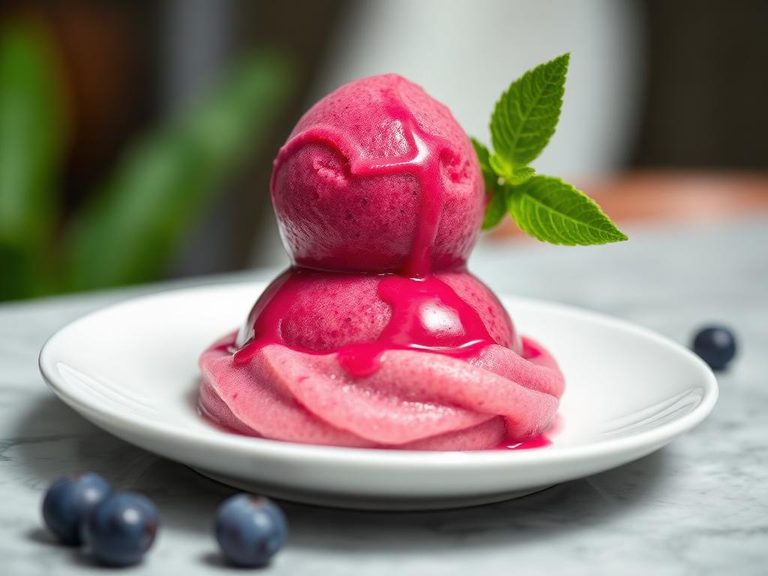
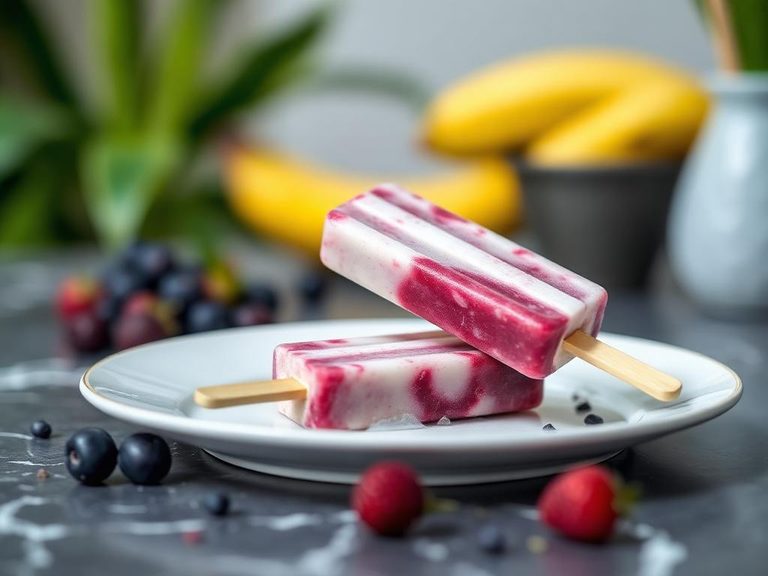
🌍 Where it's eaten
💡 Did you know?
The açaí berry, the star of this blend, is technically a drupe, not a berry, and its seed makes up about 80% of its total weight, meaning the edible pulp is a thin layer around a large seed.
Full nutrition (USDA data · scales with serving)
| Water | 84.9 g |
| Energy | 62.0 kcal |
| Protein | 0.83 g |
| Total lipid (fat) | 0.83 g |
| Carbohydrate, by difference | 12.8 g |
| Fiber, total dietary | 1.2 g |
| Total Sugars | 11.1 g |
| Calcium, Ca | 19.0 mg |
| Iron, Fe | 0.16 mg |
| Magnesium, Mg | 11.0 mg |
| Phosphorus, P | 13.0 mg |
| Potassium, K | 130 mg |
| Sodium, Na | 13.0 mg |
| Zinc, Zn | 0.11 mg |
| Copper, Cu | 0.08 mg |
| Selenium, Se | 0.00 ug |
| Vitamin C, total ascorbic acid | 42.1 mg |
| Thiamin | 0.03 mg |
| Riboflavin | 0.04 mg |
| Niacin | 9.1 mg |
| Vitamin B-6 | 1.1 mg |
| Folate, total | 4.0 ug |
| Folic acid | 0.00 ug |
| Folate, food | 4.0 ug |
| Folate, DFE | 4.0 ug |
| Choline, total | 0.00 mg |
| Vitamin B-12 | 3.4 ug |
| Vitamin B-12, added | 3.4 ug |
| Vitamin A, RAE | 485 ug |
| Retinol | 0.00 ug |
| Carotene, beta | 5784 ug |
| Carotene, alpha | 46.0 ug |
| Cryptoxanthin, beta | 23.0 ug |
| Lycopene | 899 ug |
| Lutein + zeaxanthin | 783 ug |
| Vitamin E (alpha-tocopherol) | 11.1 mg |
| Vitamin E, added | 11.1 mg |
| Vitamin D (D2 + D3) | 0.00 ug |
| Vitamin K (phylloquinone) | 16.7 ug |
| Alcohol, ethyl | 0.00 g |
| Caffeine | 0.00 mg |
| Theobromine | 0.00 mg |
Fat & fatty acid profile (per 100g)
| Fatty acids, total saturated | 0.00 g |
| SFA 4:0 | 0.00 g |
| SFA 6:0 | 0.00 g |
| SFA 8:0 | 0.00 g |
| SFA 10:0 | 0.00 g |
| SFA 12:0 | 0.00 g |
| SFA 14:0 | 0.00 g |
| SFA 16:0 | 0.00 g |
| SFA 18:0 | 0.00 g |
| Fatty acids, total monounsaturated | 0.00 g |
| MUFA 16:1 | 0.00 g |
| MUFA 18:1 | 0.00 g |
| MUFA 20:1 | 0.00 g |
| MUFA 22:1 | 0.00 g |
| Fatty acids, total polyunsaturated | 0.00 g |
| PUFA 18:2 | 0.00 g |
| PUFA 18:3 | 0.00 g |
| PUFA 18:4 | 0.00 g |
| PUFA 20:4 | 0.00 g |
| PUFA 20:5 n-3 (EPA) | 0.00 g |
| PUFA 22:5 n-3 (DPA) | 0.00 g |
| PUFA 22:6 n-3 (DHA) | 0.00 g |
| Cholesterol | 0.00 mg |
Amino acid profile (per 100g)
Estimated from Babyfood, juice treats, fruit medley, toddler — USDA does not publish this profile for Fruit juice.
| Tryptophan | 0.00 g |
| Threonine | 0.00 g |
| Isoleucine | 0.00 g |
| Leucine | 0.00 g |
| Lysine | 0.00 g |
| Methionine | 0.00 g |
| Cystine | 0.00 g |
| Phenylalanine | 0.00 g |
| Tyrosine | 0.00 g |
| Valine | 0.00 g |
| Arginine | 0.00 g |
| Histidine | 0.00 g |
| Alanine | 0.00 g |
| Aspartic acid | 0.00 g |
| Glutamic acid | 0.00 g |
| Glycine | 0.00 g |
| Proline | 0.00 g |
| Serine | 0.00 g |
FAQ
Is açaí juice the same as açaí pulp or puree?
No. Juice is the liquid extracted from the fruit, often filtered. Pulp or puree includes the mashed fruit flesh, which contains more fiber and a thicker texture, as used in traditional açaí bowls.
Why is açaí juice often frozen or sold as a puree?
The fresh açaí berry oxidizes and loses its flavor and color very quickly after harvesting. Freezing it as a puree or pulp preserves its nutrients and taste for transport and sale worldwide.
Can I use açaí juice as a substitute for other fruit juices in recipes?
Yes, but be aware of its distinct, earthy flavor and deep purple color. It works well in smoothies, cocktails, or as a colorful base for vinaigrettes, but it will alter the taste and appearance of the final dish.
Nutrient density (calculated · NRF9.3)
Nutrient Rich Foods index: beneficial nutrients (protein, fiber, vitamins, minerals) minus saturated fat, added sugar & sodium, per 100 kcal.
NRF9.3 index — Fulgoni, Keast & Drewnowski, 2009. Computed from USDA nutrients.
Weight-loss friendliness (composite index)
Energy density 0.62 kcal/g · 5% calories from protein · 1.2 g fiber · 11.1 g sugar per 100 g.
Composite of energy density (Rolls et al., 1999), protein & fiber satiety, minus sugar. A calculated heuristic — ranks satiety-per-calorie, not a clinical measure.
Dietary load (calculated from USDA values)
Potential renal acid load. Positive = acid-forming, negative = alkaline-forming.
Sodium-to-potassium ratio: 0.10 (lower is better — aim for ≤ 1)
Sodium:potassium per WHO potassium guidance. Computed from USDA nutrients.