

Flax seeds
Common food

Photo: Wikipedia
Flax seeds are tiny, glossy, teardrop-shaped seeds with a mild, nutty flavor and a satisfying crunch when whole. They are a powerhouse of plant-based nutrition, delivering an exceptional amount of fiber and omega-3 fatty acids (ALA) per serving. When ground, they form a mucilaginous gel that acts as a natural binder in recipes.
Calorie split: 13% protein · 25% carbs · 62% fat
↓ Full nutrition💚 Why it's loved
People love flax seeds for their versatile, subtle nuttiness that enhances both sweet and savory dishes without overpowering them. They are celebrated as a simple, nutrient-dense addition to smoothies, oatmeal, and baked goods.
⚠️ Watch-outs & how to enjoy it better
Whole flax seeds can be difficult to digest and may pass through the body undigested, reducing nutrient absorption. They are also high in fiber, which can cause digestive discomfort (bloating, gas) if introduced too quickly. **Tip:** Always grind them to unlock nutrients, and start with a small amount (e.g., 1 tsp) while increasing water intake to allow your system to adjust.
Key benefits
- Excellent source of alpha-linolenic acid (ALA), a plant-based omega-3 fatty acid.
- High in both soluble and insoluble dietary fiber.
- Contains lignans, which are unique antioxidant compounds.
- A good source of plant-based protein and minerals like magnesium and manganese.
🍽️ Popular dishes
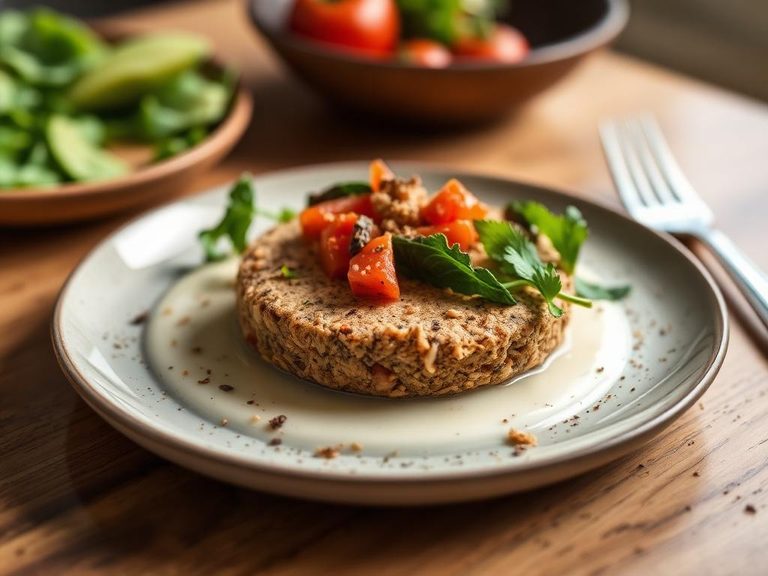
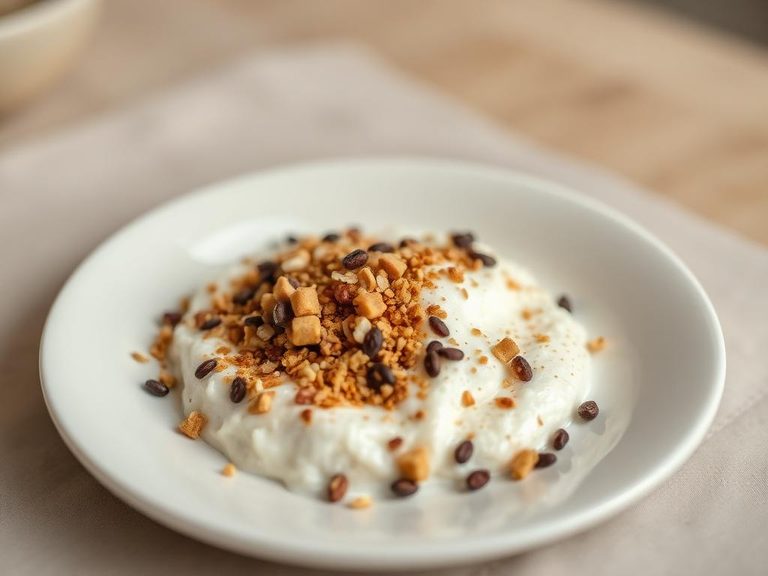

🌍 Where it's eaten
💡 Did you know?
Canada is the world's largest producer and exporter of flax seeds, with the province of Saskatchewan alone growing over 40% of the global supply.
Full nutrition (USDA data · scales with serving)
| Water | 6.8 g |
| Energy | 545 kcal |
| Protein | 18.0 g |
| Total lipid (fat) | 37.3 g |
| Carbohydrate, by difference | 34.4 g |
| Fiber, total dietary | 23.1 g |
| Total Sugars | 1.6 g |
| Calcium, Ca | 230 mg |
| Iron, Fe | 5.8 mg |
| Magnesium, Mg | 372 mg |
| Phosphorus, P | 556 mg |
| Potassium, K | 793 mg |
| Sodium, Na | 37.0 mg |
| Zinc, Zn | 4.7 mg |
| Copper, Cu | 1.3 mg |
| Selenium, Se | 136 ug |
| Vitamin C, total ascorbic acid | 0.60 mg |
| Thiamin | 0.54 mg |
| Riboflavin | 0.16 mg |
| Niacin | 3.8 mg |
| Vitamin B-6 | 0.39 mg |
| Folate, total | 41.0 ug |
| Folic acid | 0.00 ug |
| Folate, food | 41.0 ug |
| Folate, DFE | 41.0 ug |
| Choline, total | 78.7 mg |
| Vitamin B-12 | 0.00 ug |
| Vitamin B-12, added | 0.00 ug |
| Vitamin A, RAE | 0.00 ug |
| Retinol | 0.00 ug |
| Carotene, beta | 0.00 ug |
| Carotene, alpha | 0.00 ug |
| Cryptoxanthin, beta | 0.00 ug |
| Lycopene | 0.00 ug |
| Lutein + zeaxanthin | 651 ug |
| Vitamin E (alpha-tocopherol) | 0.00 mg |
| Vitamin E, added | 0.00 mg |
| Vitamin D (D2 + D3) | 0.00 ug |
| Vitamin K (phylloquinone) | 3.7 ug |
| Alcohol, ethyl | 0.00 g |
| Caffeine | 0.00 mg |
| Theobromine | 0.00 mg |
Fat & fatty acid profile (per 100g)
| Fatty acids, total saturated | 3.3 g |
| SFA 4:0 | 0.00 g |
| SFA 6:0 | 0.00 g |
| SFA 8:0 | 0.00 g |
| SFA 10:0 | 0.00 g |
| SFA 12:0 | 0.00 g |
| SFA 14:0 | 0.01 g |
| SFA 16:0 | 1.9 g |
| SFA 18:0 | 1.2 g |
| Fatty acids, total monounsaturated | 5.9 g |
| MUFA 16:1 | 0.02 g |
| MUFA 18:1 | 5.8 g |
| MUFA 20:1 | 0.16 g |
| MUFA 22:1 | 0.01 g |
| Fatty acids, total polyunsaturated | 24.7 g |
| PUFA 18:2 | 5.3 g |
| PUFA 18:3 | 19.4 g |
| PUFA 18:4 | 0.00 g |
| PUFA 20:4 | 0.00 g |
| PUFA 20:5 n-3 (EPA) | 0.00 g |
| PUFA 22:5 n-3 (DPA) | 0.00 g |
| PUFA 22:6 n-3 (DHA) | 0.00 g |
| Cholesterol | 0.00 mg |
Amino acid profile (per 100g)
Estimated from Seeds, flaxseed — USDA does not publish this profile for Flax seeds.
| Tryptophan | 0.30 g |
| Threonine | 0.77 g |
| Isoleucine | 0.90 g |
| Leucine | 1.2 g |
| Lysine | 0.86 g |
| Methionine | 0.37 g |
| Cystine | 0.34 g |
| Phenylalanine | 0.96 g |
| Tyrosine | 0.49 g |
| Valine | 1.1 g |
| Arginine | 1.9 g |
| Histidine | 0.47 g |
| Alanine | 0.93 g |
| Aspartic acid | 2.0 g |
| Glutamic acid | 4.0 g |
| Glycine | 1.2 g |
| Proline | 0.81 g |
| Serine | 0.97 g |
| Hydroxyproline | 0.17 g |
FAQ
Do I need to grind flax seeds?
Yes, for optimal nutrient absorption. The hard outer shell of whole seeds is difficult to break down, so grinding them (into flax meal) makes the omega-3s, lignans, and other nutrients bioavailable. You can buy pre-ground meal or grind them yourself in a coffee grinder.
How do I store ground flax seeds?
Because of their high oil content, ground flax seeds can go rancid quickly. Store them in an airtight container in the refrigerator or freezer to maintain freshness for several weeks or months.
What is a flax egg?
A flax egg is a common vegan egg substitute. Mix 1 tablespoon of ground flaxseed with 2.5-3 tablespoons of water, let it sit for 5-10 minutes until it forms a gel-like consistency. It works well as a binder in recipes for muffins, cookies, and pancakes.
Nutrient density (calculated · NRF9.3)
Nutrient Rich Foods index: beneficial nutrients (protein, fiber, vitamins, minerals) minus saturated fat, added sugar & sodium, per 100 kcal.
NRF9.3 index — Fulgoni, Keast & Drewnowski, 2009. Computed from USDA nutrients.
Weight-loss friendliness (composite index)
Energy density 5.45 kcal/g · 13% calories from protein · 23.1 g fiber · 1.6 g sugar per 100 g.
Composite of energy density (Rolls et al., 1999), protein & fiber satiety, minus sugar. A calculated heuristic — ranks satiety-per-calorie, not a clinical measure.
Dietary load (calculated from USDA values)
Potential renal acid load. Positive = acid-forming, negative = alkaline-forming.
Sodium-to-potassium ratio: 0.05 (lower is better — aim for ≤ 1)
Sodium:potassium per WHO potassium guidance. Computed from USDA nutrients.