

Fish, perch, fried
Common food

Photo: Wikipedia
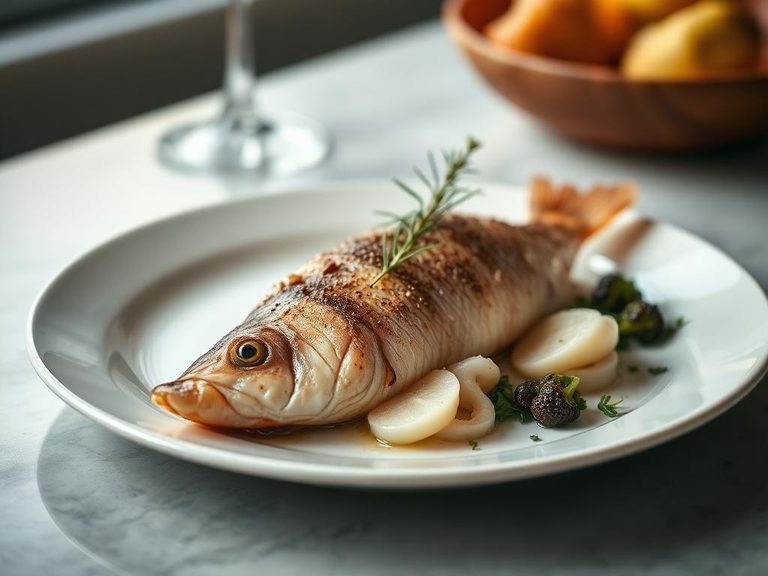
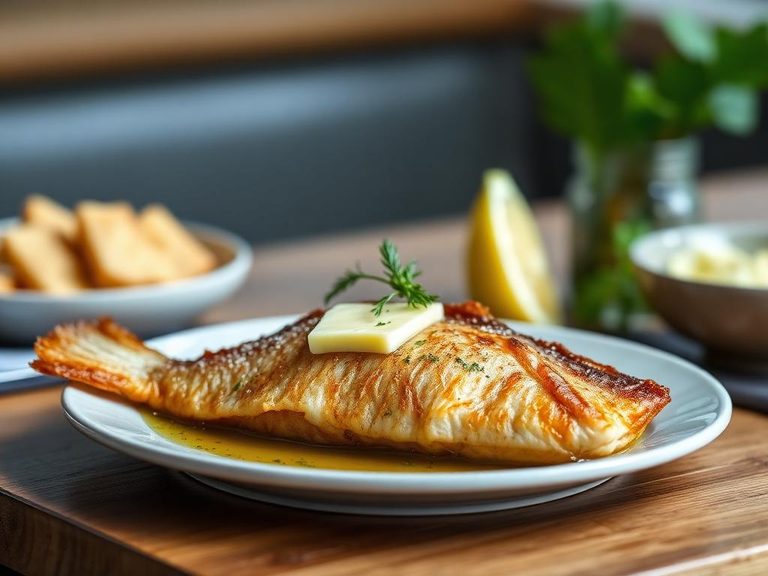
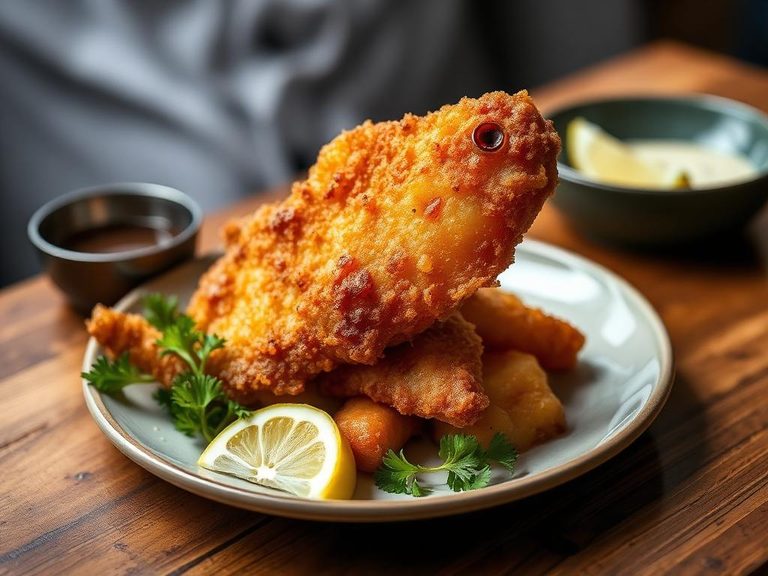
Fried perch is a golden, crispy-skinned freshwater fish with a delicate, sweet white flesh that flakes apart easily. The frying process creates a satisfying crunch while keeping the interior moist and tender. At 224 kcal per 100g, it's a solid source of protein (13.56g) with a notable fat content (13.34g) from the cooking method.
Calorie split: 25% protein · 21% carbs · 54% fat
↓ Full nutrition💚 Why it's loved
People love fried perch for its perfect balance of a crispy, savory exterior and a mild, sweet, flaky interior that isn't overly 'fishy.' It's a versatile canvas that pairs beautifully with everything from lemon and tartar sauce to spicy remoulade, and is a staple of casual comfort food and lakeside dining.
⚠️ Watch-outs & how to enjoy it better
The frying process adds significant calories and fat, which may not suit low-fat diets. The breading or batter can also add sodium and refined carbs. To counteract, use an air fryer or oven-bake with a light whole-grain coating, and pair with a vinegar-based slaw or steamed vegetables to add fiber and balance the meal.
Key benefits
- Good source of high-quality protein for muscle maintenance
- Contains omega-3 fatty acids beneficial for heart health
- Provides essential minerals like selenium and phosphorus
- Quick-cooking, making it suitable for fast weeknight meals
- Mild flavor appeals to a wide range of palates, including children
🍽️ Popular dishes
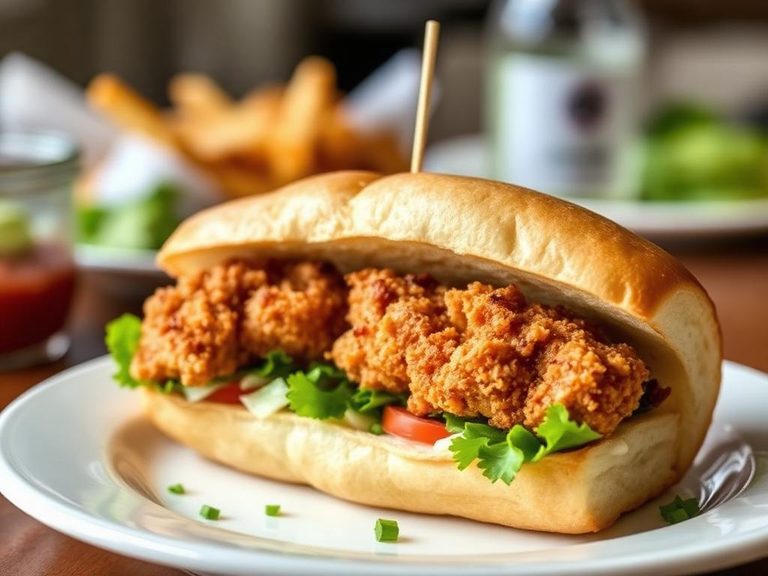
🌍 Where it's eaten
💡 Did you know?
Yellow perch was so abundant in the Great Lakes in the late 19th century that they were often used as pig feed, a practice that contributed to early overfishing concerns.
Full nutrition (USDA data · scales with serving)
| Water | 60.3 g |
| Energy | 224 kcal |
| Protein | 13.6 g |
| Total lipid (fat) | 13.3 g |
| Carbohydrate, by difference | 11.7 g |
| Fiber, total dietary | 0.50 g |
| Total Sugars | 0.20 g |
| Calcium, Ca | 36.0 mg |
| Iron, Fe | 1.1 mg |
| Magnesium, Mg | 22.0 mg |
| Phosphorus, P | 212 mg |
| Potassium, K | 167 mg |
| Sodium, Na | 400 mg |
| Zinc, Zn | 0.37 mg |
| Copper, Cu | 0.04 mg |
| Selenium, Se | 24.9 ug |
| Vitamin C, total ascorbic acid | 0.00 mg |
| Thiamin | 0.17 mg |
| Riboflavin | 0.11 mg |
| Niacin | 1.8 mg |
| Vitamin B-6 | 0.06 mg |
| Folate, total | 30.0 ug |
| Folic acid | 20.0 ug |
| Folate, food | 11.0 ug |
| Folate, DFE | 44.0 ug |
| Choline, total | 56.3 mg |
| Vitamin B-12 | 1.1 ug |
| Vitamin B-12, added | 0.00 ug |
| Vitamin A, RAE | 11.0 ug |
| Retinol | 10.0 ug |
| Carotene, beta | 0.00 ug |
| Carotene, alpha | 0.00 ug |
| Cryptoxanthin, beta | 0.00 ug |
| Lycopene | 0.00 ug |
| Lutein + zeaxanthin | 10.0 ug |
| Vitamin E (alpha-tocopherol) | 2.8 mg |
| Vitamin E, added | 0.00 mg |
| Vitamin D (D2 + D3) | 1.0 ug |
| Vitamin K (phylloquinone) | 12.0 ug |
| Alcohol, ethyl | 0.00 g |
| Caffeine | 0.00 mg |
| Theobromine | 0.00 mg |
Fat & fatty acid profile (per 100g)
| Fatty acids, total saturated | 1.9 g |
| SFA 4:0 | 0.00 g |
| SFA 6:0 | 0.00 g |
| SFA 8:0 | 0.00 g |
| SFA 10:0 | 0.00 g |
| SFA 12:0 | 0.00 g |
| SFA 14:0 | 0.05 g |
| SFA 16:0 | 1.3 g |
| SFA 18:0 | 0.40 g |
| Fatty acids, total monounsaturated | 5.4 g |
| MUFA 16:1 | 0.10 g |
| MUFA 18:1 | 5.1 g |
| MUFA 20:1 | 0.20 g |
| MUFA 22:1 | 0.02 g |
| Fatty acids, total polyunsaturated | 4.9 g |
| PUFA 18:2 | 4.1 g |
| PUFA 18:3 | 0.53 g |
| PUFA 18:4 | 0.01 g |
| PUFA 20:4 | 0.01 g |
| PUFA 20:5 n-3 (EPA) | 0.05 g |
| PUFA 22:5 n-3 (DPA) | 0.01 g |
| PUFA 22:6 n-3 (DHA) | 0.12 g |
| Cholesterol | 46.0 mg |
Amino acid profile (per 100g)
Estimated from Fish, fish sticks, frozen, prepared — USDA does not publish this profile for Fish.
| Tryptophan | 0.12 g |
| Threonine | 0.37 g |
| Isoleucine | 0.43 g |
| Leucine | 0.85 g |
| Lysine | 0.80 g |
| Methionine | 0.30 g |
| Phenylalanine | 0.47 g |
| Tyrosine | 0.29 g |
| Valine | 0.50 g |
| Arginine | 0.59 g |
| Histidine | 0.23 g |
| Alanine | 0.55 g |
| Aspartic acid | 0.82 g |
| Glutamic acid | 2.3 g |
| Glycine | 0.47 g |
| Proline | 0.78 g |
| Serine | 0.49 g |
| Hydroxyproline | 0.00 g |
FAQ
What's the best way to keep fried perch crispy?
Avoid overcrowding the pan, which steams the fish. Use a wire rack on a baking sheet instead of paper towels to prevent sogginess on the bottom. Serve immediately.
Is fried perch a good source of omega-3s?
Yes, perch is a lean white fish with a modest amount of omega-3s. While not as high as fatty fish like salmon, frying in certain oils (like canola or soybean) can add to the total omega-3 content.
How do I know when perch is done frying?
The flesh should be opaque and flake easily with a fork. The internal temperature should reach 145°F (63°C). The breading should be golden brown.
Nutrient density (calculated · NRF9.3)
Nutrient Rich Foods index: beneficial nutrients (protein, fiber, vitamins, minerals) minus saturated fat, added sugar & sodium, per 100 kcal.
NRF9.3 index — Fulgoni, Keast & Drewnowski, 2009. Computed from USDA nutrients.
Weight-loss friendliness (composite index)
Energy density 2.24 kcal/g · 24% calories from protein · 0.5 g fiber · 0.2 g sugar per 100 g.
Composite of energy density (Rolls et al., 1999), protein & fiber satiety, minus sugar. A calculated heuristic — ranks satiety-per-calorie, not a clinical measure.
Dietary load (calculated from USDA values)
Potential renal acid load. Positive = acid-forming, negative = alkaline-forming.
Sodium-to-potassium ratio: 2.40 (lower is better — aim for ≤ 1)
Sodium:potassium per WHO potassium guidance. Computed from USDA nutrients.