

Corn, white, steamed (Navajo)
Whole food · American Indian/Alaska Native Foods

Photo: Wikipedia
Steamed white Navajo corn is a staple with a mild, earthy sweetness and a pleasantly firm, slightly chewy texture. It's a nutrient-dense powerhouse, offering a substantial 16.6g of fiber and a solid protein base per 100g, making it more filling than many other starchy sides.
Calorie split: 10% protein · 78% carbs · 12% fat
↓ Full nutrition💚 Why it's loved
People cherish it for its comforting, subtly sweet flavor that serves as a perfect canvas for savory or spicy seasonings. Its cultural significance in Navajo and broader Southwestern cuisines adds a layer of heritage and tradition to every meal.
⚠️ Watch-outs & how to enjoy it better
Its high carbohydrate content can cause blood sugar spikes if eaten alone in large portions, which is a consideration for those managing diabetes. To counteract this, pair it with a source of protein or healthy fat (like beans, cheese, or avocado) and practice portion control.
Key benefits
- High in dietary fiber for digestive health
- Good source of plant-based protein
- Provides sustained energy from complex carbohydrates
- Naturally low in fat and sugar
- Contains essential minerals like magnesium and phosphorus
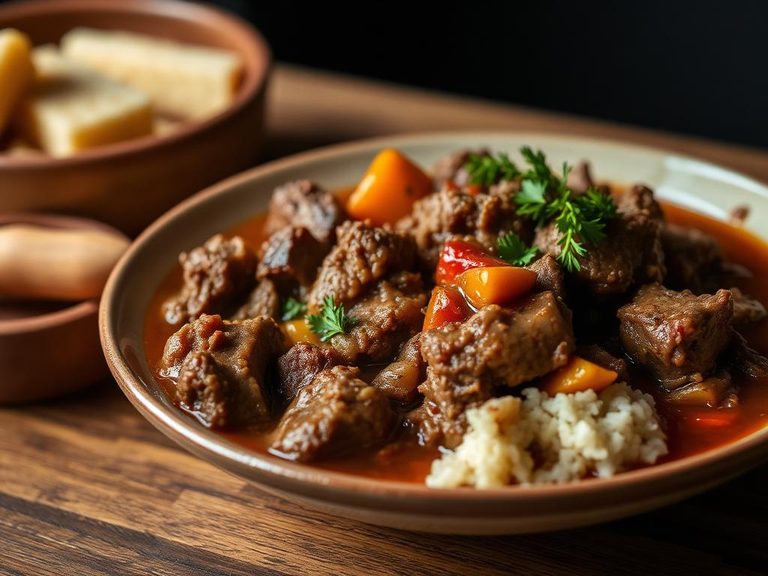
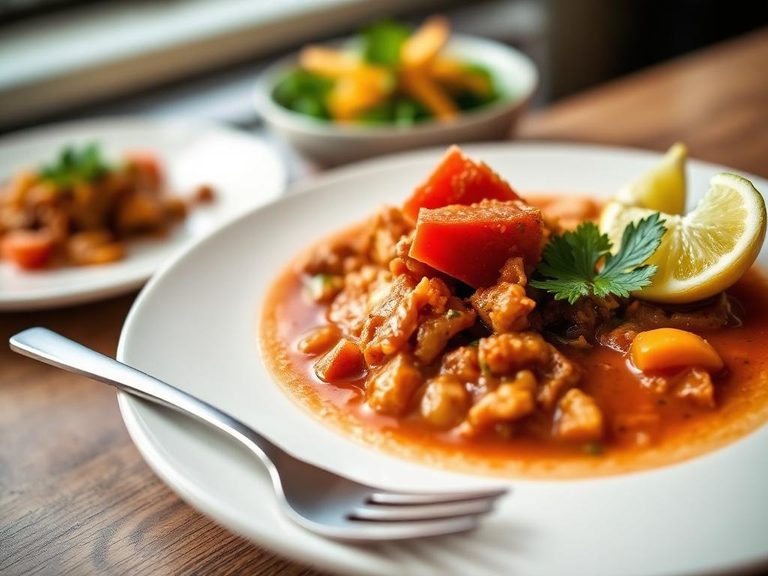
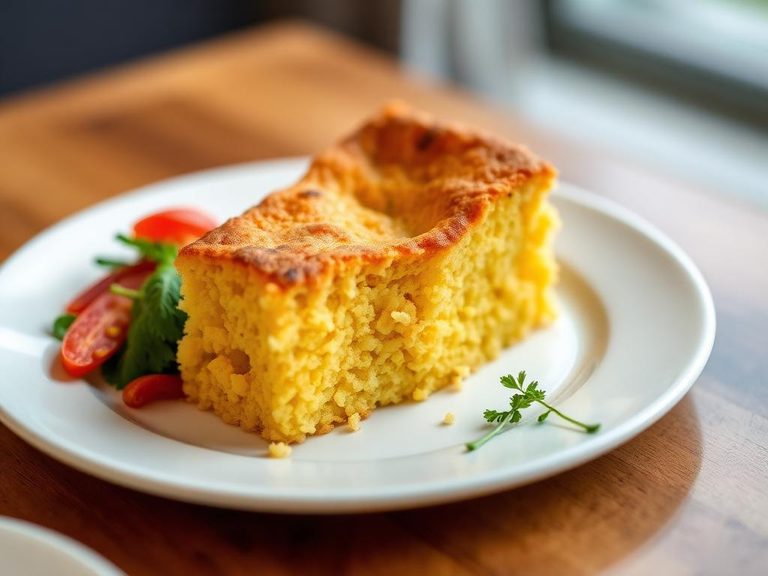
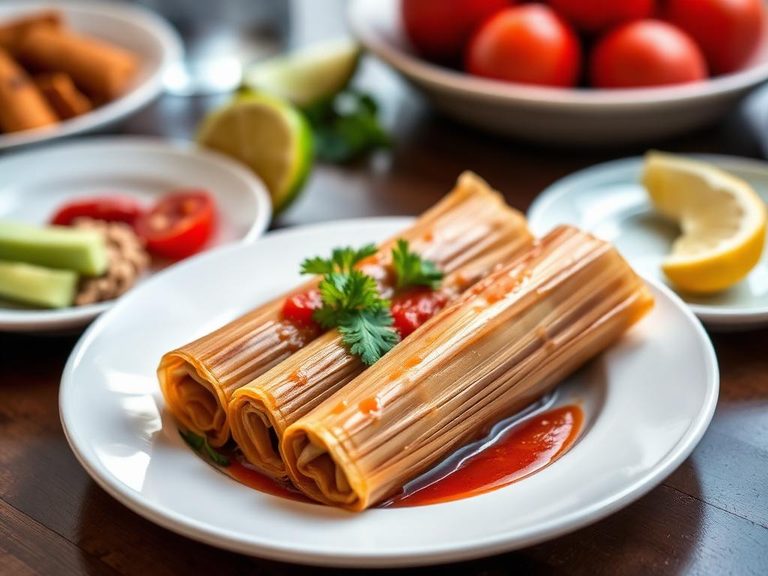
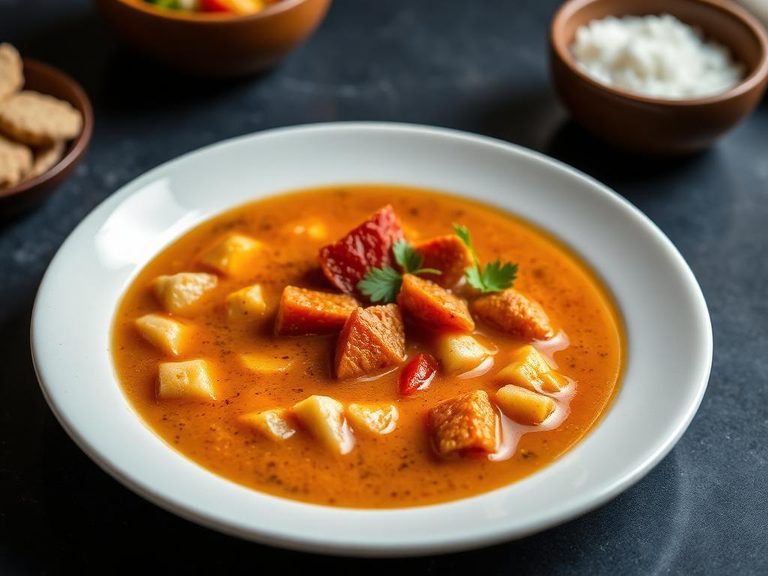
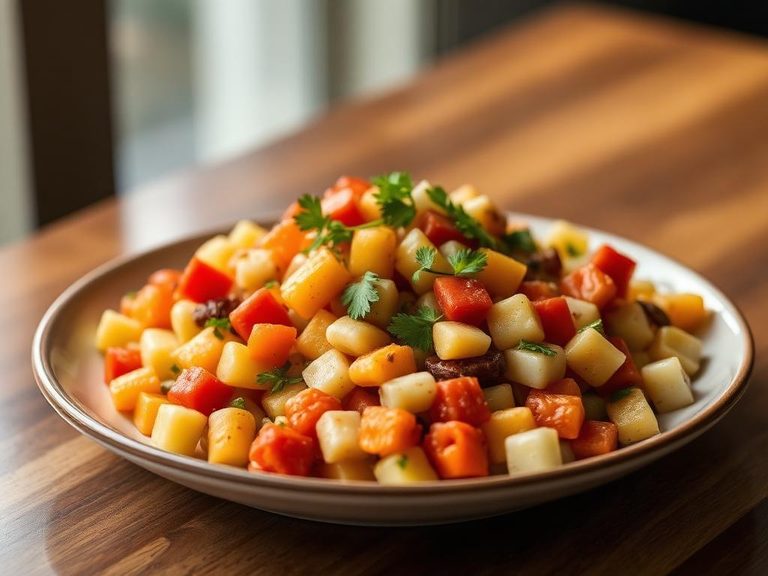
🍽️ Popular dishes
🌍 Where it's eaten
💡 Did you know?
Navajo corn, a type of flint corn, was traditionally grown using a sophisticated dry-farming technique called 'waffle gardening,' where small, sunken plots acted like natural sponges to capture and retain precious rainwater in arid climates.
Full nutrition (USDA data · scales with serving)
| Water | 8.1 g |
| Energy | 386 kcal |
| Energy | 1616 kj |
| Protein | 9.7 g |
| Total lipid (fat) | 5.2 g |
| Ash | 1.8 g |
| Carbohydrate, by difference | 75.2 g |
| Fiber, total dietary | 16.6 g |
| Total Sugars | 6.5 g |
| Sucrose | 4.3 g |
| Glucose | 1.1 g |
| Fructose | 1.0 g |
| Lactose | 0.00 g |
| Maltose | 0.00 g |
| Galactose | 0.00 g |
| Starch | 45.8 g |
| Calcium, Ca | 14.0 mg |
| Iron, Fe | 2.3 mg |
| Magnesium, Mg | 123 mg |
| Phosphorus, P | 312 mg |
| Potassium, K | 532 mg |
| Sodium, Na | 4.0 mg |
| Zinc, Zn | 3.1 mg |
| Copper, Cu | 0.23 mg |
| Manganese, Mn | 0.93 mg |
| Vitamin C, total ascorbic acid | 0.00 mg |
| Thiamin | 0.08 mg |
| Riboflavin | 0.07 mg |
| Niacin | 3.3 mg |
| Pantothenic acid | 0.30 mg |
| Vitamin B-6 | 0.29 mg |
| Folate, total | 100 ug |
| Folate, food | 100 ug |
| Vitamin E (alpha-tocopherol) | 0.00 mg |
| Tocopherol, beta | 0.00 mg |
| Tocopherol, gamma | 0.00 mg |
| Tocopherol, delta | 0.00 mg |
| Tocotrienol, alpha | 0.00 mg |
| Tocotrienol, beta | 0.00 mg |
| Tocotrienol, gamma | 0.00 mg |
| Tocotrienol, delta | 0.00 mg |
| Vitamin K (phylloquinone) | 0.80 ug |
| Vitamin K (Dihydrophylloquinone) | 0.00 ug |
Fat & fatty acid profile (per 100g)
| Fatty acids, total saturated | 0.83 g |
| SFA 8:0 | 0.00 g |
| SFA 10:0 | 0.00 g |
| SFA 12:0 | 0.00 g |
| SFA 14:0 | 0.00 g |
| SFA 15:0 | 0.00 g |
| SFA 16:0 | 0.65 g |
| SFA 17:0 | 0.01 g |
| SFA 18:0 | 0.13 g |
| SFA 20:0 | 0.03 g |
| SFA 22:0 | 0.01 g |
| Fatty acids, total monounsaturated | 1.5 g |
| MUFA 14:1 | 0.00 g |
| MUFA 15:1 | 0.00 g |
| MUFA 16:1 | 0.01 g |
| MUFA 17:1 | 0.00 g |
| MUFA 18:1 | 1.5 g |
| MUFA 20:1 | 0.02 g |
| Fatty acids, total polyunsaturated | 1.9 g |
| PUFA 18:2 | 1.8 g |
| PUFA 18:3 | 0.07 g |
| PUFA 18:3 n-3 c,c,c (ALA) | 0.07 g |
| PUFA 18:3 n-6 c,c,c | 0.00 g |
| PUFA 20:2 n-6 c,c | 0.00 g |
| PUFA 20:3 | 0.00 g |
| PUFA 20:4 | 0.00 g |
Amino acid profile (per 100g)
| Tryptophan | 0.06 g |
| Threonine | 0.30 g |
| Isoleucine | 0.35 g |
| Leucine | 1.0 g |
| Lysine | 0.30 g |
| Methionine | 0.23 g |
| Cystine | 0.14 g |
| Phenylalanine | 0.43 g |
| Tyrosine | 0.20 g |
FAQ
How is Navajo corn different from sweet corn?
Navajo corn is a type of flint or flour corn, which is starchy and meant to be dried and ground or cooked thoroughly. Sweet corn is harvested young when the kernels are milky and tender, with a higher sugar content.
Can I eat it if I'm gluten-free?
Yes, whole corn is naturally gluten-free. However, always check labels on any pre-packaged corn products for potential cross-contamination.
What's the best way to store leftover steamed corn?
Let it cool completely, then store kernels or whole cobs in an airtight container in the refrigerator for up to 4 days, or freeze for up to 3 months.
Nutrient density (calculated · NRF9.3)
Nutrient Rich Foods index: beneficial nutrients (protein, fiber, vitamins, minerals) minus saturated fat, added sugar & sodium, per 100 kcal.
NRF9.3 index — Fulgoni, Keast & Drewnowski, 2009. Computed from USDA nutrients.
Weight-loss friendliness (composite index)
Energy density 3.86 kcal/g · 10% calories from protein · 16.6 g fiber · 6.5 g sugar per 100 g.
Composite of energy density (Rolls et al., 1999), protein & fiber satiety, minus sugar. A calculated heuristic — ranks satiety-per-calorie, not a clinical measure.
Dietary load (calculated from USDA values)
Potential renal acid load. Positive = acid-forming, negative = alkaline-forming.
Sodium-to-potassium ratio: 0.01 (lower is better — aim for ≤ 1)
Sodium:potassium per WHO potassium guidance. Computed from USDA nutrients.