

Cookie, Pfeffernusse
Common food

Photo: Wikipedia
Pfeffernüsse are small, round, German spice cookies with a hard, crunchy exterior that often conceals a surprisingly soft, cakey interior. They are characterized by a complex blend of spices like anise, cinnamon, cloves, and black pepper, often coated in a simple powdered sugar glaze. Nutritionally, they are a dense, energy-rich treat, with a high carbohydrate content primarily from sugar and flour, and a significant fat content from butter or shortening.
Calorie split: 4% protein · 50% carbs · 46% fat
↓ Full nutrition💚 Why it's loved
People love Pfeffernüsse for their unique, aromatic spice profile that evokes the cozy atmosphere of the Christmas season. Their small size makes them an ideal, satisfying bite-sized treat perfect for holiday cookie platters and gift-giving.
⚠️ Watch-outs & how to enjoy it better
Their high sugar and refined carbohydrate content can lead to rapid blood sugar spikes, making them a poor choice for those managing diabetes or insulin resistance. The dense calorie count (over 500 kcal per 100g) means portion control is essential. To counteract this, enjoy just one or two cookies alongside a source of protein or healthy fat (like a handful of nuts or a piece of cheese) to slow sugar absorption and increase satiety.
Key benefits
- Provides a quick source of energy from carbohydrates.
- Contains small amounts of minerals from spices and flour.
- The spice blend may offer minor antioxidant properties.
- A traditional holiday treat with cultural significance.
- The hard texture can satisfy a craving for a crunchy snack.
🍽️ Popular dishes

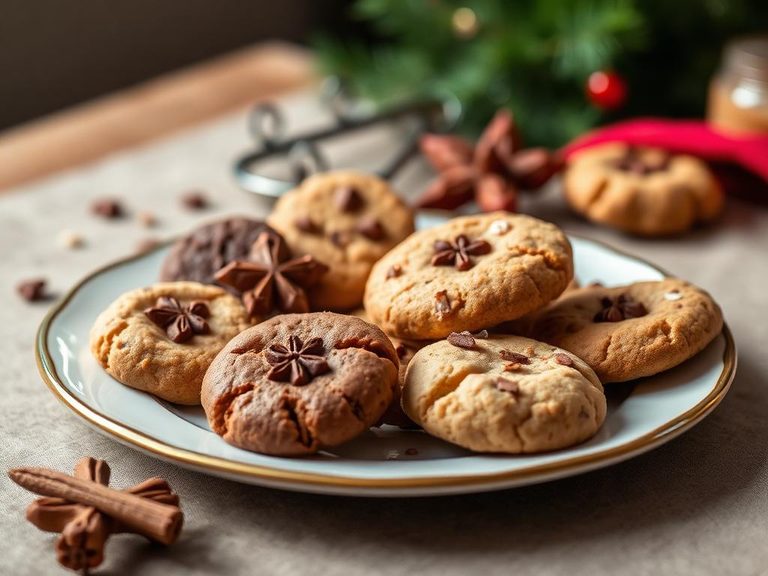
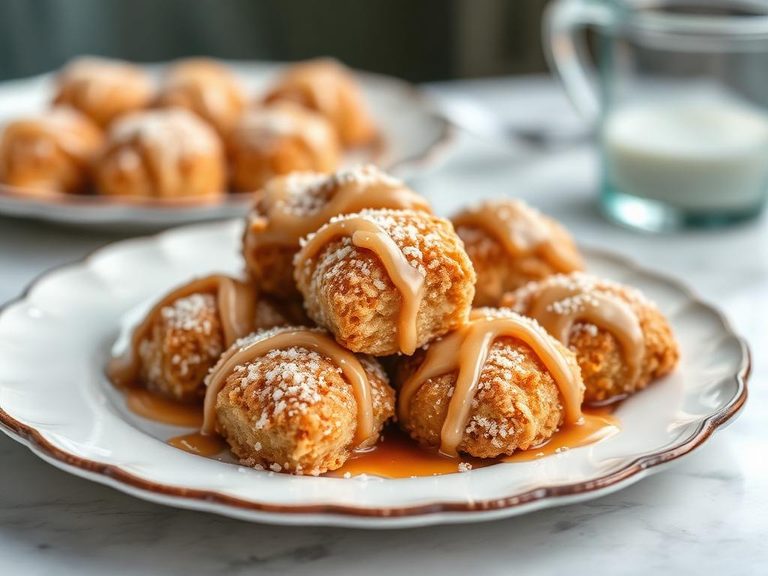
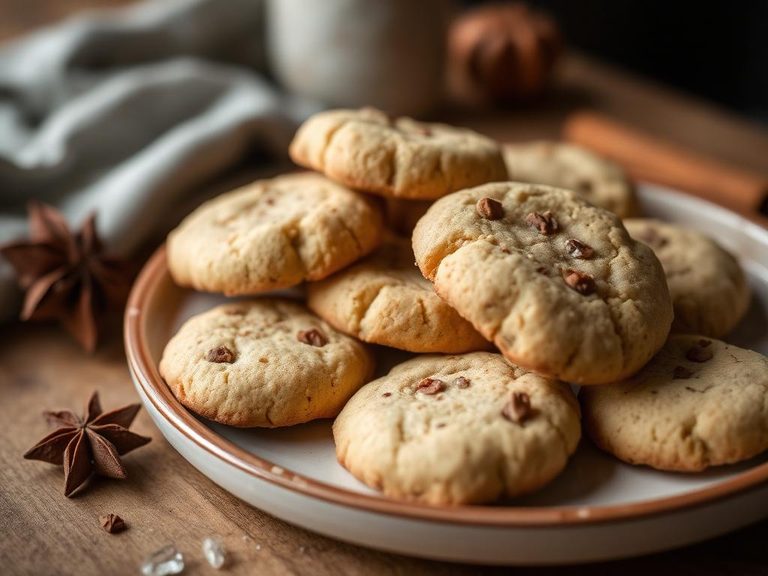
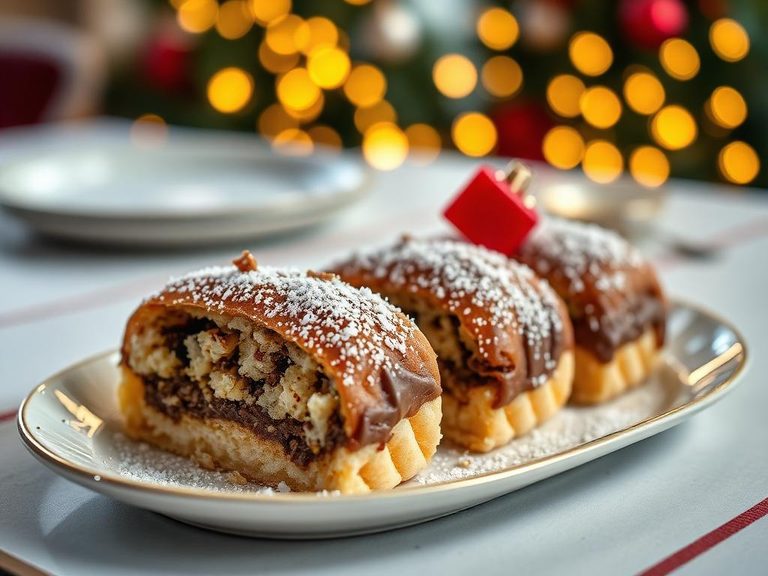
🌍 Where it's eaten
💡 Did you know?
The name 'Pfeffernüsse' literally translates to 'pepper nuts,' referring to both the traditional inclusion of black or white pepper in the dough and the cookie's original nut-like size and shape.
Full nutrition (USDA data · scales with serving)
| Water | 3.6 g |
| Energy | 514 kcal |
| Protein | 5.4 g |
| Total lipid (fat) | 26.2 g |
| Carbohydrate, by difference | 63.8 g |
| Fiber, total dietary | 1.3 g |
| Total Sugars | 21.6 g |
| Calcium, Ca | 13.0 mg |
| Iron, Fe | 3.0 mg |
| Magnesium, Mg | 14.0 mg |
| Phosphorus, P | 66.0 mg |
| Potassium, K | 88.0 mg |
| Sodium, Na | 353 mg |
| Zinc, Zn | 0.49 mg |
| Copper, Cu | 0.09 mg |
| Selenium, Se | 6.2 ug |
| Vitamin C, total ascorbic acid | 0.00 mg |
| Thiamin | 0.35 mg |
| Riboflavin | 0.31 mg |
| Niacin | 3.3 mg |
| Vitamin B-6 | 0.07 mg |
| Folate, total | 81.0 ug |
| Folic acid | 61.0 ug |
| Folate, food | 20.0 ug |
| Folate, DFE | 124 ug |
| Choline, total | 0.90 mg |
| Vitamin B-12 | 0.00 ug |
| Vitamin B-12, added | 0.00 ug |
| Vitamin A, RAE | 0.00 ug |
| Retinol | 0.00 ug |
| Carotene, beta | 1.0 ug |
| Carotene, alpha | 0.00 ug |
| Cryptoxanthin, beta | 0.00 ug |
| Lycopene | 0.00 ug |
| Lutein + zeaxanthin | 29.0 ug |
| Vitamin E (alpha-tocopherol) | 2.4 mg |
| Vitamin E, added | 0.00 mg |
| Vitamin D (D2 + D3) | 0.00 ug |
| Vitamin K (phylloquinone) | 11.0 ug |
| Alcohol, ethyl | 0.00 g |
| Caffeine | 0.00 mg |
| Theobromine | 0.00 mg |
Fat & fatty acid profile (per 100g)
| Fatty acids, total saturated | 8.1 g |
| SFA 4:0 | 0.09 g |
| SFA 6:0 | 0.07 g |
| SFA 8:0 | 0.04 g |
| SFA 10:0 | 0.10 g |
| SFA 12:0 | 0.13 g |
| SFA 14:0 | 0.46 g |
| SFA 16:0 | 5.1 g |
| SFA 18:0 | 1.8 g |
| Fatty acids, total monounsaturated | 6.7 g |
| MUFA 16:1 | 0.09 g |
| MUFA 18:1 | 6.5 g |
| MUFA 20:1 | 0.05 g |
| MUFA 22:1 | 0.00 g |
| Fatty acids, total polyunsaturated | 8.3 g |
| PUFA 18:2 | 7.4 g |
| PUFA 18:3 | 0.92 g |
| PUFA 18:4 | 0.00 g |
| PUFA 20:4 | 0.02 g |
| PUFA 20:5 n-3 (EPA) | 0.00 g |
| PUFA 22:5 n-3 (DPA) | 0.00 g |
| PUFA 22:6 n-3 (DHA) | 0.00 g |
| Cholesterol | 0.00 mg |
Amino acid profile (per 100g)
Estimated from Pie Crust, Cookie-type, Chocolate, Ready Crust — USDA does not publish this profile for Cookie.
| Tryptophan | 0.08 g |
| Threonine | 0.20 g |
| Isoleucine | 0.23 g |
| Leucine | 0.38 g |
| Lysine | 0.24 g |
| Methionine | 0.07 g |
| Cystine | 0.11 g |
| Phenylalanine | 0.28 g |
| Tyrosine | 0.16 g |
| Valine | 0.32 g |
| Arginine | 0.29 g |
| Histidine | 0.11 g |
| Alanine | 0.24 g |
| Aspartic acid | 0.45 g |
| Glutamic acid | 1.3 g |
| Glycine | 0.24 g |
| Proline | 0.42 g |
| Serine | 0.26 g |
FAQ
Are Pfeffernüsse hard or soft?
They can vary. Traditional versions are often hard and crunchy, especially when first made. Some modern recipes or those stored in airtight containers with moisture (like an apple slice) can become softer and more cake-like over time.
What is the main flavor in Pfeffernüsse?
The dominant flavor is a warm, aromatic blend of spices. While recipes vary, common key spices include anise, cinnamon, cloves, allspice, nutmeg, and cardamom, with a subtle kick from black or white pepper.
Are Pfeffernüsse gluten-free?
No, traditional Pfeffernüsse are made with wheat flour and are not gluten-free. Gluten-free versions can be made using alternative flour blends, but they are not the standard.
Nutrient density (calculated · NRF9.3)
Nutrient Rich Foods index: beneficial nutrients (protein, fiber, vitamins, minerals) minus saturated fat, added sugar & sodium, per 100 kcal.
NRF9.3 index — Fulgoni, Keast & Drewnowski, 2009. Computed from USDA nutrients.
Weight-loss friendliness (composite index)
Energy density 5.14 kcal/g · 4% calories from protein · 1.3 g fiber · 21.6 g sugar per 100 g.
Composite of energy density (Rolls et al., 1999), protein & fiber satiety, minus sugar. A calculated heuristic — ranks satiety-per-calorie, not a clinical measure.
Dietary load (calculated from USDA values)
Potential renal acid load. Positive = acid-forming, negative = alkaline-forming.
Sodium-to-potassium ratio: 4.01 (lower is better — aim for ≤ 1)
Sodium:potassium per WHO potassium guidance. Computed from USDA nutrients.