

Cookie, marshmallow, with rice cereal, no bake
Common food

Photo: Wikipedia
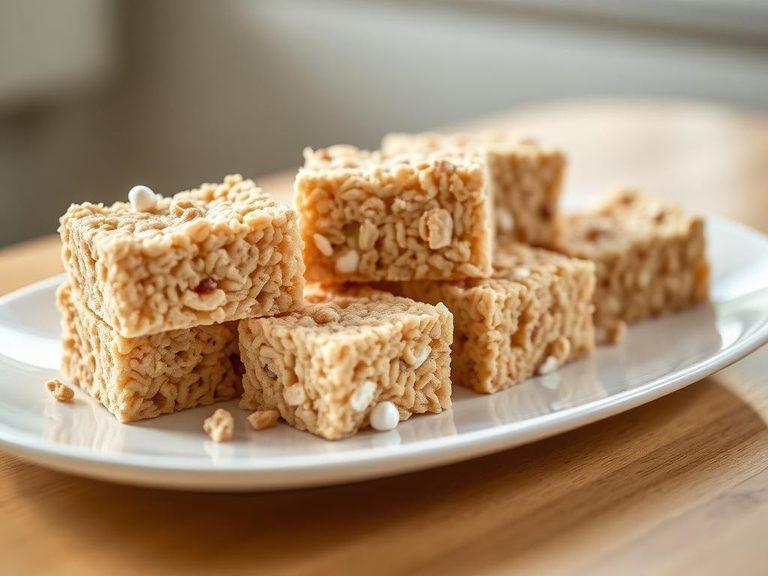
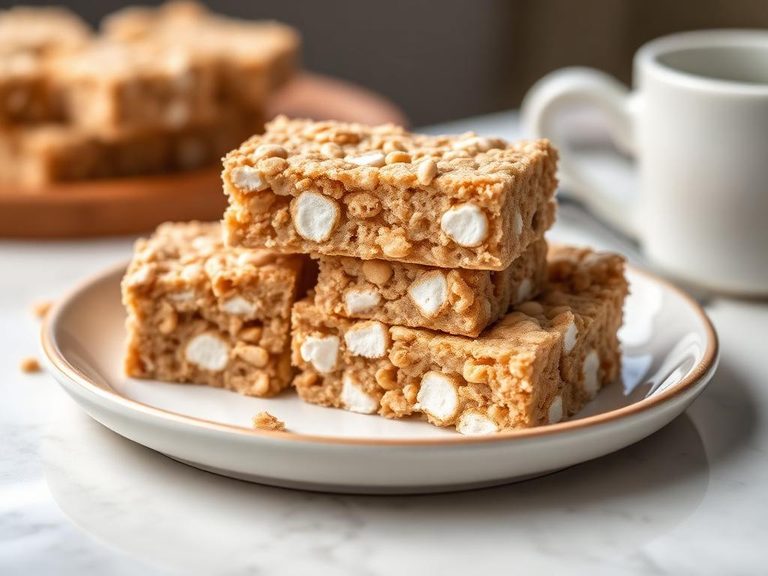
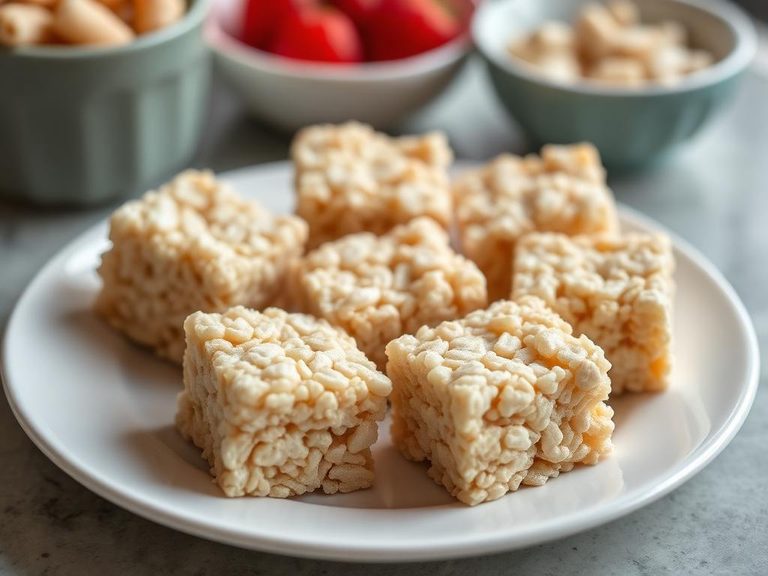
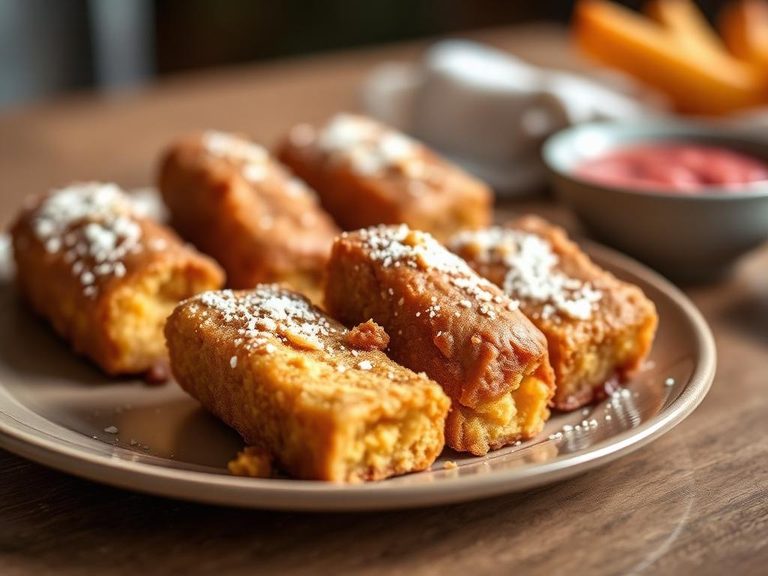
A no-bake cookie made by binding puffed rice cereal with melted marshmallows and butter, creating a chewy, sweet, and crispy treat. Its signature texture comes from the airy crunch of the cereal suspended in a sticky, sugary matrix. Nutritionally, it is a dense source of quick energy, primarily from refined carbohydrates and sugar.
Calorie split: 3% protein · 77% carbs · 19% fat
↓ Full nutrition💚 Why it's loved
People love it for its nostalgic, simple sweetness and the perfect contrast between the crunchy cereal and gooey marshmallow. Its versatility allows for endless flavor variations and it's a classic for kid-friendly cooking projects.
⚠️ Watch-outs & how to enjoy it better
It is very high in added sugar and refined carbs, offering little nutritional value, which can lead to blood-sugar spikes. To mitigate this, pair a small portion with a source of protein or healthy fat (like a handful of nuts) and enjoy it as an occasional treat rather than a staple. Those with gluten sensitivities should check that the rice cereal is certified gluten-free.
Key benefits
- Provides a rapid source of energy from carbohydrates
- Requires no oven, making it accessible for no-cook preparation
- The chewy-crisp texture is uniquely satisfying
- Highly customizable with mix-ins like chocolate chips or nuts
🍽️ Popular dishes
🌍 Where it's eaten
💡 Did you know?
The original Rice Krispies Treats recipe was created in 1939 by a Kellogg's employee as a simple snack for a campfire Girls troop, using just cereal, marshmallows, and butter.
Full nutrition (USDA data · scales with serving)
| Water | 5.9 g |
| Energy | 417 kcal |
| Protein | 3.4 g |
| Total lipid (fat) | 9.0 g |
| Carbohydrate, by difference | 80.5 g |
| Fiber, total dietary | 0.00 g |
| Total Sugars | 19.4 g |
| Calcium, Ca | 3.0 mg |
| Iron, Fe | 2.2 mg |
| Magnesium, Mg | 13.0 mg |
| Phosphorus, P | 42.0 mg |
| Potassium, K | 39.0 mg |
| Sodium, Na | 351 mg |
| Zinc, Zn | 0.50 mg |
| Copper, Cu | 0.10 mg |
| Selenium, Se | 11.0 ug |
| Vitamin C, total ascorbic acid | 0.00 mg |
| Thiamin | 0.70 mg |
| Riboflavin | 0.80 mg |
| Niacin | 9.1 mg |
| Vitamin B-6 | 0.90 mg |
| Folate, total | 241 ug |
| Folic acid | 199 ug |
| Folate, food | 42.0 ug |
| Folate, DFE | 381 ug |
| Choline, total | 0.00 mg |
| Vitamin B-12 | 0.00 ug |
| Vitamin B-12, added | 0.00 ug |
| Vitamin A, RAE | 270 ug |
| Retinol | 270 ug |
| Carotene, beta | 0.00 ug |
| Carotene, alpha | 0.00 ug |
| Cryptoxanthin, beta | 0.00 ug |
| Lycopene | 0.00 ug |
| Lutein + zeaxanthin | 0.00 ug |
| Vitamin E (alpha-tocopherol) | 0.00 mg |
| Vitamin E, added | 0.00 mg |
| Vitamin D (D2 + D3) | 0.00 ug |
| Vitamin K (phylloquinone) | 0.00 ug |
| Alcohol, ethyl | 0.00 g |
| Caffeine | 0.00 mg |
| Theobromine | 0.00 mg |
Fat & fatty acid profile (per 100g)
| Fatty acids, total saturated | 1.4 g |
| SFA 4:0 | 0.00 g |
| SFA 6:0 | 0.00 g |
| SFA 8:0 | 0.00 g |
| SFA 10:0 | 0.00 g |
| SFA 12:0 | 0.00 g |
| SFA 14:0 | 0.01 g |
| SFA 16:0 | 0.88 g |
| SFA 18:0 | 0.32 g |
| Fatty acids, total monounsaturated | 2.5 g |
| MUFA 16:1 | 0.02 g |
| MUFA 18:1 | 1.9 g |
| MUFA 20:1 | 0.02 g |
| MUFA 22:1 | 0.00 g |
| Fatty acids, total polyunsaturated | 5.1 g |
| PUFA 18:2 | 4.3 g |
| PUFA 18:3 | 0.58 g |
| PUFA 18:4 | 0.00 g |
| PUFA 20:4 | 0.00 g |
| PUFA 20:5 n-3 (EPA) | 0.00 g |
| PUFA 22:5 n-3 (DPA) | 0.00 g |
| PUFA 22:6 n-3 (DHA) | 0.00 g |
| Cholesterol | 0.00 mg |
Amino acid profile (per 100g)
Estimated from Pie Crust, Cookie-type, Chocolate, Ready Crust — USDA does not publish this profile for Cookie.
| Tryptophan | 0.08 g |
| Threonine | 0.20 g |
| Isoleucine | 0.23 g |
| Leucine | 0.38 g |
| Lysine | 0.24 g |
| Methionine | 0.07 g |
| Cystine | 0.11 g |
| Phenylalanine | 0.28 g |
| Tyrosine | 0.16 g |
| Valine | 0.32 g |
| Arginine | 0.29 g |
| Histidine | 0.11 g |
| Alanine | 0.24 g |
| Aspartic acid | 0.45 g |
| Glutamic acid | 1.3 g |
| Glycine | 0.24 g |
| Proline | 0.42 g |
| Serine | 0.26 g |
FAQ
Can I make these vegan?
Yes, by using vegan marshmallows (which use agar or other gelling agents instead of gelatin) and plant-based butter or margarine.
Why are my treats too hard or too soft?
Hardness often comes from cooking the marshmallow mixture too long or not using enough butter. Softness can result from under-cooking the mixture or using a cereal that absorbs less moisture. Precise measurement and timing are key.
How do I store them to keep them fresh?
Store in an airtight container at room temperature for up to 3 days. For longer storage, wrap individual bars tightly and freeze for up to 6 weeks. They may soften slightly upon thawing.
Nutrient density (calculated · NRF9.3)
Nutrient Rich Foods index: beneficial nutrients (protein, fiber, vitamins, minerals) minus saturated fat, added sugar & sodium, per 100 kcal.
NRF9.3 index — Fulgoni, Keast & Drewnowski, 2009. Computed from USDA nutrients.
Weight-loss friendliness (composite index)
Energy density 4.17 kcal/g · 3% calories from protein · 0.0 g fiber · 19.4 g sugar per 100 g.
Composite of energy density (Rolls et al., 1999), protein & fiber satiety, minus sugar. A calculated heuristic — ranks satiety-per-calorie, not a clinical measure.
Dietary load (calculated from USDA values)
Potential renal acid load. Positive = acid-forming, negative = alkaline-forming.
Sodium-to-potassium ratio: 9.00 (lower is better — aim for ≤ 1)
Sodium:potassium per WHO potassium guidance. Computed from USDA nutrients.