

Chili with meat, canned
Common food

Photo: Wikipedia
Canned chili with meat is a hearty, shelf-stable staple featuring a thick, savory blend of ground beef, tomatoes, and chili spices. Its texture is typically chunky and soft, with a rich, slightly smoky flavor profile that balances warmth and earthiness. Nutritionally, it offers a solid protein boost (8.5g per 100g) alongside moderate carbs and fiber, making it a convenient, satisfying meal base.
Calorie split: 32% protein · 40% carbs · 28% fat
↓ Full nutrition💚 Why it's loved
People love canned chili for its comforting, nostalgic warmth and the way it effortlessly delivers bold, spicy flavor with minimal effort. It's a cultural staple in American cuisine, often associated with casual gatherings, game days, and quick weeknight dinners.
⚠️ Watch-outs & how to enjoy it better
Canned chili can be high in sodium (often 800-1000mg per serving), which may concern those managing blood pressure or fluid retention. To mitigate this, look for low-sodium versions, pair with potassium-rich foods like bananas or potatoes, and control portions to 1 cup or less. Additionally, the high fiber and spice content might cause digestive discomfort for some; starting with small servings and gradually increasing intake can help.
Key benefits
- High protein content supports muscle maintenance and satiety
- Good source of dietary fiber (3.2g/100g) for digestive health
- Convenient, shelf-stable meal option with long shelf life
- Contains iron and B vitamins from meat and legumes
- Low sugar content (1.43g/100g) for a savory dish
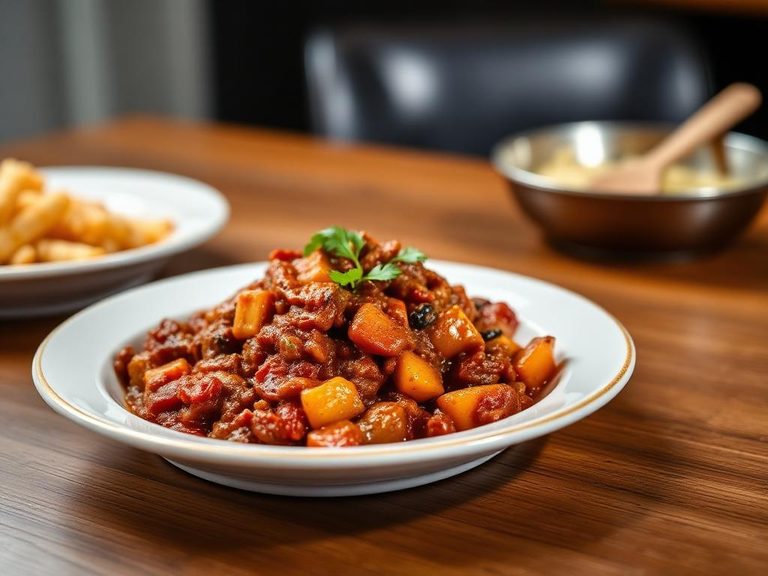
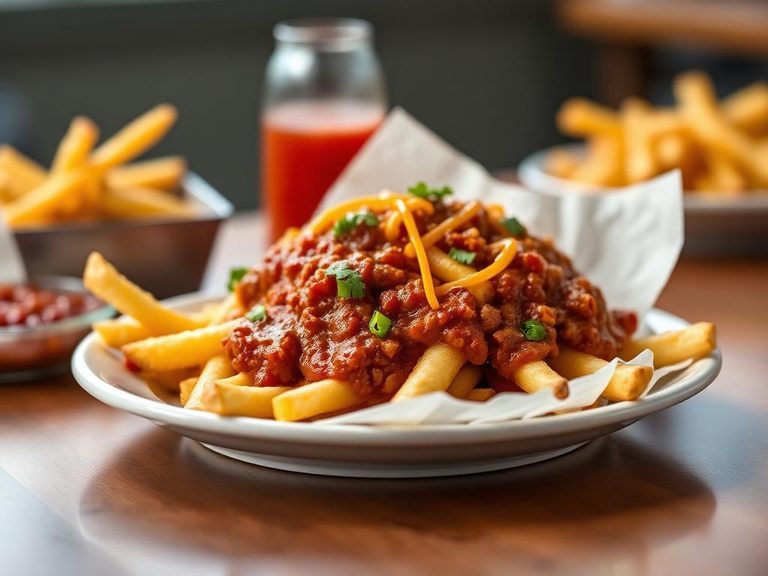
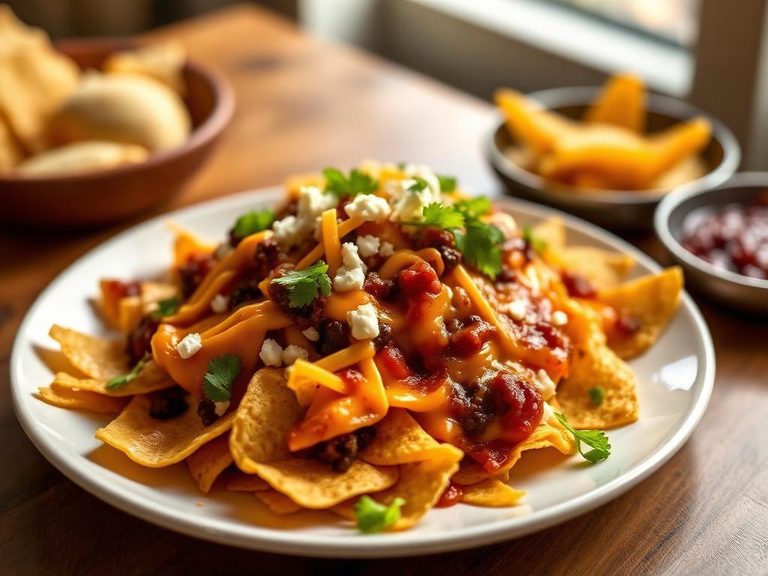
🍽️ Popular dishes



🌍 Where it's eaten
💡 Did you know?
The world's largest bowl of chili, weighing over 2,000 pounds, was made in 2012 in the town of Terlingua, Texas, which hosts an annual chili cook-off that's been running since 1967.
Full nutrition (USDA data · scales with serving)
| Water | 75.7 g |
| Energy | 106 kcal |
| Protein | 8.5 g |
| Total lipid (fat) | 3.4 g |
| Carbohydrate, by difference | 10.8 g |
| Fiber, total dietary | 3.2 g |
| Total Sugars | 1.4 g |
| Calcium, Ca | 20.0 mg |
| Iron, Fe | 1.8 mg |
| Magnesium, Mg | 25.0 mg |
| Phosphorus, P | 99.0 mg |
| Potassium, K | 275 mg |
| Sodium, Na | 357 mg |
| Zinc, Zn | 1.6 mg |
| Copper, Cu | 0.14 mg |
| Selenium, Se | 5.2 ug |
| Vitamin C, total ascorbic acid | 6.0 mg |
| Thiamin | 0.08 mg |
| Riboflavin | 0.07 mg |
| Niacin | 1.4 mg |
| Vitamin B-6 | 0.16 mg |
| Folate, total | 53.0 ug |
| Folic acid | 0.00 ug |
| Folate, food | 53.0 ug |
| Folate, DFE | 53.0 ug |
| Choline, total | 30.1 mg |
| Vitamin B-12 | 0.48 ug |
| Vitamin B-12, added | 0.00 ug |
| Vitamin A, RAE | 11.0 ug |
| Retinol | 1.0 ug |
| Carotene, beta | 109 ug |
| Carotene, alpha | 11.0 ug |
| Cryptoxanthin, beta | 17.0 ug |
| Lycopene | 2035 ug |
| Lutein + zeaxanthin | 18.0 ug |
| Vitamin E (alpha-tocopherol) | 0.43 mg |
| Vitamin E, added | 0.00 mg |
| Vitamin D (D2 + D3) | 0.00 ug |
| Vitamin K (phylloquinone) | 4.7 ug |
| Alcohol, ethyl | 0.00 g |
| Caffeine | 0.00 mg |
| Theobromine | 0.00 mg |
Fat & fatty acid profile (per 100g)
| Fatty acids, total saturated | 1.2 g |
| SFA 4:0 | 0.00 g |
| SFA 6:0 | 0.00 g |
| SFA 8:0 | 0.00 g |
| SFA 10:0 | 0.00 g |
| SFA 12:0 | 0.00 g |
| SFA 14:0 | 0.09 g |
| SFA 16:0 | 0.72 g |
| SFA 18:0 | 0.38 g |
| Fatty acids, total monounsaturated | 1.4 g |
| MUFA 16:1 | 0.11 g |
| MUFA 18:1 | 1.2 g |
| MUFA 20:1 | 0.01 g |
| MUFA 22:1 | 0.00 g |
| Fatty acids, total polyunsaturated | 0.26 g |
| PUFA 18:2 | 0.17 g |
| PUFA 18:3 | 0.08 g |
| PUFA 18:4 | 0.00 g |
| PUFA 20:4 | 0.01 g |
| PUFA 20:5 n-3 (EPA) | 0.00 g |
| PUFA 22:5 n-3 (DPA) | 0.00 g |
| PUFA 22:6 n-3 (DHA) | 0.00 g |
| Cholesterol | 17.0 mg |
Amino acid profile (per 100g)
Estimated from Restaurant, family style, chili with meat and beans — USDA does not publish this profile for Chili with meat.
| Tryptophan | 0.14 g |
| Threonine | 0.40 g |
| Isoleucine | 0.56 g |
| Leucine | 0.93 g |
| Lysine | 0.84 g |
| Methionine | 0.28 g |
| Cystine | 0.12 g |
| Phenylalanine | 0.47 g |
| Tyrosine | 0.34 g |
| Valine | 0.64 g |
| Arginine | 0.77 g |
| Histidine | 0.37 g |
| Alanine | 0.79 g |
| Aspartic acid | 1.2 g |
| Glutamic acid | 2.1 g |
| Glycine | 0.83 g |
| Proline | 0.85 g |
| Serine | 0.37 g |
| Hydroxyproline | 0.24 g |
FAQ
Is canned chili with meat healthy?
Canned chili can be a nutritious option, providing protein, fiber, and essential nutrients. However, it's often high in sodium and may contain added sugars or preservatives. Choosing low-sodium varieties and pairing with fresh vegetables can enhance its health benefits.
How long does canned chili last after opening?
Once opened, canned chili should be transferred to an airtight container and refrigerated. It typically lasts 3-4 days in the fridge. For longer storage, it can be frozen for up to 2-3 months, though the texture may change slightly upon reheating.
Can I eat canned chili straight from the can?
While it's safe to eat canned chili cold, it's generally recommended to heat it thoroughly to improve flavor and texture. Heating also reduces the risk of bacterial growth, especially if the can has been opened and stored for a while.
Nutrient density (calculated · NRF9.3)
Nutrient Rich Foods index: beneficial nutrients (protein, fiber, vitamins, minerals) minus saturated fat, added sugar & sodium, per 100 kcal.
NRF9.3 index — Fulgoni, Keast & Drewnowski, 2009. Computed from USDA nutrients.
Weight-loss friendliness (composite index)
Energy density 1.06 kcal/g · 32% calories from protein · 3.2 g fiber · 1.4 g sugar per 100 g.
Composite of energy density (Rolls et al., 1999), protein & fiber satiety, minus sugar. A calculated heuristic — ranks satiety-per-calorie, not a clinical measure.
Dietary load (calculated from USDA values)
Potential renal acid load. Positive = acid-forming, negative = alkaline-forming.
Sodium-to-potassium ratio: 1.30 (lower is better — aim for ≤ 1)
Sodium:potassium per WHO potassium guidance. Computed from USDA nutrients.